6,000 Investors Lost Everything On A 1,001x Solana Meme Coin — South Korea Just Made Its Move

bitcoinistPublicado em 2026-05-27Última atualização em 2026-05-27

Resumo

South Korean prosecutors have indicted five individuals for a landmark Solana-based meme coin rug pull, marking the first-ever criminal prosecution of a decentralized exchange (DEX) scam under the country's Virtual Asset User Protection Act. The group launched the CATFI token on pump.fun, artificially inflated its value through fake social media promotions and circular trading under the influencer alias "EtherFather," and then abandoned the project. The scam caused the token's price to surge 1,001 times, attracting about 6,000 investors and resulting in approximately $650,000 in confirmed losses for 256 victims. This precedent-setting case extends South Korea's crypto fraud enforcement framework to DEX transactions and influencer-driven manipulation for the first time.

South Korean prosecutors have indicted five individuals in the country’s first-ever criminal prosecution of a decentralized exchange rug pull — and the first case in which fraudulent trading charges under South Korea’s Virtual Asset User Protection Act have been applied, setting a landmark legal precedent for how the country’s crypto enforcement framework handles DEX-based market manipulation on Solana and other blockchains.

The Seoul Southern District Prosecutors’ Office Virtual Asset Crime Joint Investigation Unit announced on May 27 that it had arrested and indicted two suspects on market manipulation charges, indicted a third without arrest, and separately indicted two additional suspects for obstructing justice by helping the ringleader evade capture — five defendants in total across two separate charging tracks, per Digital Asset’s May 27 reporting of the prosecutor’s statement.
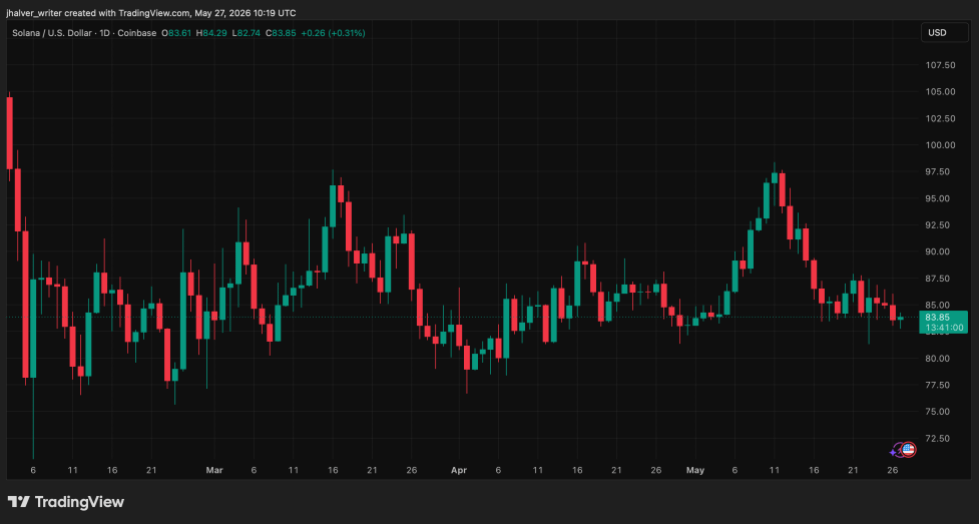
SOL's price moving sideways on the daily chart. Source: SOLUSD on Tradingview

How The Solana Scheme Worked

The operation centered on CATFI — a Solana-based meme coin launched on pump.fun, the widely used Solana token issuance platform that gained significant traction during the early 2025 meme coin frenzy. The group spent several million Korean won to launch the token and list it on a decentralized exchange, per the prosecution’s account.

The ringleader, identified only by his surname Park, operated under the influencer alias “EtherFather” on social media — presenting himself as an independent third party with no financial interest in the project while actively recommending CATFI purchases to his followers. Simultaneously, the group operated the project’s official social media accounts, artificially inflating follower counts and publishing false promotional announcements to drive retail buying interest, per the prosecutor’s statement as reported by Digital Asset.

To conceal their control over the token’s supply, the group distributed holdings across multiple wallets and conducted circular trading — a technique designed to create the appearance of organic market activity while masking the fact that the issuing parties controlled the token’s liquidity. Once retail investors had entered, the group executed the rug pull — abandoning the project and exiting with approximately 400 million Korean won in illicit proceeds from an initial outlay of roughly 10 million won, per the filing.

The Scale Of The Damage

CATFI’s price surged 1,001 times in the 26 hours following its launch, attracting approximately 6,000 investors. Of those, 256 suffered confirmed financial losses totaling approximately 900 million Korean won — roughly $650,000 at current exchange rates — per the prosecution’s figures cited in the Digital Asset report.

Why The Precedent Matters

Two firsts define this case’s significance. It is the first prosecution under the Virtual Asset User Protection Act using fraudulent trading charges — specifically the act’s prohibition on “use of fraudulent means, plans, or schemes” and “false statements on material matters” in connection with digital asset transactions, per the prosecution’s legal framing.

The prior landmark case under the same law applied market manipulation charges relating to centralized exchange activity. This case extends that framework to decentralized exchange transactions for the first time — a meaningful expansion of regulatory reach into a space prosecutors have historically struggled to address.

This development marks a critical juncture for the nascent sector’s regulatory trajectory in South Korea. A successful rug pull prosecution targeting DEX activity on Solana, influencer-driven manipulation, and coordinated wallet obfuscation simultaneously signals that Korean enforcement agencies are developing both the technical capability and the legal framework to pursue crypto fraud beyond the centralized exchange perimeter.

Cover image from Grok, SOLUSD chart from Tradingview

Perguntas relacionadas

QWhat is the landmark legal significance of the CATFI rug pull case in South Korea?

AIt is the first criminal prosecution of a decentralized exchange rug pull in South Korea and the first case to apply fraudulent trading charges under the Virtual Asset User Protection Act to DEX-based market manipulation, setting a key precedent.

QWhat meme coin was at the center of the scheme, and on which platform was it launched?

AThe scheme centered on the CATFI meme coin, which was launched on the Solana token issuance platform pump.fun.

QHow did the perpetrators conceal their control over the CATFI token and manipulate the market?

AThey distributed holdings across multiple wallets, conducted circular trading to simulate organic activity, used the alias 'EtherFather' to falsely promote the coin as a disinterested party, and inflated social media follower counts with false announcements to drive retail buying.

QWhat was the financial scale of the damage caused to investors in the CATFI scheme?

AApproximately 6,000 investors were attracted, with 256 confirmed to have suffered losses totaling about 900 million Korean won (roughly $650,000). The perpetrators made about 400 million won in illicit proceeds from an initial 10 million won outlay.

QWho was indicted in the case, and what were the general charges?

AFive individuals were indicted. Two were arrested and indicted for market manipulation, a third was indicted without arrest for the same, and two others were separately indicted for obstructing justice by helping the ringleader evade capture.

Leituras Relacionadas

AI Relay Stations Spark Heated Debate on Zhihu: Behind Cheap Tokens, What Are Users Really Worried About?

A discussion on Zhihu about "AI relay stations" shifted the niche developer topic of "cheap tokens" into broader user awareness. Users moved beyond simply questioning the legitimacy of these services to focus on practical concerns: Where do cheap tokens truly come from? Is the model being accessed the real one? Can relay stations see prompts, code, and API keys? For occasional users, are the risks worth it? The core debate centered less on price and more on trust. A primary worry is model authenticity—the risk of "model swapping," where users paying for a premium model might be routed to a cheaper one, creating an information asymmetry. Others argued that cost comparisons matter; while cheaper than official pay-as-you-go APIs, relay stations may not be the lowest-cost option versus subscriptions, domestic models, or free tiers, making user needs assessment crucial. Speculation about token sources ranged from legitimate bulk discounts to gray-area methods like account sharing or exploiting regional pricing. This opacity makes risk assessment difficult for users. Data security emerged as a critical concern, especially for enterprise use. When processing sensitive information like code, contracts, or client data, the inability to verify a relay station's data handling, retention, or access policies poses significant compliance and confidentiality risks. The evolving consensus suggests relay stations can be used cautiously for low-sensitivity, disposable tasks (e.g., summarizing public info, simple translation). However, they should not be the default for sensitive, professional, or production workflows involving proprietary data, Agents, or automated systems. Recommendations include avoiding large prepayments, not relying on a single service, using test prompts to monitor quality, anonymizing data where possible, and keeping official channels as backups. Ultimately, the discussion framed tokens not just as a billing unit but as a measure of real cost encompassing price, model integrity, data security, and service stability. The popularity of relay stations highlights user demand for affordable access, but the debate underscores a key trade-off: the savings from cheap tokens may come at the price of trust, transparency, and control over one's data and AI experience.

marsbitHá 11m

AI Relay Stations Spark Heated Debate on Zhihu: Behind Cheap Tokens, What Are Users Really Worried About?

marsbitHá 11m

In-Depth Research Report on TradFi: The Convergence Wave of Crypto and Traditional Finance

In 2026, the crypto industry is undergoing a profound infrastructure-level transformation—TradFi assets are migrating on-chain at an unprecedented pace. According to CoinGecko's Q1 2026 report, the total value locked (TVL) of tokenized real-world assets (RWA) has surpassed $31 billion, a nearly 4x increase from $7.8 billion at the beginning of 2025, with the sector’s aggregate market capitalization reaching $19.3 billion. Among these, the market cap of tokenized stocks surged from $2 million to $486 million, with Q1 spot trading volume reaching $15.1 billion—a single quarter already surpassing the entire second half of 2025. RWA perpetual contract Q1 trading volume reached a staggering $524.8 billion, far exceeding the $313 billion for all of 2025. Meanwhile, BlackRock's BUIDL fund has reached $2.3 billion in scale and has filed for two new tokenized funds, signaling that the world's largest asset manager's tokenization strategy is evolving from pilot to product suite expansion. HTX, as a core participant in the crypto exchange sector, officially launched TradFi perpetual futures products including NVDA, AAPL, MSFT, META, and SPY in 2026, enabling crypto users to gain 24/7 trading access to core U.S. equities. Boston Consulting Group predicts that global tokenized asset scale could reach $16 trillion by 2030, while McKinsey offers a conservative estimate of approximately $2 trillion. The on-chain migration of TradFi assets is no longer a "future narrative" but a structural transformation unfolding in real time, as crypto exchanges evolve from single crypto asset trading platforms toward "multi-asset-class trading infrastructure."

HTX LearnHá 13m

In-Depth Research Report on TradFi: The Convergence Wave of Crypto and Traditional Finance

HTX LearnHá 13m

Blocked Its Own Treasure, WeChat AI Steps Up

Tencent's stock surged over 10% on June 2nd amid reports that WeChat, with 1.43 billion monthly users, is finalizing tests for a native AI Agent. The reported feature, accessible by swiping right from the main interface, allows users to issue commands in natural language. The AI then decomposes tasks and automatically calls upon relevant Mini Programs within WeChat to complete actions like ordering food, booking tickets, or making payments, creating a closed-loop service execution system. This strategic shift follows the internal conflict and subsequent "blocking" of Tencent's standalone AI app, Yuanbao, by WeChat for violating sharing rules during a 2026 Spring Festival promotion. The incident highlighted a lack of internal consensus and exposed the weakness of competing in the standalone AI assistant arena against rivals like ByteDance's Doubao (345M MAU) and Alibaba's Qianwen. The new WeChat AI Agent aims to leverage WeChat's unique assets—its massive user base, standardized Mini Program APIs, WeChat Pay, and identity system—to move from simple content generation to actual task execution. Analysts note this changes the competitive landscape from model benchmarks to which AI can connect to more real-world services. However, success depends on key variables: the capability of Tencent's underlying Hunyuan model, managing massive inference costs, and redesigning incentives for Mini Program developers whose traffic might be bypassed. The move is seen as an attempt to keep user service intent within WeChat's ecosystem as AI begins to redefine how users access services.

marsbitHá 1h

Blocked Its Own Treasure, WeChat AI Steps Up

marsbitHá 1h

ByteDance Adopts Arm CPUs, Jensen Huang: So Sad I Didn't Buy Arm

**Summary:** At Computex 2026, Arm CEO Rene Haas announced that ByteDance and Oracle have adopted Arm's self-designed Arm AGI data center CPU. The company expects significant revenue growth from this product, projecting $20 billion in demand for the 2027/2028 fiscal years. Haas noted that restricting AI-capable CPUs from the US to China is nearly impossible due to their widespread applications. Arm's stock has surged dramatically this year, notably rising 16% after NVIDIA's Arm-based Vera CPU and RTX Spark announcements. A highlight was the informal, humorous on-stage conversation between Haas and NVIDIA CEO Jensen Huang. Huang joked about NVIDIA's failed attempt to acquire Arm and playfully lamented selling his Arm shares. Both executives showed a clear sense of camaraderie and shared regret over the missed merger. Key technical topics were discussed: 1. **AI PC Design:** Huang explained NVIDIA's RTX Spark superchip (with a 20-core Arm CPU) is designed for future AI agents that will autonomously run and use tools on PCs, blending local and cloud processing. 2. **Agent vs. OS:** Huang emphasized the operating system remains crucial, as AI agents rely on its APIs and tools to function. 3. **Growth Constraints:** He identified the shift to "useful AI" that generates profitable tokens as a primary driver for immense, almost limitless, computational demand. Haas outlined Arm's strategy across PC and data centers. For PCs, Arm collaborates with partners like NVIDIA and MediaTek, offering its compute subsystem (CSS) for custom SoCs. In data centers, its Arm AGI CPU (built on TSMC's 3nm process) has gained major partners including OpenAI, Meta, and now ByteDance and Oracle. Arm presented a multi-year roadmap for its in-house CPU line. The article concludes that while GPUs dominated the AI training race, the explosion of AI agents is shifting significant focus to CPUs for inference, state management, and tool orchestration. The industry is trending towards vertical integration, with companies like cloud providers designing chips and chip/IP firms offering full solutions, all competing to deliver more efficient computing per watt.

marsbitHá 1h

ByteDance Adopts Arm CPUs, Jensen Huang: So Sad I Didn't Buy Arm

marsbitHá 1h

Trading

Spot
Futuros

Artigos em Destaque

O que é MEME 2.0

Memecoin 2.0: A Ascensão do $MEME 2.0 no Mundo das Criptomoedas Introdução No panorama em constante evolução das criptomoedas, um novo concorrente surgiu. Memecoin 2.0, simbolizado como $MEME 2.0, eleva o conceito de moedas meme a um novo nível emocionante. Como um subproduto do Memecoin original, este projeto capturou a atenção da comunidade crypto ao mudar o foco de incentivos financeiros típicos para uma experiência envolvente e divertida. Operando na blockchain Ethereum, Memecoin 2.0 redefine audaciosamente o envolvimento da comunidade na esfera crypto. O que é Memecoin 2.0, $MEME 2.0? No seu cerne, Memecoin 2.0 é um projeto de criptomoeda que prioriza o espírito comunitário e a diversão associada à cultura meme. Ao contrário das criptomoedas convencionais, que se concentram em casos de uso práticos e benefícios tangíveis, Memecoin 2.0 distingue-se ao abraçar o lado mais leve da moeda digital. O projeto existe sem promessas de utilidade, um roteiro estruturado ou retornos financeiros, focando em vez disso em fomentar uma comunidade vibrante centrada em memes e no prazer partilhado. Ao fazer isso, aproveita a crescente tendência da cultura meme no espaço online, tornando-se num jogador único no mundo dos ativos digitais. Criador do Memecoin 2.0, $MEME 2.0 Apesar de extensa pesquisa sobre as origens do Memecoin 2.0, a identidade explícita do seu criador continua desconhecida. Esta anonimidade não é incomum na comunidade crypto, onde muitos projetos são liderados por indivíduos ou grupos que preferem ficar nos bastidores. A falta de informações publicamente disponíveis sobre o criador pode ser vista como um movimento estratégico, colocando os holofotes no envolvimento da comunidade em vez de na notoriedade individual dentro do espaço. Investidores do Memecoin 2.0, $MEME 2.0 As informações sobre os investidores ou o financiamento do Memecoin 2.0 são escassas. Esta ausência de detalhes pode sugerir que o projeto é autofinanciado ou que o seu foco na comunidade, em vez de estruturas de investimento tradicionais, atraiu um tipo diferente de apoiador. Como o mundo das moedas memes geralmente envolve mais envolvimento de base do que investimento institucional, esta abordagem alinha-se ao ethos de projetos orientados pela comunidade. Como Funciona o Memecoin 2.0, $MEME 2.0? O Memecoin 2.0 opera inteiramente na blockchain Ethereum, aproveitando as suas robustas características de segurança e escalabilidade. Ao aproveitar os pontos fortes da Ethereum, o Memecoin 2.0 pode oferecer um ambiente seguro para interações dos utilizadores enquanto assegura que as transações são eficientes e custo-efetivas. Uma das características únicas do Memecoin 2.0 reside na sua estrutura orientada pela comunidade. O valor e a popularidade do token $MEME 2.0 derivam da participação ativa dos seus utilizadores, em vez de uma utilidade inerente. Este design reforça o foco do projeto no aspecto de entretenimento das criptomoedas, implicando que o riso e o envolvimento da comunidade são as verdadeiras moedas que impulsionam o seu sucesso. Além disso, o projeto insere-se no ecossistema mais amplo das moedas meme, onde o valor de cada moeda meme oscila com base na cultura, nas tendências e no envolvimento da comunidade, em vez de nos princípios económicos tradicionais. Linhas do Tempo do Memecoin 2.0, $MEME 2.0 Para melhor entender a evolução e os marcos do Memecoin 2.0, aqui está uma linha do tempo que destaca eventos significativos na sua história: 2024: O início do Memecoin 2.0 é reconhecido como um desdobramento do Memecoin original, estabelecendo-se dentro do contexto próspero das moedas meme enquanto opera na blockchain Ethereum. 13 de Julho de 2024: O Memecoin 2.0 posiciona-se oficialmente como uma moeda meme centrada na comunidade na rede Ethereum, enfatizando a sua abordagem centrada no entretenimento que convida os utilizadores a participar e envolver-se no seu crescimento. Pontos Chave Sobre o Memecoin 2.0, $MEME 2.0 Várias características críticas definem o Memecoin 2.0: Abordagem Centrada na Comunidade: A missão primária do Memecoin 2.0 é criar uma experiência comunitária divertida e envolvente, capitalizando o prazer coletivo derivado da cultura meme. Construído na Ethereum: Operar na blockchain Ethereum fornece ao projeto uma infraestrutura essencial que garante segurança e escalabilidade. Falta de Utilidade ou Roteiro: Numa notável divergência das criptomoedas tradicionais, o Memecoin 2.0 não promete quaisquer características utilitárias ou retornos financeiros, reafirmando o seu compromisso com o envolvimento da comunidade e a participação social. Foco na Cultura Meme: Ao abraçar os aspectos humorísticos e culturais do fenómeno meme, o Memecoin 2.0 fornece uma plataforma para que os utilizadores se envolvam com a crypto offline e online. Contexto Adicional: A Importância das Moedas Meme As moedas meme emergiram como uma classe distinta de criptomoeda, frequentemente impulsionadas pelo humor e por uma abordagem leve ao comércio. Estas moedas geralmente carecem de utilidade significativa ou roteiros de desenvolvimento, atraindo os utilizadores com a promessa de diversão, interação comunitária e relevância cultural. No panorama do ecossistema crypto mais amplo, as moedas meme revive a importância do envolvimento da comunidade, resistindo contra abordagens exclusivamente orientadas para o lucro. Projetos como o Memecoin 2.0 inauguram uma era em que o entretenimento pode harmonizar-se com aspirações financeiras, transformando a blockchain numa plataforma para criatividade e interação social. Conclusão O Memecoin 2.0, ou $MEME 2.0, representa uma nova onda de criptomoeda que prioriza o envolvimento da comunidade em detrimento de estruturas financeiras rígidas. Com um foco no humor e na interação social, capitaliza a fascinação em torno da cultura meme. Ao operar na blockchain Ethereum, o Memecoin 2.0 aproveita as capacidades da tecnologia, enquanto mantém um compromisso firme com o valor de entretenimento da moeda digital. À medida que o espaço em torno das criptomoedas continua a evoluir, o Memecoin 2.0 serve como um testemunho da ideia de que o futuro dos ativos digitais pode muito bem depender de experiências partilhadas, risadas e conexões comunitárias sólidas. No mundo imprevisível da crypto, talvez a alegria possa ser tão valiosa quanto o ganho financeiro tradicional.

32 Visualizações TotaisPublicado em {updateTime}Atualizado em 2024.12.03

O que é MEME 2.0

Como comprar MEME

Bem-vindo à HTX.com!Tornámos a compra de Memeland (MEME) simples e conveniente.Segue o nosso guia passo a passo para iniciar a tua jornada no mundo das criptos.Passo 1: cria a tua conta HTXUtiliza o teu e-mail ou número de telefone para te inscreveres numa conta gratuita na HTX.Desfruta de um processo de inscrição sem complicações e desbloqueia todas as funcionalidades.Obter a minha contaPasso 2: vai para Comprar Cripto e escolhe o teu método de pagamentoCartão de crédito/débito: usa o teu visa ou mastercard para comprar Memeland (MEME) instantaneamente.Saldo: usa os fundos da tua conta HTX para transacionar sem problemas.Terceiros: adicionamos métodos de pagamento populares, como Google Pay e Apple Pay, para aumentar a conveniência.P2P: transaciona diretamente com outros utilizadores na HTX.Mercado de balcão (OTC): oferecemos serviços personalizados e taxas de câmbio competitivas para os traders.Passo 3: armazena teu Memeland (MEME)Depois de comprar o teu Memeland (MEME), armazena-o na tua conta HTX.Alternativamente, podes enviá-lo para outro lugar através de transferência blockchain ou usá-lo para transacionar outras criptomoedas.Passo 4: transaciona Memeland (MEME)Transaciona facilmente Memeland (MEME) no mercado à vista da HTX.Acede simplesmente à tua conta, seleciona o teu par de trading, executa as tuas transações e monitoriza em tempo real.Oferecemos uma experiência de fácil utilização tanto para principiantes como para traders experientes.

268 Visualizações TotaisPublicado em {updateTime}Atualizado em 2026.06.02

Como comprar MEME

Discussões

Bem-vindo à Comunidade HTX. Aqui, pode manter-se informado sobre os mais recentes desenvolvimentos da plataforma e obter acesso a análises profissionais de mercado. As opiniões dos utilizadores sobre o preço de MEME (MEME) são apresentadas abaixo.

活动图片