Animoca再获巨额融资,来向顶级投行学学投资!

老雅痞Publicado em 2022-09-16Última atualização em 2022-09-16

Resumo

2022年9月8日,风险投资公司Animoca Brands宣布已经获得由淡马锡、博裕资本和GGV资本支持的1.1亿美元融资。

Animoca Brands再获巨额融资

2022年9月8日,风险投资公司Animoca Brands宣布已经获得由淡马锡、博裕资本和GGV资本支持的1.1亿美元融资。

此次融资将以发行可转换票据的形式进行,而这些可转换票据日后可能转换为股票的形式。Animoca表示,该票据的到期日为发行之日起的三年,可以在该日之前的任何时间由票据持有人选择进行兑换。它将利用新资金继续为战略收购、投资和产品开发提供资金,确保流行知识产权的许可,并推进“开放元宇宙”,包括努力为在线用户推广数字产权。

其实早在今年7月12日,Animoca Brands就以59亿美元的投前估值完成了一笔7532万美元的融资,投资者包括Liberty City Ventures、Kingsway Capital、Alpha Wave Ventures、10T、SG Spring Limited Partnership Fund、Generation Highway Ltd、Cosmic Summit Investments Limited等。而这轮融资实际上属于今年1月份由Liberty City Ventures领投的3.588亿美元融资的第二部分。

Animoca Brands作为加密顶级风投机构,其一举一动可以说是备受瞩目。然而在现如今熊市氛围的渲染之下,Animoca Brands等一众头部机构但凡有一些风吹草动都会牵动用户的内心,乃至左右其对市场的认知,因此今天就让我们通过Animoca Brands的投资布局来共同探究一下接下来的加密市场可能迎来的走向。

从开始,到低谷

Animoca Brands是一家从Animoca公司拆分出的子公司,Animoca是由香港著名科技创业家萧逸(Yat Siu)创立于2014年的链游开发与投资公司,总部位于香港。

Animoca Brands不仅是元宇宙头部项目The Sandbox、NFT赛车游戏F1 Delta Time的开发商,还是Dapper Labs、Decentraland等明星项目的早期投资者。除此之外,Animoca Brands还拥有哆啦A梦、樱桃小丸子、漫威等大IP漫画手游的开发代理权。

Animoca Brands的创始人是Yat Siu,他出生于二十世纪80年代,童年在维也纳度过,由于其中国血统,他总是感觉自己难以融入维也纳的主流社会。好在凭借其从小对科技的热情,而他又恰逢生长在计算机和互联网蓬勃发展的时代,Yat Siu找到了属于自己的避难所,通过技术排解了孤独。

在经历大学辍学与几次创业的经历后,Siu于1995年定居香港,他创立了亚洲首家免费网页和电子服务提供商。

时间来到1998年,他创办了集游戏开发和网络服务业务于一身的Outblaze,在屡获多项殊荣后,2009年,Yat Siu以数亿美元的价格将公司的云部门卖给了IBM。

之后,Yat Siu将更多精力放在投资最前沿的新赛道上。于是在2014年,Animoca Brands应运而生。

在Animoca Brands成立之初,Yat Siu将其定位为移动游戏公司,主要以手游研发和发行业务为主,业务范围甚至一度涉及电子书。也许是由于Yat Siu常年的外国生活经历,相较于一般的手游公司,Animoca比较重视IP授权的游戏,先后研发了《加菲猫》、《哆啦A梦》、《铁臂阿童木》等超级IP的授权手游。

2015年1月,Animoca Brands在澳大利亚证券交易平台上市,尽管其已经有了一定的影响力,但在盈利方面却还是平平无奇,甚至不得不通过多次融资来不断补充现金流。

据相关报道数据显示,Animoca Brands从2015年到2019年总共进行了9轮IPO融资,累计金额达3430万美元,这些资金大多用以推进各类手机游戏、电子书、VR、链游等业务的发展,但最终却都收效甚微。

截止2017年第四季度,Animoca Brands的季度经营现金流持续保持负数。除此之外,据数据显示,该公司在17年8月的股价从此前的高点0.2澳元一度跌至0.01澳元以下,跌幅超 95%。

时间来到2017年下半年,在澳大利亚证券交易平台对业绩问询的压力下,Animoca Brands进行了三项以精简成本、提高营收为目的的改革,具体包括:调整董事薪酬结构、出售非核心资产,以及裁员。

在改革举措推出之后,Animoca Brands的全体高管减薪50%;且该公司以800万美元总价出售了旗下524款手游中的318款。此外,公司的员工总数也从110余人锐减至不到70人。这些激进的举措使得Animoca Brands艰难的度过了退市危机。

而2017年也成为了Animoca Brands的转折之年。因为在这一年,Animoca Brands开始正式涉足于区块链和NFT市场。

加密即是转折
2017年底,Animoca Brands开始接触一家参与过CryptoKitties开发的游戏公司。通过同该公司的接触,Yat Siu敏锐的嗅到了隐藏在NFT市场的巨大潜力,因此从那时起,Animoca Brands 开始专注于基于NFT的游戏。

在接下来的两年里,Animoca接连投资了Axie Infinity的开发商Sky Mavis、OpenSea平台、Wax公链以及Decentraland,还收购了The Sandbox。

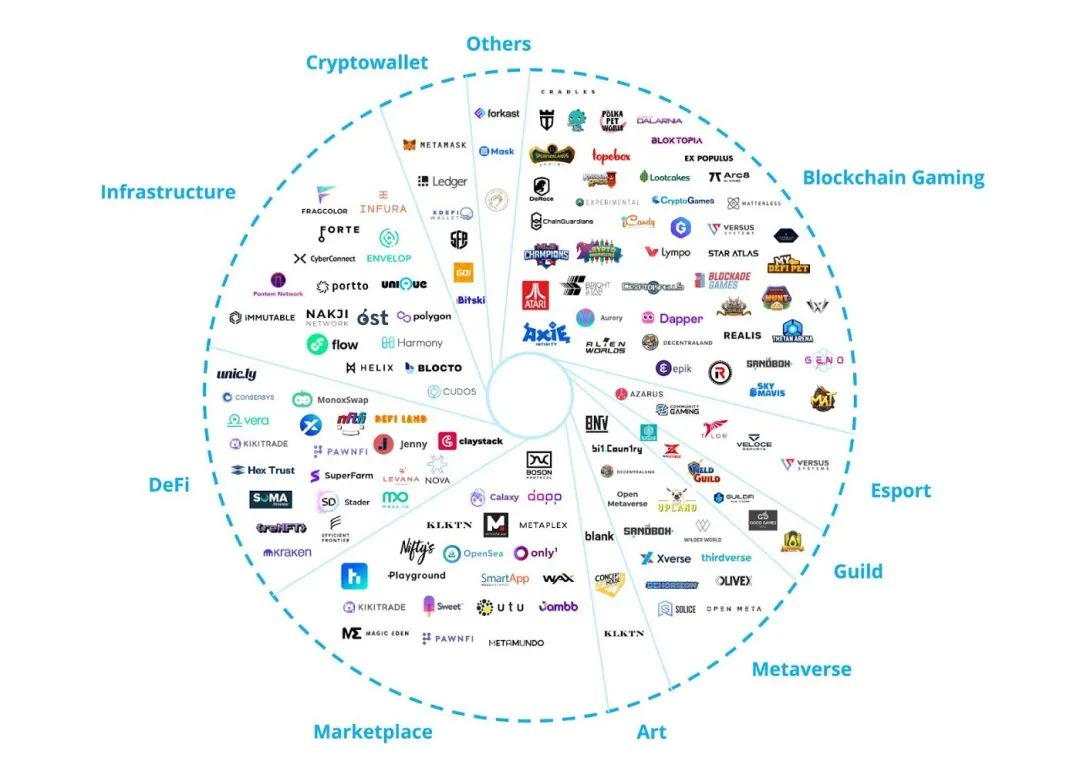
根据Animoca Brands公布的2021年最后3个月至2022年前4个月未经审计的主要财务和业务报告数据显示,Animoca Brands参与的投资项目约为340余项,总投资金额达15亿美金。投资项目主要涉及区块链游戏、电子竞技、公会、元宇宙、艺术、市集、去中心化金融、基础设施、加密钱包等。

而在众多赛道之中,Animoca Brands投资金额前三的分别为区块链游戏、Web3基础设施和DeFi,投资金额分别占总投资金额的35.4%、14.8%和10.6%。

从Animoca Brands领投参投项目的分布来看,312个项目中,Animoca Brands领投项目有84个,参投的项目达119个,参与战略投资成为合作伙伴的项目数量和收购项目数量分别为90个和18个。

这些数据虽然相当直观,但由于时间跨度过长,还不足以用来预测市场接下来的走向。因此,接下来我们将仅对2022年上半年的数据进行分析。

2022投资数据分析

据统计,Animoca Brands在2022年上半年共进行了66笔投资,投资总额超过1.85亿美元。其中,大约三分之二的投资流向了游戏和基础设施。而游戏领域内的投资又占据了最大的比例,共包含28笔交易。

平均而言,Animoca Brands每月大约完成11笔投资。但自5月起,其出手次数显著下降,其原因也不难理解,毕竟当时整个加密市场都被Luna/UST的崩盘拉入谷底。

进入6月后,Animoca Brands逐渐开始恢复其投资频率,并且当月支出达到了上半年之最。究其原因,很可能是由于大量5月就已完成融资的项目出于种种考虑直到六月份才正式公布。果不其然,紧接的7月Animoca Brands只宣布了一笔投资。自此,Animoca Brands可能已经在逐步放缓自己的投资节奏。

而从Animoca Brands的投资倾向来看,我们对当下的市场也将有一些新看法。

首先,Animoca Brands在2022年上半年的投资大部分都流向了游戏和基础设施。关于基础设施赛道的投资,在当下整体走熊的大背景下是相当符合逻辑的。毕竟牛市加码应用,熊市关注基建。但游戏作为典型的应用端,其受关注的程度却超过了更加符合熊市投资逻辑的基础设施,这不免会让人思考Animoca Brands对于接下来市场爆点的研判是否就落在GameFi之上。

回想之前的几轮爆点,如Defi、NFT,其所具备的特性同GameFi也的确存在一些相似之处,而年初STEPN的成功也打破了人们以往的认知,成功接棒了牛市最后的爆点。

因此,在这多重因素的推进之下,诸多顶级机构将GameFi作为下轮牛市的种子选手可以说不足为奇。这一点从他们的投资布局中也可以管中窥豹。

GameFi——下轮牛市的种子选手

在我看来GameFi是一个具有天然优势的赛道。

首先,游戏本身就天然具有吸引力。

根据数据显示,当前全球游戏产业的产值已经超过3000亿美元,其超过了电影和音乐产业的总和。而现实生活中也有大量玩家已经将游戏视为生活的一部分。

而相比于普通游戏,GameFi中的游戏资产完全归属于玩家所有,并且可以兑换为现实收入。试想一下,一般的游戏已经让无数玩家愿意投入其中,甚至花费大量金钱和精力。

那么如果出现一种可以让玩家完全掌握自己的数据资产,甚至能够靠它谋生的游戏,将带来多少可能性?

其次,GameFi降低了普通人进入Web3和加密市场的知识和技术门槛。

在快节奏的现代社会生活中,普通人很难有兴趣专门再去学习Web3的相关知识。而GameFi却可以以游戏的形式吸引玩家进入Web3,在娱乐的过程中实现无痛进入加密市场。

甚至目前已经出现了STEPN这种GameFi进军现实生活的成功案例,这为Web3同现实的交融提供了全新的思路。

况且,如Animoca Brands的诸多头部机构也在大力押宝GameFi,作为散户的我们很难不看好其发展前景。
Leituras Relacionadas

Can You Really 'Get' Your Gold? The Custodial Geography Blind Spot Behind Tokenized Gold

The article challenges the common perception that tokenized gold is a globally uniform asset class, arguing that its true value and functionality are intrinsically tied to the physical location and legal jurisdiction where the underlying gold is stored. Unlike stablecoins, whose value is based on fungible financial assets like treasury bills, tokenized gold represents a legal claim to a specific physical asset in a specific location. This makes the geography of custody not a minor detail, but a core component of the asset itself. The price stability of a tokenized gold product is maintained not by technology, but by arbitrage mechanisms that require the efficient, low-cost redemption of physical gold. This arbitrage is only feasible if the gold is stored in the same region as the user, avoiding complex cross-border logistics, legal hurdles, and delays that can erase profit margins. Consequently, the credibility of a product's price peg depends on the efficiency of its local redemption infrastructure. The author posits that tokenized gold will not converge into a single global market but will instead become regionalized. For institutional users in places like Singapore or Hong Kong, gold stored locally—within their familiar legal, regulatory, and market infrastructure—is a fundamentally different and more usable asset than gold stored in London or Zurich. This local embeddedness is critical for practical uses like serving as collateral or passing regulatory audits. The central question for investors shifts from "Is this token backed by gold?" to "Can I actually *get* the gold when it matters?" The article concludes that the ultimate test of a tokenized gold product is not its stated backing but its practical accessibility within the user's own market and legal system during a crisis.

marsbitHá 8m

Can You Really 'Get' Your Gold? The Custodial Geography Blind Spot Behind Tokenized Gold

marsbitHá 8m

Summary of Kevin Warsh's Past Remarks: How Will This Prospective 'New Head' Upend the Fed?

Kevin Warsh, nominated by President Trump to replace Fed Chair Powell, is poised to introduce sweeping reforms at the Federal Reserve. His agenda includes structural changes, advocating for lower policy rates, a fundamentally new approach to inflation, a significantly smaller balance sheet, safeguarding Fed independence, narrowing the Fed’s mandate, improving coordination with the Treasury, and reducing communication “noise” from policymakers. Warsh has criticized current monetary policy as “broken” and called for “fundamental regime change,” arguing that continuity is meaningless when the Fed has lost credibility. He believes interest rates should be lower and that a smaller balance sheet would help achieve that, describing the current one as “multiple trillions of dollars larger than necessary.” On inflation, he attributes its rise to cognitive errors at the Fed—including overreliance on flawed models, neglect of money supply, and blaming external factors rather than excessive government spending. He also suggests AI could lead to a structural decline in prices. He strongly defends Fed independence as its “most important asset” and warns against mission creep, which he says risks its core objectives and increases political vulnerability. He proposes closer coordination with the Treasury to align balance sheet and debt issuance plans, clarifying expectations for markets. Regarding communication, Warsh supports transparency but criticizes the current “cacophony of voices” and “forward guidance” that creates ambiguity. He has urged Fed officials to speak less frequently to avoid market confusion.

marsbitHá 39m

Summary of Kevin Warsh's Past Remarks: How Will This Prospective 'New Head' Upend the Fed?

marsbitHá 39m

Trading

Spot
Futuros
活动图片