5 Bottles of Water Equal a Day's Wage, No Creases Allowed on US Dollars: What's Causing Myanmar's Financial Anomalies?

比推Publicado em 2026-02-26Última atualização em 2026-02-26

Resumo

The article "War-Torn Myanmar: The Dignity of the Dollar, Trapped Youth, and the Underground Financial Market" details the severe economic and social conditions in Myanmar based on a two-week field study in 2026. Key observations include a massive black market exchange rate disparity (official 1:300 vs. black market 1:550 for USD to Myanmar Kyat), extreme wage gaps (e.g., servers earning as little as ¥300 monthly vs. ¥8000 in Shanghai), and rampant inflation where prices have surged 5x in a decade while wages only doubled. Basic goods like water are unaffordable for many; five bottles cost a day's wage. The financial system is fragile, with USD notes requiring perfect condition for acceptance, while the local currency is treated with far less care. Child labor is widespread, with children as young as nine working long hours for meager pay. Young adults are effectively trapped, as the government restricts passport issuance for those aged 18-60, making legal emigration nearly impossible. Illegal routes, such as human trafficking or dangerous border crossings, are often the only alternatives. The report concludes that ordinary citizens, burdened by survival and the constant threat of conscription, have no capacity to pursue happiness, encapsulating a life of relentless hardship.

Author: Joe Zhou, Foresight News

Original Title: Myanmar Under War: The Dignity of the US Dollar, Trapped Youth, and the Underground Financial Market


During the 2026 Spring Festival holiday, I traveled to Myanmar for a two-week field research trip.

Passing through Yangon, Bagan, and Mandalay, I attempted to uncover the true economic, financial, and social survival conditions of this country under the shadow of war. As the first record halfway through the journey, this article will showcase the real Myanmar I witnessed.

Just in the first week in Yangon, the overwhelming density of information far exceeded my imagination:

A 9-year-old child who dropped out of school to work as a waiter, middle-aged men who could be forcibly conscripted at any moment, young people unable to obtain passports to leave the country, and foreigners who come here to "buy wives" taking advantage of the economic disparity...

In Yangon, under warlord control, bars and KTVs still maintain the illusion of a vibrant nightlife; while in many other cities across Myanmar, once the 7 p.m. curfew hits, the streets instantly fall silent, as if becoming a dead city, devoid of any human presence.

This is a vast, folded system. War and corruption grow in the cracks, and soaring prices are pushing ordinary people's lives to the edge.

The Folded Myanmar

To understand this撕裂 (tear/rift), one must first see the three layers of "folding" present in this country.

There are two Myanmars: one is the Myanmar under the internet filter, the other is the Myanmar in reality; one is the Myanmar whitewashed in official data sheets, the other is the Myanmar struggling in the black market.

The first fold is the profound exchange rate裂痕 (crack/fissure). Upon landing in Myanmar, I exchanged 2500 Chinese Yuan for 1.38 million Myanmar Kyat at a Chinese restaurant. The official rate boasts 1:300, while the real trading price on the black market has plummeted to 1:550.
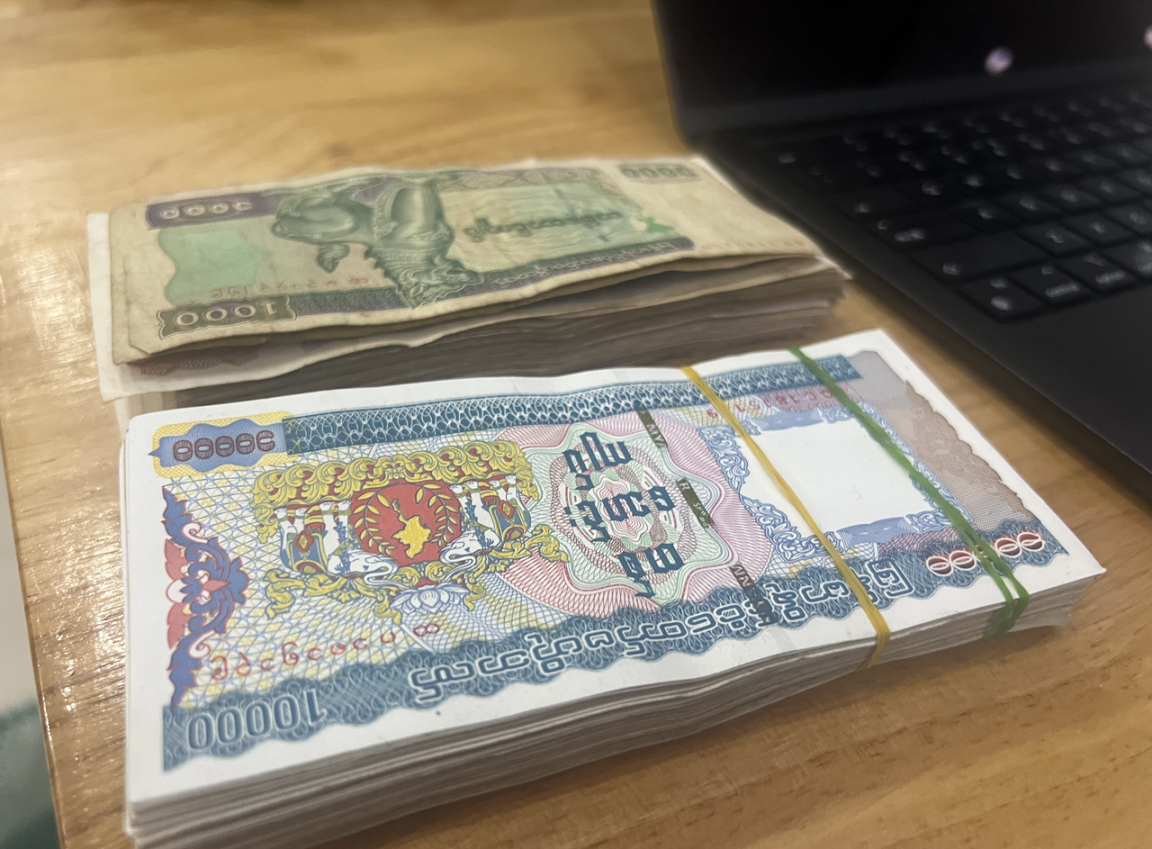
1.38 million Myanmar Kyat exchanged by the author

The national exchange rate is nominal, the black market rate reflects the people's reality.

The second fold is the cliff-like disparity in wages. A waiter doing the same job earns around 18,000 Chinese Yuan per month in Hong Kong, 8,000 in Shanghai, while in Bagan, Myanmar, this number plummets to a suffocating 300 Yuan.

Even within Myanmar, the urban-rural gap remains huge. An overseas Chinese long settled in a town told me that a waiter's monthly salary in a big city can reach 500 to 800 Yuan—this implies that even the highest-paid low-wage earners in Myanmar receive only about one-tenth of what their counterparts in Shanghai earn.

The third fold is the demonized internet labels versus the simple and honest reality. On the Chinese internet, Myanmar is simplistically and crudely reduced to synonyms for "kidney harvesting" and telecom fraud. But when you actually walk the streets of Yangon, Bagan, and Mandalay, you find that most people here still maintain extreme simplicity and peacefulness. Northern Myanmar is indeed dangerous, filled with war and grey industries, but essentially, those crimes have nothing to do with the vast majority of ordinary Myanmar people—in this grand geopolitical and interest meat grinder, they are equally the most helpless victims.

The "Dignity" of the US Dollar

This underlying economic裂痕 (crack/fissure) and sense of insecurity is most absurdly manifested in the currency.

Myanmar's underground financial market operates on an iron rule: US dollars must not be folded; any bill with marks or damage is rejected.

The economic常识 (common sense) that "a trampled $10 bill still has value" completely失效 (fails/loses effect) here. Even the slightest crease can cause the bill to be mercilessly refused by vendors. Every Myanmar person I've seen handling US dollars acts like a merchant examining an expensive antique with a magnifying glass; they hold their breath, carefully scrutinizing every inch of the bill's edges, every hidden line.

In stark contrast is the treatment of the local currency—the Myanmar Kyat can be crumpled into a ball, stuffed into a pocket, even thrown into water for a wash, taken out and still spent; but the US dollar must remain perfectly crisp. In the local subconscious, a damaged US dollar is equivalent to gold of inferior quality, subject to a 10% to 20% discount penalty.

This近乎病态的 (almost pathological) "fastidiousness" is precisely a concrete manifestation of the extreme fragility of this country's financial system. Long-term sanctions and complete financial isolation have driven the official and black-market exchange rates to an extreme撕裂 (tear/rift). In this country that has lost all sense of security, the dignity of a green piece of paper is infinitely elevated; the respect it commands甚至远远超越 (even far surpasses) that of a sweating, struggling living person.

5 Bottles of Water Equal an Adult's Daily Wage

The collapse of monetary信用 (credit/trust) directly translates into runaway inflation. With the war持续多年 (lasting many years), Myanmar's prices have become disordered.

In the memory of local Kosla, over the past decade, the price of most goods in Myanmar has soared about 5 times, while people's wages have only艰难地爬升了 (painfully climbed) 2 times. The specific numbers are冰冷 (chillingly cold): In 2019, a JJ bus ticket (JJ Express is one of Myanmar's most famous long-distance bus companies) cost only 11,000 Kyat; by 2026, the ticket price had risen to 50,000 Kyat; a bottle of mineral water, sold almost exclusively to foreigners, increased from 200 Kyat then to 800-1000 Kyat now.

Prices have quadrupled or quintupled, but labor has become increasingly cheap. In Bagan, ten years ago, the daily wage for an ordinary adult waiter was 2500 Kyat; now it is 5000 Kyat (less than 10 Chinese Yuan). Kosla confirmed this is almost the universal daily wage for most restaurant waiters in Bagan. A service industry老板 (boss/owner) in Yangon, Veraswami, also revealed a残酷的底线 (cruel baseline) to me: the monthly salary of an ordinary Myanmar person is typically only 200 to 300 Chinese Yuan.
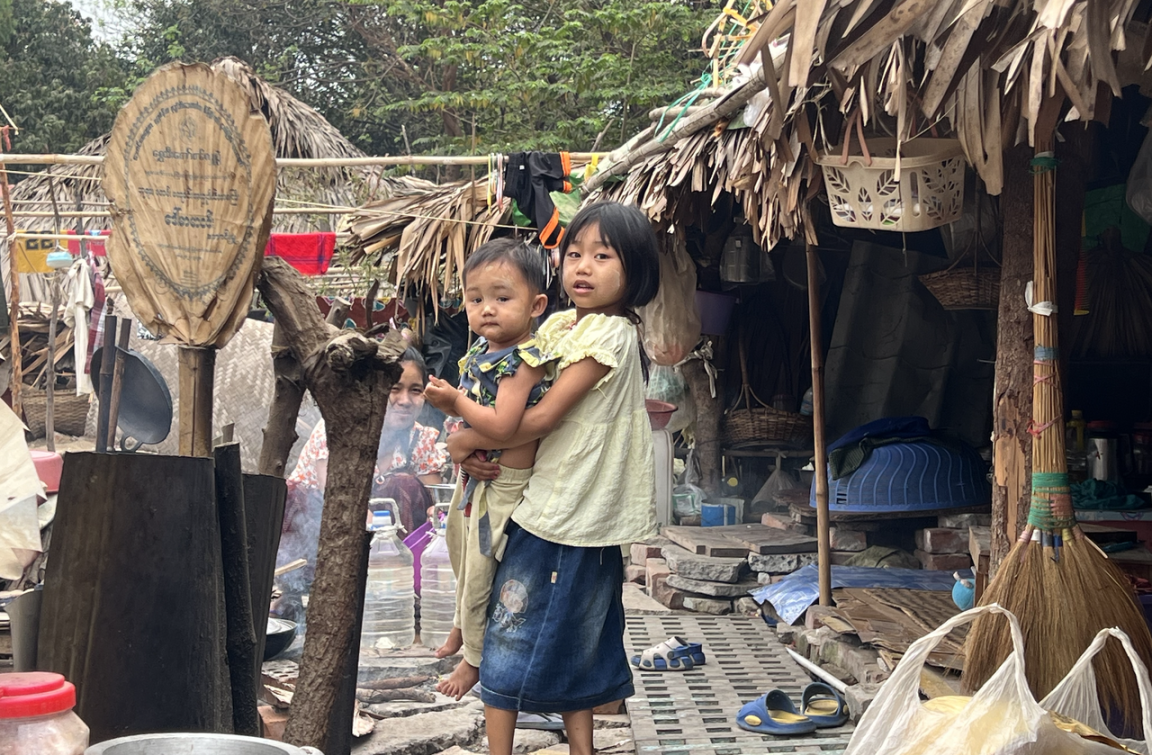
Only heavy manual labor and working in big cities can buy a little more breathing room. Near the famous pagoda in Mandalay, a construction worker laboring under the scorching sun told me his daily wage is 30,000 Kyat (less than 60 Chinese Yuan).

The income of ordinary people is firmly pinned in place. In Myanmar, locals generally cannot afford to drink bottled water. Because just 5 bottles of the most ordinary mineral water can instantly drain the entire day's wages earned through hard work by an adult.

Myanmar Children, Already Reduced to the "Working Class"

When the meager wages of adults are squeezed dry by inflation, the heavy pressure of survival inevitably falls on the next generation.

In Bagan, Kosla calmly recalled his childhood to me. To survive, he started working in a restaurant at the age of 9. Toiling from 8 a.m. to 5 p.m., he earned a daily wage of 500 Kyat. It wasn't until he was 16 that this wage艰难地爬升到了 (painfully climbed to) 2500 Kyat.

This is not just Kosla's personal时代眼泪 (tears of the times), but the至今触目惊心的 (still shocking today)底色 (underlying tone/reality) of this country.

Traveling from Yangon and Bagan to the largest northern city, Mandalay, "prematurely matured childhoods" are the most common sight on the streets.

In the middle of Yangon's traffic-congested roads, boys under 15 hold their four or five-year-old brothers, begging by knocking on car windows amidst exhaust fumes and danger;

In Bagan, children under 10 do odd jobs in restaurant kitchens, underage waiters熟练地 (skillfully) serve dishes and water, and beside those ancient pagodas, groups of teenagers can only earn meager change by taking photos for tourists; outside temples in Mandalay, children around 10 years old are busy helping their parents with incense and offerings.

Time seems to stand still here. More than a decade has passed, whether in remote villages or core cities, the situation seems unchanged. In this country, childhood is a luxury. Young children are thrown early into the cruel game of survival, still the heaviest and unsolvable daily reality of Myanmar.

Myanmar Youth, A Generation Unable to Redeem Themselves

And when these prematurely matured children grow up, what awaits them is another inescapable cage. For ordinary Myanmar youth, leaving is an exorbitantly expensive redemption.
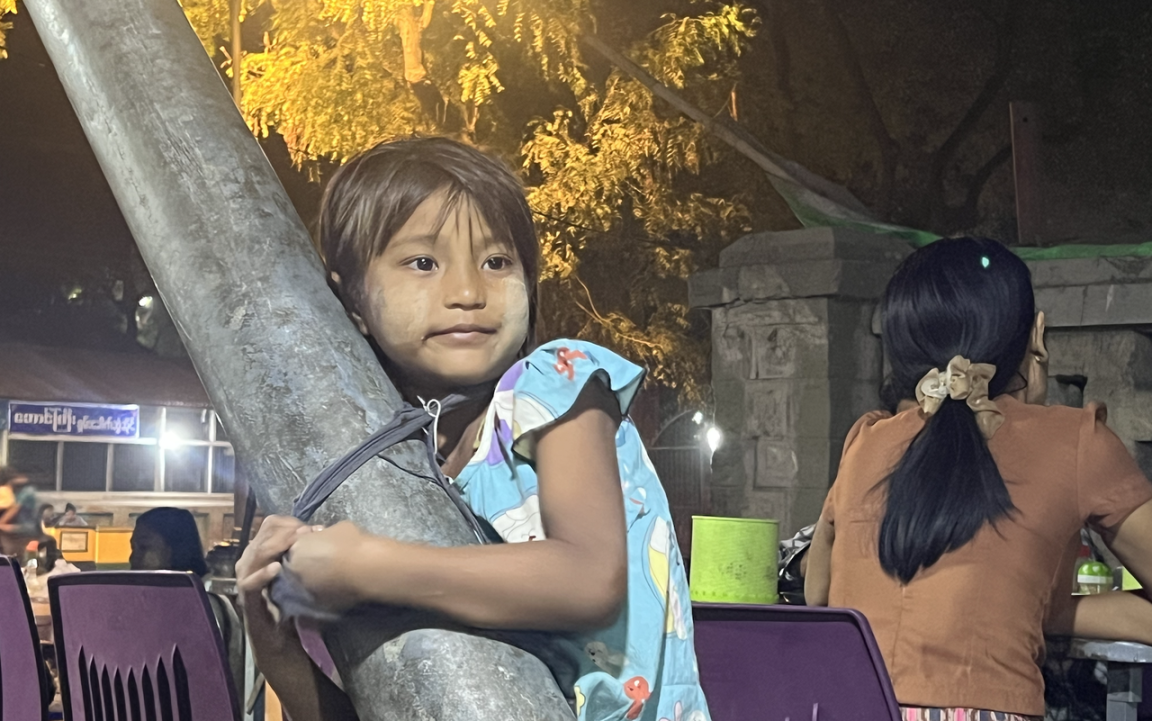
First are the economic shackles. Meager wages are like stagnant water; merely coping with soaring living costs exhausts all their strength, making "saving money to go abroad" a distant, unattainable luxury.

And the iron fist of power directly severs the legal escape route for this generation. "If you are over 80 years old, you can leave Myanmar freely; but if you are between 18 and 60 years old, the country will absolutely not let you go." A老板 (boss/owner) in Yangon, Veraswami, told me this cruel unwritten rule. The government strictly controls youth出境 (exiting the country), making passports meaningless.

When normal channels are completely blocked,畸形 (deformed/malformed) "ways out" begin to滋生 (breed/grow) in the shadows.

"Now many people specifically come to Myanmar to 'buy wives'." Boss Veraswami shared a recent incident he handled with a bitter smile: To help the Myanmar wife of a foreign man leave the country smoothly, he疏通 (greased the wheels), paid various facilitation fees totaling 3000 Chinese Yuan. For a foreigner, 3000 Yuan might be just an ordinary plane ticket; but for the底层 (bottom/underclass) Myanmar people, it is the entire life's earnings of an ordinary person working diligently for 15 months without eating or drinking.

Even risking their lives to work illegally, the reality is equally绝望 (hopeless). A Myanmar monk无奈地 (helplessly) told me that many young people try to偷渡 (sneak across the border) to Thailand by water. But as border hostilities spread, Thailand not only does not welcome Myanmar refugees but has also begun strictly investigating and cracking down on the employment of Myanmar illegal workers.

Can't leave, can't stay. The national border here is no longer a dotted line on the map, but an abyss cast from absolute power and extreme poverty.

Final Words

The镜头定格 (lens focuses) on a little boy quietly looking out the train window.
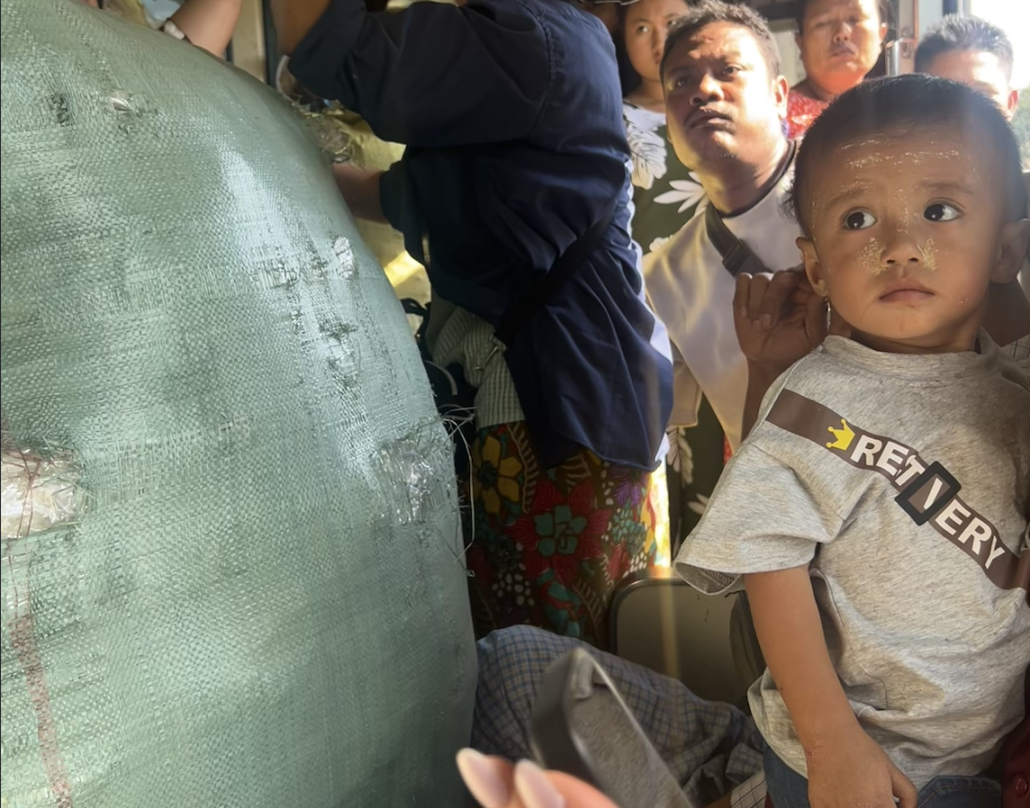
A Myanmar boy on the train

He is an缩影 (epitome) of the millions of ordinary boys in Myanmar. Time will irreversibly push him forward, making him grow into a youth, then a man, eventually, inevitably becoming someone like my guide, Kosla.

I once asked this ordinary Myanmar man: "Are you happy?" Kosla didn't answer immediately. When I追问 (pressed) a second time, he only避重就轻 (evaded the important point) saying: "We are busy with making a living every day, we simply have no time to think about happiness."

Until much later, on the dusty roadside, he answered this question for the third time, and most completely:

"I might die tomorrow. They could grab me to become a soldier at any time, to go fight on the other side of the river. After 7 p.m., if a man is on the street in Bagan, he will likely be thrown in jail, then sent to the battlefield for no reason. I've been working since I was 9 years old, but the speed of wage increases can never catch up with inflation."

"A lifetime. No happiness." He said.


Twitter:https://twitter.com/BitpushNewsCN

Bitpush TG Discussion Group:https://t.me/BitPushCommunity

Bitpush TG Subscription: https://t.me/bitpush

Original article link:https://www.bitpush.news/articles/7614847

Perguntas relacionadas

QWhat are the three main 'folds' or divisions that characterize the economic and social situation in Myanmar as described in the article?

AThe three main 'folds' are: 1) The deep chasm between the official exchange rate and the black market exchange rate. 2) The extreme wage disparity between Myanmar and other countries, as well as within the country itself. 3) The contrast between the demonized online perception of Myanmar (as a place for scams and organ harvesting) and the reality of a mostly simple and peaceful populace who are victims of the conflict.

QWhy is the physical condition of US dollar bills so important in Myanmar's underground financial market?

AUS dollar bills must be in perfect, crisp condition with no folds, creases, or marks. Even a slight imperfection can lead to the bill being rejected or severely discounted by 10-20%. This 'pathological fastidiousness' is a manifestation of the country's extremely fragile financial system. The dignity and perceived value of the physical US currency are disproportionately high due to a complete loss of financial security and the extreme disparity between official and black-market exchange rates.

QHow does the price of basic goods, like water, compare to the average daily wage for a worker in places like Bagan?

AThe price of basic goods has skyrocketed due to inflation. A bottle of water, which is primarily bought by foreigners, costs between 800 to 1000 kyat. Meanwhile, the average daily wage for a service worker in Bagan is only about 5,000 kyat (less than 10 RMB). This means that just 5 bottles of water can cost the equivalent of an adult's entire daily wage.

QWhat challenges do young Myanmar citizens face if they try to leave the country?

AYoung Myanmar citizens face immense challenges in leaving the country. Economically, their meager wages make saving money for travel impossible. Politically, the government tightly controls出境 (exit), with a reported unwritten rule that those between 18 and 60 years old are not allowed to leave legally, making passports effectively useless. This has led to the growth of illicit 'ways out,' such as foreign men 'buying' Myanmar wives or dangerous attempts to sneak across the border to Thailand, which is now cracking down on undocumented Myanmar workers.

QWhat was the poignant response from the guide, Kosla, when asked if he was happy?

AWhen asked if he was happy, Kosla initially avoided the question, stating that people are too busy making a living to think about happiness. Later, he gave a full answer, explaining his perpetual fear of being forcibly conscripted to fight at any moment, the danger of being imprisoned for being on the street after curfew, and the fact that his wages have never kept pace with inflation since he started working at age 9. His concluding statement was: 'A lifetime. No happiness.'

Leituras Relacionadas

Google and Amazon Simultaneously Invest Heavily in a Competitor: The Most Absurd Business Logic of the AI Era Is Becoming Reality

In a span of four days, Amazon announced an additional $25 billion investment, and Google pledged up to $40 billion—both direct competitors pouring over $65 billion into the same AI startup, Anthropic. Rather than a typical venture capital move, this signals the latest escalation in the cloud wars. The core of the deal is not equity but compute pre-orders: Anthropic must spend the majority of these funds on AWS and Google Cloud services and chips, effectively locking in massive future compute consumption. This reflects a shift in cloud market dynamics—enterprises now choose cloud providers based on which hosts the best AI models, not just price or stability. With OpenAI deeply tied to Microsoft, Anthropic’s Claude has become the only viable strategic asset for Google and Amazon to remain competitive. Anthropic’s annualized revenue has surged to $30 billion, and it is expanding into verticals like biotech, positioning itself as a cross-industry AI infrastructure layer. However, this funding comes with constraints: Anthropic’s independence is challenged as it balances two rival investors, its safety-first narrative faces pressure from regulatory scrutiny, and its path to IPO introduces new financial pressures. Globally, this accelerates a "tri-polar" closed-loop structure in AI infrastructure, with Microsoft-OpenAI, Google-Anthropic, and Amazon-Anthropic forming exclusive model-cloud alliances. In contrast, China’s landscape differs—investments like Alibaba and Tencent backing open-source model firm DeepSeek reflect a more decoupled approach, though closed-source models from major cloud providers still dominate. The $65 billion bet is ultimately about securing a seat at the table in an AI-defined future—where missing the model layer means losing the cloud war.

marsbitHá 1h

Google and Amazon Simultaneously Invest Heavily in a Competitor: The Most Absurd Business Logic of the AI Era Is Becoming Reality

marsbitHá 1h

Computing Power Constrained, Why Did DeepSeek-V4 Open Source?

DeepSeek-V4 has been released as a preview open-source model, featuring 1 million tokens of context length as a baseline capability—previously a premium feature locked behind enterprise paywalls by major overseas AI firms. The official announcement, however, openly acknowledges computational constraints, particularly limited service throughput for the high-end DeepSeek-V4-Pro version due to restricted high-end computing power. Rather than competing on pure scale, DeepSeek adopts a pragmatic approach that balances algorithmic innovation with hardware realities in China’s AI ecosystem. The V4-Pro model uses a highly sparse architecture with 1.6T total parameters but only activates 49B during inference. It performs strongly in agentic coding, knowledge-intensive tasks, and STEM reasoning, competing closely with top-tier closed models like Gemini Pro 3.1 and Claude Opus 4.6 in certain scenarios. A key strategic product is the Flash edition, with 284B total parameters but only 13B activated—making it cost-effective and accessible for mid- and low-tier hardware, including domestic AI chips from Huawei (Ascend), Cambricon, and Hygon. This design supports broader adoption across developers and SMEs while stimulating China's domestic semiconductor ecosystem. Despite facing talent outflow and intense competition in user traffic—with rivals like Doubao and Qianwen leading in monthly active users—DeepSeek has maintained technical momentum. The release also comes amid reports of a new funding round targeting a valuation exceeding $10 billion, potentially setting a new record in China’s LLM sector. Ultimately, DeepSeek-V4 represents a shift toward open yet realistic infrastructure development in the constrained compute landscape of Chinese AI, emphasizing engineering efficiency and domestic hardware compatibility over pure model scale.

marsbitHá 1h

Computing Power Constrained, Why Did DeepSeek-V4 Open Source?

marsbitHá 1h

Trading

Spot
Futuros

Artigos em Destaque

O que é $S$

Compreender o SPERO: Uma Visão Abrangente Introdução ao SPERO À medida que o panorama da inovação continua a evoluir, o surgimento de tecnologias web3 e projetos de criptomoeda desempenha um papel fundamental na formação do futuro digital. Um projeto que tem atraído atenção neste campo dinâmico é o SPERO, denotado como SPERO,$$s$. Este artigo tem como objetivo reunir e apresentar informações detalhadas sobre o SPERO, para ajudar entusiastas e investidores a compreender as suas bases, objetivos e inovações nos domínios web3 e cripto. O que é o SPERO,$$s$? O SPERO,$$s$ é um projeto único dentro do espaço cripto que procura aproveitar os princípios da descentralização e da tecnologia blockchain para criar um ecossistema que promove o envolvimento, a utilidade e a inclusão financeira. O projeto é concebido para facilitar interações peer-to-peer de novas maneiras, proporcionando aos utilizadores soluções e serviços financeiros inovadores. No seu núcleo, o SPERO,$$s$ visa capacitar indivíduos ao fornecer ferramentas e plataformas que melhoram a experiência do utilizador no espaço das criptomoedas. Isso inclui a possibilidade de métodos de transação mais flexíveis, a promoção de iniciativas impulsionadas pela comunidade e a criação de caminhos para oportunidades financeiras através de aplicações descentralizadas (dApps). A visão subjacente do SPERO,$$s$ gira em torno da inclusão, visando fechar lacunas dentro das finanças tradicionais enquanto aproveita os benefícios da tecnologia blockchain. Quem é o Criador do SPERO,$$s$? A identidade do criador do SPERO,$$s$ permanece algo obscura, uma vez que existem recursos publicamente disponíveis limitados que fornecem informações detalhadas sobre o(s) seu(s) fundador(es). Esta falta de transparência pode resultar do compromisso do projeto com a descentralização—uma ética que muitos projetos web3 partilham, priorizando contribuições coletivas em vez de reconhecimento individual. Ao centrar as discussões em torno da comunidade e dos seus objetivos coletivos, o SPERO,$$s$ incorpora a essência do empoderamento sem destacar indivíduos específicos. Assim, compreender a ética e a missão do SPERO é mais importante do que identificar um criador singular. Quem são os Investidores do SPERO,$$s$? O SPERO,$$s$ é apoiado por uma diversidade de investidores que vão desde capitalistas de risco a investidores-anjo dedicados a promover a inovação no setor cripto. O foco desses investidores geralmente alinha-se com a missão do SPERO—priorizando projetos que prometem avanço tecnológico social, inclusão financeira e governança descentralizada. Essas fundações de investidores estão tipicamente interessadas em projetos que não apenas oferecem produtos inovadores, mas que também contribuem positivamente para a comunidade blockchain e os seus ecossistemas. O apoio desses investidores reforça o SPERO,$$s$ como um concorrente notável no domínio em rápida evolução dos projetos cripto. Como Funciona o SPERO,$$s$? O SPERO,$$s$ emprega uma estrutura multifacetada que o distingue de projetos de criptomoeda convencionais. Aqui estão algumas das características-chave que sublinham a sua singularidade e inovação: Governança Descentralizada: O SPERO,$$s$ integra modelos de governança descentralizada, capacitando os utilizadores a participar ativamente nos processos de tomada de decisão sobre o futuro do projeto. Esta abordagem promove um sentido de propriedade e responsabilidade entre os membros da comunidade. Utilidade do Token: O SPERO,$$s$ utiliza o seu próprio token de criptomoeda, concebido para servir várias funções dentro do ecossistema. Esses tokens permitem transações, recompensas e a facilitação de serviços oferecidos na plataforma, melhorando o envolvimento e a utilidade gerais. Arquitetura em Camadas: A arquitetura técnica do SPERO,$$s$ suporta modularidade e escalabilidade, permitindo a integração contínua de funcionalidades e aplicações adicionais à medida que o projeto evolui. Esta adaptabilidade é fundamental para manter a relevância no panorama cripto em constante mudança. Envolvimento da Comunidade: O projeto enfatiza iniciativas impulsionadas pela comunidade, empregando mecanismos que incentivam a colaboração e o feedback. Ao nutrir uma comunidade forte, o SPERO,$$s$ pode melhor atender às necessidades dos utilizadores e adaptar-se às tendências do mercado. Foco na Inclusão: Ao oferecer taxas de transação baixas e interfaces amigáveis, o SPERO,$$s$ visa atrair uma base de utilizadores diversificada, incluindo indivíduos que anteriormente podem não ter participado no espaço cripto. Este compromisso com a inclusão alinha-se com a sua missão abrangente de empoderamento através da acessibilidade. Cronologia do SPERO,$$s$ Compreender a história de um projeto fornece insights cruciais sobre a sua trajetória de desenvolvimento e marcos. Abaixo está uma cronologia sugerida que mapeia eventos significativos na evolução do SPERO,$$s$: Fase de Conceituação e Ideação: As ideias iniciais que formam a base do SPERO,$$s$ foram concebidas, alinhando-se de perto com os princípios de descentralização e foco na comunidade dentro da indústria blockchain. Lançamento do Whitepaper do Projeto: Após a fase conceitual, um whitepaper abrangente detalhando a visão, os objetivos e a infraestrutura tecnológica do SPERO,$$s$ foi lançado para atrair o interesse e o feedback da comunidade. Construção da Comunidade e Primeiros Envolvimentos: Esforços ativos de divulgação foram feitos para construir uma comunidade de primeiros adotantes e investidores potenciais, facilitando discussões em torno dos objetivos do projeto e angariando apoio. Evento de Geração de Tokens: O SPERO,$$s$ realizou um evento de geração de tokens (TGE) para distribuir os seus tokens nativos a apoiantes iniciais e estabelecer liquidez inicial dentro do ecossistema. Lançamento da dApp Inicial: A primeira aplicação descentralizada (dApp) associada ao SPERO,$$s$ foi lançada, permitindo que os utilizadores interagissem com as funcionalidades principais da plataforma. Desenvolvimento Contínuo e Parcerias: Atualizações e melhorias contínuas nas ofertas do projeto, incluindo parcerias estratégicas com outros players no espaço blockchain, moldaram o SPERO,$$s$ em um jogador competitivo e em evolução no mercado cripto. Conclusão O SPERO,$$s$ é um testemunho do potencial do web3 e das criptomoedas para revolucionar os sistemas financeiros e capacitar indivíduos. Com um compromisso com a governança descentralizada, o envolvimento da comunidade e funcionalidades inovadoras, abre caminho para um panorama financeiro mais inclusivo. Como em qualquer investimento no espaço cripto em rápida evolução, potenciais investidores e utilizadores são incentivados a pesquisar minuciosamente e a envolver-se de forma ponderada com os desenvolvimentos em curso dentro do SPERO,$$s$. O projeto demonstra o espírito inovador da indústria cripto, convidando a uma exploração mais aprofundada das suas inúmeras possibilidades. Embora a jornada do SPERO,$$s$ ainda esteja a desenrolar-se, os seus princípios fundamentais podem, de facto, influenciar o futuro de como interagimos com a tecnologia, as finanças e uns com os outros em ecossistemas digitais interconectados.

69 Visualizações TotaisPublicado em {updateTime}Atualizado em 2024.12.17

O que é $S$

O que é AGENT S

Agent S: O Futuro da Interação Autónoma no Web3 Introdução No panorama em constante evolução do Web3 e das criptomoedas, as inovações estão constantemente a redefinir a forma como os indivíduos interagem com plataformas digitais. Um projeto pioneiro, o Agent S, promete revolucionar a interação humano-computador através do seu framework aberto e agente. Ao abrir caminho para interações autónomas, o Agent S visa simplificar tarefas complexas, oferecendo aplicações transformadoras em inteligência artificial (IA). Esta exploração detalhada irá aprofundar-se nas complexidades do projeto, nas suas características únicas e nas implicações para o domínio das criptomoedas. O que é o Agent S? O Agent S é um framework aberto e agente, especificamente concebido para abordar três desafios fundamentais na automação de tarefas computacionais: Aquisição de Conhecimento Específico de Domínio: O framework aprende inteligentemente a partir de várias fontes de conhecimento externas e experiências internas. Esta abordagem dupla capacita-o a construir um rico repositório de conhecimento específico de domínio, melhorando o seu desempenho na execução de tarefas. Planeamento ao Longo de Longos Horizontes de Tarefas: O Agent S emprega planeamento hierárquico aumentado por experiência, uma abordagem estratégica que facilita a decomposição e execução eficientes de tarefas intrincadas. Esta característica melhora significativamente a sua capacidade de gerir múltiplas subtarefas de forma eficiente e eficaz. Gestão de Interfaces Dinâmicas e Não Uniformes: O projeto introduz a Interface Agente-Computador (ACI), uma solução inovadora que melhora a interação entre agentes e utilizadores. Utilizando Modelos de Linguagem Multimodais de Grande Escala (MLLMs), o Agent S pode navegar e manipular diversas interfaces gráficas de utilizador de forma fluida. Através destas características pioneiras, o Agent S fornece um framework robusto que aborda as complexidades envolvidas na automação da interação humana com máquinas, preparando o terreno para uma infinidade de aplicações em IA e além. Quem é o Criador do Agent S? Embora o conceito de Agent S seja fundamentalmente inovador, informações específicas sobre o seu criador permanecem elusivas. O criador é atualmente desconhecido, o que destaca ou o estágio nascente do projeto ou a escolha estratégica de manter os membros fundadores em anonimato. Independentemente da anonimidade, o foco permanece nas capacidades e no potencial do framework. Quem são os Investidores do Agent S? Como o Agent S é relativamente novo no ecossistema criptográfico, informações detalhadas sobre os seus investidores e financiadores não estão explicitamente documentadas. A falta de informações disponíveis publicamente sobre as fundações de investimento ou organizações que apoiam o projeto levanta questões sobre a sua estrutura de financiamento e roteiro de desenvolvimento. Compreender o apoio é crucial para avaliar a sustentabilidade do projeto e o seu impacto potencial no mercado. Como Funciona o Agent S? No núcleo do Agent S reside uma tecnologia de ponta que lhe permite funcionar eficazmente em diversos ambientes. O seu modelo operacional é construído em torno de várias características-chave: Interação Humano-Computador Semelhante: O framework oferece planeamento avançado em IA, esforçando-se para tornar as interações com computadores mais intuitivas. Ao imitar o comportamento humano na execução de tarefas, promete elevar as experiências dos utilizadores. Memória Narrativa: Utilizada para aproveitar experiências de alto nível, o Agent S utiliza memória narrativa para acompanhar os históricos de tarefas, melhorando assim os seus processos de tomada de decisão. Memória Episódica: Esta característica fornece aos utilizadores orientações passo a passo, permitindo que o framework ofereça suporte contextual à medida que as tarefas se desenrolam. Suporte para OpenACI: Com a capacidade de funcionar localmente, o Agent S permite que os utilizadores mantenham o controlo sobre as suas interações e fluxos de trabalho, alinhando-se com a ética descentralizada do Web3. Fácil Integração com APIs Externas: A sua versatilidade e compatibilidade com várias plataformas de IA garantem que o Agent S possa integrar-se perfeitamente em ecossistemas tecnológicos existentes, tornando-o uma escolha apelativa para desenvolvedores e organizações. Estas funcionalidades contribuem coletivamente para a posição única do Agent S no espaço cripto, à medida que automatiza tarefas complexas e em múltiplos passos com mínima intervenção humana. À medida que o projeto evolui, as suas potenciais aplicações no Web3 podem redefinir a forma como as interações digitais se desenrolam. Cronologia do Agent S O desenvolvimento e os marcos do Agent S podem ser encapsulados numa cronologia que destaca os seus eventos significativos: 27 de Setembro de 2024: O conceito de Agent S foi lançado num artigo de pesquisa abrangente intitulado “Um Framework Agente Aberto que Usa Computadores como um Humano”, mostrando a base para o projeto. 10 de Outubro de 2024: O artigo de pesquisa foi disponibilizado publicamente no arXiv, oferecendo uma exploração aprofundada do framework e da sua avaliação de desempenho com base no benchmark OSWorld. 12 de Outubro de 2024: Uma apresentação em vídeo foi lançada, proporcionando uma visão visual das capacidades e características do Agent S, envolvendo ainda mais potenciais utilizadores e investidores. Estes marcos na cronologia não apenas ilustram o progresso do Agent S, mas também indicam o seu compromisso com a transparência e o envolvimento da comunidade. Pontos-Chave Sobre o Agent S À medida que o framework Agent S continua a evoluir, várias características-chave destacam-se, sublinhando a sua natureza inovadora e potencial: Framework Inovador: Concebido para proporcionar um uso intuitivo de computadores semelhante à interação humana, o Agent S traz uma abordagem nova à automação de tarefas. Interação Autónoma: A capacidade de interagir autonomamente com computadores através de GUI significa um avanço em direção a soluções computacionais mais inteligentes e eficientes. Automação de Tarefas Complexas: Com a sua metodologia robusta, pode automatizar tarefas complexas e em múltiplos passos, tornando os processos mais rápidos e menos propensos a erros. Melhoria Contínua: Os mecanismos de aprendizagem permitem que o Agent S melhore a partir de experiências passadas, aprimorando continuamente o seu desempenho e eficácia. Versatilidade: A sua adaptabilidade em diferentes ambientes operacionais, como OSWorld e WindowsAgentArena, garante que pode servir uma ampla gama de aplicações. À medida que o Agent S se posiciona no panorama do Web3 e das criptomoedas, o seu potencial para melhorar as capacidades de interação e automatizar processos significa um avanço significativo nas tecnologias de IA. Através do seu framework inovador, o Agent S exemplifica o futuro das interações digitais, prometendo uma experiência mais fluida e eficiente para os utilizadores em diversas indústrias. Conclusão O Agent S representa um ousado avanço na união da IA e do Web3, com a capacidade de redefinir a forma como interagimos com a tecnologia. Embora ainda esteja nas suas fases iniciais, as possibilidades para a sua aplicação são vastas e cativantes. Através do seu framework abrangente que aborda desafios críticos, o Agent S visa trazer interações autónomas para o primeiro plano da experiência digital. À medida que avançamos mais profundamente nos domínios das criptomoedas e da descentralização, projetos como o Agent S desempenharão, sem dúvida, um papel crucial na formação do futuro da tecnologia e da colaboração humano-computador.

533 Visualizações TotaisPublicado em {updateTime}Atualizado em 2025.01.14

O que é AGENT S

Como comprar S

Bem-vindo à HTX.com!Tornámos a compra de Sonic (S) simples e conveniente.Segue o nosso guia passo a passo para iniciar a tua jornada no mundo das criptos.Passo 1: cria a tua conta HTXUtiliza o teu e-mail ou número de telefone para te inscreveres numa conta gratuita na HTX.Desfruta de um processo de inscrição sem complicações e desbloqueia todas as funcionalidades.Obter a minha contaPasso 2: vai para Comprar Cripto e escolhe o teu método de pagamentoCartão de crédito/débito: usa o teu visa ou mastercard para comprar Sonic (S) instantaneamente.Saldo: usa os fundos da tua conta HTX para transacionar sem problemas.Terceiros: adicionamos métodos de pagamento populares, como Google Pay e Apple Pay, para aumentar a conveniência.P2P: transaciona diretamente com outros utilizadores na HTX.Mercado de balcão (OTC): oferecemos serviços personalizados e taxas de câmbio competitivas para os traders.Passo 3: armazena teu Sonic (S)Depois de comprar o teu Sonic (S), armazena-o na tua conta HTX.Alternativamente, podes enviá-lo para outro lugar através de transferência blockchain ou usá-lo para transacionar outras criptomoedas.Passo 4: transaciona Sonic (S)Transaciona facilmente Sonic (S) no mercado à vista da HTX.Acede simplesmente à tua conta, seleciona o teu par de trading, executa as tuas transações e monitoriza em tempo real.Oferecemos uma experiência de fácil utilização tanto para principiantes como para traders experientes.

1.0k Visualizações TotaisPublicado em {updateTime}Atualizado em 2025.03.21

Como comprar S

Discussões

Bem-vindo à Comunidade HTX. Aqui, pode manter-se informado sobre os mais recentes desenvolvimentos da plataforma e obter acesso a análises profissionais de mercado. As opiniões dos utilizadores sobre o preço de S (S) são apresentadas abaixo.

活动图片