"How to Avoid Unforeseen Circumstances": The Truth About the 300,000 Limit on the Digital Ruble

cryptonews.ruPublicado em 2026-08-20Última atualização em 2026-08-20

Resumo

The Bank of Russia has confirmed a monthly limit of 300,000 rubles for replenishing digital ruble wallets from traditional bank accounts. Announced by Alla Bakina, head of the central bank's national payment system department, this cap is not new and was established during the pilot phase to manage liquidity risks between conventional and digital accounts, not to curb potential high demand. Key details from the article include: each Russian citizen will have a single digital wallet, accessible from September 1, 2026, via apps of participating banks; all systemically important banks and several others will offer the service; and acceptance will be mandatory only for large retail chains. Survey data suggests no immediate rush to adopt the digital ruble. While 46% of respondents are ready to use it, popular use cases focus on receiving state payments and paying taxes. Most Russians are against receiving salaries in the digital currency. Given this cautious public stance, the 300,000-ruble limit appears more as a precautionary measure than a response to actual demand. An interesting parallel is noted: Russian law sets the same 300,000-ruble threshold, but as an annual limit for non-qualified investors buying cryptocurrency, making that restriction significantly stricter.

The Bank of Russia has limited the replenishment of digital ruble wallets to 300,000 rubles per month — this was announced on August 19, 2026, by Alla Bakina, Director of the National Payment System Department of the regulator. "The only limit is 300,000 rubles per month for transfers from one's non-cash account in one bank to a digital account. As practice and our statistics show, this amount is generally sufficient for the average person," she said in an interview with RIA Novosti. The restriction applies only to replenishment from a regular bank account: funds already in the digital wallet can be used without limits. This is also reported by other sources.

Important detail: The figure is not new. The same threshold was in effect even during the pilot project, and the Bank of Russia indicated in a report dated June 30, 2025, that it does not plan to change it — the limit is needed to manage the risk of liquidity outflow between regular accounts and digital wallets. In other words, the restriction was not devised to curb the hype around the September launch but was incorporated into the system's architecture in advance as a protective mechanism for the banking sector.

One Wallet for the Entire Country

Every Russian citizen will have only one digital wallet — it operates on the Bank of Russia's platform and is not tied to a specific bank. Starting September 1, 2026, it can be opened through the application of any bank connected to the platform: a button with the digital ruble logo will appear on the main screen. This is confirmed by materials published following Bakina's interview, and the principle of "one person — one wallet" is separately clarified in RIA Novosti's reference materials.

Banks Are Ready, But Not All Simultaneously

All 12 systemically important banks — accounting for over 80% of the payment market — are ready as of September 1 to provide clients with account opening and digital ruble transactions. Access should also be provided by nine other banks significant in the payment services market: most will have enough time by autumn, while three, according to Bakina, may need assistance until the end of the year. Transactions for citizens will remain free, and the new instrument can be used solely at will. Mandatory acceptance of the digital ruble will only be required for large retail chains with revenue exceeding 120 million rubles.

Is the Limit Justified and Will Demand Be Frenzied

Judging by surveys, there is no talk of a sharp influx of people wanting to transfer savings into the digital ruble — and the limit looks more like a precaution for the future than a reaction to real demand.

  • According to a survey by "Vyberu.ru" and "Eurokredit.ru" (2,976 respondents, late July 2026), 46% of Russians are ready to use the digital ruble immediately after launch, another 36% — later, when the instrument becomes more familiar, and 18% do not consider this possibility at all. Among young people aged 18–24, the share of those ready is higher — 62%.

  • Another study (about 3,000 respondents, July 2026) showed that the most in-demand usage scenario is receiving government payments (35%), followed by paying taxes and fines (about 25%) and store purchases (19%). At the same time, only 18% of respondents fully trust settlements in the digital ruble, and another 44% — mostly trust.

  • A separate issue is salaries. According to SuperJob (early 2026), 67% of working Russians are against transferring salaries to digital format, and only 15% are ready to receive it partially or fully in digital rubles.

The picture is mixed: about 70% of respondents already know something about the digital ruble, but only a third demonstrate a deep understanding of how it works. A mass outflow of funds from settlement accounts to digital wallets in the first weeks of the system's operation is not expected — most intend to observe, not act immediately. It is in this context that the 300,000 ruble limit looks not so much as a barrier against demand, but as a safety margin in case public readiness for the transition turns out to be higher than current expectations.

AI Opinion

Analysis shows an interesting coincidence: the "300,000" ruble limit is already familiar to Russian financial regulation — not regarding the digital ruble, but regarding cryptocurrency. The law on digital currency and digital rights establishes the same threshold for non-qualified investors for purchasing digital assets, but per year, not per month. The difference in scale is significant: the annual crypto limit is effectively almost twelve times stricter than the monthly digital ruble limit, nominally speaking. The coincidence of the figure seems more random than systemic — both thresholds originated in different agencies and different logics of risk.

A question for the future: Will the number "300,000" become an unofficial benchmark for Russian financial regulation for retail transactions, regardless of the asset type?

end-content

Criptomoedas em alta

Perguntas relacionadas

QWhat is the main restriction imposed on the digital ruble, and what is its purpose according to the Central Bank of Russia?

AThe main restriction is a monthly limit of 300,000 rubles for transferring funds from a regular bank account to a digital ruble wallet. According to the Central Bank, this limit is not a temporary measure to control hype but a fundamental risk management tool built into the system's architecture. Its purpose is to prevent excessive liquidity outflows from the traditional banking sector to the new digital ruble platform, ensuring financial stability.

QHow will a Russian citizen open and access their digital ruble wallet starting September 1, 2026?

AEach Russian citizen will have only one digital ruble wallet, which operates on the Bank of Russia's platform. From September 1, 2026, they can open this wallet through the mobile application of any bank connected to the platform. A button with the digital ruble logo will appear on the app's main screen to initiate the process. The wallet is not tied to a specific commercial bank.

QWhat do public opinion polls reveal about the initial public demand and trust in the digital ruble?

APolls indicate cautious initial demand and moderate trust. While about 70% of respondents are aware of the digital ruble, only a third deeply understand how it works. About 46% are ready to use it immediately after launch, with another 36% planning to use it later. However, only 18% fully trust transactions in the digital ruble. The most anticipated uses are receiving state payments (35%), paying taxes/fines (~25%), and in-store purchases (19%). Most Russians do not expect a mass, immediate transfer of their savings.

QWhat is the interesting coincidence noted in the article regarding the 300,000 ruble figure in Russian financial regulation?

AThe article notes that the 300,000 ruble limit coincides with an existing limit for cryptocurrency purchases by non-qualified investors, but with a key difference. The crypto limit is an annual cap, making it roughly twelve times stricter nominally than the digital ruble's monthly limit. The article suggests this is likely a coincidence, as the two limits were established by different authorities with different risk logics.

QAccording to the article, which businesses will be required to accept the digital ruble, and what is the status of transaction fees for citizens?

AOnly large retail chains with annual revenue exceeding 120 million rubles will be mandated to accept the digital ruble as payment. For citizens, all operations with the digital ruble, such as transfers and payments, will remain free of charge. Using the digital ruble is entirely voluntary for individuals.

Leituras Relacionadas

Jameson Lopp's BIP-110 Postmortem: Bitcoin Is Driven by Game Theory, Not Morality

Jameson Lopp's analysis concludes that BIP-110, a proposal to restrict arbitrary data (like inscriptions) on Bitcoin, failed due to economic and technical realities, not moral arguments. The proposal, championed by Luke Dashjr and others, aimed to "cleanse" the chain but never reached its 55% miner activation threshold. Upon its forced signaling deadline in August, only the OCEAN pool (with ~1% hash rate) supported it, creating a short-lived fork that quickly died as miners faced unredeemable block rewards. Lopp's earlier predictions about its economic infeasibility were proven correct. Technically, BIP-110 was flawed; workarounds to embed data compliant with its rules were demonstrated almost immediately, proving it couldn't achieve its stated goal. The debate often devolved into moralistic rhetoric, with supporters accusing opponents of supporting child exploitation material—a tactic Lopp criticizes as ineffective for building consensus. Lopp argues Bitcoin is driven by incentives and game theory, not morality. Past forks like Bitcoin Cash promised economic benefits, while BIP-110 offered only restrictions and reduced miner fees, gaining no substantial support from major economic players. He predicts the "puritans" behind the failed fork will continue complaining but their new chain will remain insignificant. The episode reaffirms that attempting to censor data on a permissionless, anti-censorship network like Bitcoin is a futile battle.

marsbitHá 31m

Jameson Lopp's BIP-110 Postmortem: Bitcoin Is Driven by Game Theory, Not Morality

marsbitHá 31m

Tokenization Scale Soars to $4.3 Billion, But Why Did Securitize Incur a $5.5 Million Loss?

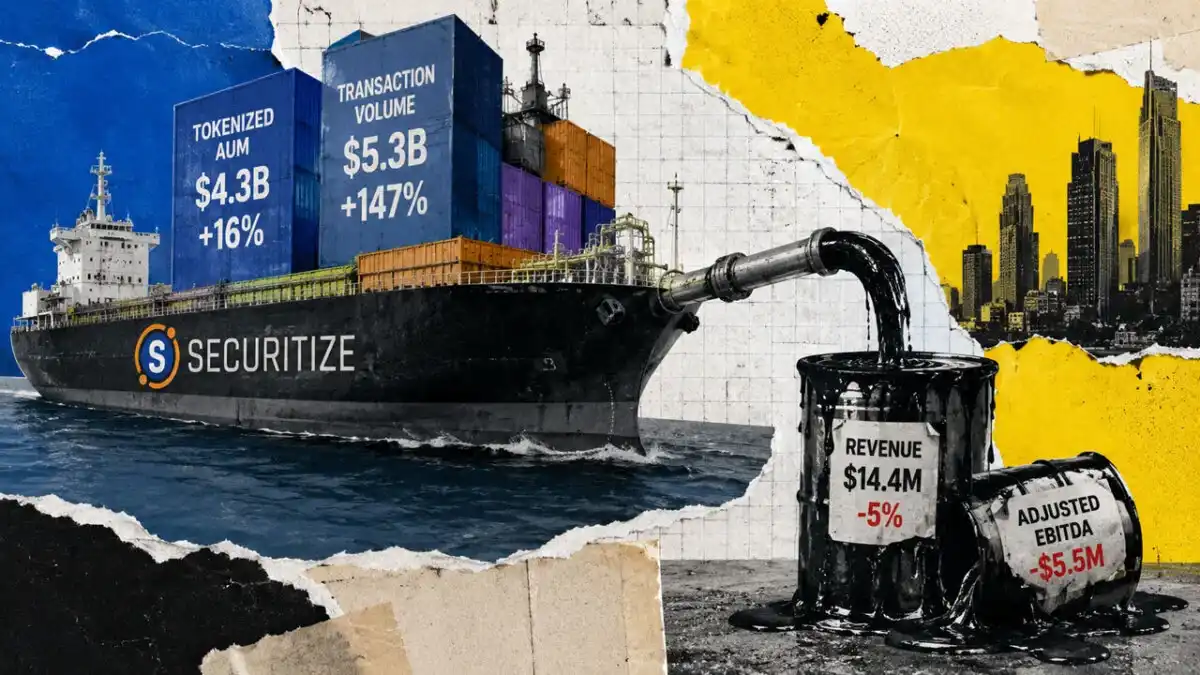
Securitize's first quarterly report post-IPO reveals a paradox: while its tokenized assets under management hit a record $4.3 billion (up 16% YoY) and platform trading volume surged 147% to $5.3 billion, total revenue fell 5% to $14.4 million. Tokenization revenue specifically dropped ~12% to $7.8 million, leading to an adjusted EBITDA loss of $5.5 million. CFO Francisco Flores explained that most trading volume is not yet monetized, with the majority of tokenization revenue still coming from one-time projects like new protocol integrations. In contrast, asset servicing revenue, a more recurring stream, grew slightly to $6.6 million. The company has lowered its full-year revenue guidance to $70-$80 million from an initial projection of $110 million. Industry experts note this highlights a structural challenge for the tokenization sector. Scaling assets on-chain doesn't automatically scale a profitable business model. Current implementations often rely on costly, customized projects for each new asset or jurisdiction. The future, they argue, lies in building standardized infrastructure that generates recurring "infrastructure revenue" from post-issuance activities like compliance, distributions, and secondary trading—similar to enterprise software. Analysts caution against misinterpreting high trading volumes as indicative of a mature fee-based model, as Securitize's broad volume metric includes many non-monetized actions. The key test for the industry is whether adding billions in new assets can generate sustainable revenue without constant new custom projects.

marsbitHá 34m

Tokenization Scale Soars to $4.3 Billion, But Why Did Securitize Incur a $5.5 Million Loss?

marsbitHá 34m

The Five Paradoxes of Artificial Intelligence

**Five Paradoxes of Artificial Intelligence** Artificial intelligence (AI) is an era filled with paradoxes, which we navigate as we advance. **1. The Prediction Paradox** AI experts, from pioneers like Marvin Minsky to contemporary figures like Geoffrey Hinton and Demis Hassabis, have a history of inaccurate forecasts regarding AI's capabilities and timelines, such as achieving human-level machine intelligence or surpassing radiologists. Predictions about Artificial General Intelligence (AGI) vary wildly between optimistic entrepreneurs and skeptical academics, highlighting the inherent unpredictability of technological futures. **2. The Employment Quantification Paradox** Despite numerous studies from institutions like the OECD, IMF, and McKinsey attempting to quantify AI's impact on jobs, estimates of affected employment range from 0.4% to 67%, revealing vast inconsistencies. This paradox arises because isolating AI's effect from other economic, social, and technological factors is virtually impossible, and forecasts depend on static assumptions about a dynamically evolving technology. **3. The Productivity Paradox** While AI is a transformative General Purpose Technology, significant productivity growth has not yet materialized in major economies like the EU and has only matched historical averages in the US. This disconnect between rapid innovation and slow productivity gains, reminiscent of the "Solow Paradox" from the computer age, is often explained by time lags. History shows it takes decades for such technologies to diffuse and trigger complementary innovations that boost productivity. **4. The Data Value Paradox** Data is hailed as the "new oil" and critical for AI, yet its economic value is paradoxical. Its worth is realized only in use, not in straightforward trade. Despite policy emphasis and initiatives for data asset recognition on corporate balance sheets in China, the monetized value remains negligible—accounting for only about 0.06% of major telecom operators' total assets—highlighting the gap between perceived utility and financial valuation. **5. The Industrial Revolution Paradox** For decades, nearly every major new technology, from the internet and nanotechnology to blockchain and now AI, has been proclaimed as the driver of a "Fourth Industrial Revolution." This constant reassignment suggests prior labels were premature. True industrial revolutions are typically identified in hindsight, not in real-time. Furthermore, the coexistence of such a proclaimed transformative revolution with ongoing economic crises would be historically anomalous. Whether AI truly defines a new industrial revolution remains a narrative for the future to decide.

marsbitHá 36m

The Five Paradoxes of Artificial Intelligence

marsbitHá 36m

Trading

Spot

Artigos em Destaque

O que é $BANK

Bank AI: Um Passo Revolucionário no Futuro da Banca Introdução Em uma era marcada por avanços rápidos na tecnologia, o Bank AI está na interseção da inteligência artificial (IA) e dos serviços bancários. Este projeto inovador visa redefinir o panorama financeiro, melhorando a eficiência operacional, as medidas de segurança e as experiências dos clientes através do poder da IA. Ao embarcarmos nesta exploração do Bank AI, iremos aprofundar no que o projeto implica, suas dinâmicas operacionais, seu contexto histórico e marcos significativos. O que é o Bank AI? No seu cerne, o Bank AI representa uma iniciativa transformadora com o objetivo de integrar a inteligência artificial em várias operações bancárias. Este projeto aproveita as capacidades da IA para automatizar processos, melhorar os protocolos de gestão de risco e melhorar a interação com os clientes através de serviços personalizados. Os principais objetivos do Bank AI incluem: Automatização das Funções Bancárias: Ao aproveitar as tecnologias de IA, o Bank AI visa automatizar tarefas rotineiras, reduzindo o peso sobre os recursos humanos e aumentando a eficiência. Gestão de Risco Melhorada: O projeto utiliza algoritmos de IA para prever e identificar riscos, fortalecendo assim as medidas de segurança contra fraudes e outras ameaças. Personalização dos Serviços Bancários: O Bank AI foca em oferecer produtos e serviços financeiros ajustados, analisando dados e comportamentos dos clientes. Melhoria da Experiência do Cliente: A implementação de soluções impulsionadas por IA, como chatbots e assistentes virtuais, visa proporcionar aos usuários interações mais humanizadas, revolucionando a forma como os clientes se envolvem com os bancos. Com esses objetivos, o Bank AI posiciona-se como um ator crucial para tornar a banca mais eficiente, segura e centrada no usuário. Quem é o Criador do Bank AI? Os detalhes sobre o criador do Bank AI permanecem desconhecidos. Assim, nenhuma pessoa ou organização específica foi identificada nas informações disponíveis. O anonimato que cerca a origem do projeto levanta questões, mas não diminui a sua ambiciosa visão e objetivos. Quem são os Investidores do Bank AI? Semelhante ao criador do projeto, informações específicas sobre os investidores ou organizações que apoiam o Bank AI não foram divulgadas. Sem essas informações, é difícil delinear o apoio financeiro e institucional que pode estar impulsionando o projeto para frente. No entanto, a importância de ter uma sólida base de investimento é fundamental para sustentar o desenvolvimento em um campo tão inovador. Como Funciona o Bank AI? O Bank AI opera em várias frentes inovadoras, focando em fatores únicos que o diferenciam das estruturas bancárias tradicionais. Abaixo estão as principais características operacionais: Automatização: Ao aplicar algoritmos de aprendizado de máquina, o Bank AI automatiza vários processos manuais dentro dos bancos. Isso resulta na redução dos custos operacionais e permite que os trabalhadores humanos redirecionem os seus esforços para atividades mais estratégicas. Gestão de Risco Avançada: A integração da IA nas práticas de gestão de risco equipa os bancos com ferramentas para prever com precisão potenciais ameaças, como fraudes, garantindo que as informações e ativos dos clientes permaneçam seguros. Recomendações Financeiras Personalizadas: Através do aprendizado contínuo a partir das interações com os clientes, os sistemas de IA desenvolvem uma compreensão sutil das necessidades dos usuários, permitindo oferecer conselhos adaptados sobre decisões financeiras. Interações Melhoradas com os Clientes: Utilizando chatbots e assistentes virtuais alimentados por IA, o Bank AI permite uma experiência de cliente mais envolvente, permitindo que os usuários tenham suas dúvidas resolvidas rapidamente, reduzindo assim os tempos de espera e melhorando os níveis de satisfação. Juntas, estas características operacionais posicionam o Bank AI como um pioneiro no setor bancário, estabelecendo novos padrões para a prestação de serviços e a excelência operacional. Cronologia do Bank AI Compreender a trajetória do Bank AI requer uma análise do seu contexto histórico. Abaixo está uma cronologia que destaca marcos e desenvolvimentos importantes: Início de 2010: A conceituação da integração da IA nos serviços bancários começou a ganhar atenção à medida que instituições bancárias reconheciam os potenciais benefícios. 2018: Ocorreu um aumento significativo na implementação de tecnologias de IA, quando os bancos começaram a usar ferramentas de IA como chatbots para atendimento ao cliente básico e sistemas de gestão de risco para melhorar o tratamento de segurança. 2023: A sofisticação da IA continuou a avançar, com a introdução de IA generativa para tarefas mais complexas, como processamento de documentos e análise de investimentos em tempo real. Este ano marcou um salto significativo nas capacidades proporcionadas aos bancos pela tecnologia de IA. 2024-Estado Atual: Neste ano, o Bank AI está em uma trajetória ascendente, com pesquisas e desenvolvimentos em andamento prontos para aprimorar ainda mais as capacidades nas operações bancárias. A exploração contínua das aplicações de IA sugere desenvolvimentos emocionantes por vir. Pontos Chave Sobre o Bank AI Integração da IA na Banca: O Bank AI foca na adoção da inteligência artificial para simplificar os processos bancários e melhorar as experiências dos usuários. Automatização e Foco em Gestão de Risco: O projeto enfatiza fortemente essas áreas, visando transferir o peso das tarefas rotineiras enquanto melhora as estruturas de segurança através de análises preditivas. Soluções Bancárias Personalizadas: Ao aproveitar os dados dos clientes, o Bank AI possibilita serviços bancários ajustados que atendem às necessidades individuais dos usuários. Compromisso com o Desenvolvimento: O Bank AI permanece comprometido com contínuas pesquisas e esforços de desenvolvimento, garantindo a sua adaptabilidade e relevância contínua à medida que a tecnologia continua a evoluir. Conclusão Em resumo, o Bank AI exemplifica um passo crucial em frente na indústria bancária, aproveitando a inteligência artificial para remodelar paradigmas operacionais, melhorar a segurança e promover a satisfação do cliente. Apesar das lacunas de informação em torno do criador e dos investidores, os objetivos claros e os mecanismos funcionais do Bank AI fornecem uma base sólida para sua evolução contínua. À medida que a tecnologia de IA continua a avançar e se fundir com o setor bancário, o Bank AI está bem posicionado para impactar significativamente o futuro dos serviços financeiros, aprimorando a maneira como entendemos e interagimos com a banca.

233 Visualizações TotaisPublicado em {updateTime}Atualizado em 2024.12.03

O que é $BANK

Como comprar BANK

Bem-vindo à HTX.com!Tornámos a compra de Lorenzo Protocol (BANK) simples e conveniente.Segue o nosso guia passo a passo para iniciar a tua jornada no mundo das criptos.Passo 1: cria a tua conta HTXUtiliza o teu e-mail ou número de telefone para te inscreveres numa conta gratuita na HTX.Desfruta de um processo de inscrição sem complicações e desbloqueia todas as funcionalidades.Obter a minha contaPasso 2: vai para Comprar Cripto e escolhe o teu método de pagamentoCartão de crédito/débito: usa o teu visa ou mastercard para comprar Lorenzo Protocol (BANK) instantaneamente.Saldo: usa os fundos da tua conta HTX para transacionar sem problemas.Terceiros: adicionamos métodos de pagamento populares, como Google Pay e Apple Pay, para aumentar a conveniência.P2P: transaciona diretamente com outros utilizadores na HTX.Mercado de balcão (OTC): oferecemos serviços personalizados e taxas de câmbio competitivas para os traders.Passo 3: armazena teu Lorenzo Protocol (BANK)Depois de comprar o teu Lorenzo Protocol (BANK), armazena-o na tua conta HTX.Alternativamente, podes enviá-lo para outro lugar através de transferência blockchain ou usá-lo para transacionar outras criptomoedas.Passo 4: transaciona Lorenzo Protocol (BANK)Transaciona facilmente Lorenzo Protocol (BANK) no mercado à vista da HTX.Acede simplesmente à tua conta, seleciona o teu par de trading, executa as tuas transações e monitoriza em tempo real.Oferecemos uma experiência de fácil utilização tanto para principiantes como para traders experientes.

664 Visualizações TotaisPublicado em {updateTime}Atualizado em 2026.06.02

Como comprar BANK

Discussões

Bem-vindo à Comunidade HTX. Aqui, pode manter-se informado sobre os mais recentes desenvolvimentos da plataforma e obter acesso a análises profissionais de mercado. As opiniões dos utilizadores sobre o preço de BANK (BANK) são apresentadas abaixo.

活动图片