Cơ quan thuế Pháp thừa nhận rò rỉ dữ liệu: Hacker đánh cắp 678 nghìn hồ sơ

cryptonews.ruPublicado em 2026-08-15Última atualização em 2026-08-15

Resumo

Cơ quan thuế Pháp xác nhận vi phạm dữ liệu: Hacker đánh cắp 678.000 hồ sơ Một mối đe dọa mới đã xuất hiện đối với chủ sở hữu tiền mã hóa ở Pháp sau khi tin tặc có biệt danh Zerobytes xâm nhập thành công và đánh cắp dữ liệu của 678.438 người nộp thuế từ trang web của Tổng cục Quản lý Tài chính Công (DGFiP). Vụ tấn công xảy ra vào ngày 12/6. Tin tặc này được cho là đã sử dụng công cụ tìm kiếm nội bộ thông qua VPN để xâm phạm máy chủ. Mặc dù quyền truy cập của kẻ tấn công đã bị chặn và không thể lấy toàn bộ dữ liệu, nhưng một tập tin dữ liệu vẫn đang được rao bán với giá vài nghìn euro. DGFiP thừa nhận các biện pháp kiểm soát truy cập hiện tại không thể phát hiện vụ trộm dữ liệu này do tính chất tinh vi của cuộc tấn công. Cơ quan này khẳng định thông tin đăng nhập vào trang web không bị lộ và đang triển khai các biện pháp bảo mật mới. DGFiP cho biết sẽ liên hệ trực tiếp với từng cá nhân và chuyên gia bị ảnh hưởng vào tuần tới để thông báo chi tiết về dữ liệu có khả năng bị xem hoặc lấy cắp, cùng các biện pháp phòng ngừa cần thiết. Sự việc làm dấy lên lo ngại trong cộng đồng tiền mã hóa Pháp về nguy cơ gia tăng các vụ tấn công "giữ con tin" nhắm vào họ. Đây là bối cảnh sau những cáo buộc trước đó về việc một nhân viên thuế bán dữ liệu của các chủ sở hữu tiền mã hóa có hồ sơ lớn. Tính đến tháng Tư, Pháp đã ghi nhận 41 vụ tấn công và buộc tội 88 người trong 12 vụ bắt cóc liên quan đến tiền mã hữu. Ông Alexandre Stachtchenko, Giám đốc Chiến lược và Truyền thông của Bitstack, kê...

Ở Pháp đã xuất hiện một mối đe dọa mới đối với các chủ sở hữu tiền mã hóa, khi những kẻ xấu đã tiếp cận được thông tin cá nhân của một số lượng lớn người nộp thuế.

Một hacker sử dụng biệt danh Zerobytes đã đánh cắp dữ liệu của 678.438 người nộp thuế, được trích xuất từ trang web của Tổng cục Quản lý Tài chính Nhà nước (DGFiP). Theo các thông tin địa phương, kẻ xấu này tuyên bố đã xâm nhập thành công các máy chủ nội bộ bằng cách sử dụng một công cụ tìm kiếm nội bộ thông qua VPN.

Kẻ phạm tội, người dường như cũng có liên quan đến các cuộc tấn công trước đó vào các cơ quan của Pháp, đã bị chặn truy cập và không thể khôi phục toàn bộ dữ liệu người nộp thuế của DGFiP. Tuy nhiên, tập tin đang được bán cho các bên quan tâm với giá vài nghìn euro.

DGFiP đã xác nhận cuộc tấn công xảy ra vào ngày 12 tháng 6, đồng thời nhấn mạnh rằng "đã ngay lập tức chấm dứt quyền truy cập vào tất cả các tài khoản được sử dụng trong các sự cố đã được xác định", tuy nhiên "các biện pháp kiểm soát truy cập được thực hiện trong trường hợp này đã không phát hiện ra rằng những cuộc xâm nhập này dẫn đến việc đánh cắp dữ liệu, do tính tinh vi của cuộc tấn công".

Cơ quan này cũng giải thích rằng dữ liệu cần thiết để truy cập vào trang web đã không bị xâm phạm, và thông báo về việc triển khai các biện pháp bảo mật mới để ngăn chặn rò rỉ tương tự trong tương lai.

"Vào tuần tới, DGFiP sẽ liên hệ trực tiếp với từng cá nhân và chuyên gia bị ảnh hưởng. Họ sẽ nhận được thông tin cá nhân hóa qua email hoặc bưu điện, nêu rõ dữ liệu có khả năng đã bị xem hoặc trích xuất, cũng như, nếu cần thiết, các biện pháp phòng ngừa cần thực hiện", cơ quan này kết luận.

Các chủ sở hữu tiền mã hóa người Pháp đã bày tỏ lo ngại trên mạng xã hội, sợ rằng vụ rò rỉ mới này có thể kích động các cuộc "tấn công khóa cửa" mới nhắm vào họ. Nước Pháp đã trở thành một ổ phát sinh loại tội phạm này sau khi, theo cáo buộc, một viên chức thuế đã bán dữ liệu về những chủ sở hữu tiền mã hóa có địa vị cao.

Alexandre Stachtchenko, người đứng đầu bộ phận chiến lược và truyền thông của công ty Bitstack, đã kêu gọi áp dụng lệnh cấm tạm thời đối với việc thu thập dữ liệu cá nhân bởi các cơ quan nhà nước, nhấn mạnh rằng nước Pháp đã đặt người nộp thuế vào tình thế nguy hiểm.

"Hãy yêu cầu một lệnh cấm tạm thời: hãy ngừng thu thập dữ liệu cho đến khi nhà nước học được cách bảo vệ những gì họ nắm giữ. Hãy liên hệ với các nghị sĩ của bạn. Chia sẻ thông tin này. Quyền riêng tư là một trong những quyền tự do cơ bản cần được đảm bảo", ông nhấn mạnh.

Đến tháng Tư, tại Pháp đã có 88 cá nhân bị truy tố trong 12 vụ án bắt cóc liên quan đến tiền mã hóa; vào thời điểm đó đã ghi nhận 41 vụ tấn công.

end-content

Criptomoedas em alta

Perguntas relacionadas

QCơ quan thuế Pháp đã xác nhận việc rò rỉ bao nhiêu bản ghi dữ liệu?

ACơ quan thuế Pháp (DGFiP) đã xác nhận việc rò rỉ 678.438 bản ghi dữ liệu của người nộp thuế.

QHacker sử dụng phương pháp nào để xâm nhập vào máy chủ nội bộ của DGFiP?

AHacker với biệt danh Zerobytes đã xâm nhập vào máy chủ nội bộ thông qua một công cụ tìm kiếm nội bộ sử dụng VPN.

QDGFiP đã thực hiện hành động nào ngay lập tức sau khi phát hiện vụ tấn công?

ADGFiP cho biết họ đã ngay lập tức chấm dứt quyền truy cập vào tất cả các tài khoản được sử dụng trong các sự cố đã xác định.

QTại sao chủ sở hữu tiền mã hóa ở Pháp đặc biệt lo ngại về vụ rò rỉ dữ liệu này?

AHọ lo ngại vụ rò rỉ này có thể kích hoạt các vụ 'tấn công bằng chìa khóa' mới nhằm vào họ, sau một sự việc trước đó mà một viên chức thuế bị cáo buộc đã bán dữ liệu của những chủ sở hữu tiền mã hóa có hồ sơ cao.

QAlexander Stachtchenko của Bitstack đã đề xuất biện pháp gì để đối phó với vấn đề này?

AÔng Alexander Stachtchenko kêu gọi áp dụng một lệnh cấm tạm thời (moratorium) đối với việc thu thập dữ liệu cá nhân bởi các cơ quan nhà nước, cho đến khi nhà nước học được cách bảo vệ dữ liệu mà họ nắm giữ.

Leituras Relacionadas

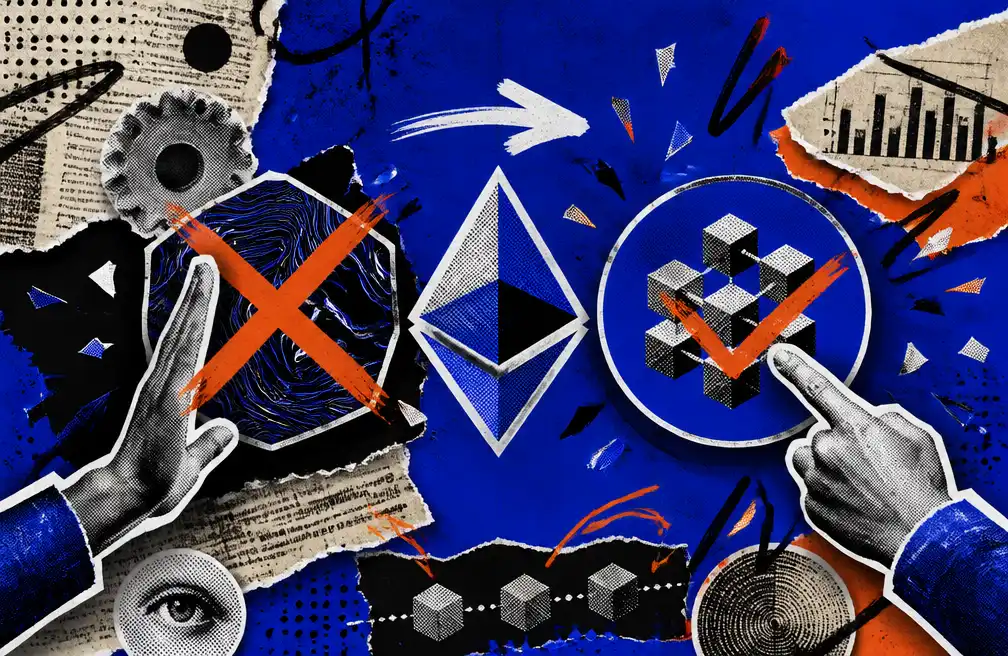
An Eight-Year Investment Takes a Sharp Turn: Why Did Ethereum Suddenly Abandon Poseidon?

On August 13, Ethereum researcher Justin Drake announced a significant shift in Ethereum's Layer-1 cryptographic roadmap: abandoning the SNARK-friendly hash function Poseidon in favor of traditional functions like SHA2 or BLAKE2. This decision ends eight years of research and investment, marking a major revision to the post-quantum security strategy. Poseidon, introduced in 2019, was highly efficient for zkRollups and zkVMs within SNARK circuits. However, its need for prolonged cryptanalysis and the pressing timeline for quantum resistance revealed limitations. Recent breakthroughs in SNARK design, specifically using binary fields, now enable traditional, battle-tested hash functions to perform as efficiently as Poseidon within SNARKs. Benchmarks show modern laptops can now verify over a million traditional hash calls per second. This change is partly driven by accelerated concerns over quantum computing threats. Reports warn that "Cryptographically Relevant Quantum Computers" could break current blockchain signatures like ECDSA by the early 2030s, risking trillions in assets. Ethereum's response focuses on hash-based post-quantum signature schemes, deemed more quantum-resistant than some lattice-based alternatives under pressure from AI cryptanalysis. Ethereum's updated post-quantum roadmap targets a production-ready "leanVM" for signature aggregation by 2027, with full deployment across consensus, execution, and data layers by 2028. The shift to mature hash functions like SHA2 reduces reliance on newer algorithms and aligns with the goal of using widely analyzed cryptographic primitives. Other major blockchains are also preparing. Solana's core teams have independently chosen the NIST-standardized Falcon signature scheme for its compact size. Starknet plans a phased migration, starting with replacing its Pedersen hash with BLAKE2. Ethereum's move signifies a strategic pivot towards proven security foundations for the quantum era.

marsbitHá 40m

An Eight-Year Investment Takes a Sharp Turn: Why Did Ethereum Suddenly Abandon Poseidon?

marsbitHá 40m

Programmers Worldwide Are Wasting Money on Anthropic! The Company Can't Stand It Anymore

Anthropic recently published guidelines to help developers using Claude Code reduce unnecessary token costs. The key recommendations include: 1) Clear (/clear) conversations after completing a task to avoid carrying irrelevant file reads and command outputs into the next task. 2) Set the model and reasoning effort level at the start of a session, as switching mid-session invalidates the prompt cache, requiring a full-price recalculation of the entire dialog history. 3) Attach files using @ references instead of typing paths manually to avoid extra tool calls and searches that bloat the context. 4) Add quiet flags to verbose commands (e.g., in CLAUDE.md) to minimize lengthy output in the dialog history. 5) Use /compact while the session cache is still warm (before breaks) to compress the dialog at one-tenth the cost. 6) Offload large-output tasks to a sub-agent, which runs in an isolated context and only returns conclusions, preventing intermediate outputs from polluting the main dialog. The article explains token pricing: input tokens (prefill) are processed in parallel, while output tokens (decode) are generated serially, making output tokens five times more expensive. Caching is crucial for savings—if a request's prefix (system prompt, CLAUDE.md, dialog history) matches the previous one byte-for-byte, reading it costs only 10% of the standard input price. However, cache invalidation occurs when changing models, effort levels, fast mode, compressing dialogs, after cache expiration, or when resuming old sessions. Dialog history also grows quadratically (O(n²)) as file contents and command outputs accumulate, increasing costs per round. Proactive context management—like isolating noisy tasks, using /rewind to trim unproductive turns, and task-based session clearing—is becoming an essential skill for cost-effective AI-assisted development.

marsbitHá 2h

Programmers Worldwide Are Wasting Money on Anthropic! The Company Can't Stand It Anymore

marsbitHá 2h

Pax Silica vs. WAICO: The US Wants to Prohibit Europe from Using Chinese Artificial Intelligence

The United States is preparing to demand that European and other partners abandon Chinese artificial intelligence initiatives, threatening exclusion from the American-led "Pax Silica" coalition, according to a leaked U.S. State Department document. This ultimatum forces signatories of the "AI Opportunity Statement" to choose between the Western technological ecosystem and alternative frameworks, with China not explicitly named but clearly targeted. Pax Silica is a U.S. strategy for AI and semiconductor hegemony, launched in late 2025. Its European presence expanded significantly in mid-2026. Concurrently, China, Russia, and 27 other nations established the World AI Cooperation Organization (WAICO) in July 2026 as an independent intergovernmental platform promoting AI governance based on UN principles. This situation creates a difficult choice, especially for European nations balancing strategic autonomy with dependence on U.S. tech and security. It also pressures Global South countries with pragmatic ties to both Washington and Beijing. The formation of competing blocks risks fragmenting the global tech landscape, forcing companies to split supply chains, increasing costs, and potentially leading to incompatible standards and protocols. The era of open globalization in AI may be ending, replaced by geopolitical confrontation where technological sovereignty trumps economic efficiency. The decisions made will shape the global digital economy for decades.

cryptonews.ruHá 4h

Pax Silica vs. WAICO: The US Wants to Prohibit Europe from Using Chinese Artificial Intelligence

cryptonews.ruHá 4h

Robert Kiyosaki Shares His Mentor's Predictions About the Emergence of Bitcoin and AI

American entrepreneur and author of "Rich Dad Poor Dad," Robert Kiyosaki, discussed the influence of futurist R. Buckminster Fuller on his worldview, linking Fuller's past technological predictions to the emergence of Bitcoin and the development of artificial intelligence. In an X post, Kiyosaki also reflected on personal purpose, sharing his journey from the music business—where he worked with bands like The Police and Iron Maiden—to creating the "Cashflow" board game and writing his famous book. He described feeling an inner emptiness despite his success, a turning point that came after meeting Fuller, whom he studied with for three summers. Kiyosaki described Fuller as a "friendly genius" who foresaw world-changing developments like Bitcoin and AI. However, the core of his post focused on Fuller's philosophical impact, particularly a quote about belonging to the universe and finding purpose by dedicating one's life to the maximum benefit of others. The entrepreneur remains a vocal advocate for cryptocurrencies. He regularly advises buying Bitcoin during market panics, viewing it and assets like Ethereum, gold, and silver as hedges against traditional financial system failures. Kiyosaki has predicted a major market crash by 2026, seeing it as an opportunity for prepared investors, with long-term price targets including $750,000 for Bitcoin and $95,000 for Ethereum.

cryptonews.ruHá 6h

Robert Kiyosaki Shares His Mentor's Predictions About the Emergence of Bitcoin and AI

cryptonews.ruHá 6h

Trading

Spot

Artigos em Destaque

Como comprar DATA

Bem-vindo à HTX.com!Tornámos a compra de DATA Network (DATA) simples e conveniente.Segue o nosso guia passo a passo para iniciar a tua jornada no mundo das criptos.Passo 1: cria a tua conta HTXUtiliza o teu e-mail ou número de telefone para te inscreveres numa conta gratuita na HTX.Desfruta de um processo de inscrição sem complicações e desbloqueia todas as funcionalidades.Obter a minha contaPasso 2: vai para Comprar Cripto e escolhe o teu método de pagamentoCartão de crédito/débito: usa o teu visa ou mastercard para comprar DATA Network (DATA) instantaneamente.Saldo: usa os fundos da tua conta HTX para transacionar sem problemas.Terceiros: adicionamos métodos de pagamento populares, como Google Pay e Apple Pay, para aumentar a conveniência.P2P: transaciona diretamente com outros utilizadores na HTX.Mercado de balcão (OTC): oferecemos serviços personalizados e taxas de câmbio competitivas para os traders.Passo 3: armazena teu DATA Network (DATA)Depois de comprar o teu DATA Network (DATA), armazena-o na tua conta HTX.Alternativamente, podes enviá-lo para outro lugar através de transferência blockchain ou usá-lo para transacionar outras criptomoedas.Passo 4: transaciona DATA Network (DATA)Transaciona facilmente DATA Network (DATA) no mercado à vista da HTX.Acede simplesmente à tua conta, seleciona o teu par de trading, executa as tuas transações e monitoriza em tempo real.Oferecemos uma experiência de fácil utilização tanto para principiantes como para traders experientes.

474 Visualizações TotaisPublicado em {updateTime}Atualizado em 2026.07.01

Como comprar DATA

Discussões

Bem-vindo à Comunidade HTX. Aqui, pode manter-se informado sobre os mais recentes desenvolvimentos da plataforma e obter acesso a análises profissionais de mercado. As opiniões dos utilizadores sobre o preço de DATA (DATA) são apresentadas abaixo.

活动图片