宇树发行市值600亿,梁文锋投了

marsbitPublicado em 2026-08-06Última atualização em 2026-08-06

Resumo

宇树科技(简称“宇树”)确定科创板IPO发行价为150.8元/股,预计发行市值约609亿元。公司计划于8月10日启动网上申购,市场对其市值预期高达千亿甚至两千亿元,打新热情高涨。 宇树科技成立于2016年,主营四足及人形机器人业务。2025年,公司营收达16.99亿元,实现盈利,其中人形机器人业务收入占比已超50%。本次IPO拟募资42亿元,主要投向“智能机器人模型研发项目”。 创始人、90后王兴兴上市后持股近30%,有望成为科创板90后首富。公司股东阵容强大,包括红杉中国、美团、腾讯等知名机构。值得注意的是,梁文锋创立的深度求索公司(DeepSeek)也出现在战略配售名单中,获配金额1.41亿元。 作为“人形机器人第一股”,宇树科技的上市被视为具身智能赛道的重要风向标。目前,约20家相关公司正推进IPO进程。 2026年被市场视为IPO大年。截至8月初,A股今年已有87家公司上市,首日均未破发,平均涨幅达278%,其中长进光子、臻宝科技等首日涨幅超10倍,但整体中签率极低。宇树科技的发行进一步点燃了市场对硬科技公司打新的热情。

七月长鑫,八月宇树。

今日(8月6日),宇树科技IPO发行价确定为150.8元/股,由此预计发行市值约为609亿元。这意味着,持股近30%的90后创始人王兴兴,有望成为科创板90后首富。

值得注意的是,梁文锋创立的杭州深度求索人工智能基础技术研究有限公司( DeepSeek )也在战略配售名单中,获配股数93.34万股,获配金额1.41亿元。

接下来激动的时间是8月10日,届时“人形机器人第一股”网上申购将正式开始。遥想去年底,伴随摩尔线程和沐曦股份上市,“单签赚30万元”的打新赚钱效应还历历在目,行至今年,市场打新情绪依旧热烈。

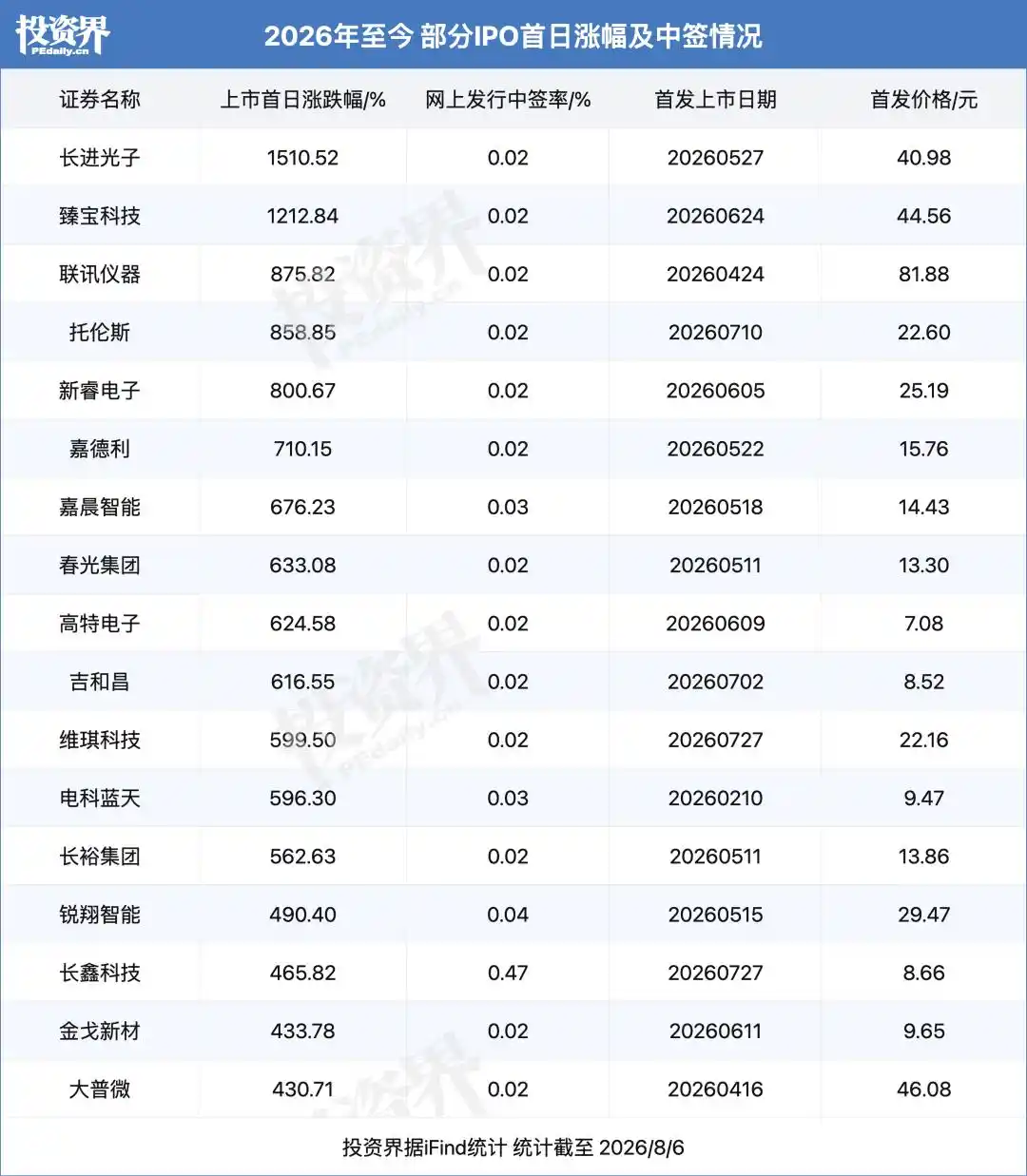
投资界据同花顺iFind统计下来,今年以来A股共计87家公司成功IPO,上市首日无一破发,诸如长进光子、臻宝科技等上市首日涨幅更是在10倍以上。但考验运气的是,往往一万人参与打新,仅不足4人能够中签。

IPO大年,扑面而来。
没打中长鑫的人,开始许愿宇树

10年时间,一家创业公司足以经历命运的转折。

2016年,王兴兴抱着一个叫XDog的四足机器人原型,在杭州租了间办公室,注册资本只有10万元;2026年,宇树科技从IPO获受理至6月1日过会,仅历时73天,创下这一年迄今最快IPO审核纪录。

行至此刻,“人形机器人第一股”箭在弦上。8月10日,宇树科技线上打新将正式开启,市场普遍预计将在8月下旬正式登陆科创板。

但与此前发行体量极大的长鑫科技不同,宇树科技中签概率更低。网上初始发行约647万股,即使触发回拨网上可配售量依然有限,打新成功率大概在0.02%至0.05%区间。另据披露,本次IPO中宇树科技171名员工合计以2.7亿元认购股份,其中创始人王兴兴掏1500万元。

结合宇树科技8月6日公布的发行价150.8元/股,发行市值大概609亿元——但不少市场机构已经将宇树科技未来市值看到1000亿元甚至2000亿元。
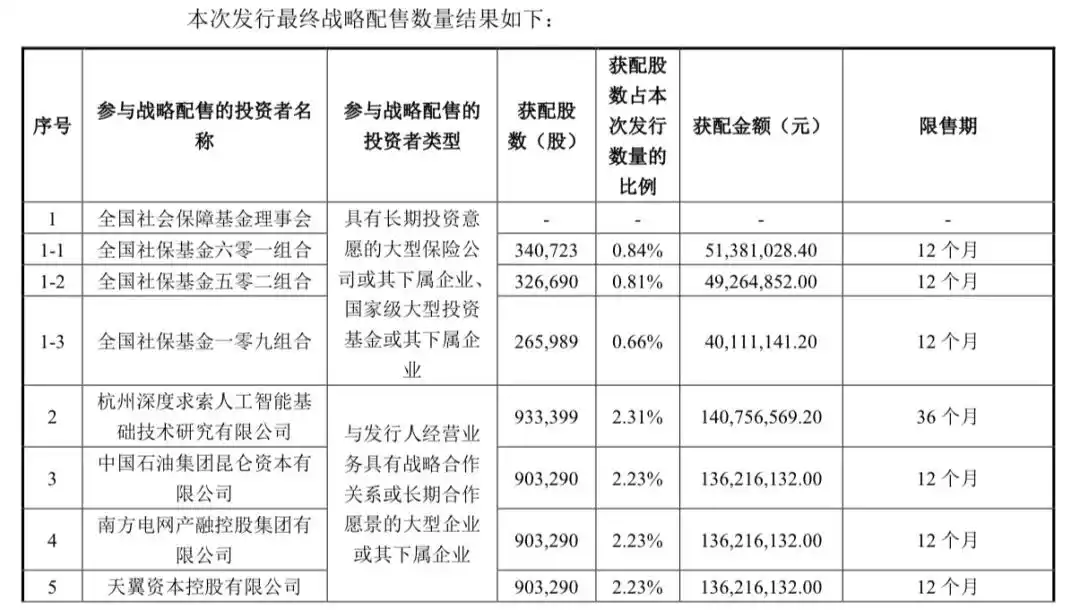
部分战略配售名单

如此,打新想象空间依旧令投资者们期冀浮想。“许愿宇树打新能中”,放眼社交平台,自确定申购日期起,投资者们就开启了在线祈祷模式。

热情背后,是宇树科技已经释放出值得期待的盈利能力。

财务数据显示:2025年,宇树科技实现营收16.99亿元,同比增长332.64%,扣非后净利润5.91亿元,正式实现盈利;2026年1至6月,预计实现营业收入较上年同期增加35.62%至45.41%。细看其总营收构成,2025年人形机器人营收约8.68亿元,占主营业务收入的51.78%,换言之,人形机器人业务已经接过四足机器人的收入增长大旗。

十年饮冰,难凉热血。如其招股书中写道:

“当下正逢全球AI与具身智能技术突破前夜,曾经这份梦想看似遥远,但通过十年的不懈努力,我们已真正拥有奔赴梦想、实现梦想的底气与能力。”

本次IPO的42亿元募资计划中,“智能机器人模型研发项目”拟投入20.22亿元,这个聚焦机器人“大脑”的项目,或许就关系着宇树科技下一程梦想的突破——实现通用机器人的大规模商业化。

科创板90后首富

“宇树身后几乎站着半个投资圈”,这已不是新鲜事。

2025年6月最后一轮融资中,宇树科技投后估值达127亿元。股东阵列集结了红杉中国、美团、经纬创投、祥峰投资、顺为资本、敦鸿资产、腾讯、深创投、光合创投等数十家知名机构以及地方国资。

这份名单中,持股比例最大的外部股东是美团系——上市前,美团系通过汉海信息、成都龙珠、Galaxy Z三家关联公司合计持股近9.65%,构成仅次于创始人王兴兴和员工持股平台之后的第二大股东阵营。

若按时间线看去,尹方鸣是宇树科技最早天使投资人。2016年,王兴兴创业之际,尹方鸣投资宇树科技200万元获得了15%的股权,此后2020年8月,尹方鸣作为个人投资者退出宇树科技股东序列,但仍通过持有天津君万弘毅间接成为宇树科技股东。

外界鲜少看到尹方鸣与宇树科技的互动。招股书中细节显示,2023年,彼时尹方鸣曾自掏5.64万元购买宇树科技的健身泵、机械臂、其他零部件。

与此同时,创始人王兴兴将新晋成为90后百亿富豪。上市前,王兴兴直接、间接持有宇树科技近33%的股份,上市稀释后,其持股仍有30%左右。仅仅是按照目前发行市值测算,王兴兴身家将轻松超越百亿元,如按千亿市值计算更为惊人。

于行业而言,宇树科技IPO颇具风向标意义。

据不完全统计,目前有将近20家具身智能公司已经处于或启动IPO进程,包括同样冲刺科创板的云深处、傅利叶智能,面向港股的智元机器人、银河通用、星海图、智平方、自变量机器人、逐际动力、跨维智能等——这些公司绝大多数估值都已经进入百亿估值独角兽甚至越过200亿元门槛。

可以想象的是,在具身智能如此火热的当下,作为行业头部公司,宇树科技上市表现将不可避免地成为具身智能赛道公司估值兑现的一个参照。

IPO大年的窗口期

正如年初的预判,2026年是IPO大年。

宇树之前, MiniMax 、智谱两家大模型公司今年1月便在万众瞩目中港股IPO,存储巨头长鑫科技则刚于7月登陆科创板;而宇树之后,算力巨头超聚变、GPU厂商燧原科技、NAND巨头长江存储、商业航天企业蓝箭航天等均在紧锣密鼓地推进IPO最后临门一脚。

密集之下,打新情绪异常火热。

A股市场上,犹记得去年12月摩尔线程和沐曦股份带来“中一签收益超30万元”的赚钱叙事,紧随其后,2026年以来,更是有恒运昌、大普微、联讯仪器、长进光子、臻宝科技、长鑫科技等超级大肉签出现,几乎每个月,市场都能传来现象级打新回报案例。

据同花顺iFind统计,2026年开年至8月4日,A股共计87家公司成功IPO,首日平均涨幅为278%,且上市首日无一破发,哪怕是涨幅最低的欧伦电气,上市首日亦有超20%的涨幅。这意味着,至今为止成功打新的投资者几乎都能赚钱。更进一步看去,诸如长进光子、臻宝科技、联讯仪器等涨幅前列新股,上市首日涨幅分别达1510%、1212%、875%——打新中一签,当日便可获几十万元收益。

不过,打新中签比想象中难上太多。

悉数87家今年来IPO新股,打新成功几率最高的分别是长鑫科技、华润新能源、惠科股份等,中签率为0.47%、0.14%、0.07%,其余大部分中签率实际上都在0.04%以下,也就是说,10000人参与打新不足4人中签。

而这般一签难求,正映衬出投资者对新股上市的热情,尤其是那些打开中国科技未来想象空间的硬科技公司:如眼下正热的宇树,是2025年人形机器人出货量全球第一公司;此前打新火热的长鑫科技,是全球DRAM第四大厂商。类似叙事,正在密集上演。

IPO从来不只是一个交易时刻,时代如何奖励创新,才是更大的命题。

声明:本文不构成任何投资建议。市场有风险,投资需谨慎,请独立判断和决策。

本文来自微信公众号 “投资界”(ID:pedaily2012),作者:冯雨晨

Criptomoedas em alta

Perguntas relacionadas

Q宇树科技的发行价是多少?预计发行市值是多少?

A宇树科技的发行价确定为150.8元/股,预计发行市值约为609亿元。

Q谁在宇树科技的战略配售名单中,获配金额是多少?

A梁文锋创立的杭州深度求索人工智能基础技术研究有限公司(DeepSeek)在战略配售名单中,获配93.34万股,获配金额1.41亿元。

Q宇树科技的网上申购何时开始?

A宇树科技的网上申购将于8月10日正式开始。

Q宇树科技创始人王兴兴的持股比例是多少?根据发行市值,其身家预计如何?

A上市稀释后,创始人王兴兴仍持有宇树科技约30%的股份。按照约609亿元的发行市值测算,其身家将轻松超过百亿元。

Q根据文章,2026年A股IPO公司上市首日表现如何?

A据同花顺iFind统计,2026年开年至8月4日,A股共计87家公司成功IPO,上市首日无一破发,首日平均涨幅为278%。

Leituras Relacionadas

Citi Research Report Analysis: U.S. Proposed Ban on Chinese Optical Modules Has No Substantial Progress, Short-term Enforcement Faces Supply Constraints

Citi Report Analysis: U.S. Proposed Ban on Chinese Optical Modules Lacks Substantive Progress, Faces Supply Bottlenecks in Short Term. Reuters reported on August 4th that the U.S. government and FCC are considering a ban on Chinese optical modules. Citi's August 9th report clarifies that optical modules are not listed on any effective FCC ban. The FCC's Order 26-50 established two restricted list mechanisms (based on manufacturer and production location), but optical modules were only mentioned once, as an example in a disclosure requirement, not as a restricted product. The reported ban remains at a proposal stage. Citi estimates Chinese suppliers provide 60-70% of high-speed optical modules for U.S. hyperscalers. Non-Chinese suppliers cannot fill this gap in the short term, making the immediate implementation of a genuine ban unlikely. Future regulatory paths could be manufacturer-based (least likely), location-based covering all offshore production (strictest), or location-based covering only China (more feasible but with unresolved definitions). A ban would pressure U.S. AI infrastructure, conflicting with stated policy goals. Citi sees low near-term implementation probability, with the issue potentially becoming a negotiation chip in bilateral talks. U.S. domestic capacity build-out is a key long-term variable. Among Chinese companies, XSENS and Dongshan Precision have the highest U.S. exposure, while Tianfu Communication, as a passive component supplier, is relatively insulated. Citi maintains Buy ratings on all three with respective price targets. The conclusion is that Chinese modules are currently irreplaceable in the U.S. AI supply chain, creating a longer timeline for potential restrictions than the market may expect.

marsbitHá 18m

Citi Research Report Analysis: U.S. Proposed Ban on Chinese Optical Modules Has No Substantial Progress, Short-term Enforcement Faces Supply Constraints

marsbitHá 18m

Lead Analyst Claims Bitcoin is at a Critical Stage: 'We are at the Bear Market Bottom, What Happens Next…'

Renowned cryptocurrency analyst Benjamin Cowen, in his latest analysis video, examined recent events and historical cycles in the Bitcoin market. Noting Bitcoin's trading range of $64,000 to $65,000, Cowen stated that market dynamics and investor interest show similarities to past cycles, suggesting the upcoming period marks a critical turning point. Cowen observed a significant decline in public interest and investor enthusiasm for the crypto market, with social risk metrics falling to 0.2, far below levels seen four years ago. He added that market volatility has notably decreased, and a sense of distrust prevails among investors, drawing parallels to the ends of bear markets in 2018 and 2022. Historical data indicates Bitcoin markets typically bottom in summer months, followed by a period of stagnation with low volatility, implying a major move could occur in the year's final quarter. However, Cowen noted on-chain indicators like the MVRV Z-Score have not yet signaled a definitive bottom. Cowen believes an event in the coming weeks could shake the market, potentially triggering a final sell-off wave. Such an event, he argues, would bring investors back and pave the way for a new bull cycle. He predicts October as the most likely bottoming period, while acknowledging September or November are also possible, advising crypto users to remain cautious and prepared for a decisive market moment.

cryptonews.ruHá 27m

Lead Analyst Claims Bitcoin is at a Critical Stage: 'We are at the Bear Market Bottom, What Happens Next…'

cryptonews.ruHá 27m

Bitcoin Community in Uproar: Deciphering the New Scaling War Sparked by BIP-110

On August 10, Luke Dashjr, a long-time Bitcoin Improvement Proposal (BIP) editor and co-founder of Ocean mining pool, was removed from the BIP editing team for bypassing discussion protocols and preemptively assigning a number to BIP-110, a controversial soft fork proposal he helped draft. The conflict stems from Bitcoin Core's version 30 release in October 2025, which removed the default 83-byte limit on OP_RETURN, a field used for embedding non-transaction data. In response, BIP-110 aimed to enforce this limit as a consensus rule. It controversially lowered the activation threshold for miners to 55% and included a mandatory activation clause, causing significant community backlash. Major mining pools like Foundry USA and AntPool did not support it, with public criticism from figures like F2Pool's Wang Chun and Michael Saylor, who argued it compromised Bitcoin's neutrality. On August 8, at block height 961,632, nodes running the BIP-110 patch rejected the main chain block, causing a chain split. The minority chain, supported by only about 2.53% of the network's hash rate, produced just one additional block before stalling. The main chain quickly outpaced it by over 240 blocks. No major exchanges have supported the minority chain. The event highlighted Bitcoin's governance reality: while rules can be proposed by a few, ultimate authority lies with the economic majority—miners willing to expend hash power and users/exchanges recognizing a chain's validity. Following the failed split, BIP-110 proponents, including Luke Dashjr, have begun discussing a change to the proof-of-work algorithm to create a separate coin, though this remains in early discussion stages.

marsbitHá 48m

Bitcoin Community in Uproar: Deciphering the New Scaling War Sparked by BIP-110

marsbitHá 48m

Trading

Spot

Artigos em Destaque

Como comprar CAP

Bem-vindo à HTX.com!Tornámos a compra de Cap (CAP) simples e conveniente.Segue o nosso guia passo a passo para iniciar a tua jornada no mundo das criptos.Passo 1: cria a tua conta HTXUtiliza o teu e-mail ou número de telefone para te inscreveres numa conta gratuita na HTX.Desfruta de um processo de inscrição sem complicações e desbloqueia todas as funcionalidades.Obter a minha contaPasso 2: vai para Comprar Cripto e escolhe o teu método de pagamentoCartão de crédito/débito: usa o teu visa ou mastercard para comprar Cap (CAP) instantaneamente.Saldo: usa os fundos da tua conta HTX para transacionar sem problemas.Terceiros: adicionamos métodos de pagamento populares, como Google Pay e Apple Pay, para aumentar a conveniência.P2P: transaciona diretamente com outros utilizadores na HTX.Mercado de balcão (OTC): oferecemos serviços personalizados e taxas de câmbio competitivas para os traders.Passo 3: armazena teu Cap (CAP)Depois de comprar o teu Cap (CAP), armazena-o na tua conta HTX.Alternativamente, podes enviá-lo para outro lugar através de transferência blockchain ou usá-lo para transacionar outras criptomoedas.Passo 4: transaciona Cap (CAP)Transaciona facilmente Cap (CAP) no mercado à vista da HTX.Acede simplesmente à tua conta, seleciona o teu par de trading, executa as tuas transações e monitoriza em tempo real.Oferecemos uma experiência de fácil utilização tanto para principiantes como para traders experientes.

450 Visualizações TotaisPublicado em {updateTime}Atualizado em 2026.06.26

Como comprar CAP

Discussões

Bem-vindo à Comunidade HTX. Aqui, pode manter-se informado sobre os mais recentes desenvolvimentos da plataforma e obter acesso a análises profissionais de mercado. As opiniões dos utilizadores sobre o preço de CAP (CAP) são apresentadas abaixo.

活动图片