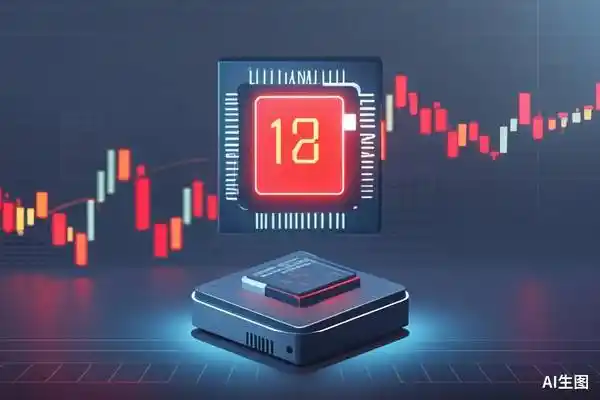
Fun Coffee Offers Investors 278% Annual Yield on USDT Investments

cryptonews.ruPublicado em 2026-08-05Última atualização em 2026-08-05

Resumo

Hong Kong police arrested multiple individuals (five women and one man, aged 51-64) in connection with Fun Coffee, following 225 complaints from victims aged 32-83. Fun Coffee allegedly promotes a high-yield cryptocurrency investment scheme, claiming to research high-tech coffee equipment and coffee plant gene enhancement. It entices investors by promising an annual return of 278%. For example, an investment of 29,800 USDT (approx. HKD 230,000) for 570 days is promised to yield 129,093 USDT (approx. HKD 1 million). Authorities state the company lured investors through seminars and encouraged recruiting friends and family for rewards. Investors were directed to download an app and transfer crypto to provided addresses to purchase "investment packages." Entering the Hong Kong market late last year, Fun Coffee portrayed itself as socially responsible. However, Hong Kong's Securities and Futures Commission (SFC) listed it as suspicious in July, and Vietnamese authorities warned it might be a financial pyramid scheme. Despite this, the scheme continues aggressive expansion into mainland China, Korea, and Singapore. Hong Kong has criminalized promoting stablecoin services without a license, with penalties including heavy fines and up to six months imprisonment. Authorities have also proposed stricter oversight for crypto asset custodians and broker-dealers.

Those detained are between 51 and 64 years old, among them five women and one man. Hong Kong police received 225 complaints about Fun Coffee from people aged 32 to 83.

Representatives of Fun Coffee claim to be researching high-tech coffee equipment and studying ways to improve the genes of coffee plants. They persuade investors to deposit cryptocurrency, offering an annual yield of 278%. Users who invest 29,800 stablecoins $USDT (about 230,000 Hong Kong dollars) for 570 days are promised a profit of 129,093 $USDT (about 1 million Hong Kong dollars).

Police explained how Fun Coffee's organizers held investor seminars and similar events, encouraging people to bring friends and relatives into the scheme in exchange for rewards. Potential depositors were asked to download a mobile app and register, then transfer cryptocurrency to addresses provided by the platform's staff, explained as necessary for purchasing "investment packages."

The firm entered the Hong Kong market late last year and built an image as a socially responsible company, launching advertising campaigns about sports and healthy lifestyles. In July, the Hong Kong Securities and Futures Commission (SFC) added Fun Coffee to its list of suspicious investment projects, and Vietnamese authorities stated that Fun Coffee might be a financial pyramid scheme. However, the project continues to aggressively expand its presence in mainland China, Korea, and Singapore, police lament.

Last year, Hong Kong, this special administrative region of China, introduced criminal liability for promoting stablecoins without a regulator's license. Violators face heavy fines and up to six months in prison. In December, Hong Kong authorities proposed tightening control over custodial services and broker-dealers handling crypto assets.

end-content
Criptomoedas em alta

Perguntas relacionadas

QWhat annual return did Fun Coffee promise to investors for depositing USDT?

AFun Coffee promised investors an annual return of 278% for depositing USDT.

QWhat actions did Hong Kong authorities take regarding Fun Coffee?

AHong Kong's Securities and Futures Commission (SFC) placed Fun Coffee on its suspicious investment project list. Additionally, Hong Kong police received 225 complaints about the company and made arrests in connection with it.

QHow did Fun Coffee encourage users to bring in more participants?

AFun Coffee encouraged users to bring in friends and relatives by offering rewards for doing so, often during investor seminars and similar events.

QWhat regions is Fun Coffee reportedly expanding into despite regulatory warnings?

ADespite warnings, Fun Coffee is reportedly aggressively expanding its presence in mainland China, Korea, and Singapore.

QWhat potential penalty exists in Hong Kong for promoting stablecoins without a license?

AIn Hong Kong, promoting stablecoins without a license can result in a substantial fine and imprisonment for up to six months.

Leituras Relacionadas

South Korean Stocks Plunge Again, Latest Response from the Blue House

Korean Stock Market Plummets Amid Global Sell-Off, Presidential Office Responds South Korea's stock market experienced a sharp decline on Thursday. The benchmark KOSPI index fell over 4%, with major components SK Hynix and Samsung Electronics dropping over 8% and 5%, respectively. The sell-off quickly spread to related Hong Kong ETFs. The trigger was weak forward guidance from U.S. memory chip giants SanDisk and Western Digital, whose revenue forecasts fell short of lofty market expectations despite strong prior-quarter results. Their subsequent stock plunge led to a sell-off in Asian semiconductor stocks, highlighting the region's dependence on U.S. market sentiment. Since hitting a record high in mid-June, the KOSPI has fallen over 21% in about a month. In response to market volatility, the South Korean government has implemented measures, including raising cash margin requirements for single-stock leveraged ETFs. This led to a significant drop in their trading volume. A senior presidential official stated the focus is on closely monitoring the situation and formulating appropriate countermeasures. Analyst views on the market outlook diverge: while Morgan Stanley sees the sell-off as a buying opportunity due to low valuations, others like China Securities warn of continued high volatility as leverage unwinds. Looking ahead, analysts expect the global memory chip sector to remain in a high-sensitivity phase. However, Goldman Sachs maintains a long-term bullish target of 12,000 for the KOSPI, citing unmet AI-driven demand, with JPMorgan also viewing the pullback as a chance to accumulate positions.

marsbitHá 12m

South Korean Stocks Plunge Again, Latest Response from the Blue House

marsbitHá 12m

Tiger Research: What Will the Crypto World Look Like in 2036?

Tiger Research envisions the crypto world of 2036 through four narrative vignettes. In a fictional nation with a hyperinflating currency, the local "Bucks" are nearly obsolete. Citizens and eventually the government itself—for taxes, bonds, and salaries—adopt dollar-pegged stablecoins like USDT and USDC, marking a fundamental shift in monetary sovereignty. In Singapore, a young trader named Lia operates in a borderless, 24/7 market. She trades tokenized versions of everything from NVIDIA stock to Korean real estate indices on decentralized platforms, representing a generation for whom constant, global asset exposure is the norm. An infrastructure engineer, Do-hyun, reflects on the consolidation of blockchain networks. The hundreds of independent chains and Layer 2 solutions that boomed in the 2020s, fueled by incentives, have largely collapsed under their own weight. By 2036, only a few major, efficient infrastructures remain, having absorbed liquidity and users. Finally, media entrepreneur Jae-hoon witnesses the end of the traditional web advertising model. With AI agents generating over half of web traffic by 2029, banner ads become irrelevant. The industry pivots to a new machine-to-machine economy, using protocols like the x402 standard to charge AI models micropayments for direct data access, creating a more reliable revenue stream than human eyeballs ever did. The article paints a picture of 2036 defined by stablecoin adoption as sound money, perpetual global trading of all assets, consolidation into few dominant blockchain infrastructures, and the restructuring of digital commerce around AI agents.

marsbitHá 36m

Tiger Research: What Will the Crypto World Look Like in 2036?

marsbitHá 36m

IOSG: How Can Blockchains Keep Secrets? Three Answers to On-Chain Privacy

**Title: IOSG: How Does Blockchain Keep Secrets? Three Answers to On-Chain Privacy** **Summary:** Public blockchains expose every transaction. To protect sensitive data like institutional balances or trade sizes, three main approaches have emerged: 1. **Native Privacy Networks:** Projects like Zcash (with optional privacy) and Monero (with mandatory privacy) build secrecy directly into their own blockchains. However, they exist as isolated "islands," limiting interaction with mainstream DeFi applications. Canton, a permissioned network, offers privacy by restricting data sharing only to transaction participants, which appealed to JPMorgan for its deposit token. 2. **Privacy as an Add-On Layer:** This approach adds privacy to existing chains like Ethereum. Tornado Cash was an early "mixer" but was sanctioned. Railgun provides private balances and payments via zero-knowledge proofs on Ethereum. Zama uses Fully Homomorphic Encryption (FHE) to encrypt balances and amounts on-chain, enabling confidential DeFi activities like private yield vaults and over-the-counter trading while keeping transaction graphs public. 3. **The Core Trade-off:** All solutions sacrifice some privacy for functionality. Truly private chains (Zcash, Monero) lack smart contract versatility. Add-on layers (Zama, Railgun) reveal some metadata to enable computation. "Perfect" privacy that hides everything while allowing full functionality remains elusive. **Market Reality:** Demand is validated, with institutions moving trades off-screen to avoid slippage. However, the sector's revenue (est. $6-7M/year across all protocols) is minuscule compared to the ~$25B market cap of privacy assets. Protocols like Zama charge minimal, usage-based fees, while others like Railgun take a small percentage. The key gap is a sustainable pricing model. The conclusion is bullish on the underlying demand but suggests value will accrue to the applications (trading venues, wallets) that successfully monetize privacy, not necessarily the foundational privacy layers themselves.

marsbitHá 39m

IOSG: How Can Blockchains Keep Secrets? Three Answers to On-Chain Privacy

marsbitHá 39m

Trading

Spot

Artigos em Destaque

Como comprar FUN

Bem-vindo à HTX.com!Tornámos a compra de FUNTOKEN (FUN) simples e conveniente.Segue o nosso guia passo a passo para iniciar a tua jornada no mundo das criptos.Passo 1: cria a tua conta HTXUtiliza o teu e-mail ou número de telefone para te inscreveres numa conta gratuita na HTX.Desfruta de um processo de inscrição sem complicações e desbloqueia todas as funcionalidades.Obter a minha contaPasso 2: vai para Comprar Cripto e escolhe o teu método de pagamentoCartão de crédito/débito: usa o teu visa ou mastercard para comprar FUNTOKEN (FUN) instantaneamente.Saldo: usa os fundos da tua conta HTX para transacionar sem problemas.Terceiros: adicionamos métodos de pagamento populares, como Google Pay e Apple Pay, para aumentar a conveniência.P2P: transaciona diretamente com outros utilizadores na HTX.Mercado de balcão (OTC): oferecemos serviços personalizados e taxas de câmbio competitivas para os traders.Passo 3: armazena teu FUNTOKEN (FUN)Depois de comprar o teu FUNTOKEN (FUN), armazena-o na tua conta HTX.Alternativamente, podes enviá-lo para outro lugar através de transferência blockchain ou usá-lo para transacionar outras criptomoedas.Passo 4: transaciona FUNTOKEN (FUN)Transaciona facilmente FUNTOKEN (FUN) no mercado à vista da HTX.Acede simplesmente à tua conta, seleciona o teu par de trading, executa as tuas transações e monitoriza em tempo real.Oferecemos uma experiência de fácil utilização tanto para principiantes como para traders experientes.

345 Visualizações TotaisPublicado em {updateTime}Atualizado em 2026.06.02

Como comprar FUN

Discussões

Bem-vindo à Comunidade HTX. Aqui, pode manter-se informado sobre os mais recentes desenvolvimentos da plataforma e obter acesso a análises profissionais de mercado. As opiniões dos utilizadores sobre o preço de FUN (FUN) são apresentadas abaixo.

活动图片