SK海力士较高位跌近40%,抄底机会?还是更大风险的开始?

华尔街见闻Publicado em 2026-07-14Última atualização em 2026-07-14

Resumo

分析师Nico Rosti表示,"再跌一周是可能的,但我们将其视为加仓机会。韩国市场的反弹应会推动ADR走高,因此这是一个不错的买入时机。"

韩国存储芯片巨头遭遇史上最惨烈的单日抛售之一,但这场暴跌究竟是情绪宣泄后的买入窗口,还是基本面裂缝扩大的前兆,市场分歧正在加剧。

7月13日,SK海力士在首尔股市单日暴跌逾15%,创历史最大单日跌幅,股价触及逾两个月低点;三星电子同日下挫近11%。两只权重股合力拖累韩国综合股价指数(Kospi)单日重挫9%,触发今年第七次熔断机制。

这一幕发生在SK海力士完成史上规模最大外国企业赴美首次公开募股、其美国存托凭证(ADR)上周五劲涨13%之后,"利好出尽"的市场逻辑在此得到了极为直观的演绎。

导火索来自韩国本土券商。据华尔街见闻此前文章,韩国投资证券当日发布报告,预测SK海力士第二季度营业利润为60.4万亿韩元,低于市场共识预期65万亿韩元约8%,这一偏差直接引爆市场情绪。与此同时,SK海力士股价较6月25日历史高位已在三周内累计回调逾38%,三星同样从近期高位跌去约32%。
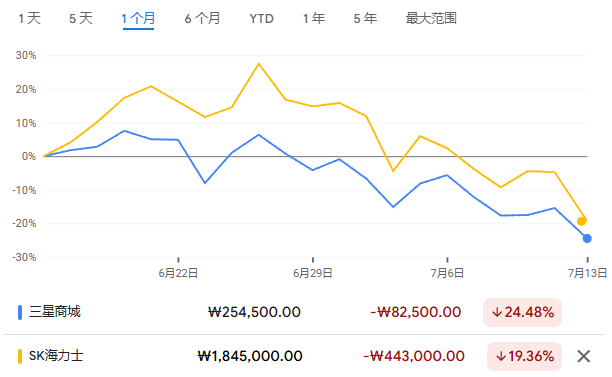
大跌导火索:一份低于预期的业绩预测

KIS报告的核心逻辑并不复杂,但市场的反应却异常剧烈。

据华尔街见闻此前文章,KIS预测SK海力士第二季度营收为80.9万亿韩元,环比增长54%,同比大涨264%;营业利润60.4万亿韩元,环比增长61%,同比增长556%。数字本身依然亮眼,但问题在于,市场共识预期为65万亿韩元,KIS的预测低于共识约8%。

这一缺口的根源指向高带宽内存(HBM)的定价结构。据彭博,SK海力士在HBM领域收入占比较高,而HBM供应合同通常基于灵活度较低的长期协议(LTA),导致其平均售价(ASP)涨幅低于普通存储芯片的市场均值。KIS同步下调了SK海力士2026年和2027年盈利预期各9%和11%,但维持380万韩元的目标价,并强调此次下调仅为LTA定价修正,并非基本面恶化。

尽管如此,市场并未买账。SK海力士开盘后迅速跌破200万韩元关口,跌幅一度超过10%,最终收跌逾15%。

"利好出尽":ADR上市成为抛售信号

此次暴跌的另一重背景,是SK海力士刚刚完成的史上最大规模外国企业赴美IPO。

SK海力士此次美国发行规模达265亿美元,认购倍数超过七倍,ADR在上周五首个交易日上涨13%。然而,首尔市场的投资者随即将这一成功视为兑现筹码的时机。

首尔对冲基金Petra Capital Management管理合伙人Chan H Lee对彭博表示,"ADR上市高度成功,但这一成功早已被市场定价。今日的疲软更像是典型的'利好出尽'反应和获利了结,而非基本面发生了变化。"

这一判断与三星的遭遇形成呼应。据彭博,三星上周公布的初步业绩同样引发抛售,并波及全球科技供应链。AI热潮推高了市场预期,而预期一旦难以超越,便成为股价的压力来源。

结构性隐忧:产能扩张与需求放缓的双重压力

短期情绪之外,市场对存储芯片行业的中长期逻辑也存在真实的结构性担忧。

SK海力士首席执行官Kwak Noh-Jung上周五在采访中表示,存储芯片短缺状况可能持续至2030年以后。然而,存储芯片制造商竞相扩充产能的举动,已令市场对需求最终回落时的利润冲击感到不安。

Leo Wealth全球投资解决方案主管Aleksey Mironenko在彭博电视上指出,"SK海力士此次额外融资并非为了派发股息,而是为了扩建产能。与此同时,买家也在持续创新,试图降低所需的内存和算力消耗。因此,需求将缓慢下降,供给将缓慢上升。"

这一供需剪刀差的担忧,与HBM定价弹性不足的问题叠加,构成了当前市场对SK海力士和三星估值重估的核心逻辑。

技术面与市场情绪:超卖信号浮现,分歧仍存

从技术层面看,此轮暴跌已将SK海力士推入超卖区间,部分分析师认为短期买入机会正在形成。

据彭博,MRM Research分析师Nico Rosti表示,SK海力士股价目前呈现"深度超卖"特征。他在Smartkarma发布的研报中写道,"再跌一周是可能的,但我们将其视为加仓机会。韩国市场的反弹应会推动ADR走高,因此这是一个不错的买入时机。"

然而,市场的高度波动性本身也是一个警示信号。据彭博,追踪SK海力士和三星的杠杆ETF的盛行,进一步放大了价格波动。Kospi单日涨跌幅达到5%已日趋常态,自2000年以来共触发13次熔断,其中7次发生在今年。

SK海力士股价较6月历史高位已累计下跌逾38%,三星同样从近期高位跌去约30%。在AI叙事尚未破裂、但预期兑现压力持续累积的当下,这场暴跌究竟是周期中的噪音,还是拐点的前奏,投资者仍需审慎权衡。


Leituras Relacionadas

Tensions in the Strait of Hormuz Escalate, Bitcoin Plunges to $61,700 Amid Safe-Haven Selling

Bitcoin fell sharply to around $61,700 on Monday, July 13th, as geopolitical tensions in the Strait of Hormuz triggered a broad shift toward risk-off sentiment across global markets. The decline of roughly 4% mirrored weaker performances in major U.S. stock indices. Market analysts attributed the sell-off to a confluence of factors stemming from the heightened U.S.-Iran tensions. These tensions reignited inflation concerns, reduced expectations for near-term Federal Reserve rate cuts, and prompted investors to reduce exposure to risk assets like Bitcoin. Additional pressure came from slowed institutional ETF inflows, Bitcoin's failure to breach a key resistance level, and a wave of liquidations for leveraged long positions. Despite the drop, analysts largely viewed the move as a typical macro-driven correction within a healthy long-term cycle. They emphasized that Bitcoin's underlying growth trajectory remains intact. The sell-off was seen more as a liquidation event targeting over-leveraged longs rather than a structural loss of confidence. Attention now turns to the upcoming U.S. Consumer Price Index (CPI) report. A higher-than-expected inflation reading could further delay Fed rate cuts, making safer assets like bonds more attractive and continuing to pressure volatile assets like Bitcoin. The consensus is that the current volatility reflects short-term macro and geopolitical shocks, not a fundamental breakdown in Bitcoin's long-term proposition.

Foresight NewsHá 29m

Tensions in the Strait of Hormuz Escalate, Bitcoin Plunges to $61,700 Amid Safe-Haven Selling

Foresight NewsHá 29m

BitMart Research Institute Weekly Highlights: Rising Rate Hike Expectations, Crypto Market Stabilizes Amid Fluctuations

BitMart Research Weekly Market Review: Rate Hike Expectations Rise, Crypto Market Stabilizes Macro & Traditional Markets: U.S. stocks weakened with tech and semiconductors leading losses (Nasdaq down 1.55%, Philly Semi Index down 4.78%), while Apple bucked the trend. Brent oil surged 9.3% after Middle East ceasefire破裂, but gold fell 1% as美元 strengthened. The Fed's June FOMC纪要 was hawkish, shifting market expectations toward potential rate hikes, pushing the 10-year Treasury yield to 4.56%. Crypto Market Overview: BTC saw a slight 0.2% weekly gain, trading between ~$61.3K and $64.7K and settling near $64K. ETH outperformed, rising 1.2%. Market fear eased slightly but remained in "Fear" territory. Altcoin performance was mixed, with gains concentrated in large-cap assets. Key Developments: U.S. spot Bitcoin ETFs ended an 8-week outflow streak with a $197.4M net inflow, aiding price stabilization. On-chain, stablecoin growth was minimal. Robinhood Chain's TVL surpassed $132M within two weeks, largely driven by institutional stablecoin deposits. MicroStrategy executed its first major BTC sale (3,588 BTC for $216M) to fund dividends, while maintaining a large BTC reserve. Institutional infrastructure advanced with Swift's blockchain pilot for tokenized deposits and growing Asia-Pacific stablecoin initiatives. *This is market analysis, not investment advice. Cryptocurrency investment is high-risk; assess your risk tolerance and implement strict risk management.*

marsbitHá 1h

BitMart Research Institute Weekly Highlights: Rising Rate Hike Expectations, Crypto Market Stabilizes Amid Fluctuations

marsbitHá 1h

Trading

Spot
活动图片