仅11天,Claude重写百万行代码,AI史诗级工程却引来愤怒

marsbitPublicado em 2026-07-11Última atualização em 2026-07-11

Resumo

科技圈近日因编程语言Zig创始人Andrew Kelley公开抨击Bun创始人Jarred Sumner而震动。Bun是一个高性能JavaScript/TypeScript运行时,原用Zig编写,旨在取代Node.js。在被Anthropic收购后,Bun团队发现Zig版本存在大量内存安全Bug,且Zig社区对AI生成代码持零容忍态度,导致维护成本高昂。 今年5月,Jarred Sumner团队利用Anthropic未公开的Claude Fable 5模型,仅用11天就将Bun的百万行代码用Rust重写,耗资约16.5万美元API费用,时间和成本大幅降低。此举被Anthropic宣传为智能体工作流的标杆案例,但也引发争议。 Andrew Kelley在博客中猛烈批评Jarred Sumner的工程习惯,称其代码质量低下,依赖AI生成未经审查的代码,并对其管理能力表示失望。他认为Bun的原有Bug源于工程实践问题,而非Zig语言本身,甚至对Bun放弃Zig感到“松了口气”。 科技圈对此反应两极:有人认为Andrew维护工程质量,风格类似Linus Torvalds;也有人批评其公开攻击重要赞助者缺乏职业素养。技术层面,新代码库因机械翻译残留了2.7万行unsafe代码,引发对未来维护成本和长期稳定性的担忧。这一项目被视为AI重塑软件工程的激进实验,其最终成败仍需时间检验。

这几天,科技圈都在吃瓜:编程语言 Zig 的创始人 Andrew Kelley 怒了。
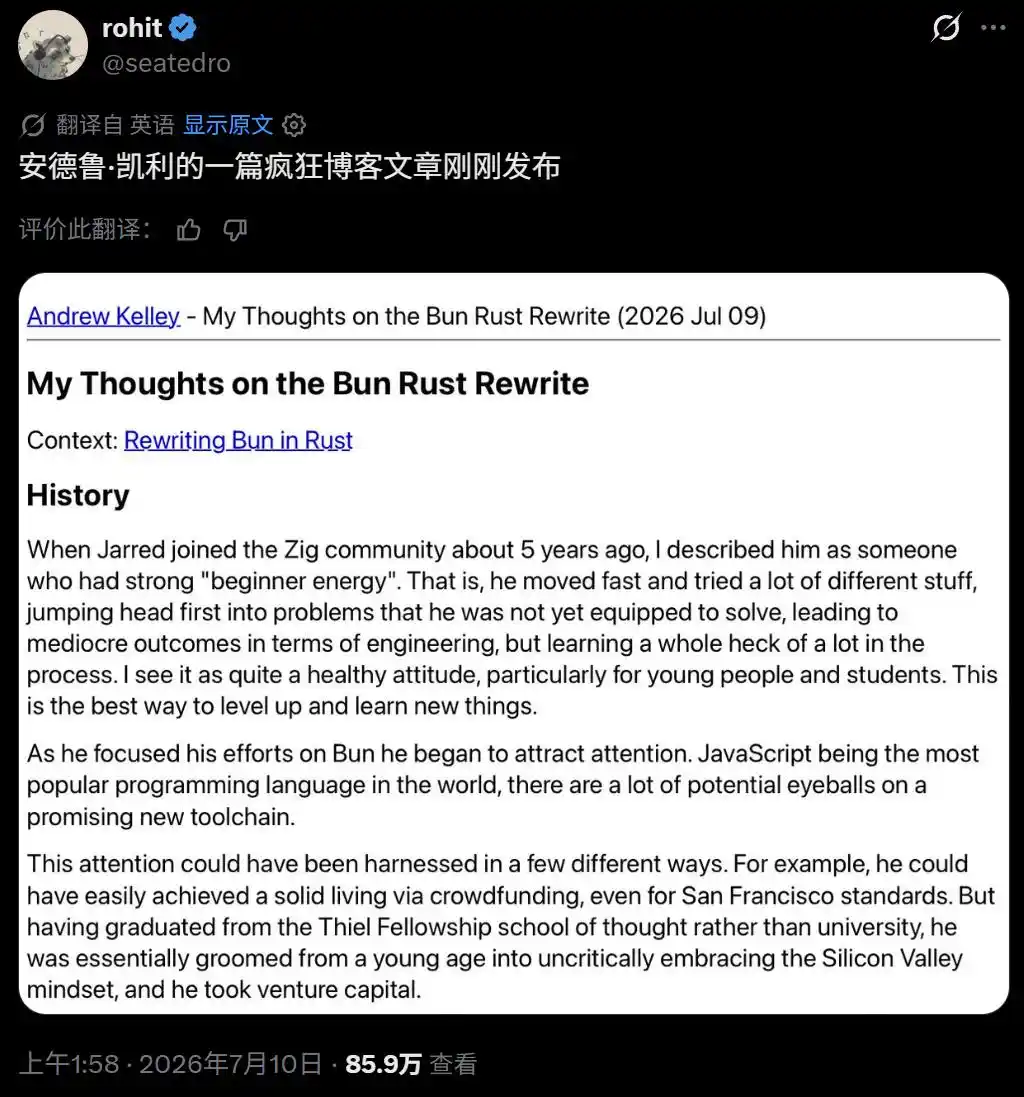
原因在于原来全面押注 Zig 语言的 Bun,被其创始人 Jarred Sumner 用 Rust 语言重写了。

Andrew Kelley 毫无遮拦地展示了自己的怒火,他没有在这个现象级技术事件中说客套话,直接将矛头对准了 Jarred Sumner 的个人工程习惯、管理能力,以及这起事件背后的商业逻辑。

Bun 是一个高性能 JavaScript/TypeScript 运行时,旨在成为 Node.js 的更快速、现代的直接替代品,近年来已经成为了前端世界挑战 Node.js 霸权的重量级选手。

Bun 的核心卖点是极速:无论是启动速度、依赖安装还是测试运行,都远超竞品,其部分原因在于它是用 Zig 语言编写的。

去年 12 月,Anthropic 宣布收购了 Bun,将其作为基础设施来驱动其 AI 编程工具 Claude Code 和 Claude Agent SDK。Jarred Sumner 和 Bun 团队的其他成员目前都在 Anthropic 工作。

在大规模应用,尤其是作为 Claude Code 的底层后,Bun 团队认为遇到了难以根除的稳定性问题。

具体来说,Zig 版本的 Bun 存在大量内存安全 bug——use-after-free、double-free、错误路径中忘记释放内存等。这些问题在 Zig 中只能靠编码规范约束,而在 Rust 中通过借用检查器和 Drop 机制会直接变成编译错误。

另一方面,Zig 上游社区对大语言模型(LLM)生成代码采取零容忍政策,即使是与 AI 无关的优化改动也无法合入上游。Bun 团队重度依赖 AI 辅助开发,继续使用 Zig 意味着必须长期维护自己的编译器分支,成本很高。

于是在今年 5 月,我们见证了科技圈的一场大工程:Bun 的创始人 Jarred Sumner 宣布,将 Bun 的百万行代码在 11 天内推倒重来用 Rust 重写了,他们使用的是 Anthropic 当时尚未公开发布的 Claude Fable 5(Mythos 级模型)和 Claude Code 的动态工作流能力。
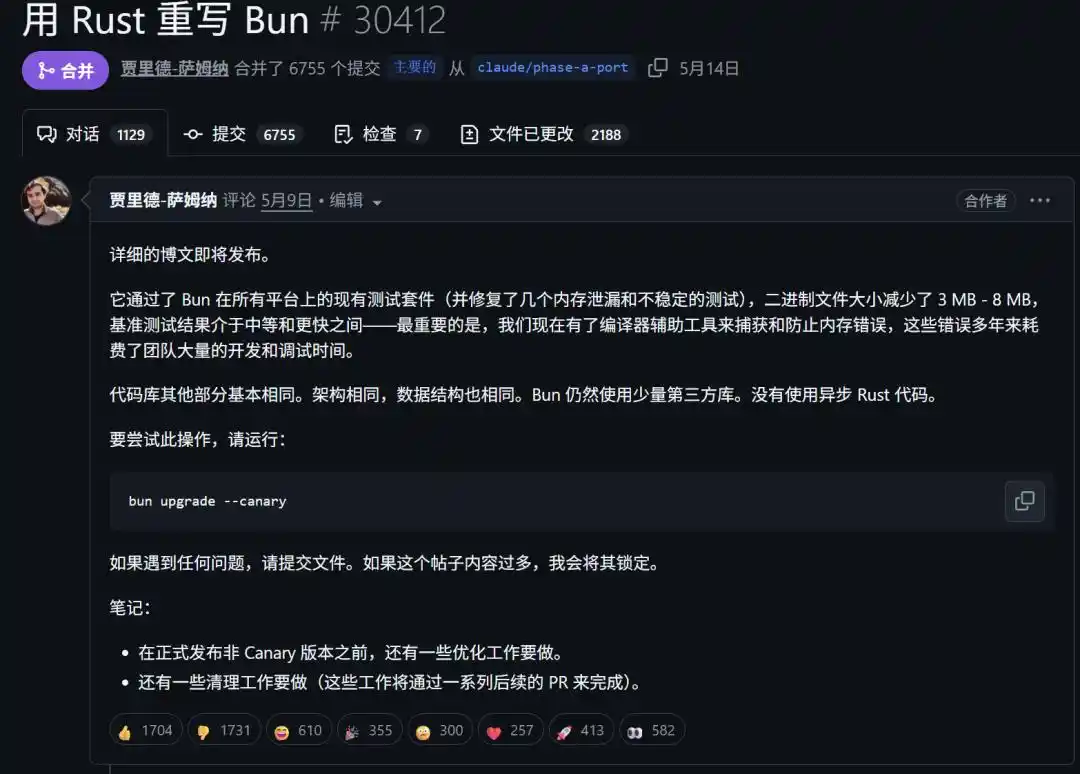
这是一次史诗级的智能体工作流(Agentic Workflow)大测试,后来也被 Anthropic 作为 Dynamic Workflows 的标杆案例进行宣传,但也因为「背叛信仰」引来了争议。

Zig 创始人 Andrew Kelley 在最近的博客文章中指出,Bun 在改写前之所以 Bug 频出,根本原因是 Jarred Sumner 糟糕的工程习惯。

首先是 AI 还没有兴起的时候,Jarred 就一直在写垃圾代码。Kelley 表示,Zig 团队经常会检查用户的代码库,而他们对 Bun 的代码库感到「极其恐惧」。里面充满了黑客式的补丁摞补丁(hacks on top of hacks)、滥用断言,并且为了快速上线新功能,几乎从不花时间消除 Bug 和技术债。

然后就是用 Claude 生成的百万行代码了。Kelley 反问道:「Bun 官方声称 100 万行未经过人工审查的 Rust(AI 写的)代码因为有测试用例所以是安全的;那如果测试用例真的这么完备,为什么原来用 Zig 写的时候没能抓出那些烦人的 Bug?」

现在,Kelley 对 Jarred 从一个有新手冲劲(beginner energy)的开源开发者变成一个糟糕的经理(stinky manager)感到极度失望。

Kelley 直言当得知 Bun 决定弃用 Zig 时,他不仅没有被背叛的愤怒,反而松了一口气。他害怕打着 Zig 招牌的 Bun 会让外界产生误解,更怕它引来一群只会复制粘贴 AI 代码的用户。他甚至讽刺地表示,自己正捧着一杯茶,庆幸「这终于不关我的事了」。

这么直白的开火,科技圈的其他人也纷纷加入战局,发表了看法。

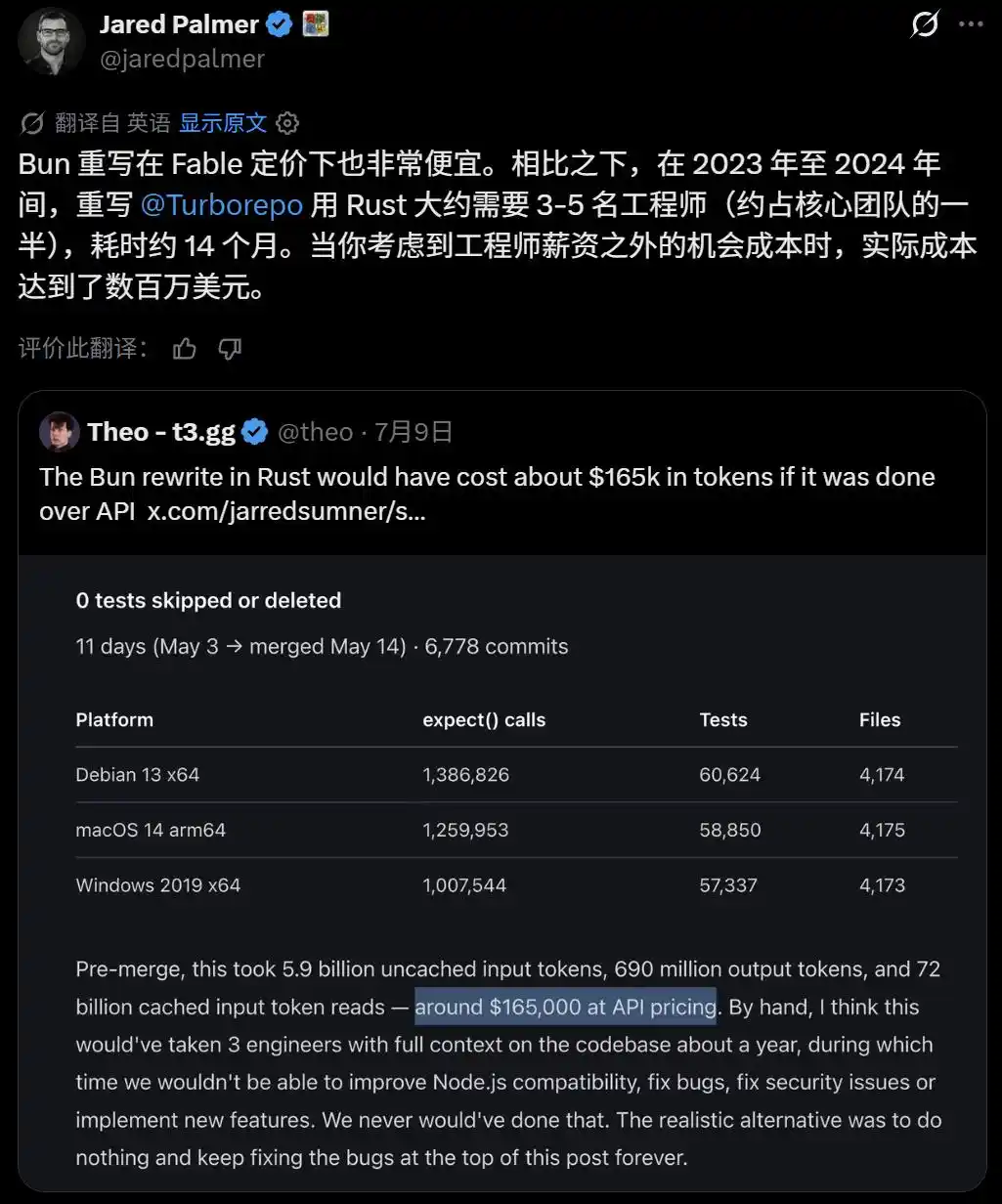
首先是算了一笔账:都说 Claude 的 token 太贵,但根据 Jarred Sumner 和 Bun 官方公布的数据,Rust 语言重写的 Bun 项目预计消耗了 16.5 万美元的 API 费用。在科技圈和工程界看来,这个价格和时间便宜得令人恐惧。

仅仅从账面上看,AI 将开发成本压缩到了原本的十分之一左右,时间也从大约一年减到了不到两个星期。
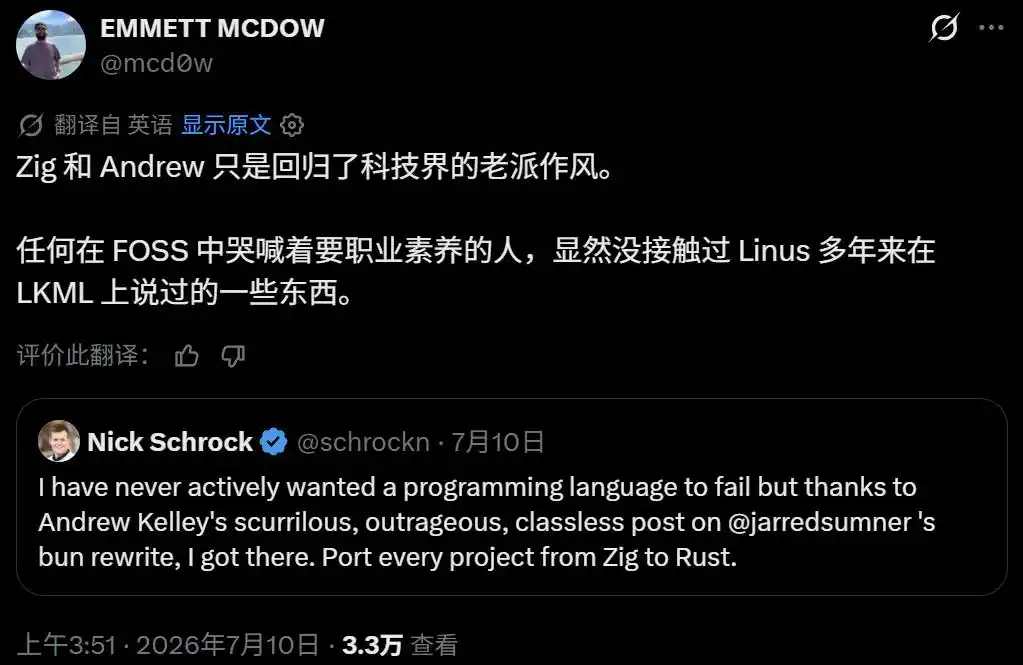
其次是对开源社区文化与 AI 时代碰撞的态度。有人在看完 Zig 创始人 Andrew 的博文之后感到极度不适,认为他公开攻击曾经的重要用户和赞助者(Bun 曾长期资助 Zig),显得缺乏职业素养,甚至有人激进地表示「从未如此主动希望一种编程语言失败」。

但也有老派程序员站出来声援,认为在这个被资本和 AI 泡沫裹挟的时代,Andrew 只是在捍卫纯粹的工程质量,展现了当年 Linus Torvalds 的作风。
当然,大家更关心的是项目这么折腾了一番之后,还是否好用。

目前争议最大的的地方在于,这 100 万行代码由于是 AI 直接由 Zig 机械翻译而来,缺少人类工程师的架构重构。新代码库中残留了高达 2.7 万行 unsafe 代码块。很多人担忧,未来人类开发者在维护、阅读和修改这坨庞大的「AI 生成物」时,耗费的认知成本和排错成本,最终可能会超过今天省下的前置开发成本。

这个打破软件工程历史规律的项目,最终会是一场 AI 改变编程范式的里程碑,还是会在未来化作一座难以维护的技术债火山?可能只能交给时间来验证了。

参考内容:

https://bun.com/blog/bun-in-rust

https://andrewkelley.me/post/my-thoughts-bun-rust-rewrite.html

本文来自微信公众号 “机器之心”(ID:almosthuman2014),作者:关注AI的

Criptomoedas em alta

Perguntas relacionadas

Q是什么事件引发了Zig创始人Andrew Kelley的愤怒?

A事件是Bun的创始人Jarred Sumner宣布,在Anthropic的支持下,使用Claude AI在11天内将Bun项目的百万行代码从Zig语言重写为Rust语言。

QBun团队决定从Zig迁移到Rust的主要原因是什么?

A主要原因有两个:一是Zig版的Bun存在难以根除的内存安全bug,而Rust的借用检查器等机制能从编译器层面防止这类错误;二是Zig社区对AI生成代码持零容忍态度,与Bun团队重度依赖AI辅助开发的模式相冲突。

QAndrew Kelley在博客中主要批评了Jarred Sumner的哪些方面?

AAndrew Kelley主要批评了Jarred Sumner糟糕的工程习惯,包括在AI兴起前就写“垃圾代码”、代码库充满黑客式补丁、滥用断言、为快速上线功能而忽视修复Bug和偿还技术债。他还批评Jarred从一个有新手冲劲的开发者变成了一个糟糕的经理。

Q这次用AI重写百万行代码的工程,预计花费了多少API费用?开发时间压缩了多少?

A预计消耗了16.5万美元的API费用。开发时间从大约一年压缩到了11天(不到两个星期),成本和时间都降到了原本的十分之一左右。

Q关于这次AI重写工程,目前最大的技术担忧是什么?

A最大的技术担忧是,由于代码是由AI从Zig机械翻译而来,缺少人类工程师的架构重构,新代码库中残留了高达2.7万行unsafe代码块。这可能导致未来人类开发者在维护、阅读和修改这些“AI生成物”时,耗费的认知成本和排错成本极高,可能超过今天节省下的前期开发成本。

Leituras Relacionadas

Interview with Robinhood Executive: Meme + Tokenized US Stocks as "Barbell" Customer Acquisition Strategy, All Business Lines Achieve Hundreds of Millions in Revenue

Interview with Robinhood executive Johann Kerbrat reveals the company's "barbell" customer acquisition strategy for its new Robinhood Chain, combining meme tokens with tokenized stocks. Three weeks after mainnet launch, the chain has seen over $3B in weekly DEX volume and 105M transactions. Kerbrat explains the logic behind the permissionless chain: meme tokens attract DeFi users, while tokenized real-world assets (RWA), currently over 90 US stocks and ETFs accessible in 120+ countries, serve global users. The goal is to bring Robinhood's 27 million funded accounts on-chain by simplifying DeFi with a user-friendly interface, exemplified by features like Robinhood Earn which offers yield without requiring wallet management. Built on Arbitrum's technology stack for its speed, low cost, and Ethereum's security, the chain focuses on financial products like Earn, spot trading, and perpetuals. Kerbrat downplays direct competition with platforms like Base, emphasizing the goal of expanding the overall market for on-chain assets. He details selective partnerships (e.g., Morpho, Lighter) based on compliance, unique UX, and differentiation. While regulatory clarity is pending for US perpetuals, the expansion continues via Bitstamp in Europe. Finally, Kerbrat positions Robinhood as a "super app" integrating stocks, options, crypto, banking, and AI trading, with all major business lines generating hundreds of millions in revenue. For the chain, current priority is driving adoption over maximizing gas fee revenue.

marsbitHá 1h

Interview with Robinhood Executive: Meme + Tokenized US Stocks as "Barbell" Customer Acquisition Strategy, All Business Lines Achieve Hundreds of Millions in Revenue

marsbitHá 1h

Fidelity Q3 Report: BTC, ETH, and SOL Continue to Build Bottoms; How Much Further Will This Crypto Bear Market Go?

Fidelity's Q3 Crypto Signal Report analyzes the current bear market, noting Bitcoin (BTC), Ethereum (ETH), and Solana (SOL) are in a prolonged bottoming phase. Key indicators like the weighted Net Unrealized Profit/Loss (NUPL) have turned negative (-0.01), signaling the market is slightly below its aggregate cost basis, with BTC acting as the primary stabilizing asset. BTC's dominance has risen to 68%, indicating a lack of capital rotation to other digital assets. Performance has been weak across the board, with BTC, ETH, and SOL down significantly year-to-date. Market sentiment is depressed, exacerbated by substantial outflows from spot ETPs and a challenging macro environment. The report compares the current ~203-day downtrend to historical ~300-day bottoming cycles, suggesting the process may be two-thirds complete, with late 2026 as a potential timeframe to monitor. For Bitcoin, NUPL at 0.09 indicates cautious sentiment, while momentum signals remain negative. The Yardstick metric points to potential undervaluation relative to network security (hashrate). Ethereum's NUPL is deep in the "capitulation" zone at -0.43, a historically positive signal for future returns, though its momentum and network fee revenue are negative. Solana shows the deepest NUPL at -0.72 but demonstrates relative resilience in on-chain activity and stablecoin transfer volume. The report concludes that while several metrics are near historical capitulation levels, a definitive market bottom has not yet been established. The path forward likely involves continued consolidation, with BTC's relative strength and fundamental on-chain usage for ETH and SOL providing key areas for investor observation.

marsbitHá 1h

Fidelity Q3 Report: BTC, ETH, and SOL Continue to Build Bottoms; How Much Further Will This Crypto Bear Market Go?

marsbitHá 1h

Trading

Spot

Artigos em Destaque

Como comprar EPIC

Bem-vindo à HTX.com!Tornámos a compra de Epic Chain (EPIC) simples e conveniente.Segue o nosso guia passo a passo para iniciar a tua jornada no mundo das criptos.Passo 1: cria a tua conta HTXUtiliza o teu e-mail ou número de telefone para te inscreveres numa conta gratuita na HTX.Desfruta de um processo de inscrição sem complicações e desbloqueia todas as funcionalidades.Obter a minha contaPasso 2: vai para Comprar Cripto e escolhe o teu método de pagamentoCartão de crédito/débito: usa o teu visa ou mastercard para comprar Epic Chain (EPIC) instantaneamente.Saldo: usa os fundos da tua conta HTX para transacionar sem problemas.Terceiros: adicionamos métodos de pagamento populares, como Google Pay e Apple Pay, para aumentar a conveniência.P2P: transaciona diretamente com outros utilizadores na HTX.Mercado de balcão (OTC): oferecemos serviços personalizados e taxas de câmbio competitivas para os traders.Passo 3: armazena teu Epic Chain (EPIC)Depois de comprar o teu Epic Chain (EPIC), armazena-o na tua conta HTX.Alternativamente, podes enviá-lo para outro lugar através de transferência blockchain ou usá-lo para transacionar outras criptomoedas.Passo 4: transaciona Epic Chain (EPIC)Transaciona facilmente Epic Chain (EPIC) no mercado à vista da HTX.Acede simplesmente à tua conta, seleciona o teu par de trading, executa as tuas transações e monitoriza em tempo real.Oferecemos uma experiência de fácil utilização tanto para principiantes como para traders experientes.

242 Visualizações TotaisPublicado em {updateTime}Atualizado em 2026.07.21

Como comprar EPIC

Discussões

Bem-vindo à Comunidade HTX. Aqui, pode manter-se informado sobre os mais recentes desenvolvimentos da plataforma e obter acesso a análises profissionais de mercado. As opiniões dos utilizadores sobre o preço de EPIC (EPIC) são apresentadas abaixo.

活动图片