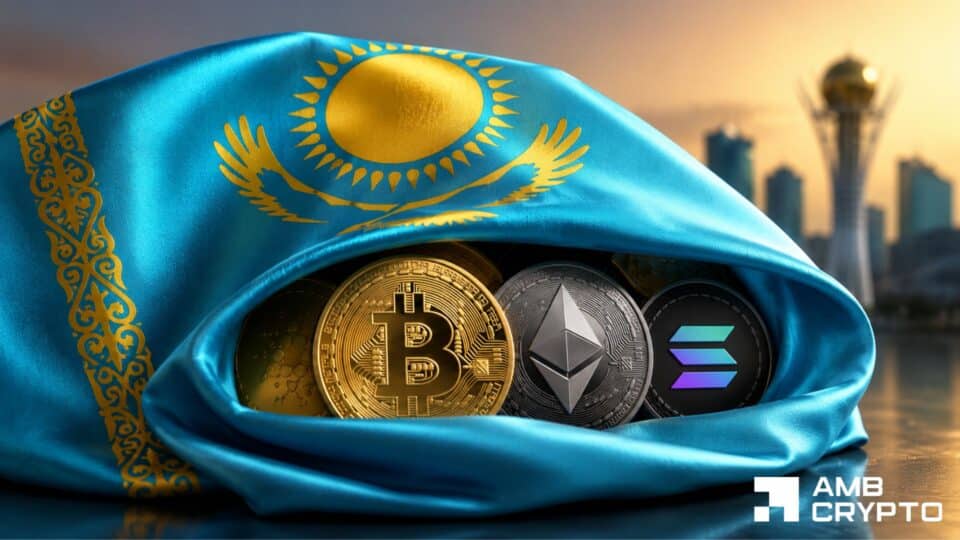
Top 7 VPNs of July 2026

ambcryptoPublicado em 2026-07-07Última atualização em 2026-07-07

Resumo

With over 6 billion internet users globally, only a small percentage utilize a VPN to encrypt their connection, mask their IP address, and protect data, especially on public Wi-Fi. Choosing a VPN requires considering speed, privacy record, and server network. Here are the top 7 VPNs for July 2026: 1. **ExpressVPN:** Offers high speed, reliability, and usability with over 3,000 servers in 106 countries, featuring a proprietary Lightway protocol. 2. **Windscribe:** A privacy-focused, freemium VPN committed to an open internet, offering server-side ad blocking and browser extensions. 3. **Norton VPN:** A user-friendly option with a strict no-logs policy, kill switch, and split tunneling, integrated into the Norton 360 security ecosystem. 4. **CyberGhost:** An affordable VPN with a 45-day money-back guarantee, over 12,000 servers, and independently audited no-logs policy. 5. **Mullvad VPN:** Prioritizes privacy by not requiring an email or account, offering flat pricing, strong speeds, and optional content blocking. 6. **NordVPN:** A popular provider with servers in 118 countries, standard protections, and higher-tier plans including Threat Protection Pro. 7. **Proton VPN:** Offers a generous free tier and paid plans with features like Secure Core and NetShield, operating under strict Swiss privacy laws. VPNs are crucial for protecting online activity. Users should research thoroughly before purchasing any service.

More than 6 billion people in the world use the internet, which roughly represents about 74% of the global population. Out of this large number, only a small percentage use a VPN or Virtual Private Network. A VPN creates an encrypted connection between a user’s device and the internet. This protects user data and masks their IP address and protects it especially on public Wi-Fi.

VPNs prevent third parties from spying or intercepting sensitive information and be especially useful for people who use public Wi-Fi networks. In order to choose the right VPN, users should consider their requirements and match them to the several available options before picking the right one. Some of the factors to consider are speed, a good privacy record, and a large server network. Here are the top 7 VPNs of July 2026:

1. ExpressVPN
ExpressVPN mixes speed, reliability, and usability in its network spanning over 3,000 servers across 106 countries. It offers consistent access even in regions with strict restrictions.

The VPN has a proprietary Lightway protocol that keeps connections stable and fast whether users are streaming, browsing, or torrenting on public Wi-Fi. It offers 8 device connections and provides strong speeds, reliable performance, and a clean and intuitive interface.

2. Windscribe

Windscribe operates with the mission that the internet should be open and free from censorship, surveillance, and invasive tracking. They put the users first, before advertisers, governments, or even shareholders. It gives people tools to take back control of their online life.

The VPN does not track or sell user data and the platform is self-funded and follows a freemium model. They also offer server side ad blocking and browser extensions with privacy features.

3. Norton
Norton is another user-friendly option for users who want to mask their IP address and follows a strict no-logs policy. It also has a kill switch that disconnects user internet if the VPN drops to prevent data leaks and split tunneling that helps users choose and route through the VPN while leaving others connected to the local network.

There are 3 package options that the platform offers which are Norton VPN Standard, Norton VPN Plus and Norton VPN Ultimate. Norton offers server locations including city-level ones for faster connections and content access. The Norton 360 ecosystem focuses on online security and shares some VPN capabilities like Compromised Network Detection, kill switch, and DNS leak protection.

4. CyberGhost
CyberGhost is an affordable VPN that has a 45-day money-back guarantee and runs over 12,000 servers in 100 countries and delivers local speeds with WireGuard support. The VPN is based in Romania and operates under a strict no-logs policy that is independently audited by Deloitte.

The VPN is built with speed in mind and provides unlimited bandwidth and comprehensive 256-bit AES encryption and multiple protocols plus split tunneling and a kill switch. One subscription covers 7 devices in total and is a one-click solution for all privacy needs.

5. Mullvad VPN
Mullvad VPN is a privacy-focused platform that does not require users to have an email address or user account to get started. It runs on a flat pricing model and lets users pay without linking personal information. The VPN offers strong speeds consistently and reliable connections, particularly on public WiFi networks.

They also offer standard protections like a kill switch, split tunneling, and multi-hop connections along with an optional content blocker that can filter specific categories of web traffic. The streaming access works consistently, including Netflix across multiple regions, though the server network covers fewer countries than many larger providers.

6. Nord VPN
Nord VPN is one of the most popular providers in the space. It operates servers spanning over 118 countries and has standard protections like a kill switch, split tunneling, multi-hop routing, and an ad/malware blocker. One of the reasons for its wide popularity is its ability to deliver stable connections across devices and regions.

The higher-tier plans come with Threat Protection Pro, which scans downloads and blocks malicious websites. The service operates on RAM-only servers and utilizes modern protocols, including WireGuard.

7. Proton VPN
Proton VPN’s free tier comes without any data caps and provides access to a limited number of servers, whereas the paid plan expands this access to a larger global network. The major features include a kill switch, split tunneling, port forwarding, multi-hop routing, ad and malware blocking, and optional access to the Tor network through VPN.

The VPN operates out of Switzerland and follows some of the world’s strictest privacy laws and is also not subject to either the US or EU surveillance alliances. They follow a no-logs policy, and the built-in “Stealth” protocol lets users circumvent government and regional censorship in restrictive countries. The premium plans include features like Secure Core, which routes traffic through multiple servers for extra security, and NetShield, which blocks malware, ads, and website trackers.

Final word

VPNs are a crucial step towards protecting data and online activity, especially on public WiFi or when accessing restricted content. Features and performance can vary widely for various VPNs, but the key factors that make a VPN valuable remain its ability to create a safer and more private internet experience.

Users need to take the time and do their own research before getting the paid versions of any VPNs.


Disclaimer. Readers are encouraged to do their own research. Ambcrypto is not liable for any outcomes related to the use of information, products, or services mentioned. This content may include affiliate or partner links.

Criptomoedas em alta

Perguntas relacionadas

QAccording to the article, what are the two main ways a VPN protects users on public Wi-Fi?

AIt creates an encrypted connection to protect user data, and it masks the user's IP address.

QWhich VPN provider mentioned in the article uses a proprietary protocol called Lightway to ensure stable and fast connections?

AExpressVPN uses its proprietary Lightway protocol for stable and fast connections.

QWhich two VPNs in the list are highlighted for their strong privacy stance and strict no-logs policies that have been independently audited?

ACyberGhost (audited by Deloitte) and Proton VPN (operating under strict Swiss privacy laws) are highlighted for their audited no-logs policies.

QWhat unique feature does Mullvad VPN offer regarding user sign-up and payment, as stated in the article?

AMullvad VPN does not require an email address or user account to sign up, and users can pay without linking personal information.

QBesides standard VPN protections, what additional security feature do the higher-tier plans of Nord VPN include, according to the article?

ANord VPN's higher-tier plans include Threat Protection Pro, which scans downloads and blocks malicious websites.

Leituras Relacionadas

Zuckerberg Begins Betting on Prediction Markets, While Asian Countries Still View Them as Gambling

Mark Zuckerberg is backing prediction markets, with Meta developing its own app "Arena," signaling major tech validation. This industry now sees over $14 billion in monthly volume. These markets function as binary contracts (payout $1 if an event occurs, $0 if not), with trading prices reflecting real-time event probabilities. Results are settled by oracles. Prediction markets originated from informal political betting and academic experiments like the Iowa Electronic Markets. Their core mechanism relies on "skin in the game"—participants risk their own money, making aggregated information more reliable than polls or expert opinions. They have proven accurate in forecasting areas like monetary policy, elections, and market events. While Western markets are integrating them into regulated financial systems, many Asian jurisdictions still classify them as gambling, leading to regulatory divergence. This stance creates three major issues for Asia: regulatory arbitrage and capital outflow, loss of informational sovereignty as valuable social data accumulates offshore, and a lack of user protection within a formal framework. The article argues that Asia's focus should shift from blocking these markets to responsibly harnessing the data they generate within a regulated system. The current avoidance of discussion cedes leadership and advantages to foreign entities.

Foresight NewsHá 8m

Zuckerberg Begins Betting on Prediction Markets, While Asian Countries Still View Them as Gambling

Foresight NewsHá 8m

Beyond Private Keys: From Wallets and L2 to Supply Chains, How to Guard the Security Perimeter of Web3?

Beyond Private Keys: Securing Web3's Expanding Attack Surface from Wallets to L2s and Supply Chains The crypto space faced a wave of security incidents in June, with over $75 million lost across 40 major attacks. These breaches highlighted risks beyond private key theft, exposing vulnerabilities across the entire user interaction chain. Wallet security was compromised not through stolen seed phrases, but via a critical flaw in the Cardano wallet SecondFi's signing implementation. This bug allowed attackers to potentially derive private keys from publicly visible signature data, emphasizing that wallet security depends on correct cryptographic implementation, ideally in open-source, auditable code. Layer-2 networks also revealed complex trust chain risks. Attacks on legacy Aztec deployments exploited inconsistencies in proof systems, showing that a valid zero-knowledge proof is only as secure as its underlying rules. Another attack on Taiko's SGX-based prover stemmed from a leaked signing key and inadequate verification checks. Furthermore, a technical glitch halted Base's block production, underscoring that L2 security encompasses network availability and reliable user exit paths as much as asset safety. Finally, the Polymarket incident demonstrated that even audited smart contracts are not immune. A compromised third-party supplier led to a malicious script being injected into the platform's frontend, resulting in user fund losses. This "supply chain attack" shows that the security of the entire interaction path—from the webpage to the wallet signature—is critical. The conclusion is clear: Web3 security now involves safeguarding the entire journey from transaction intent to on-chain settlement. Users must adopt layered security habits: isolating long-term holdings, using dedicated wallets for daily interactions, scrutinizing transaction details before signing, and managing authorizations cautiously. Defense must evolve from protecting a single point (the private key) to securing a complete chain of interactions.

marsbitHá 1h

Beyond Private Keys: From Wallets and L2 to Supply Chains, How to Guard the Security Perimeter of Web3?

marsbitHá 1h

Robinhood Chain Goes Viral in One Week: Memes Drive Traffic, Stablecoins Support TVL

Robinhood Chain, an Arbitrum-based Layer 2 network launched on July 1st, experienced explosive growth in its first week. While meme coin hype drove user activity, stablecoin deposits fueled its surge in Total Value Locked (TVL). The chain's rapid adoption was driven by multiple factors. CEO Vlad Tenev reversed his initial stance, endorsing the chain for meme coins despite its original focus on Real-World Assets (RWA). The integration of the popular Solana-based launchpad Pump.fun significantly lowered the barrier for meme trading. Furthermore, the prediction market application World announced a migration from Solana to Robinhood Chain. Meme coin mania, led by tokens like CASHCAT, generated massive trading volume, with daily active addresses skyrocketing from near zero to hundreds of thousands. However, the primary driver of the chain's TVL, which soared past $234 million, was a major institutional deposit. Ethena injected approximately $50 million in stablecoins into the Morpho lending protocol, which underpins Robinhood's Earn product, accounting for the bulk of locked value. This highlights two concurrent narratives: retail-driven meme speculation boosting transactions, and institutional stablecoin deposits building foundational liquidity. In contrast, the chain's flagship RWA offerings, like tokenized stocks, remain a minor part of the ecosystem at around $12.8 million. The first week demonstrates a path where speculative trading and yield-seeking capital provide initial momentum, while the core RWA vision is still in early development.

Foresight NewsHá 1h

Robinhood Chain Goes Viral in One Week: Memes Drive Traffic, Stablecoins Support TVL

Foresight NewsHá 1h

Trading

Spot

Artigos em Destaque

Como comprar PEOPLE

Bem-vindo à HTX.com!Tornámos a compra de ConstitutionDAO (PEOPLE) simples e conveniente.Segue o nosso guia passo a passo para iniciar a tua jornada no mundo das criptos.Passo 1: cria a tua conta HTXUtiliza o teu e-mail ou número de telefone para te inscreveres numa conta gratuita na HTX.Desfruta de um processo de inscrição sem complicações e desbloqueia todas as funcionalidades.Obter a minha contaPasso 2: vai para Comprar Cripto e escolhe o teu método de pagamentoCartão de crédito/débito: usa o teu visa ou mastercard para comprar ConstitutionDAO (PEOPLE) instantaneamente.Saldo: usa os fundos da tua conta HTX para transacionar sem problemas.Terceiros: adicionamos métodos de pagamento populares, como Google Pay e Apple Pay, para aumentar a conveniência.P2P: transaciona diretamente com outros utilizadores na HTX.Mercado de balcão (OTC): oferecemos serviços personalizados e taxas de câmbio competitivas para os traders.Passo 3: armazena teu ConstitutionDAO (PEOPLE)Depois de comprar o teu ConstitutionDAO (PEOPLE), armazena-o na tua conta HTX.Alternativamente, podes enviá-lo para outro lugar através de transferência blockchain ou usá-lo para transacionar outras criptomoedas.Passo 4: transaciona ConstitutionDAO (PEOPLE)Transaciona facilmente ConstitutionDAO (PEOPLE) no mercado à vista da HTX.Acede simplesmente à tua conta, seleciona o teu par de trading, executa as tuas transações e monitoriza em tempo real.Oferecemos uma experiência de fácil utilização tanto para principiantes como para traders experientes.

504 Visualizações TotaisPublicado em {updateTime}Atualizado em 2026.06.02

Como comprar PEOPLE

Discussões

Bem-vindo à Comunidade HTX. Aqui, pode manter-se informado sobre os mais recentes desenvolvimentos da plataforma e obter acesso a análises profissionais de mercado. As opiniões dos utilizadores sobre o preço de PEOPLE (PEOPLE) são apresentadas abaixo.

活动图片