【Introduction】 This statement from the LMArena lead has been trending recently: The masses only get to play with AI toys, while a select few are using GPT-5.6 and Fable 5 to sweep everything before them. A vast experience gap is forming a new chasm. Have you been quietly "folded" too?
We are living in a world of AI folding.
Just yesterday, Altman was up to new antics on X again.
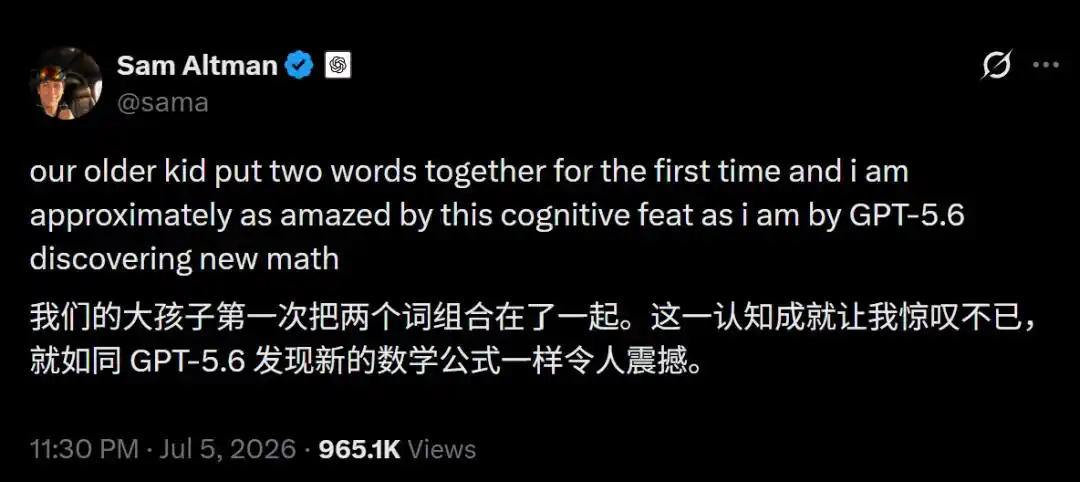
He posted this X.
Our eldest child combined two words for the first time. This cognitive achievement left me in awe, just as astonishing as GPT-5.6 discovering a new mathematical formula.
Same old formula, familiar taste.
Under this X, there were all sorts of comments.


However, behind this seemingly heartwarming X lies a harsh reality—
The current AI experience has seen a severe "class folding."
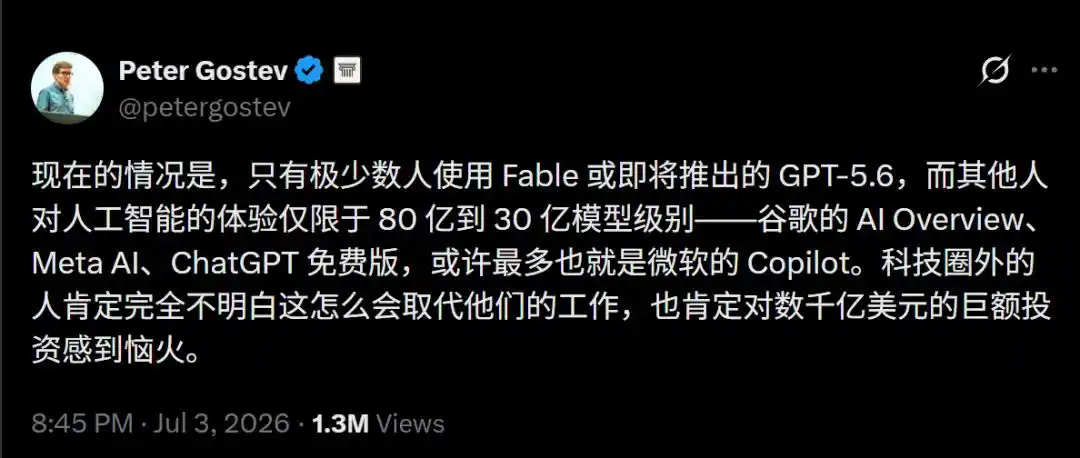
A very small number of people are using top-tier large models like Fable or the upcoming GPT-5.6, while the vast majority of the general public only has access to mediocre products with 8B to 30B parameters.
The benefits of technology are becoming the exclusive domain of a few, while the masses only feel the clamor of the bubble. Inside and outside the tech circle, we are in two completely different parallel universes.
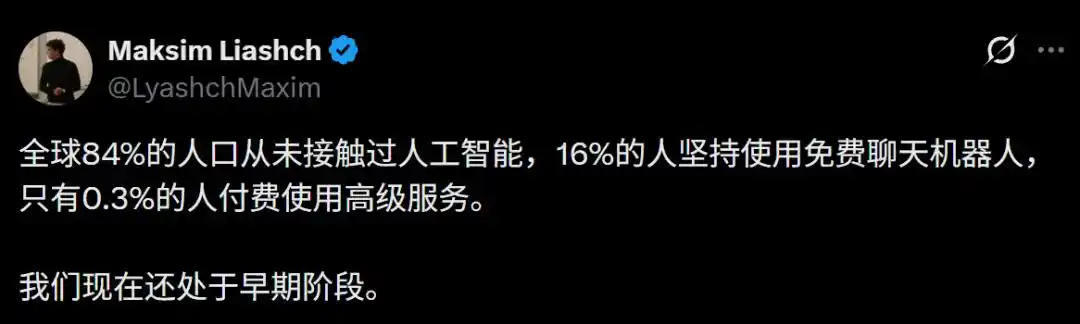
A survey shows that 84% of the global population has never interacted with AI, 16% stubbornly use free chatbots, and only 0.3% pay for premium services.
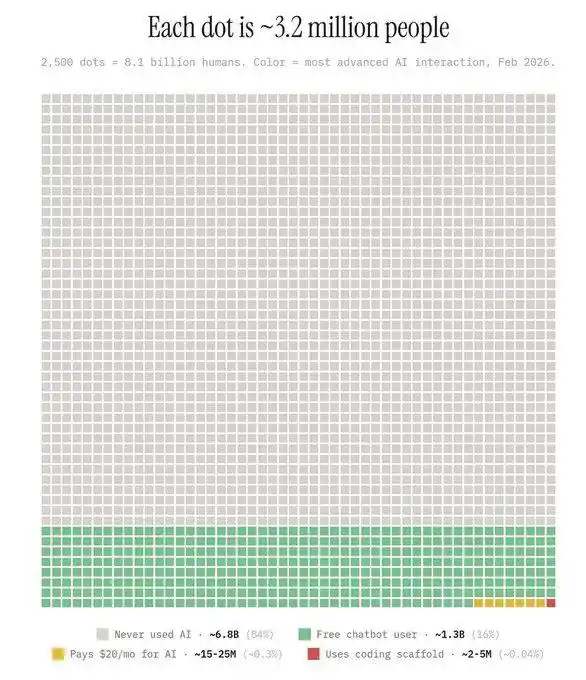
Fable 5 and GPT-5.6: The Chasm Between the Masses and the Elite
The above viewpoint comes from Peter Gostev, core lead at LMArena.
He stated: Fable 5 and GPT-5.6 are becoming the privilege of a few!
This perspective, once raised, sparked widespread discussion among netizens and has become a hot topic recently.
If you are an ordinary person outside the tech industry, you might be puzzled—
The news is filled with tech giants burning through hundreds of billions of dollars investing in large models, experts constantly warn that "AI will steal jobs," but why are free models like ChatGPT so underwhelming to use?
The answer is simple: because you are using a castrated, inferior product.
Peter Gostev pointed out bluntly:
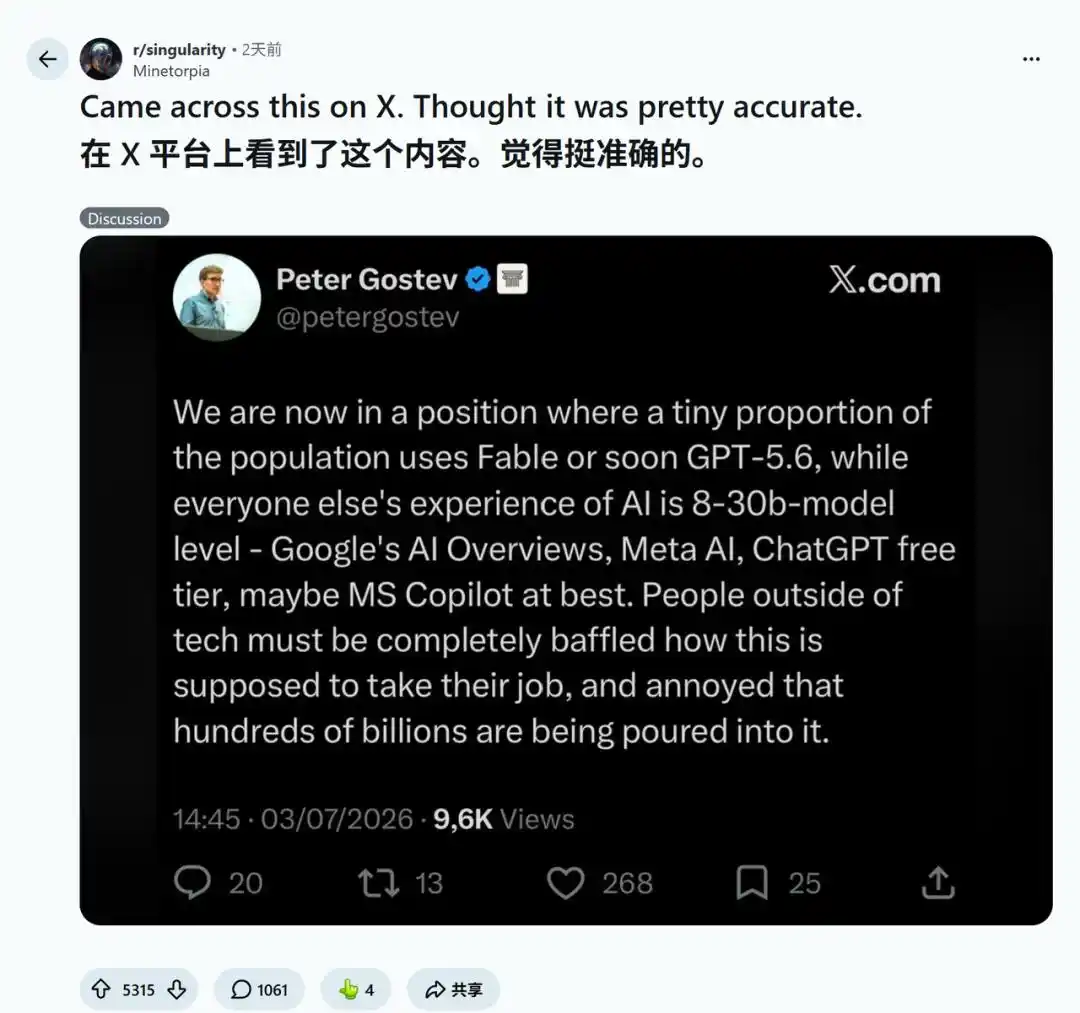
We are now in a situation where a tiny fraction of the population is using top-tier models like Fable or the upcoming GPT-5.6, while the AI experience for everyone else is stuck at the level of 8B to 30B (8 billion to 30 billion) parameter models—at best, that's the free version of ChatGPT or basic Microsoft Copilot.
This vast experience gap leads to a strong cognitive divide.
The general public outside the circle completely fails to understand how AI can replace some human jobs. They are confused or even angry about the tech industry's insane spending.
On the other side, the privileged tech elite are enjoying a dimension-lowering strike.
The dividends of technology are quietly becoming the exclusive property of a few.

Current AI is Too Far from Ordinary People
Why do ordinary people think AI is useless?
AI influencer Kol Tregaskes used his brother, a park groundskeeper, as an example.
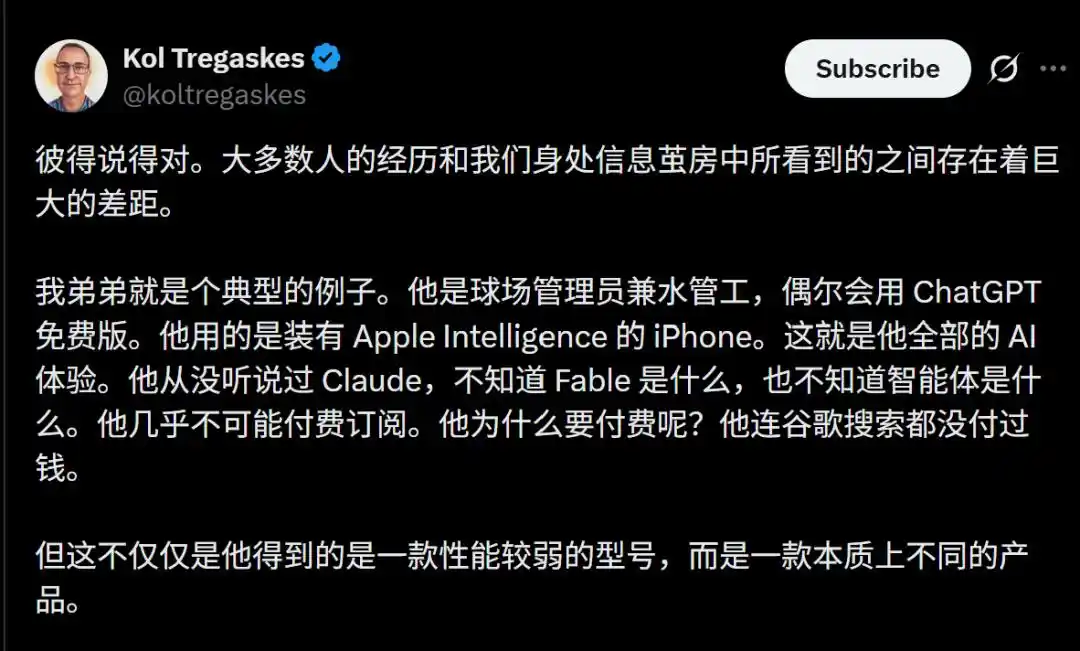
His brother occasionally uses the free ChatGPT and has an iPhone with basic Apple Intelligence. That's his entire "AI experience."
He hasn't heard of Anthropic's Claude, doesn't know what Fable is, and has no idea what an Agent is. He would never pay for an AI subscription, just as he would never pay to use Google Search.
This isn't just about "model quality"; they are using two completely different product forms.
Free users get a chatbot. You can ask it quick questions, upload a file, or do some shallow internet research.
But the paying elite get a complete work system.
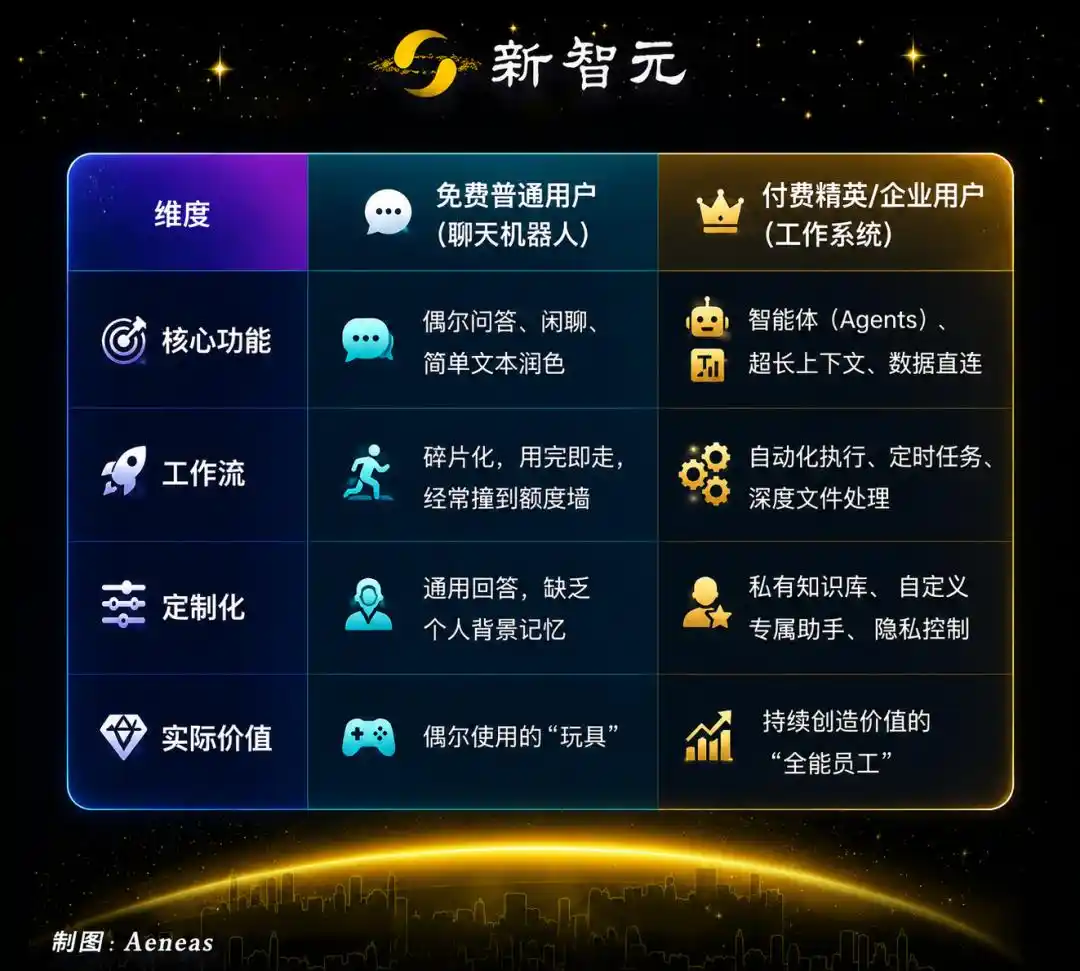
Kol pointed out that his brother cannot create a specialized "Lawn Management GPT" for UK turf species, common diseases, and seasonal maintenance schedules; he cannot throw a thick equipment manual at AI and expect it to get it right; he doesn't have Agent mode, no connected data, and cannot turn AI into a real assistant that handles quotes, supplier emails, and maintenance plans.
This is also the biggest deficiency in the current AI product layer: a severe disconnect between the lab and real life.
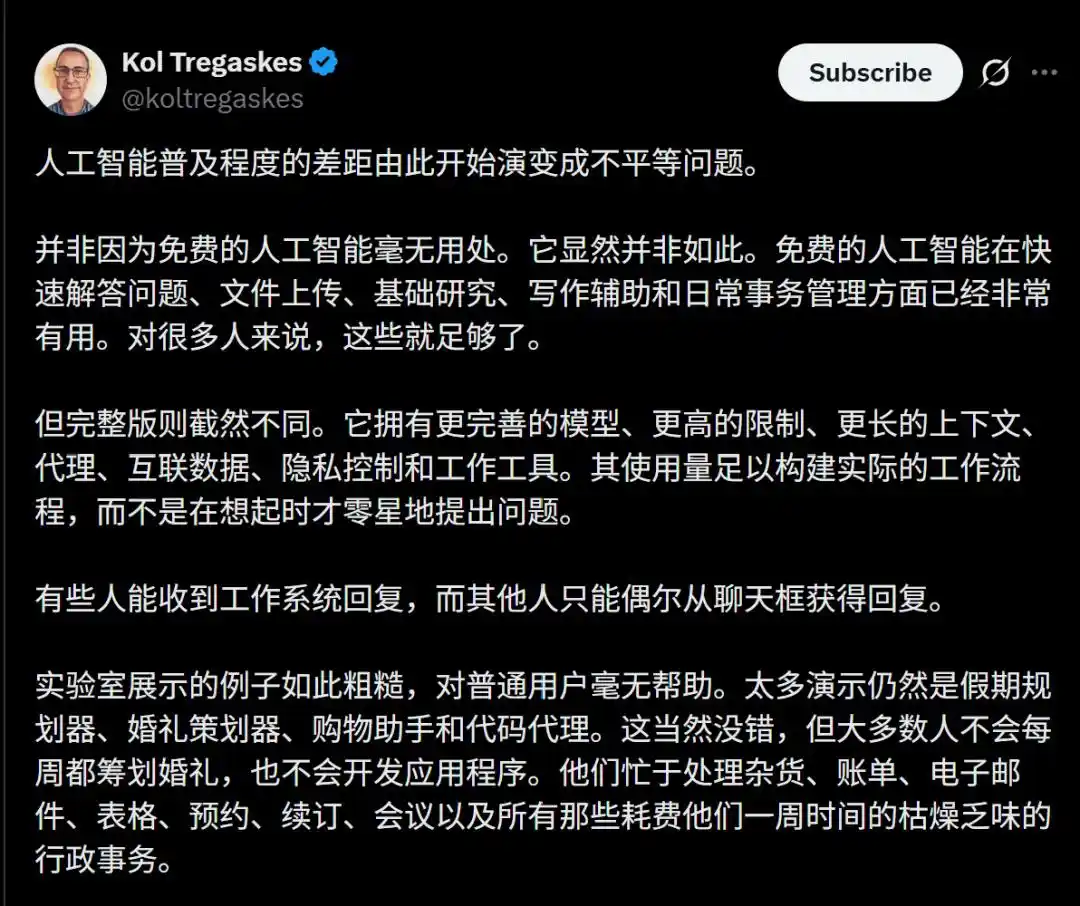
The demos at tech giant launch events mostly involve AI helping you plan a luxurious wedding or AI developing a cool app from scratch.
But what does that have to do with ordinary people?
What ordinary people actually face are the daily headaches: weekly grocery shopping, complicated bills, endless emails, forms to fill out, medical appointments, and car insurance renewals.
A true AI assistant should understand your living habits, your family's allergies, your budget, supermarket sales, and even what's left in your fridge.
It should automatically compare prices, generate lists, warn you when the total cost exceeds your budget, and ultimately turn into an automation program on your phone that silently handles all of this for you every week.
As long as AI stays in a dialog box answering questions, what the masses see will always be demos, not life-changing products.


What Does a $1000-a-Day AI Look Like?
Meanwhile, what best illustrates the fold is how top engineers on Reddit use super AI.
First, what most distinguishes the elite from ordinary people is the staggering cost of computing power.
A netizen revealed a figure that would stun ordinary people: "Yesterday, I spent $1000 on a Fable inference project. Even in large corporations, only a handful have such freedom. Things will only get worse."
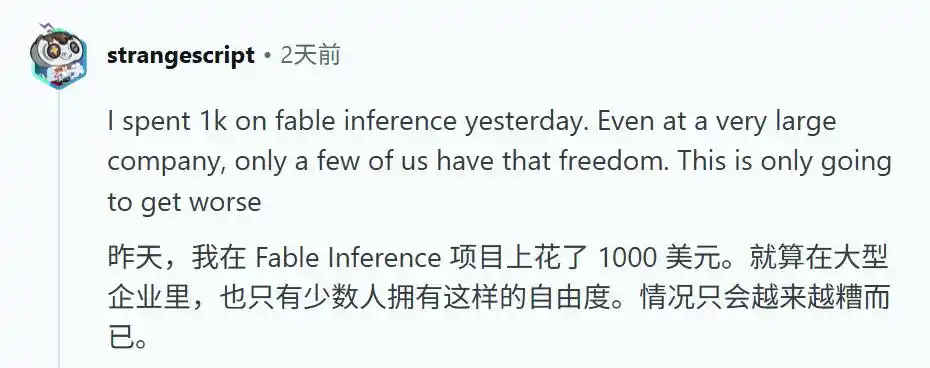
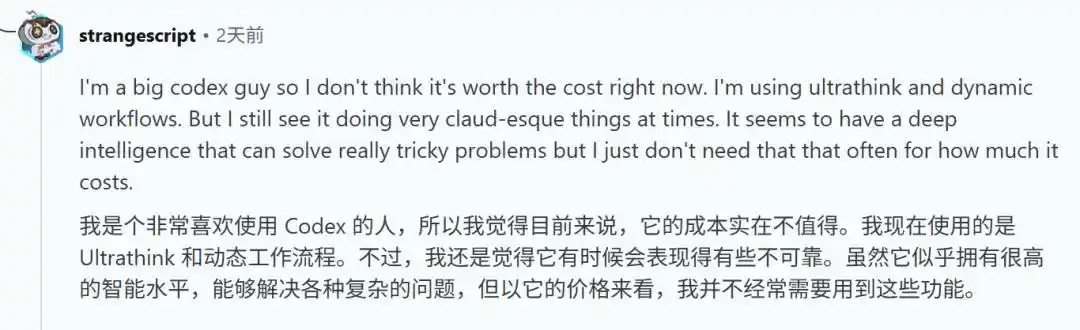
This exorbitant cost is like a chasm separating ordinary people from top-tier AI.
And Fable 5's power is indeed awe-inspiring for those in the industry.
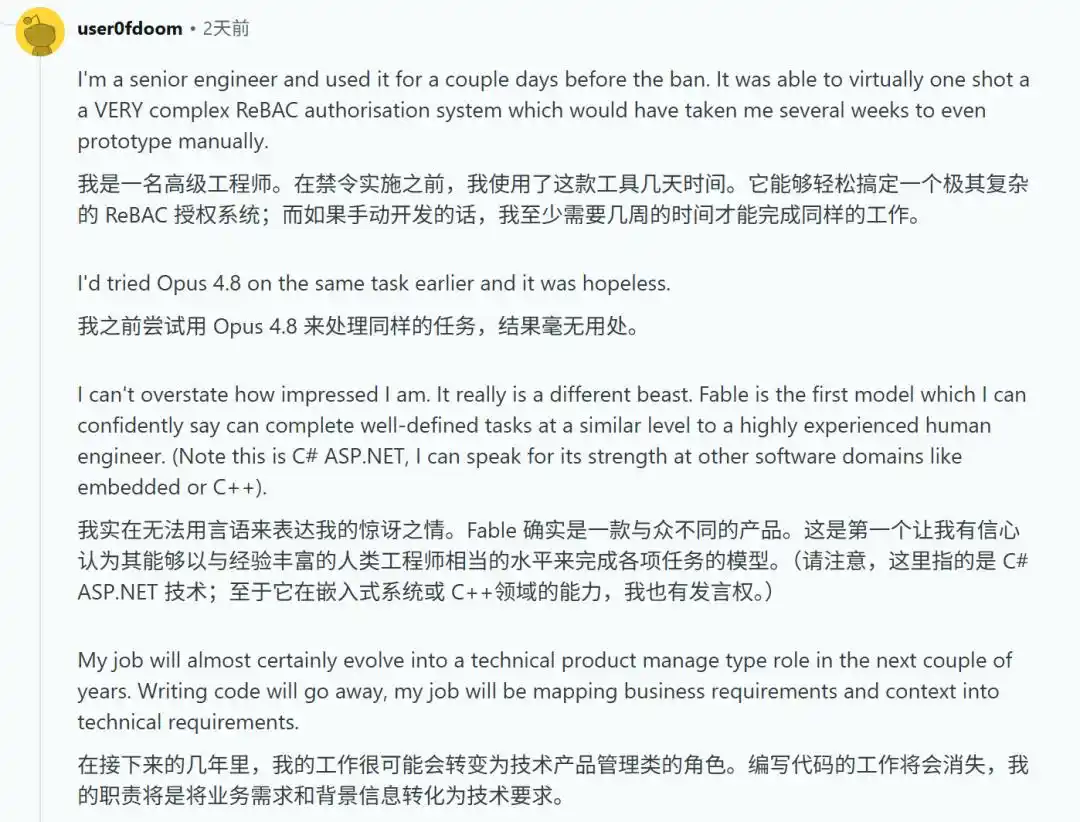
A senior engineer shared his震撼 experience before Fable was restricted.
Faced with an extremely complex ReBAC authorization system, manually developing a prototype would take him weeks. But Fable almost perfectly handled it all in one go.
He described it: "I genuinely lack the words to express my shock. Fable is indeed a completely different beast. It's the first model that convinced me AI can reach the level of an experienced, senior human engineer."
Most impressively, the top elite no longer rely on a single model but have built a multi-model collaborative matrix.
Based on the practical experience of several netizens, the current cutting-edge workflow looks like this.
Creativity & Requirements Layer (ChatGPT 5.5): Acts as the product manager, responsible for brainstorming, providing ideas, and writing complex prompt instructions.
Architecture & Planning Layer (Fable): Acts as the architect. Doesn't write low-level code directly, but designs the macro architecture of the entire system, plans specific operational steps, and verifies logic (because it's extremely smart, but costly to use and occasionally unstable).
Heavy Execution Layer (Opus 4.8): Acts as the senior programmer. Executes medium-to-high difficulty coding tasks under Fable's strict process orchestration.
Finalization & Review Layer (Sonnet 5): Acts as the code reviewer and junior programmer. Handles repetitive, pattern-fixed code writing and performs final reviews.
Another developer working on native mobile apps was even more blunt: "Hand a complex feature that would take an expert a week to this system, and it can run through it in 30 minutes."
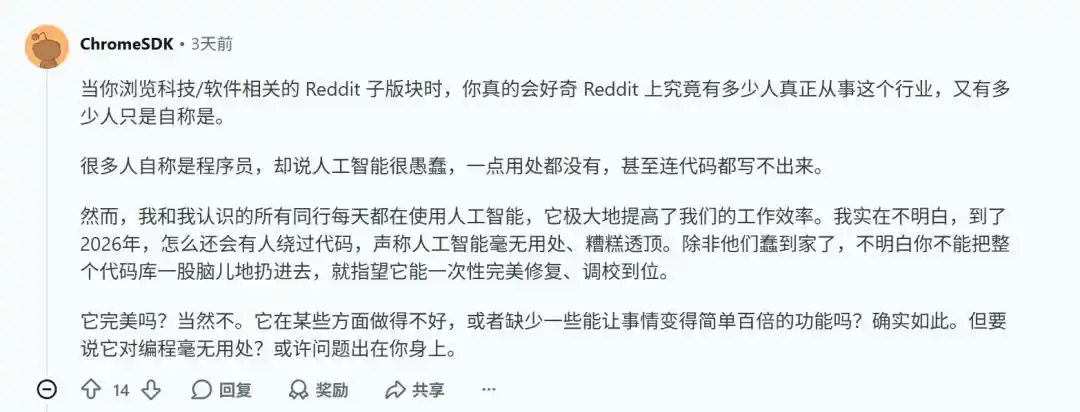
In his view, "Many people online say they can't see the difference in AI. Sometimes I really wonder what kind of incompetent people I'm talking to. Our traditional work might be completely over within a year."
The Invisible Barrier in Healthcare and Wellness
This divide isn't just about programmers writing code; it's even more evident in healthcare and wellness, a field crucial to everyone.
A netizen mentioned, "Any elderly person (or young person with serious health issues) should at least have a Pro subscription to answer their medical questions. But unfortunately, the elderly use AI the least."
Ordinary people, unwilling to pay, can only use the free GPT to inquire about symptoms. But this netizen revealed a brutal statistic: "Asking medical questions with the free GPT is like flipping a coin. Actually worse than a coin flip, because it's wrong 51% of the time."
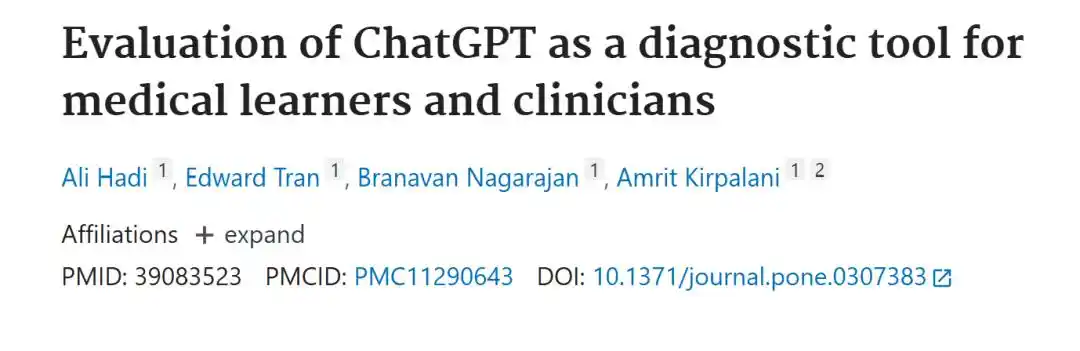

In fields requiring absolute trust, data privacy, and deep contextual support—like health, finance, and private contracts—free AI is often incompetent or even dangerous.
Only those who can afford Pro subscriptions or have employers providing enterprise-level Copilot support can let AI touch high-value, real work data.
Opposing Voices: Does Your Job Really Need Fable?
Of course, amid this fervor, there were also sober voices of opposition.
Netizen [Name redacted for privacy, placeholder used] proposed a classic argument: "Most ordinary corporate business logic doesn't involve incredibly complex algorithms. It's situationally complex, not intellectually complex.
In their view, for 90% of corporate employees and ordinary white-collar workers, their jobs simply don't require god-tier models like Fable or GPT-5.6 that can "discover new mathematics."
ChatGPT 5.4/5.5 has reached the perfect sweet spot—reasonably priced and good enough.
Often, when you feel AI can't solve your problem, it's not because AI isn't smart enough, but because you haven't provided enough context.
You haven't fed it your historical data, connected it to your company's API, or embedded it into your workflow, which is why it seems useless.
The Folded Future: Which Side Are You On?
In this summer of 2026, access to different AIs is becoming a profound crisis of inequality.
It's not happening in a storm, but quietly.
When giants demonstrate how AI can reconstruct the entire logic of human society, please don't laugh at AI being an idiot just because a free chatbot miscalculated an addition or subtraction.
Because in this new folded world, AI hasn't gotten dumber; it's just that the truly powerful ASI is moving further and further away from ordinary people.
References:
https://x.com/sama/status/2073791666553844074
https://x.com/koltregaskes/status/2073381804736926116
https://x.com/petergostev/status/2073025360749355049
This article is from the WeChat public account "Xinzhiyuan," author: ASI Apocalypse; editor: Aeneas