Aave just crossed $1M in swap revenue, but HERE’s what you’re missing

ambcryptoPublicado em 2026-07-03Última atualização em 2026-07-03

Resumo

Aave is expanding beyond its core lending and deposit services, establishing new revenue streams. The launch of its Global Dollar Hub and increased user activity have driven momentum. Notably, Aave DAO's swap revenue has surpassed $1 million since the launch of "Aave Will Win," with Ethereum being the primary contributor. This provides a new income source alongside traditional lending fees, and future features like leverage tools could further boost this growth. On-chain activity surged around the V4 Global Dollar Hub launch, briefly pushing the AAVE token price from ~$72 to ~$95 before settling near $87. Importantly, user growth remained strong despite the price pullback, with new addresses reaching 1,806 on June 30th—far above typical daily levels—and active addresses peaking at 3,144. Technical indicators like an RSI of 58 and a positive CMF suggest some underlying market strength remains.

Aave [AAVE] is no longer just growing through deposits and lending activity; they’re also also building new revenue streams. With the launch of Aave’s Global Dollar Hub and a rise in user activity, the project is picking up steam again.

Aave DAO’s swap revenue crosses $1 million!

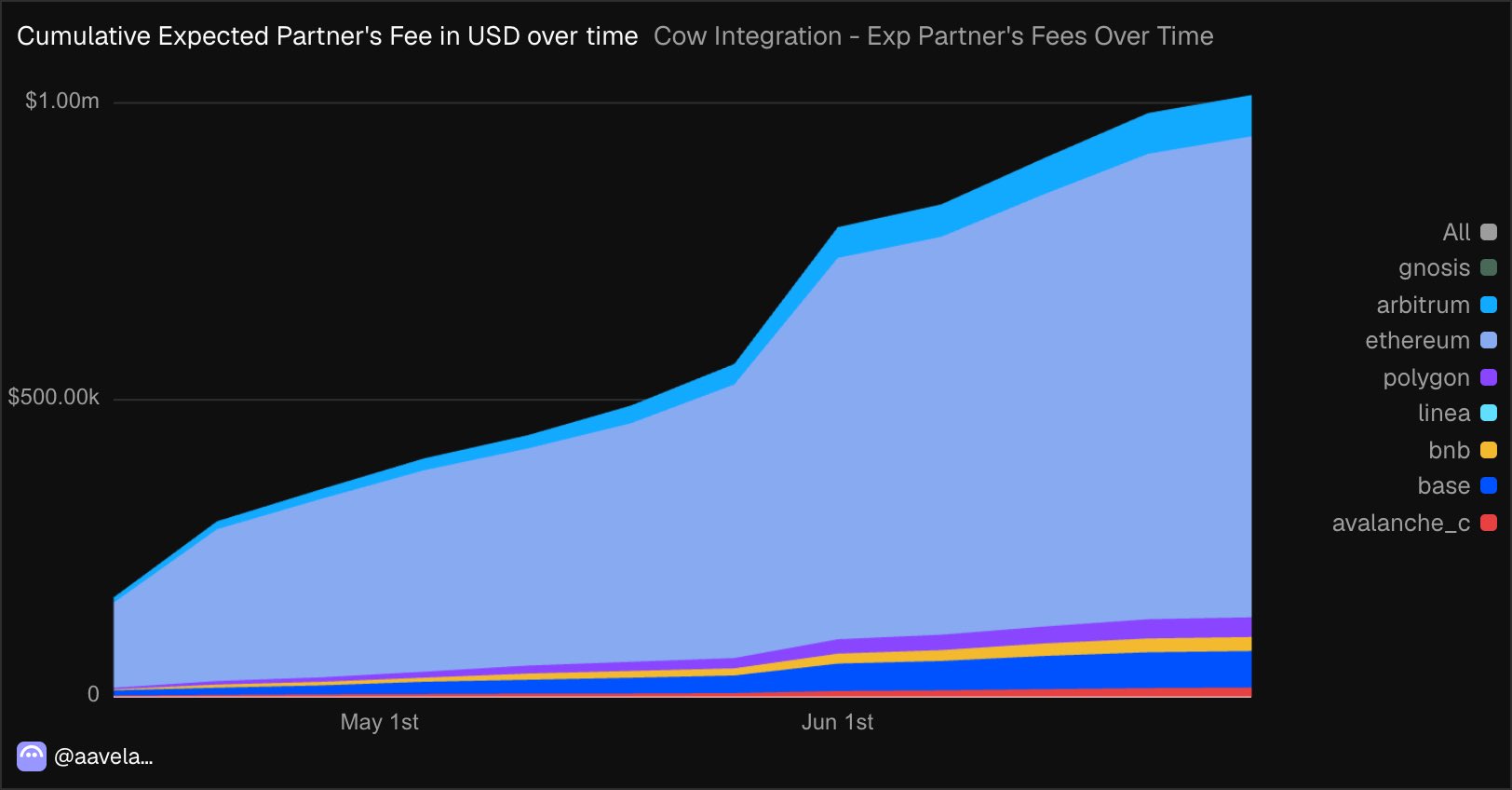
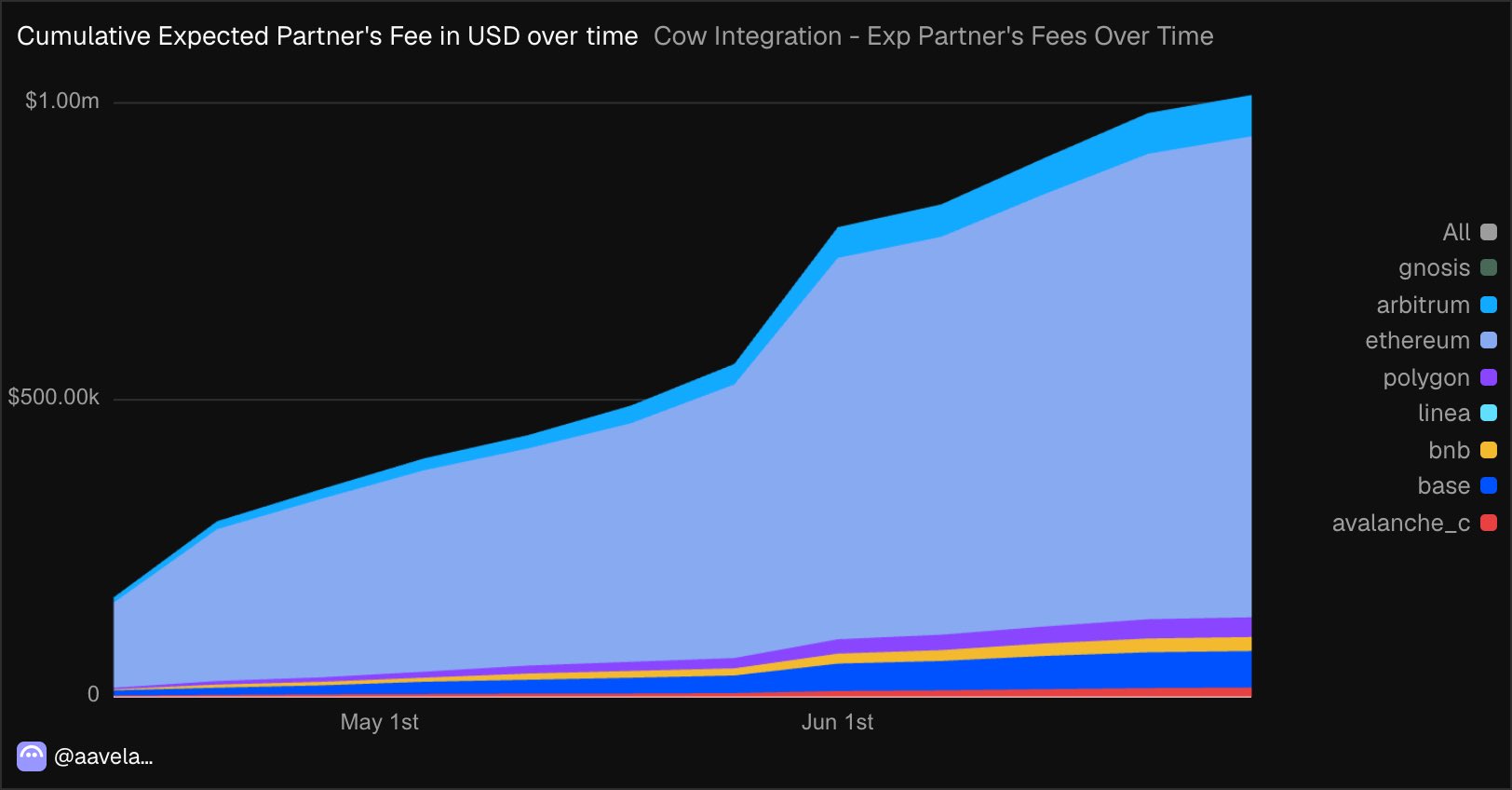
Aave DAO’s swap revenue has crossed $1 million since the launch of Aave Will Win. The cumulative expected partner fees has risen from April, with a jump around early June and sustained growth throughout the month.
Source: X

Most of this revenue has been coming from Ethereum [ETH], while Arbitrum [ARB] and a few other chains have added smaller contributions too. Interestingly, this gives Aave another income stream beyond its usual AUM-based fees from lending markets.

With more features planned – including leverage tools, transaction builder support, and V4 support in Aave Pro – this revenue base could keep growing.

New wallet growth outlasts AAVE’s price

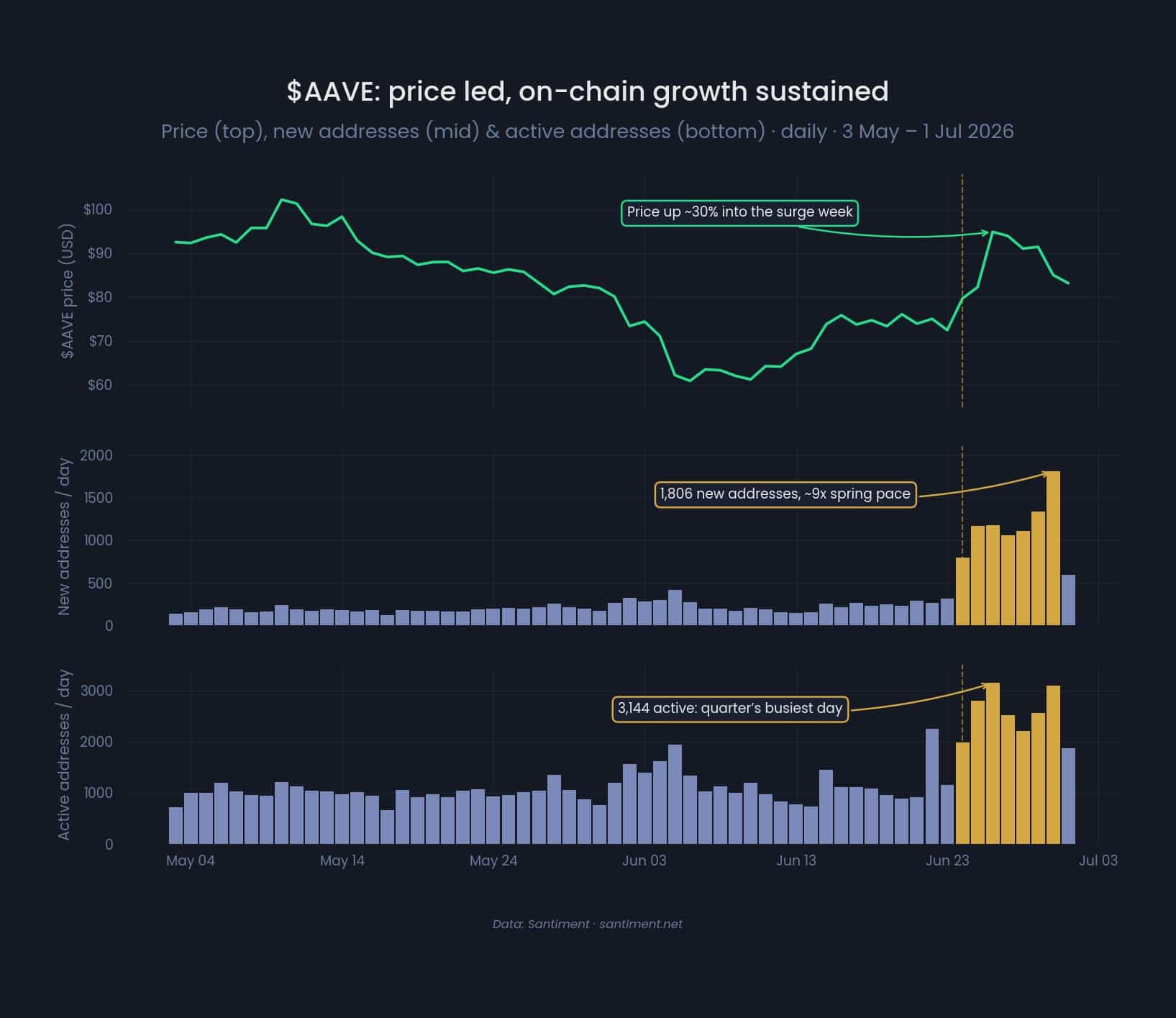
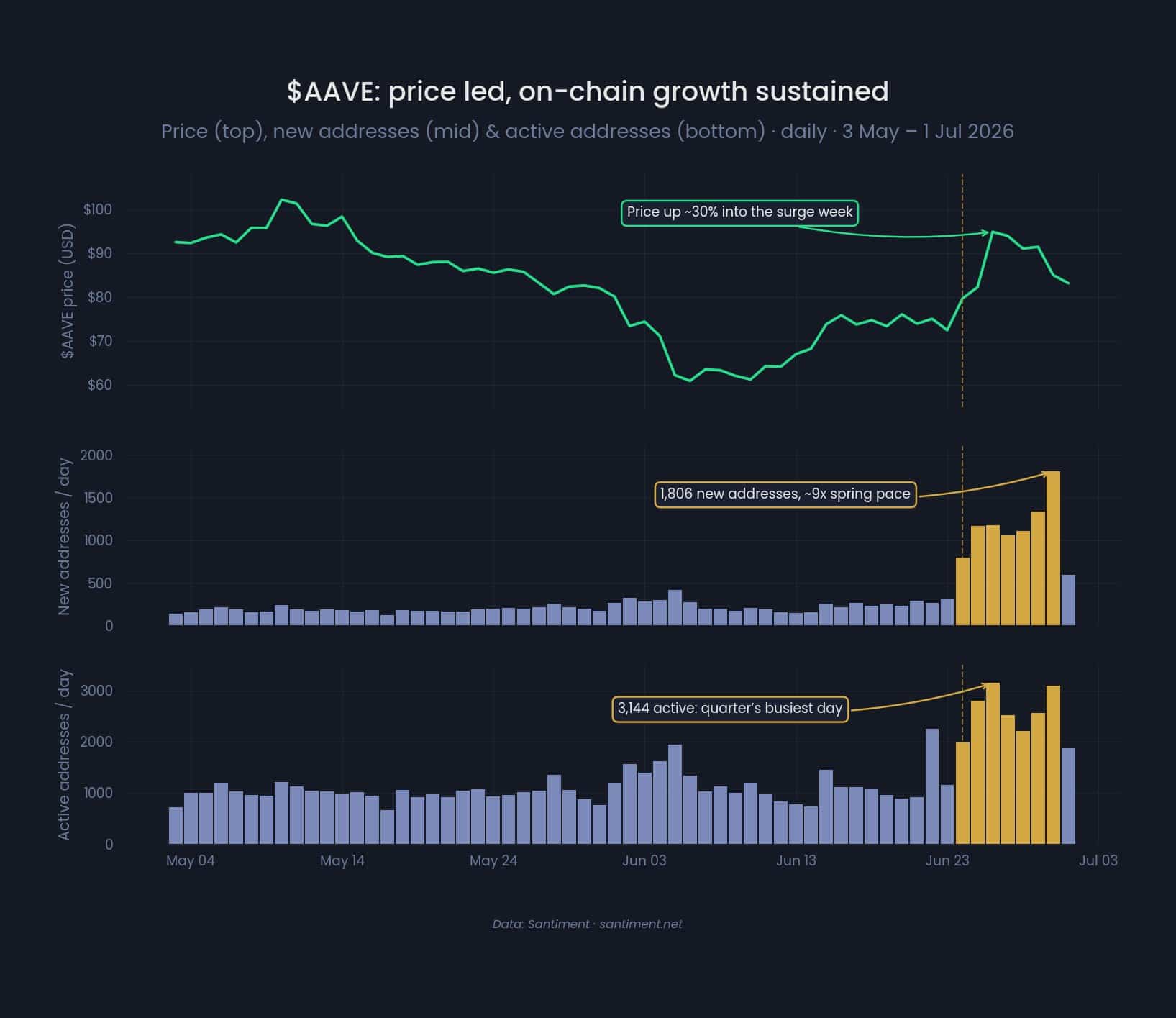
Beyond this, Aave’s on-chain activity jumped too. Around the launch of its V4 Global Dollar Hub, AAVE’s price moved from nearly $72 to about $95, before falling back towards $85.
Source: Santiment

However, what stands out is that user growth did not fade with the price. New AAVE addresses reached 1,806 on 30th of June, far above the usual spring pace of around 200 per day.

New address growth was also well above baseline throughout this week. In fact, active addresses were above 2,200 and at 3,144 at their highest.

AAVE holds above pullback zone

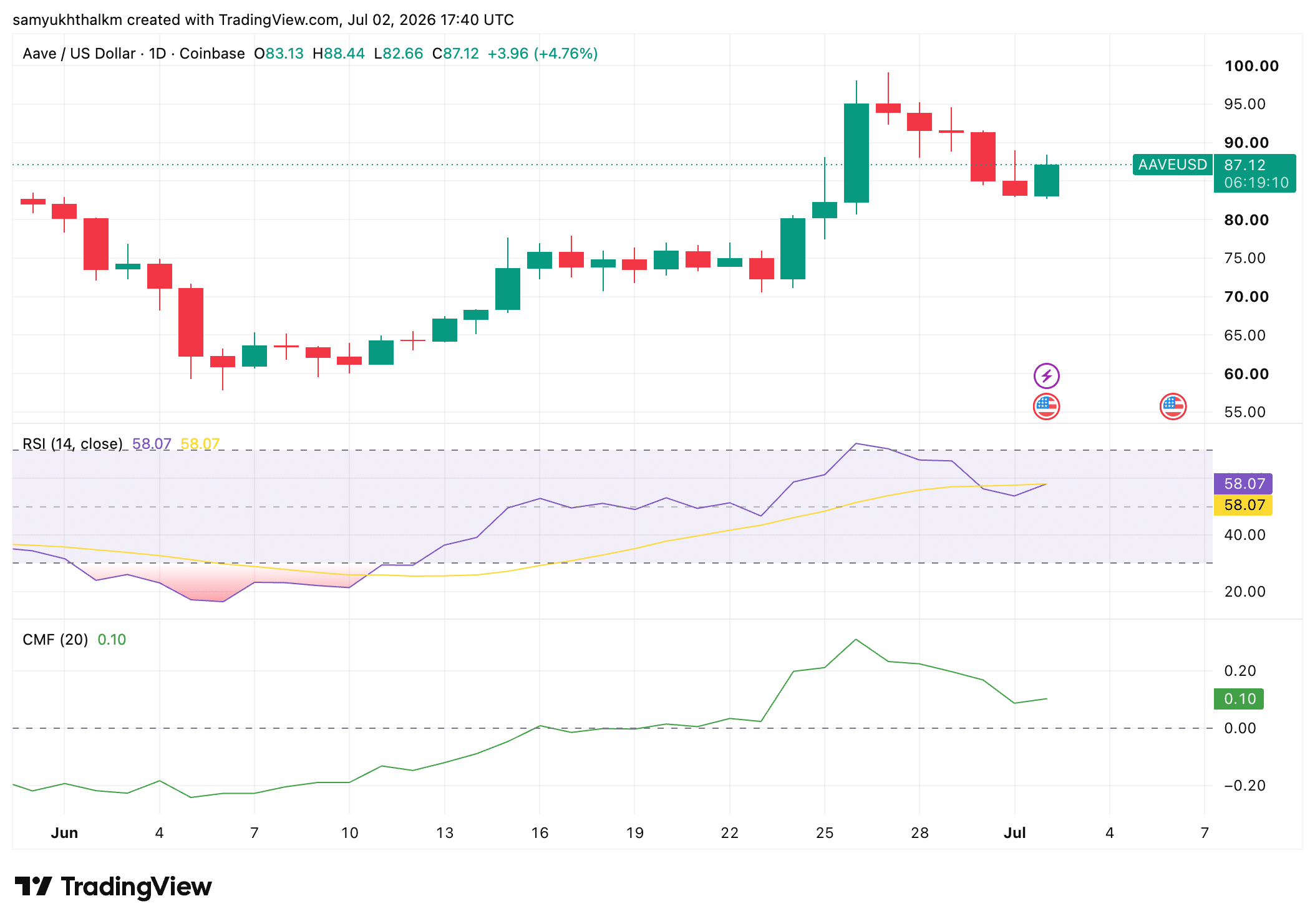
Here’s a bit of balance to this story. After the move towards the $95-$100 area, AAVE fell back below $90 on the charts.
Source: TradingView

However, the token has not fully lost its pace either. It was trading at around $87 at press time, with a small recovery attempt.

The RSI was at 58, so the rally was no longer overheated. There seemed to be some strength left still. The CMF was also positive at 0.10, indicating some buying interest.


Final Summary

  • Aave DAO crossed $1 million in swap revenue, adding a new income mode.
  • AAVE’s price hit the brakes on the charts, but new addresses hit 1,806 too.

Perguntas relacionadas

QWhat milestone did Aave DAO recently achieve in terms of swap revenue?

AAave DAO recently crossed $1 million in swap revenue.

QWhich blockchain contributed the most to Aave's swap revenue, according to the article?

AEthereum contributed the most to Aave's swap revenue.

QWhat significant development coincided with a jump in Aave's on-chain activity and price?

AThe launch of Aave's V4 Global Dollar Hub coincided with a jump in on-chain activity and price.

QDespite a price pullback, what metric showed strong and sustained growth for Aave?

AThe creation of new AAVE addresses showed strong and sustained growth, reaching 1,806 on June 30th.

QWhat are two future features mentioned that could help grow Aave's new revenue base?

AFuture features mentioned include leverage tools and transaction builder support, along with V4 support in Aave Pro.

Leituras Relacionadas

Zcash ETF Moves One Step Closer: Wall Street to Pack Privacy Coin into Securities Accounts for the First Time

The Grayscale Zcash Trust has filed its fifth amended registration statement with the SEC, aiming to convert into the first U.S. spot ETF directly holding a privacy coin (ticker ZCSH). Key terms include a 2.5% annual fee, Bank of NY Mellon as administrator, and Coinbase for custody and brokerage. The trust held ~388,700 ZEC (~$155M) as of June 30; its AUM surged to ~$260M by August 21, driven by ZEC's price rally from $250 to over $800. The ETF represents a major identity shift for Zcash, a coin previously delisted by many exchanges and flagged by regulators for its anonymity. However, the ETF strips away Zcash's core privacy feature. To ensure compliance, all trust-held ZEC will be stored in transparent addresses, making transactions auditable and traceable. Zcash's optional privacy—unlike Monero's mandatory privacy—is the key compromise enabling this Wall Street entry. Market pricing reflects aggressive optimism for institutional access, but challenges remain. Only ~22% of circulating ZEC is in shielded pools; if ETF demand siphons transparent coins, Zcash's privacy narrative weakens. Competition from programmable privacy on Ethereum L2s could also dilute its value proposition. With prices already up over 200% in four months, the rally may have prematurely priced in the ETF approval, leaving limited safety margin. Grayscale's move highlights traditional finance's capacity to repackage regulatory-edge assets into compliant products, raising questions about the future boundaries of crypto ETF adoption.

marsbitHá 6m

Zcash ETF Moves One Step Closer: Wall Street to Pack Privacy Coin into Securities Accounts for the First Time

marsbitHá 6m

Fed Research: Crypto Investors Driven by Beliefs, Returns Change Their Decisions

A new working paper from the Federal Reserve Bank of Cleveland provides a novel explanation for cryptocurrency's divergence from traditional financial assets. It finds that American crypto investors are distinguished not by demographics or risk tolerance alone, but by their radically different beliefs about future returns. This divergence in expectations better explains who owns crypto than factors like age or income, a reversal of the pattern seen with stocks or bonds. The research, based on surveys of up to 25,000 US households, shows crypto owners expected an average 22% annual return, compared to just 7% for non-owners. A one-percentage-point increase in an individual's expected return was linked to a 0.8-point rise in ownership likelihood. A randomized experiment revealed that simply showing information about Bitcoin's past 12-month performance increased respondents' desired crypto portfolio share by about 47% and spurred subsequent purchases, primarily among those who previously felt uninformed. The study suggests this dynamic—where past gains attract new buyers, pushing prices higher and reinforcing bullish beliefs—could fuel speculative bubbles. It also indicates crypto wealth gains are treated more like "gambling winnings" than permanent income, boosting purchases of durable goods but not everyday spending. The broader conclusion is that crypto volatility stems partly from investor disagreement and learning, not just market fundamentals. With widespread misunderstanding and shifting expectations driven by performance data, price swings are likely to remain a defining feature of the asset class. Future retail demand may depend not just on Bitcoin's price, but on what information investors receive about its past performance.

cryptonews.ruHá 5h

Fed Research: Crypto Investors Driven by Beliefs, Returns Change Their Decisions

cryptonews.ruHá 5h

Trading

Spot
活动图片