任何人可轻松创建预测市场,Limitless 的用户自建市场能长久吗?

Foresight NewsPublicado em 2026-07-02Última atualização em 2026-07-02

Resumo

加密领域长期以来面临用户自由创建预测市场的难题,多个早期项目如Augur、Omen等均因流动性分散、发现性差和结算争议等问题而失败。Limitless近期推出了用户生成市场功能,允许用户创建加密价格预测市场,并尝试通过一系列设计解决这些痛点。 其市场创建基于客观价格目标,依托预言机自动结算,避免了主观争议。平台已有一定用户基础,采用订单簿模式降低创建门槛。创建市场需消耗LMTS代币作为成本,同时创建者可获得市场交易费用的50%作为激励,以此平衡垃圾市场泛滥和创作者收益。 这一设计试图从结算可靠性、流动性和经济机制三方面突破历史局限。若成功,或可为开放预测市场提供一个可行路径。


撰文:Stacy Muur

编译:AIdidiaoJP,Foresight News


在加密领域,让用户自由创建预测市场一直是悬而未决的老大难问题。多年来,几乎所有尝试者都以失败告终。


@trylimitless(Limitless)却采取了独特路径来应对这一挑战。最近,他们推出了 UGM(用户生成市场)功能,允许任何用户自行创建加密价格预测市场。这是对预测市场领域长期痛点的一次大胆尝试。


下面我们来梳理此前各方的尝试、失败原因,以及 Limitless 如何让这一模式真正运转起来。


许可自由预测市场的历史


最早的许可自由预测市场是@AugurProject。它 2018 年在以太坊上线,主打「任何人可创建任何主题的市场,由群众定价真相」。
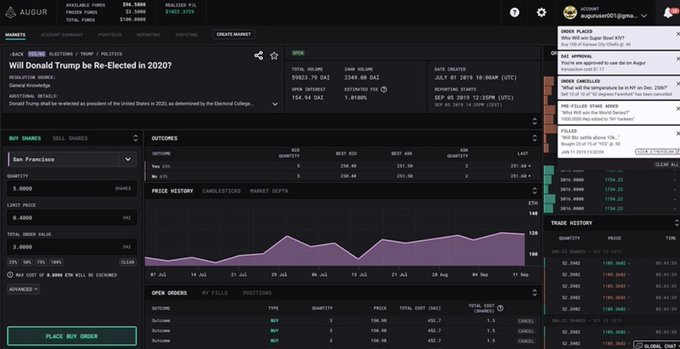


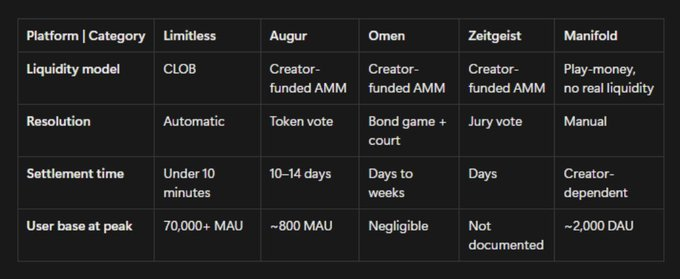
理论上很完美,实际却门可罗雀。项目代币峰值市值超过 1.7 亿美元,但日活跃用户仅约 47 人,一周内使用人数甚至不到 115 人。


失败原因残酷且相互强化:


  • 流动性分散在数千个空市场中(因为谁都能创建市场)
  • 市场结算需要 10 到 14 天
  • 用户资金在结算前全程锁定
  • 用户下注前还得自己运行以太坊节点


Augur 并非个例。@OmenEth 在 Gnosis 链上采用类似模式,也逐渐沉寂。@ZeitgeistPM 在 Polkadot 上甚至加入了创建者费用,仍难有实质交易量。@ManifoldMarkets 曾靠虚拟货币建立真实社区,日活一度达数千人,但热度消退后跌至 900 人以下。


不同团队、不同链条,却走上相同结局。


反复出现的模式


这种模式反复出现,很难归结为单纯执行问题。创建免费且简单,并不会带来需求,只会让平台充斥更多供给,所有供给都在争夺同一小块注意力池。


这导致预测市场在两个层面碎片化:


流动性稀薄


大多数用户创建的市场很快无人问津。在早期 AMM(自动做市商)平台上,创建市场还需自己出钱提供初始流动性,成本更高。


发现性差


谁都能创建市场,结果很快出现十几个版本略有不同的「美联储 7 月是否降息?」市场,流动性被进一步分散。


想象一下,用户打开应用,看到一堆半死不活的市场,每个市场几乎没流动性。谁还愿意停留?


正是这个问题,迫使行业最大玩家改变方向。2022 年,Polymarket 转向精选模式,集中流动性到少数深度市场,效果显著。但它也放弃了最初的开放创建承诺——让任何人轻松发起市场的「更难版本」仍未解决。


结算难题


流动性和发现性已够棘手,如果结算不是硬编码,用户信任就会崩塌。


市场结束后,平台需决定如何结算。像「比特币是否收于 10 万美元以上」这类客观事件容易处理;但涉及主观解读的,比如某政客言论是否构成特定政策背书,就容易引发争议。


多数平台靠代币持有者投票解决争议,本意是去中心化结算,但实际投票权往往集中在最大持有者手中。而他们还能像普通用户一样下注,因此可能操纵结果。


这让人们对结算公正性失去信任,也从另一个角度回到流动性问题。


Limitless 的应对之道


任何新尝试都必须跨过流动性稀薄、发现性差、结算不可靠这三道关。@trylimitless 在这些方面做出了不同选择。


重点说说新推出的 UGM 功能。任何用户只需几步就能创建市场:


  • 选择资产
  • 设置价格目标(百分比变动或具体美元价位)
  • 设置持续时间(15 分钟到 1 天不等)
  • 启动(需持有 LMTS 代币)


市场持续时间越长,创建成本越高。


任何人均可交易这些市场,到期后由预言机自动拉取资产价格并即时结算结果。这些市场依托@PythNetwork 和@Chainlink 的实时价格馈送,无需投票、无需争议小组、无需委员会。


市场仅限客观类型,例如「某时刻 SOL 是否高于 X 价格」,智能合约可在市场关闭瞬间自动结算。无法创建需要人工解读的市场(如选举结果或有争议新闻事件)。Limitless 有意将范围限定在价格市场,因为这是唯一能每一次都在数秒内可靠结算的类型,其他平台往往需要数小时甚至数天。


冷启动问题曾让此前多数平台栽跟头。Limitless 在这方面已有优势:


  • 累计交易量超过 30 亿美元
  • 5 月和 6 月交易量超过 12 亿美元
  • 月活跃交易者峰值超过 7 万人


已有相当活跃的交易者基础,与 2018 年的 Augur 完全不同。


另一个重要差异:Limitless 采用订单簿而非早期 AMM 模式。在 Augur 这类平台上,创建市场需要自己出资提供初始流动性。Limitless 完全省去这一步,交易者自行挂买单和卖单,市场只需吸引他们即可。


最巧妙的部分是创建者经济机制。创建市场需花费 100 到 1000 LMTS 代币,且不可退还。作为回报,创建者可获得该市场产生的所有交易费用的 50%。


一边是真实成本,一边是真实回报。成本能有效阻止垃圾市场泛滥,因为每个市场都需要真金白银投入;回报则让真正有活跃度的市场能为创建者带来实实在在的费用收入。


成本机制同时也为 LMTS 代币赋能。每创建一个市场都会从公开市场销毁 LMTS 代币,将代币效用与 UGM 活动直接绑定。创建市场的人越多,对 LMTS 的需求就越大。


总结与展望


现有证据清晰指向一个方向:此前所有许可自由预测市场的尝试,要么陷入结算争议,要么淹没在死流动性中,要么干脆放弃开放模式转向精选。


Limitless 是首个同时针对这三种失败模式设计的方案。


结算(最棘手的问题)通过坚持使用预言机价格市场被彻底规避。


冷启动问题因已有活跃用户基础而得到缓解。


市场创建的成本与回报结构同时平衡了双方激励。


最重要的是,这些市场结算时间更短,我们能很快看到设计在大规模应用中是否有效。


如果有效,许可自由预测市场终于有了首个可行的蓝图。


披露:作者持有部分 $LMTS 代币,并为 Limitless 用户。

Criptomoedas em alta

Perguntas relacionadas

Q文章中提到预测市场平台面临的三个主要挑战是什么?

A文章提到的三个主要挑战是:1. 流动性稀薄:用户创建的市场大多迅速无人问津,导致流动性分散。2. 发现性差:任何人都能创建市场,导致主题重复,流动性被进一步分割,用户难以找到有价值或活跃的市场。3. 结算不可靠:对于非客观事件,依赖投票机制可能导致结算争议,且易被大户操纵,损害用户信任。

QLimitless 推出的 UGM 功能如何运作?创建市场的步骤是什么?

AUGM功能允许任何用户创建加密货币价格预测市场。创建步骤包括:1. 选择资产。2. 设置价格目标(百分比变动或具体美元价位)。3. 设置持续时间(从15分钟到1天不等)。4. 启动市场,此过程需要持有并花费一定数量的LMTS代币。市场到期后,会通过预言机自动拉取资产价格进行即时结算。

Q与 Augur 等早期平台相比,Limitless 在市场创建成本、流动性和结算机制上有何不同?

A1. 成本:早期平台(如Augur)创建市场免费,导致市场泛滥。Limitless创建市场需要花费(并销毁)LMTS代币,增加了真实成本以抑制垃圾市场。2. 流动性:早期平台通常采用AMM模式,创建者需自己提供初始流动性。Limitless采用订单簿模式,创建者无需提供流动性,由交易者自行挂单。3. 结算:早期平台对主观事件依赖社区投票,过程慢且易争议。Limitless严格限定于客观价格事件,通过预言机实现瞬间自动结算,避免了争议。

QLimitless 如何通过创建者经济机制来平衡市场激励?

ALimitless的创建者经济机制包含成本与回报两方面:1. 成本:创建市场需要花费100到1000个LMTS代币(这些代币会被销毁),这增加了创建市场的门槛,防止市场无序泛滥。2. 回报:市场创建者可以获得该市场产生的所有交易费用的50%。这种机制激励创建者去设计能吸引交易者参与的优质市场,从而获得持续的收入。成本机制也为LMTS代币创造了需求和使用场景。

Q根据文章分析,Limitless 解决“许可自由预测市场”难题的独特之处主要有哪些?

ALimitless的独特之处在于:1. 规避结算争议:将市场严格限定于可由预言机(如PythNetwork, Chainlink)提供实时价格的客观事件,实现秒级自动结算。2. 已具备用户基础:平台已有大量活跃交易者和交易量,为新市场功能解决了冷启动问题。3. 创新的激励设计:通过代币成本和费用分成机制,有效平衡了创建者和平台生态的利益,抑制垃圾市场的同时激励优质市场。4. 采用订单簿模式:免除创建者提供初始流动性的负担。

Leituras Relacionadas

MSTR Discloses Sale of 3,588 Bitcoins, Stock Price Drops Over 5% at One Point During Trading

MicroStrategy, the world's largest corporate holder of Bitcoin, has significantly shifted its business model. Between June 29 and July 5, the company sold 3,588 bitcoins for approximately $216 million to fund quarterly dividends for its preferred stock. This marks its largest-ever Bitcoin sale and signals a strategic pivot: Bitcoin is transitioning from a "buy-and-hold" reserve asset to a liquidity management tool for the company. This move follows a recent authorization allowing Bitcoin sales when equity fundraising is less attractive. The announcement contributed to a more than 5% intraday drop in MicroStrategy's stock price, while Bitcoin fell to around $61,800—below the company's average holding cost of roughly $75,700. The sale represents a major departure from MicroStrategy's long-standing "never sell" commitment, which saw its first minor breach in May with a $2.5 million sale. The latest, hundred-times-larger transaction underscores growing financial pressures. Analysts note the company faces about $1.5 billion in annual preferred dividend obligations, far exceeding cash flow from its software business. As of July 5, MicroStrategy holds 843,775 bitcoins. Its current operational logic involves buying Bitcoin during favorable financing conditions and selling portions to cover dividends when needed, creating a flexible capital management cycle amidst a challenging market environment.

华尔街日报Há 5h

MSTR Discloses Sale of 3,588 Bitcoins, Stock Price Drops Over 5% at One Point During Trading

华尔街日报Há 5h

Q-Day Countdown: Will Quantum Computing End Cryptocurrencies?

Quantum Computing's Threat to Cryptocurrency: A Countdown to Q-Day Quantum computing, specifically Shor's algorithm, poses a fundamental threat to the public-key cryptography (e.g., ECDSA, RSA) that secures blockchain networks like Bitcoin and Ethereum. This critical juncture, known as Q-Day, is estimated to occur potentially within the next 5-15 years. The core vulnerability stems from the public and immutable nature of blockchains. Assets in addresses where the public key is already exposed on-chain (e.g., spent outputs) are at direct risk, as a sufficiently powerful quantum computer could derive the private key. This threatens the very trust model of cryptocurrencies. The response lies in Post-Quantum Cryptography (PQC)—algorithms like lattice-based ML-DSA and hash-based SLH-DSA, which are resistant to quantum attacks. NIST has standardized key PQC algorithms (FIPS 203, 204, 205), providing a migration path. However, the primary challenge is not technical but socio-economic and involves complex governance: * **Bitcoin's** path is constrained by its conservative ethos. Migrating requires a soft-fork to new address types, facing hurdles like significantly larger signature sizes and, most critically, the divisive governance question of how to handle at-risk legacy UTXOs without violating core principles. * **Ethereum** is pursuing a "cryptographic agility" strategy, with a multi-layered roadmap. It leverages account abstraction for user accounts and is developing compressed hash-based signatures (e.g., leanXMSS) for its consensus layer, aiming for a full-stack upgrade over time. In conclusion, quantum computing does not spell an instant end for cryptocurrency but initiates a critical countdown. The industry has a limited "engineering comfort window" to orchestrate a coordinated, ecosystem-wide migration to PQC. The ultimate bottlenecks are the immense coordination efforts and governance decisions required for this foundational transition.

marsbitHá 6h

Q-Day Countdown: Will Quantum Computing End Cryptocurrencies?

marsbitHá 6h

Trump, the President Who Knows Best How to 'Trade Stocks'

Former US President Donald Trump reported a record-breaking $2.2 billion in personal income for 2025, the highest annual income ever disclosed by a sitting president. This figure, from a 927-page government ethics filing, represented a 3.5-fold increase from his $600 million income in 2024 and boosted his net worth to $6.5 billion. The primary drivers were cryptocurrency (64% of income, approximately $1.4 billion) and real estate (26%, approximately $575 million). His crypto earnings stemmed largely from the launch of his personal meme coin, $TRUMP, generating over $600 million in licensing fees, and substantial profits from the WLFI token and its parent company. Despite a sluggish property market, his Mar-a-Lago resort and associated golf clubs saw revenue surges of 50% and 27%, respectively, attributed to their use as venues for presidential events. Trump's financial disclosure also revealed an unprecedented level of stock market activity, with over 22,000 trades executed in 2025, averaging 87 trades per market day. Media analyses noted several instances where significant trading coincided with major policy announcements, such as proposed tariffs, raising questions about potential conflicts of interest. While the White House stated these trades were handled by a family-managed trust fund and not Trump directly, critics highlighted this as a departure from the blind trusts traditionally used by presidents post-Watergate. The report has intensified debate over the commercialization of the presidency. Supporters view it as a success story of a businessman-president, while critics argue it demonstrates an unprecedented conversion of public influence into private wealth, with policy decisions potentially linked to personal financial gains. The controversy centers on whether Trump's earnings represent innovative entrepreneurship or a fundamental conflict of interest, sparking renewed calls for stricter ethics reforms in US governance.

marsbitHá 6h

Trump, the President Who Knows Best How to 'Trade Stocks'

marsbitHá 6h

Trading

Spot

Artigos em Destaque

Como comprar AL

Bem-vindo à HTX.com!Tornámos a compra de Archloot (AL) simples e conveniente.Segue o nosso guia passo a passo para iniciar a tua jornada no mundo das criptos.Passo 1: cria a tua conta HTXUtiliza o teu e-mail ou número de telefone para te inscreveres numa conta gratuita na HTX.Desfruta de um processo de inscrição sem complicações e desbloqueia todas as funcionalidades.Obter a minha contaPasso 2: vai para Comprar Cripto e escolhe o teu método de pagamentoCartão de crédito/débito: usa o teu visa ou mastercard para comprar Archloot (AL) instantaneamente.Saldo: usa os fundos da tua conta HTX para transacionar sem problemas.Terceiros: adicionamos métodos de pagamento populares, como Google Pay e Apple Pay, para aumentar a conveniência.P2P: transaciona diretamente com outros utilizadores na HTX.Mercado de balcão (OTC): oferecemos serviços personalizados e taxas de câmbio competitivas para os traders.Passo 3: armazena teu Archloot (AL)Depois de comprar o teu Archloot (AL), armazena-o na tua conta HTX.Alternativamente, podes enviá-lo para outro lugar através de transferência blockchain ou usá-lo para transacionar outras criptomoedas.Passo 4: transaciona Archloot (AL)Transaciona facilmente Archloot (AL) no mercado à vista da HTX.Acede simplesmente à tua conta, seleciona o teu par de trading, executa as tuas transações e monitoriza em tempo real.Oferecemos uma experiência de fácil utilização tanto para principiantes como para traders experientes.

307 Visualizações TotaisPublicado em {updateTime}Atualizado em 2026.06.02

Como comprar AL

Discussões

Bem-vindo à Comunidade HTX. Aqui, pode manter-se informado sobre os mais recentes desenvolvimentos da plataforma e obter acesso a análises profissionais de mercado. As opiniões dos utilizadores sobre o preço de AL (AL) são apresentadas abaixo.

活动图片