Earning Bounty with a Forehead Tattoo? pump.fun Keeps Memes Alive Through 'Bounties'

Foresight NewsPublicado em 2026-06-08Última atualização em 2026-06-08

Resumo

The article discusses the launch of pump.fun's new bounty platform "Pump.fun GO," which allows meme coin holders to lock funds as rewards for completing specific, often outrageous, marketing tasks to promote their tokens. Examples include a $50,000 bounty to skydive into a World Cup match in a mascot costume and a bounty for getting a forehead tattoo (with a typo) of a token name. The platform has sparked controversy for its perceived copycat nature compared to existing Web3 bounty platforms and its "crazy" tasks, while also granting pump.fun unilateral authority to approve or reject submissions. The move is analyzed as a strategic effort by pump.fun to revive declining platform revenue and meme coin engagement, following a pattern from its earlier, chaotic live-streaming feature. The core logic is that meme coins, lacking fundamentals, rely on manufactured attention and events, with GO formalizing this by outsourcing promotional stunts to bounty hunters, all aimed at boosting token visibility and price.


Written by: angelilu, Foresight News


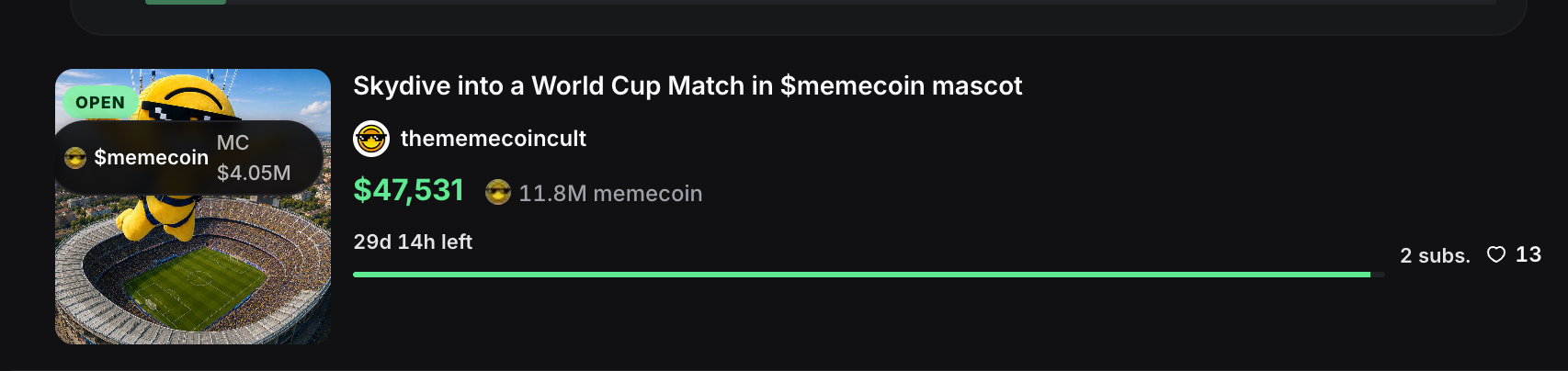
If someone offered you $50,000 to skydive into a World Cup stadium while wearing bizarre costumes to attract the attention of the entire crowd, would you do it?


Most people wouldn't, because in most countries, unauthorized entry into an ongoing sports event constitutes trespassing and can lead to imprisonment. The request is as absurd as a joke, or at least a marketing stunt. But this was precisely the highest-bounty task on the first day of pump.fun's newly launched bounty platform, "Pump.fun GO."


Mechanism of Pump.fun GO


Pump.fun GO attempts to shift the competition for attention around Meme assets from passive dissemination to active output via a task economy. The mechanism of GO isn't complex: an issuer (often a holder of a particular Meme coin) connects a wallet, locks the bounty into an escrow smart contract, and posts a bounty for completing a specific task; a task-taker completes the task, submits proof, and receives the payment after pump.fun's approval. The minimum bounty is $5, with no upper limit. The official launch copy grandly states: "Pay anyone to do anything."


Each task issuer holds a certain Meme coin—the task is a customized marketing campaign for their coin, and the bounty is the promotion fee drawn from their holdings. The coin comes first, the task follows; GO is not a "simple" task platform but an outsourced tool for marketing existing Meme coins.


However, the community's response to this new product is also highly contentious. Firstly, the Web3 bounty platform space already has established professional players like Dework, Gitcoin, and Layer3, leading to accusations that pump.fun is yet another clumsy "copycat." Secondly, the tasks currently listed on the platform often have a "touch of madness," and event adjudication is entirely at the platform's discretion—the terms state: the platform reserves the right to approve, reject, modify, or cancel any task and any submission, with decisions being final and non-appealable.


Why Launch GO Now


But to understand why pump.fun is launching GO now, we must first look at some numbers.


In January 2025, the platform's daily revenue peak exceeded $15 million, with annual cumulative revenue nearing $1 billion. However, by August 2025, daily revenue once fell below $300,000 and has recently hovered around $1 million.


The PUMP token has fallen from its issuance high of $0.006 to today's $0.0016, and SOL has also declined over 55% from its $150 high this year.
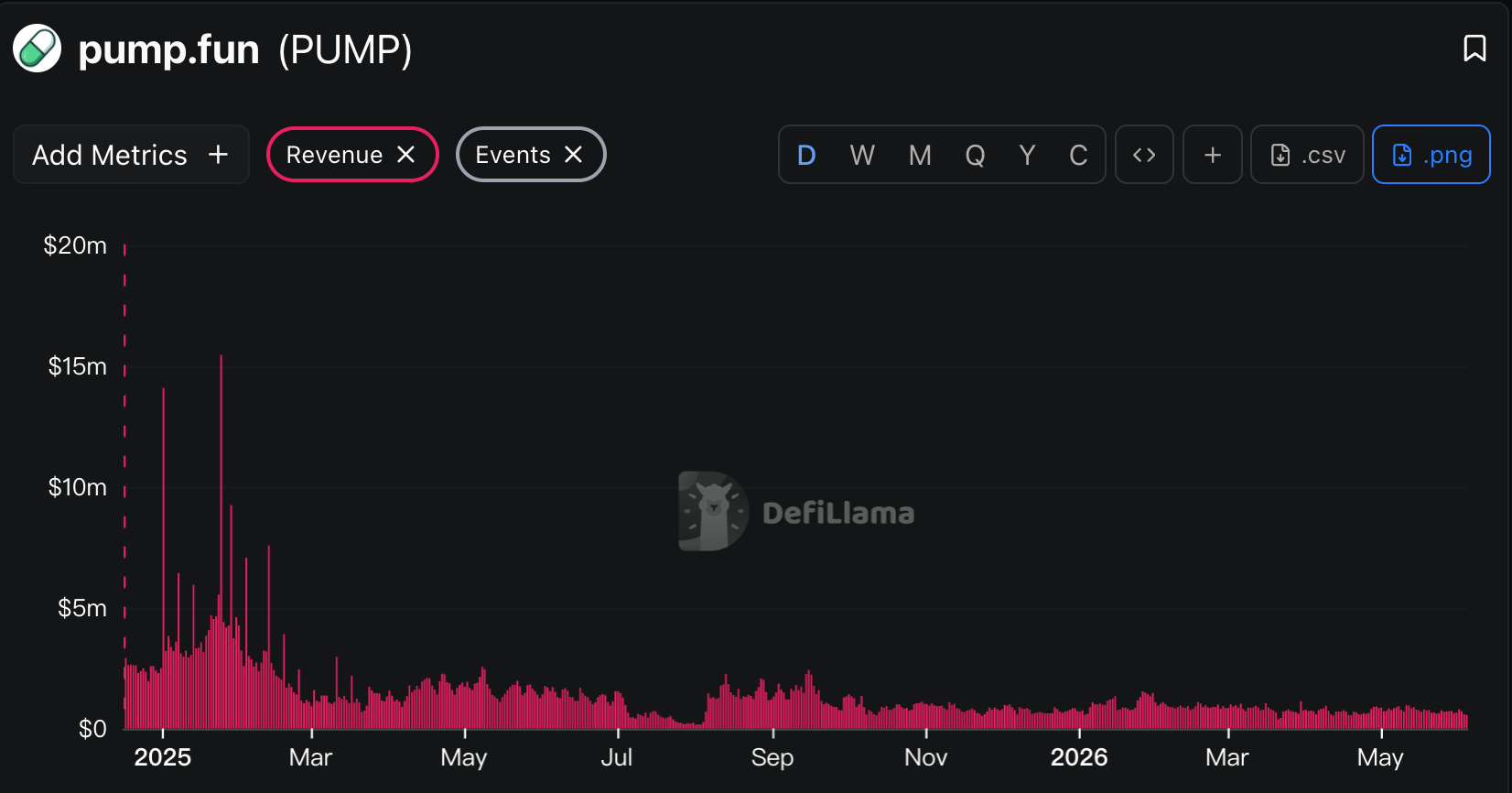


Meanwhile, in April of this year, pump.fun changed its "all revenue used for PUMP buyback and burn" policy to a 50/50 split—half continues for buybacks, and the other half is reserved for product development, hiring, and marketing. GO is the first project funded by this budget allocation.


Hot Content on GO


A closer look at the GO task list reveals that most content is "quite entertaining."


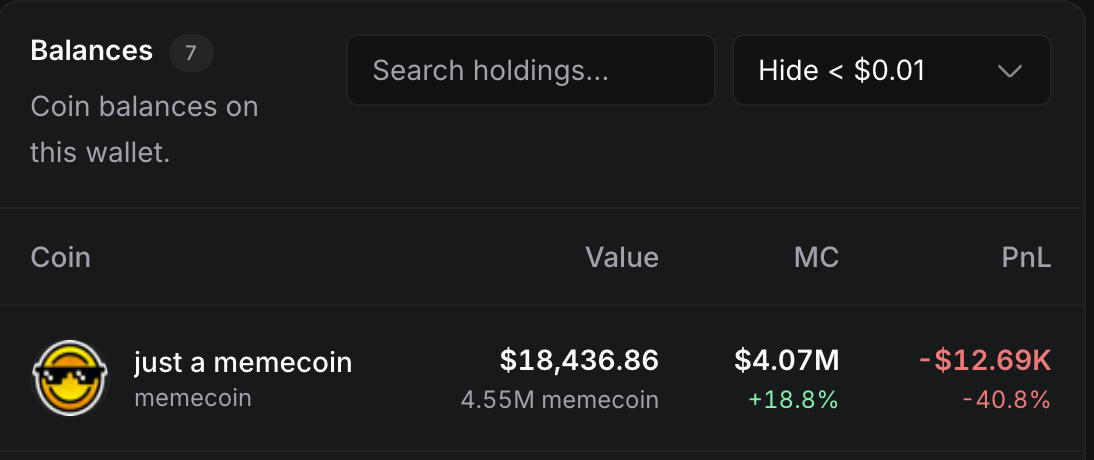
As of writing, the task "requiring the taker to skydive into the World Cup match venue while wearing the memecoin mascot costume throughout" might be "too sensitive" and is no longer displayed on the page. Perhaps related to topping the GO task list that day, the price of the related memecoin rose 18.8% on the day the task was posted, with its market cap exceeding $4 million; its current market cap is $3.73 million.


The bounty issuer "thememecoincult" also posted two other "sensational" tasks: wearing the same mascot costume to break the world record in long-distance running; and spraying the token code and logo on a car while wearing their mascot costume.


But some are indeed willing to do "crazy" things for the bounty. An Indian man named arivu accepted a bounty task worth 40 SOL (approximately $2,640) to get "$boutywork" tattooed on his forehead as required by the issuer, documenting the entire process in a video. However, there is a missing 'n' compared to the correct spelling "$bountywork." This typo sparked debate over the validity of the reward. Some claimed he wouldn't get a penny, while the issuer side opened a new bounty task for him to correct the tattoo. Ultimately, it's up to the platform to decide whether he receives the bounty after the task concludes.
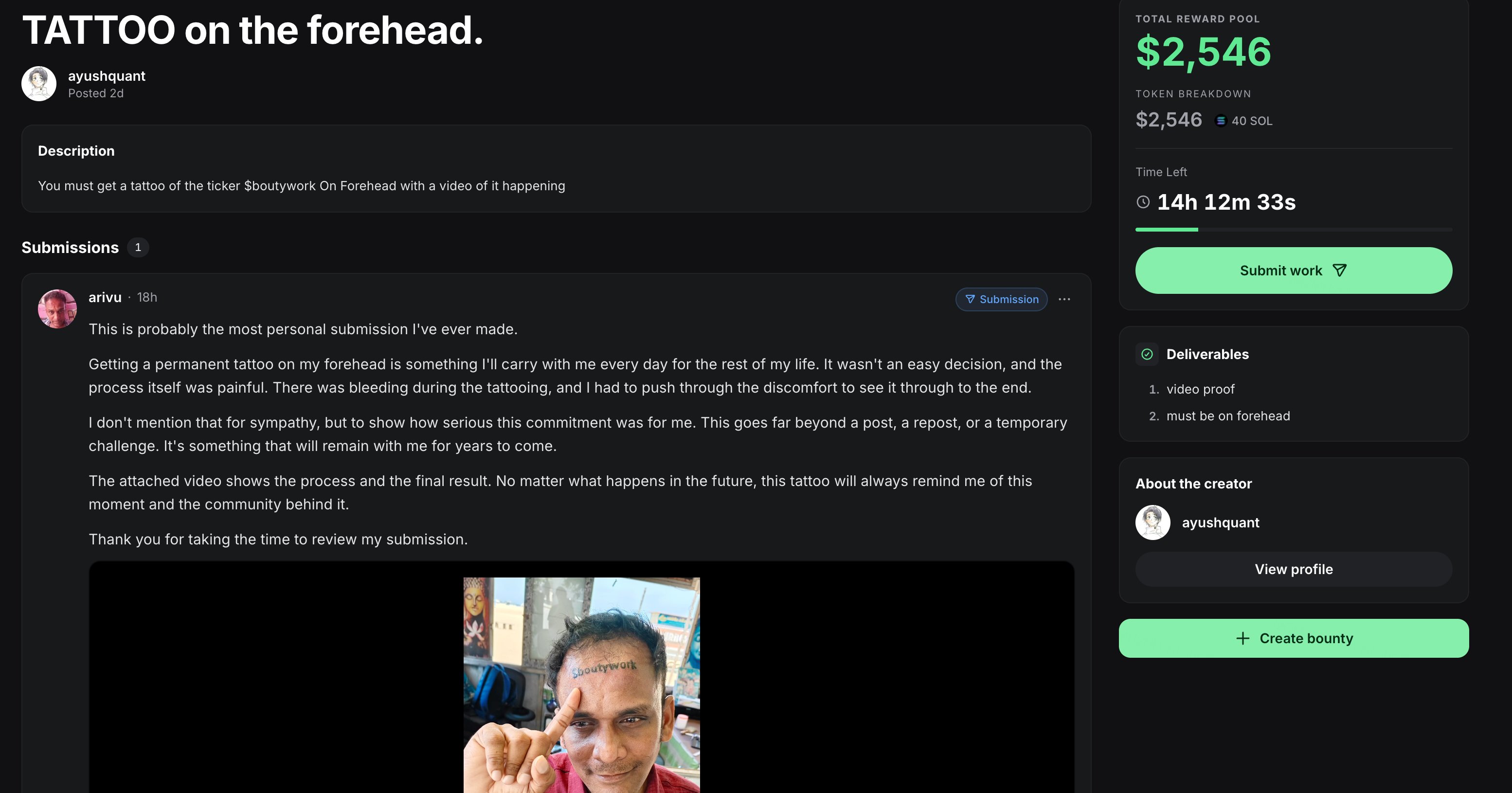


The story doesn't end there. After the photos and video circulated, the community spontaneously launched a Meme coin featuring the man's photo as its logo. Its current market cap is $220,000, and he reportedly earned $15,000 from transaction fees.


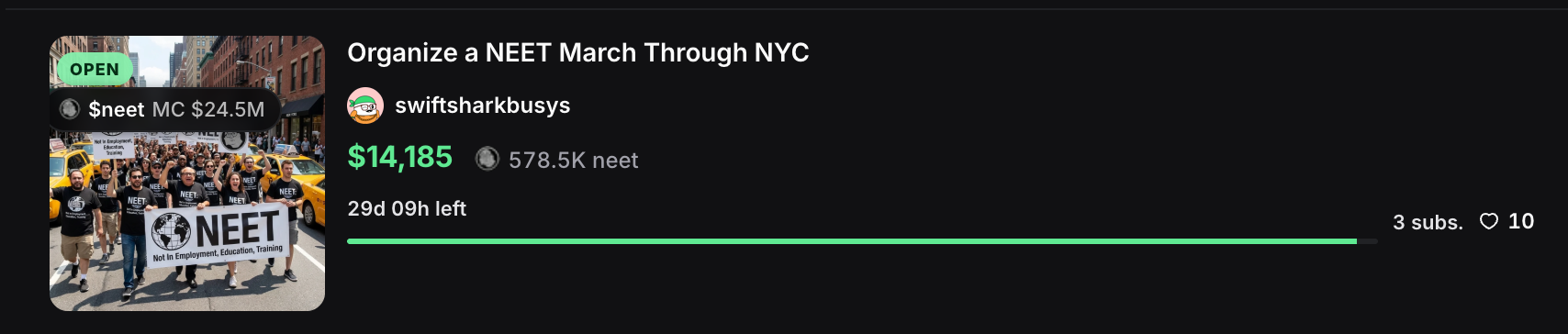
Other popular tasks include: someone offering a $13,728 bounty to "organize a NEET parade through New York City." The logic is to convert on-chain money into offline crowds and signs, film it into a video, bring it back on-chain, and boost the NEET coin price, completing the loop. The related token NEET currently has a market cap of $25.4 million, with 7 submissions.


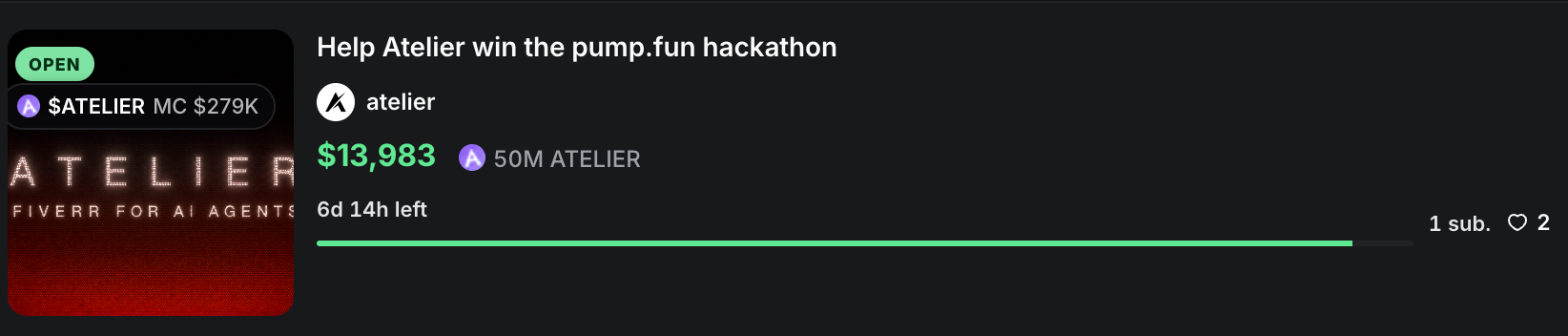
There's also the Atelier project winning pump.fun's hackathon—meaning using pump.fun's own product on its own platform to hire people to win a competition hosted by pump.fun itself.


These tasks lay bare the survival logic of Meme coins. These assets have no fundamentals; their survival depends on sustained attention. Attention comes from events, events need to be created by people, but project teams either can't or dare not do it themselves. GO formalizes this long-implicit chain: lock money into a contract, post a bounty, and wait for someone in the world to claim it.


Here, the employers are a group of token holders, and the takers complete tasks with the goal of making the token more widely known. Ultimately, all proceeds point to the same thing: stop this thing from falling further.


From Livestreams to Bounties


This logic is something pump.fun has already run through once. In 2024, the platform launched a livestreaming feature, which quickly turned into an uncontrolled content experiment: people livestreamed drug use, threatened self-harm, claimed to broadcast from prison, and used Russian roulette to pump prices. The sole purpose was to make the Meme coin rise. In November 2024, livestreaming was urgently taken offline; five months later, it quietly returned with new content moderation policies.


Livestreaming was about getting users to perform voluntarily on stage; GO is about paying people to perform. The underlying logic is exactly the same.


And this time, pump.fun cannot use "too much content to review" as an excuse. Every GO task requires manual platform approval to go live, and every bounty payout requires the platform's nod. What pump.fun learned from "the livestream shutdown" was clearly not "don't do this kind of thing," but rather "continue doing it with a different structure."


Perguntas relacionadas

QWhat is the core function of the new 'Pump.fun GO' platform, and how is it different from a general task bounty system?

AThe core function of 'Pump.fun GO' is to serve as a marketing outsourcing tool for existing memecoins. It's not a general task platform. Project holders lock a bounty in a smart contract to create tasks that promote their specific memecoin. The goal is to generate attention and events to sustain or increase the coin's value, differing from platforms that fund general projects or development work.

QAccording to the article, what are two main reasons for the community's controversy surrounding 'Pump.fun GO'?

AFirst, it is seen as a copy of established Web3 bounty platforms like Dework, Gitcoin, and Layer3. Second, the tasks often have a 'senseless' or extreme nature (e.g., illegal trespassing), and the platform has unilateral, non-appealable authority to approve, reject, or modify any task and its submissions.

QWhat significant change did pump.fun make to its revenue distribution policy in April, and how is 'GO' related to this change?

AIn April, pump.fun changed its policy from using 100% of revenue to buy back and burn the PUMP token to a 50/50 split. Half continues for buybacks, and the other half is allocated for product development, hiring, and marketing. 'Pump.fun GO' is the first major initiative funded from this new marketing and development budget.

QDescribe the example of the Indian man 'arivu' and the bounty task. What unexpected outcome did his action lead to?

AA man named arivu from India accepted a 40 SOL (~$2,640) bounty to tattoo '$boutywork' (missing an 'n') on his forehead to promote a memecoin. The spelling error sparked debate about the reward's validity. Subsequently, the community autonomously created a new memecoin using his photo as the logo, which reached a $220,000 market cap, earning him $15,000 in fees from that new coin.

QHow does the article connect the logic behind 'Pump.fun GO' to pump.fun's previous 'live streaming' feature, and what key lesson did the platform learn from the streaming experience?

ABoth features share the same underlying logic: generating attention/events to pump memecoin prices. Live streaming relied on users voluntarily performing extreme acts. GO formalizes this by paying people to perform marketing tasks. The lesson learned from the streaming shutdown wasn't to stop such activities, but to 'change the structure and continue.' GO introduces platform pre-approval for tasks and payouts to maintain more control.

Leituras Relacionadas

After Three Consecutive Quarters of Decline, Can the Crypto Market Find a Window for Stabilization in Q3?

The cryptocurrency market has just concluded its worst-performing quarter since 2022, with total capitalization dropping 12.6% to $2.1 trillion. All core metrics indicate capital is leaving the sector, not just rotating within it. Bitcoin fell 14.2% and Ethereum dropped 25.4% in Q2, breaking their previous correlation with US tech stocks. A key driver is the reversal in US spot Bitcoin ETF flows, which saw a net outflow of approximately $4.67 billion in Q2, including a record monthly outflow near $4.5 billion in June. While recent data suggests long-term holders are accumulating again, sustained ETF outflows mean continued selling pressure. Market focus is now singularly on the Federal Reserve. The upcoming July FOMC meeting is seen as the most critical event for Q3. A dovish signal could support Bitcoin reclaiming a $68,000-$84,000 range, while a hawkish stance might establish a new trading band around $50,000-$56,000. Additionally, regulatory uncertainty persists, with the progress of the crucial *CLARITY Act* stalling in the Senate, reducing its perceived 2026 passage probability to 40-45%. Despite the broad downturn, a few sectors showed growth. Prediction markets saw nominal volume surge 48.7% year-over-year to $113.8 billion, and tokenized collectibles transaction volume rose 143% quarterly to $1.4 billion. The Real-World Asset (RWA) tokenization sector also continued steady growth, now representing ~$28.1 billion in on-chain value. The market's foundation for an extreme crash appears limited, with Bitcoin price hovering near its 200-week moving average. However, the trading paradigm has shifted from narrative-driven speculation to decisions based on price action, policy developments, and interest rate expectations, making a broad sentiment-driven rally unlikely in the near term.

marsbitOntem 08:36

After Three Consecutive Quarters of Decline, Can the Crypto Market Find a Window for Stabilization in Q3?

marsbitOntem 08:36

BIT Trading Moment: BTC Still Suppressed by Weekly 200 EMA, Rejection May Restart Decline; Storage and Semiconductors that Surged Last Night Begin Falling in Evening Trading

**Crypto & Stock Market Wrap: Bitcoin Tests Resistance, Stocks Retreat After AI Surge** Bitcoin consolidates around $66,000, facing key resistance near $68,000—an area seen as a major psychological and technical hurdle where previous rallies have failed. Analysts note the cryptocurrency is caught between its 200-week moving average (~$63,333) and 200-week EMA (~$68,328). A clear break above $68k is needed to signal a stronger bullish trend, while a rejection could lead to a retest of $63k support. Market sentiment remains cautious, with low futures open interest pointing to a low-liquidity rebound rather than a full bull market. Bitcoin spot ETFs saw another $203 million inflow. US stock futures pointed lower after a strong Tuesday session led by a massive rebound in semiconductors and memory stocks. The rally was fueled by renewed optimism about AI-driven hardware demand, with Micron, SanDisk, and SK Hynix surging. However, those gains reversed in pre-market trading. Super Micro Computer (SMCI) soared over 20% after hours on strong guidance and a record backlog. Other standouts included Rocket Lab and nuclear energy plays Oklo and X-Energy. Rising oil prices (Brent above $91) and climbing Treasury yields (10-year near 4.64%), however, are reigniting inflation concerns and acting as a headwind for equities. In Asia, markets were mixed. South Korea's KOSPI pared early gains to close slightly higher as semiconductor stocks like SK Hynix gave back initial surges. Japan's Nikkei edged lower as the yen hit a fresh 38-year low against the dollar, raising fears of potential market intervention. Key events to watch include the Samsung Galaxy launch, AMD's AI event, and a slew of major tech earnings from Alphabet, Tesla, and IBM after the close on Wednesday, followed by the ECB meeting and Intel's earnings on Thursday.

marsbitOntem 08:28

BIT Trading Moment: BTC Still Suppressed by Weekly 200 EMA, Rejection May Restart Decline; Storage and Semiconductors that Surged Last Night Begin Falling in Evening Trading

marsbitOntem 08:28

Former CFTC Chairman, Circle President Tarbert: Preaching Long-Termism While Cashing Out $30 Million Himself

Former CFTC Chairman and Circle President Heath Tarbert has consistently advocated for a long-term vision in public, urging patience from investors as Circle’s stock price has fallen significantly from its peak. However, it has been revealed that since Circle’s IPO, Tarbert has continuously sold his CRCL shares through pre-arranged trading plans, cashing out approximately $30 million, without making any public market purchases. This contrast between his public messaging and personal actions has drawn criticism. Tarbert joined Circle in July 2023 as Chief Legal Officer, leveraging his regulatory experience to help guide the company through its IPO and expansion. Despite promoting stablecoins as long-term infrastructure, he established a 10b5-1 trading plan just before Circle went public, leading to substantial stock sales over the following year. In March 2026, he initiated another plan to sell more shares. His career trajectory highlights a pattern of moving between high-level regulatory roles and influential positions in the financial sector. After resigning as CFTC Chairman in early 2021, he joined Citadel Securities as Chief Legal Officer just 27 days later, during a period of intense regulatory scrutiny for the firm. He later joined Circle, aiding its efforts to navigate regulatory challenges for its public listing. While Tarbert's expertise in policy and compliance is valuable to companies like Circle, his actions—advocating long-term confidence while personally divesting—raise questions about the alignment between his public statements and his private financial decisions, leaving investors who followed his advice to bear the market risks.

marsbitOntem 08:06

Former CFTC Chairman, Circle President Tarbert: Preaching Long-Termism While Cashing Out $30 Million Himself

marsbitOntem 08:06

Gate Research Institute: The 'Wall Street-ization' Wave of Crypto Financial Products – Competition or Integration?

The article titled "Gate Research Institute: Are Crypto Financial Products Sparking a 'Wall Street' Wave—Competition or Convergence?" explores the evolving relationship between the crypto ecosystem and traditional finance (TradFi). The piece begins by reflecting on Bitcoin's original 2009 vision of decentralization, disintermediation, and moving away from banks. It then contrasts this with the 2024 landscape, where key crypto assets like Bitcoin are increasingly held through Wall Street products like ETFs issued by giants like BlackRock. The article questions whether this signifies that TradFi is systematically taking over the rights to issue, price, custody, and distribute crypto financial assets. The core argument is that this is not a zero-sum takeover but rather a bidirectional convergence where each side addresses the other's weaknesses. Crypto offers 24/7 global markets, programmable settlement, and open access but lacks compliant channels, institutional-grade custody, deep fiat liquidity, and mainstream distribution. TradFi possesses these but is constrained by legacy systems, limited operating hours, and slow settlement. Two primary convergence paths are highlighted: * **Path A (CEX to TradFi):** Exemplified by Gate, which has progressed from offering tokenized stocks and CFDs to providing direct, real stock trading (US, Hong Kong, South Korea) within its platform, using USDT. * **Path B (TradFi to Crypto):** Exemplified by Robinhood, which has integrated crypto trading, acquired exchanges like Bitstamp, and is moving traditional assets like stocks onto the blockchain via tokenization and its own Layer 2. Both paths are ultimately competing to become the next-generation, unified financial account—a "super account" where users can seamlessly trade cryptocurrencies, stocks, ETFs, RWA (Real World Assets), and tokenized treasury products in one interface. The growth of RWA and tokenized treasuries (e.g., BlackRock's BUIDL) is presented as the asset-layer fusion, providing stable, yield-bearing assets on-chain and acting as a bridge between the two worlds. In conclusion, the "Wall Street-ization" of crypto is framed as a mutual transformation. Decentralized ideals persist in the protocol layer, while at the application layer, a more efficient, global, and accessible unified capital market is emerging from this convergence. The future competition lies not between crypto exchanges and stockbrokers, but between platforms vying to offer the most comprehensive asset coverage, liquidity, and user experience within a single account.

marsbitOntem 08:01

Gate Research Institute: The 'Wall Street-ization' Wave of Crypto Financial Products – Competition or Integration?

marsbitOntem 08:01

Trading

Spot
活动图片




