XRP Tụt Hậu Trước Đối Thủ XLM: Tại Sao Nhà Đầu Tư Nhỏ Lẻ Đang Bán Một Đồng Tiền Để Mua Đồng Kia

bitcoinistPublicado em 2026-06-03Última atualização em 2026-06-03

Resumo

Mối cạnh tranh giữa XRP và Stellar (XLM) lại nổi lên, với báo cáo cho thấy các nhà giao dịch bán lẻ ở Hàn Quốc đang chuyển từ XRP sang XLM. Trên sàn Upbit lớn nhất Hàn Quốc, khối lượng giao dịch 24 giờ của XLM đạt khoảng 252,3 triệu USD, gấp đôi so với XRP (125,7 triệu USD), đánh dấu lần đầu tiên XLM vượt XRP về khối lượng tại đây. Sự dịch chuyển này được thúc đẩy bởi sự quan tâm đến vai trò của Stellar trong lĩnh vực tài chính mã hóa, đặc biệt sau thông tin về kế hoạch liên kết mạng lưới này với các nỗ lực mã hóa tài sản liên quan đến DTCC. Trong tuần qua, giá XLM đã tăng hơn 55%. Trong khi đó, XRP gặp khó khăn, giảm xuống dưới 1,3 USD. Một nhà phân tích khác, CW, dự báo XRP có thể là 'người chiến thắng' tiếp theo sau đợt tăng của XLM, cho rằng XRP đang ở vị trí tương tự trước khi bứt phá và nhắm mục tiêu giá cao kỷ lục mới gần 56 USD, dù đây là dự báo đầy tham vọng.

Sự cạnh tranh giữa XRP và Stellar (XLM) đã kéo dài trong nhiều năm, với các nhà đầu tư thường so sánh hai loại tiền điện tử tập trung vào thanh toán này do cùng nguồn gốc và trường hợp sử dụng tương tự. Trong khi XRP từ lâu vẫn duy trì sự hiện diện thị trường lớn hơn, XLM dường như đang giành lợi thế ở một số khu vực. Một báo cáo mới cho thấy các nhà giao dịch nhỏ lẻ tại Hàn Quốc hiện đang bán XRP để mua XLM, thúc đẩy giá trị thị trường của Stellar tăng mạnh trong khi giá XRP tiếp tục giảm.

XLM Vượt XRP Về Khối Lượng Giao Dịch Tại Hàn Quốc

Token gốc của Stellar, XLM, đã vượt lên trước XRP trong một sự thay đổi lớn trên sàn giao dịch tiền điện tử lớn nhất Hàn Quốc, Upbit. Sự phát triển này diễn ra khi các nhà giao dịch nhỏ lẻ đổ xô vào XLM, đẩy hoạt động giao dịch của nó lên trên một trong những tài sản kỹ thuật số phổ biến nhất tại quốc gia này.

Dữ liệu được chia sẻ bởi nhà phân tích thị trường Xaif Crypto cho thấy XLM ghi nhận khoảng 252,3 triệu USD khối lượng giao dịch trong 24 giờ trên Upbit. Trong khi đó, XRP chỉ đạt khoảng 125,7 triệu USD trong cùng kỳ, chưa bằng một nửa khối lượng của XLM. Khoảng cách đáng kinh ngạc này đánh dấu lần đầu tiên XLM vượt XRP về khối lượng giao dịch, hiện xếp hạng số một trên Upbit.
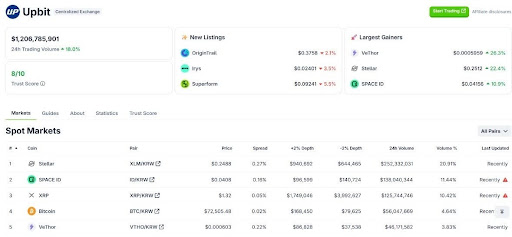
Nguồn: CoinCodex

Đợt tăng mới nhất đến sau khi sự quan tâm đến vai trò của Stellar trong lĩnh vực tài chính token hóa bùng nổ tại Hàn Quốc. Các nhà giao dịch đã phản ứng tích cực trước các kế hoạch gần đây liên kết mạng lưới blockchain này với nỗ lực token hóa liên quan đến Tổng Công ty Lưu ký và Thanh toán Bù trừ Hoa Kỳ (DTCC), một trong những công ty cơ sở hạ tầng thị trường tài chính lớn nhất thế giới.

Tin tức về DTCC đã giúp thúc đẩy nhu cầu mới đối với XLM trong giới nhà đầu tư Hàn Quốc, những người thường ưa chuộng giao dịch XRP. Đáng chú ý, XLM cũng ghi nhận mức tăng giá mạnh cùng với sự gia tăng hoạt động giao dịch. Báo cáo cho thấy token này đã tăng hơn 55% lên 11 USD trong tuần qua khi động lực tiếp tục hình thành trên khắp thị trường. Trong khi đó, XRP đã phải vật lộn để theo kịp đợt tăng giá, thậm chí giảm xuống dưới 1,3 USD, bất chấp sự phổ biến lâu đời của nó trong giới giao dịch Hàn Quốc.

Sự thay đổi về mối quan tâm và nhu cầu này rất đáng chú ý vì XRP từ lâu đã là một trong những loại tiền điện tử được giao dịch nhiều nhất tại các thị trường châu Á như Hàn Quốc, Nhật Bản và Thái Lan. Chỉ vài tuần trước, XRP đang dẫn đầu về khối lượng giao dịch trên Upbit của Hàn Quốc, vượt cả Bitcoin và Ethereum. Tuy nhiên, các con số mới nhất cho thấy sự chú ý của giới đầu tư nhỏ lẻ hiện đã chuyển hướng sang XLM khi các nhà giao dịch đuổi theo động lực mạnh nhất trên thị trường.

Nhà Phân Tích Dự Báo Đợt Tăng Giá Cho XRP Sau Khi XLM Bứt Phá

Trong một phân tích riêng biệt, nhà phân tích tiền điện tử CW tin rằng XRP có thể là người chiến thắng lớn tiếp theo sau đợt bứt phá gần đây của Stellar. Trong một bài đăng chia sẻ trên X, nhà phân tích này cho biết đợt tăng giá mạnh cho XLM đã bắt đầu và gợi ý rằng XRP hiện đang ở vị trí tương tự trước khi có động thái tăng giá của riêng mình.

Theo CW, XRP đang chờ đợi một "tín hiệu khởi động" và hiện đang giao dịch quanh mức mà XLM từng ở trước đợt tăng giá 57% gần đây. Nhà phân tích lập luận rằng XRP có thể đi theo con đường tăng giá của XLM nếu động lực tiếp tục được xây dựng.
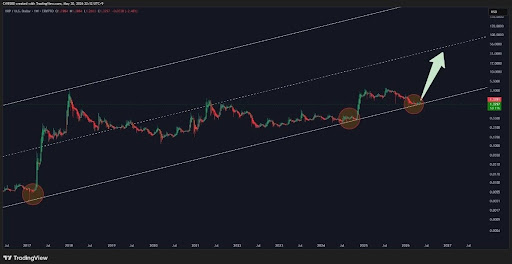
Nguồn: X

Tuy nhiên, biểu đồ của CW dự đoán một động thái lớn hơn nhiều cho XRP, hướng tới mức cao kỷ lục mới tiềm năng gần 56 USD. Mặc dù dự đoán này vẫn mang tính suy đoán cao và đầy tham vọng do giá hiện tại của loại tiền điện tử này còn thấp, nhưng nó phản ánh sự lạc quan ngày càng tăng trong số một số người tham gia thị trường, những người tin rằng XRP vẫn chưa thực hiện bước di chuyển lớn nhất của mình trong chu kỳ hiện tại.

Giá theo xu hướng giảm của thị trường | Nguồn: XRPUSDT trên Tradingview.com

Perguntas relacionadas

QTại sao các nhà giao dịch bán lẻ tại Hàn Quốc đang chuyển từ XRP sang XLM?

ABáo cáo cho thấy sự dịch chuyển này chủ yếu do sự quan tâm đến vai trò của Stellar trong lĩnh vực tài chính token hóa, đặc biệt sau thông tin về kế hoạch liên kết mạng lưới blockchain này với các nỗ lực token hóa của DTCC (Tổng công ty Lưu ký & Thanh toán Bù trừ Hoa Kỳ). Sự kiện này đã thúc đẩy nhu cầu mới đối với XLM.

QSự khác biệt về khối lượng giao dịch giữa XLM và XRP trên sàn Upbit của Hàn Quốc như thế nào?

ATheo dữ liệu, XLM đã ghi nhận khối lượng giao dịch 24 giờ khoảng 252,3 triệu USD trên Upbit, trong khi XRP chỉ đạt khoảng 125,7 triệu USD trong cùng kỳ. XLM đã vượt XRP về khối lượng giao dịch lần đầu tiên và hiện đứng đầu trên sàn Upbit.

QPhản ứng của giá XLM và XRP trước sự thay đổi nhu cầu này là gì?

AXLM đã tăng hơn 55% lên mức 11 USD trong tuần qua, được thúc đẩy bởi khối lượng giao dịch tăng và động lực thị trường tích cực. Trong khi đó, XRP gặp khó khăn trong việc theo kịp đà tăng, thậm chí giảm xuống dưới 1,3 USD.

QNhà phân tích CW dự báo điều gì về XRP sau đợt tăng giá của XLM?

ANhà phân tích CW tin rằng XRP có thể là 'người chiến thắng lớn tiếp theo'. Ông cho rằng XRP hiện đang ở vị trí tương tự XLM trước đợt tăng giá và đang chờ 'tín hiệu khởi động' để có thể tăng mạnh, với mục tiêu dài hạn lên tới vùng cao kỷ lục mới gần 56 USD.

QTại sao sự thay đổi về sự quan tâm từ XRP sang XLM lại đáng chú ý?

AĐiều này đáng chú ý vì XRP từ lâu đã là một trong những tiền mã hóa được giao dịch nhiều nhất tại các thị trường châu Á như Hàn Quốc, Nhật Bản và Thái Lan. Chỉ vài tuần trước, XRP còn dẫn đầu khối lượng giao dịch trên Upbit trước cả Bitcoin và Ethereum, cho thấy sự luân chuyển nhanh chóng trong sở thích của các nhà giao dịch bán lẻ.

Leituras Relacionadas

Behind HYPE's Repeated Record Highs, the 'Minions' in the Ecosystem Can't Keep Up

While HYPE, the native token of the Hyperliquid ecosystem, surges to new all-time highs above $76 and attracts significant institutional ETF inflows, a starkly different reality unfolds within its HyperEVM application layer. Multiple core DeFi protocols across lending, NFTs, stablecoins, and DEXs have announced shutdowns between May and June. The article argues HYPE functions more like an "application stock" than a traditional ecosystem token. Its value is anchored to the trading fees from Hyperliquid's core perpetual contracts platform (HyperCore), which boasts a diversified revenue stream from crypto, commodities, and indices. Approximately 97% of protocol fees fund buybacks and burns of HYPE. This means HYPE's price is largely decoupled from the health of projects built on HyperEVM. The closures of significant projects like lending protocol HypurrFi (peak TVL >$300M) and NFT marketplace Drip.Trade highlight a structural tension. Hyperliquid's minimalist philosophy offers infrastructure without official grants, liquidity support, or marketing coordination for HyperEVM projects. This forces protocols into a fiercely competitive environment from day one. Furthermore, the success of HyperCore creates a liquidity vacuum, and mechanisms like HIP-3 (allowing direct perpetual market deployment) divert user attention and capital away from application-layer projects. The stronger the core perpetual trading business becomes, the more difficult it is for peripheral "DeFi lego" projects to survive and capture value, despite the flagship token's rising price.

Foresight NewsHá 2m

Behind HYPE's Repeated Record Highs, the 'Minions' in the Ecosystem Can't Keep Up

Foresight NewsHá 2m

Conversation with Arthur Hayes: AI Has Drained Market Liquidity, BTC Will Be Below 100k by Year-End

In this June 2026 podcast interview, BitMEX co-founder Arthur Hayes explains his decision to sell his major crypto holdings (HYPE, NEAR, Worldcoin, Zcash). His rationale is based on a macro view linking oil prices, the Iran conflict, US politics, and an impending AI bubble burst. Hayes argues that high oil prices, driven by the ongoing war, will pressure domestic US inflation. To salvage the Republican Party's chances in the midterm elections, he believes Donald Trump may pivot to a populist, anti-AI stance—advocating for taxes and regulation—which would deflate the AI investment narrative. He sees the AI sector, particularly massive capital expenditure on data centers, as having absorbed nearly all excess market liquidity (around $1.5 trillion in debt issuance since 2025), starving other assets like Bitcoin. He highlights the upcoming SpaceX IPO at a ~$1.8 trillion valuation and 100x price-to-sales ratio as a potential tipping point. If these hyped IPOs underperform, it could shatter market confidence in AI. In such a scenario, all risk assets, including crypto, would fall together as correlations converge to 1 during a broad correction. Hayes has moved his portfolio into Treasuries and energy stocks (like ExxonMobil), predicting Bitcoin will be below $100k by year-end. He sees a potential crypto bull market only after the AI frenzy cools, liquidity stops flowing exclusively into AI, and possibly after a significant market downturn prompts new monetary stimulus.

marsbitHá 13m

Conversation with Arthur Hayes: AI Has Drained Market Liquidity, BTC Will Be Below 100k by Year-End

marsbitHá 13m

Fed's Internal Doves Flock to Hawkish Stance, Warsh's Debut "Between a Rock and a Hard Place"

U.S. Federal Reserve officials who previously advocated for rate cuts, including Governor Christopher Waller, have recently shifted their stance, with many now not ruling out the possibility of future rate hikes. This sets a challenging stage for new Fed Chair Kevin Warsh's first policy meeting. Appointed by President Trump based on his dovish views, Warsh now faces a committee where the debate has pivoted from "when to cut" to "whether to hike," driven by persistent inflation above 3%, a strong labor market, and supply-side pressures from AI infrastructure demands and geopolitical tensions. Key figures illustrate the shift. Governor Waller, once concerned about employment, now says data has pushed him toward considering rate increases. Even moderate voices like Governor Lisa Cook, while expecting inflation to ease, have indicated readiness to hike if it fails to do so. Long-time hawks such as regional Fed presidents Beth Hammack, Lorie Logan, and Neel Kashkari have grown more vocal, arguing that the real policy rate is effectively falling and that action may soon be needed. The upcoming Fed meeting is expected to keep rates steady but will likely remove the "easing bias" from its statement, signaling a neutral stance between cuts and hikes. The quarterly "dot plot" is anticipated to show most officials projecting no cuts this year, with some potentially indicating hikes. Chair Warsh, a critic of the Fed's reliance on forward guidance like the dot plot, must navigate communicating this pivot using tools he has questioned, all while steering policy in a direction counter to the preferences of the president who appointed him. The consensus suggests the Fed's next move could well be a rate increase.

marsbitHá 1h

Fed's Internal Doves Flock to Hawkish Stance, Warsh's Debut "Between a Rock and a Hard Place"

marsbitHá 1h

The Trillion-Yuan Market Cap 'Yi Zhong Tian': Who is the True Value King?

The article analyzes the three leading Chinese optical module companies, collectively nicknamed "Yi Zhong Tian": Xinyisheng, Zhongji Innolight, and TFC Optical Communication. It evaluates their "cost-performance" not by current stock price, but through three lenses: PEG ratio (growth vs. valuation), earnings quality, and premium/discount for certainty. Xinyisheng shows the most attractive PEG ratio and high profitability, but its valuation reflects discounts for risks like high customer concentration and reliance on overseas markets. Zhongji Innolight, the most expensive, commands a premium for its market leadership, dominant share in key products like 800G/1.6T modules, and higher earnings certainty, though it faces geopolitical risks. TFC Optical, as an upstream component supplier ("water seller"), has the highest gross margin and bets on the long-term CPO/NPO architecture trend, but trades at a high valuation with more stable, less explosive growth. The core argument is that while these companies dominate module assembly, the true profit pool and technological moat lie upstream in laser and switch chips, currently controlled by U.S. firms like Lumentum and Coherent. The long-term "cost-performance" for these Chinese leaders hinges on whether the domestic industry, exemplified by companies like Yuanjie Technology, can successfully move up the value chain into high-power laser chips. Otherwise, their high growth may remain confined to the lower-margin assembly segment.

marsbitHá 1h

The Trillion-Yuan Market Cap 'Yi Zhong Tian': Who is the True Value King?

marsbitHá 1h

Trading

Spot
Futuros

Artigos em Destaque

O que é XRP 2.0

XRP 2.0: Uma Nova Fronteira no Landscape das Criptomoedas Introdução ao XRP 2.0 No reino em constante evolução das criptomoedas, novos projetos surgem continuamente, lutando por atenção e adoção. Uma dessas iniciativas promissoras é o XRP 2.0, um novo projeto de criptomoeda concebido para aproveitar a tecnologia de blockchain avançada e as metodologias de criptografia robustas. Embora o nome tenha paralelos com o XRP da Ripple, é crucial notar que o XRP 2.0 opera de forma independente, focando em melhorar a segurança das transações, a privacidade e a escalabilidade. À medida que o panorama financeiro digital abraça cada vez mais soluções descentralizadas, o XRP 2.0 visa contribuir de forma significativa para a web3 e a expansão global dos projetos de criptomoedas. O que é o XRP 2.0? No seu núcleo, o XRP 2.0 é um projeto de criptomoeda que visa criar um ecossistema de moeda digital seguro e descentralizado. Sua tecnologia fundamental integra princípios de blockchain sofisticados com técnicas de criptografia de ponta. O objetivo abrangente do XRP 2.0 é estabelecer-se como uma plataforma confiável e eficiente que possibilita a execução rápida de transações, priorizando a proteção de privacidade aprimorada para os seus usuários. O projeto é promovido como uma solução para muitas limitações enfrentadas pelas criptomoedas existentes, propondo um sistema que pode lidar com um volume maior de transações com velocidade e privacidade melhoradas. Esta versatilidade posiciona o XRP 2.0 como um concorrente significativo em um mercado repleto de várias moedas digitais. Quem é o Criador do XRP 2.0? A identidade do criador por trás do XRP 2.0 foi identificada como 'Wilbur.' No entanto, detalhes abrangentes sobre Wilbur ou a sua entidade associada permanecem elusivos. O anonimato de muitos criadores de criptomoedas não é um fenômeno incomum na indústria, muitas vezes concebido para manter um grau de privacidade e segurança. Quem são os Investidores do XRP 2.0? Até agora, informações específicas relacionadas às fundações ou organizações de investimento que apoiam o XRP 2.0 não estão disponíveis publicamente. No setor das criptomoedas, o apoio de investidores reputados pode influenciar significativamente a credibilidade e o sucesso de um projeto, no entanto, a transparência em relação aos apoiantes financeiros do XRP 2.0 não foi estabelecida. Como Funciona o XRP 2.0? O XRP 2.0 destaca-se por empregar uma combinação de tecnologia blockchain e algoritmos de criptografia avançados que asseguram transações seguras e descentralizadas. Sua estrutura inovadora inclui características únicas projetadas para fomentar o envolvimento dos usuários e ampliar as funcionalidades além das transações convencionais de criptomoedas. Entre essas características, o XRP 2.0 incorpora capacidades potenciadas por IA, como funcionalidades de texto-para-imagem e texto-para-fala. Estas adições são projetadas para melhorar a experiência interativa dos usuários, promovendo uma maior aplicabilidade em vários setores. Ao unir avanços tecnológicos com um design centrado no utilizador, o XRP 2.0 pretende captar a atenção de uma diversa gama de indivíduos e empresas que procuram integrar soluções de criptomoedas em suas estruturas operacionais. Cronologia do XRP 2.0 Compreender o XRP 2.0 requer examinar os marcos que definiram sua jornada até agora: 23 de Julho de 2023: O XRP 2.0 é apresentado como um novo projeto de criptomoeda, visando revolucionar as capacidades de transação seguras e descentralizadas no domínio do blockchain. 8 de Setembro de 2023: O lançamento de outro projeto, XRP20, ocorre, marcando o surgimento de um token ERC-20 na blockchain Ethereum que permanece não relacionado ao XRP 2.0. 13 de Novembro de 2023: O XRP Ledger passa por uma atualização significativa com o lançamento da versão 2.0.0 do software do servidor rippled. É importante notar que este desenvolvimento está desconectado do projeto de criptomoeda XRP 2.0. Pontos-chave sobre o XRP 2.0 Para destilar a essência do XRP 2.0, vários fatores críticos emergem: Características Únicas: A inclusão de características como texto-para-imagem e texto-para-fala potenciadas por IA diversifica ainda mais as aplicações potenciais do XRP 2.0. Tecnologia Blockchain: A estrutura utiliza mecanismos de blockchain avançados e protocolos de criptografia, assegurando um ambiente seguro e descentralizado para transações. Escalabilidade e Privacidade: O XRP 2.0 prioriza proteção de privacidade aprimorada nos processos de transação e a escalabilidade necessária para acomodar uma base de utilizadores crescente. Sem Afiliação com a Ripple: Importante, apesar do seu nome, o XRP 2.0 não tem qualquer lealdade ou colaboração com o XRP da Ripple, distinguindo sua estrutura operacional e objetivos dentro do ecossistema das criptomoedas. Conclusão O XRP 2.0 representa uma empreitada ambiciosa no domínio das criptomoedas, visando oferecer uma combinação de segurança, privacidade e eficiência em transações digitais. Ao integrar tecnologias sofisticadas e características amigáveis ao utilizador, o projeto propõe-se a ampliar os horizontes do que as criptomoedas podem alcançar na economia digital atual. Embora o anonimato do seu criador e a falta de investidores divulgados possam levantar questões para alguns, o foco do XRP 2.0 em funcionalidades avançadas e descentralização aumenta seu apelo num mercado de criptomoedas cada vez mais congestionado. À medida que o panorama das criptomoedas continua a evoluir, o XRP 2.0 pode ainda emergir como um jogador crucial na expansão de soluções de blockchain seguras e escaláveis.

100 Visualizações TotaisPublicado em {updateTime}Atualizado em 2024.12.03

O que é XRP 2.0

Como comprar XRP

Bem-vindo à HTX.com!Tornámos a compra de XRP (XRP) simples e conveniente.Segue o nosso guia passo a passo para iniciar a tua jornada no mundo das criptos.Passo 1: cria a tua conta HTXUtiliza o teu e-mail ou número de telefone para te inscreveres numa conta gratuita na HTX.Desfruta de um processo de inscrição sem complicações e desbloqueia todas as funcionalidades.Obter a minha contaPasso 2: vai para Comprar Cripto e escolhe o teu método de pagamentoCartão de crédito/débito: usa o teu visa ou mastercard para comprar XRP (XRP) instantaneamente.Saldo: usa os fundos da tua conta HTX para transacionar sem problemas.Terceiros: adicionamos métodos de pagamento populares, como Google Pay e Apple Pay, para aumentar a conveniência.P2P: transaciona diretamente com outros utilizadores na HTX.Mercado de balcão (OTC): oferecemos serviços personalizados e taxas de câmbio competitivas para os traders.Passo 3: armazena teu XRP (XRP)Depois de comprar o teu XRP (XRP), armazena-o na tua conta HTX.Alternativamente, podes enviá-lo para outro lugar através de transferência blockchain ou usá-lo para transacionar outras criptomoedas.Passo 4: transaciona XRP (XRP)Transaciona facilmente XRP (XRP) no mercado à vista da HTX.Acede simplesmente à tua conta, seleciona o teu par de trading, executa as tuas transações e monitoriza em tempo real.Oferecemos uma experiência de fácil utilização tanto para principiantes como para traders experientes.

1.7k Visualizações TotaisPublicado em {updateTime}Atualizado em 2026.06.02

Como comprar XRP

Discussões

Bem-vindo à Comunidade HTX. Aqui, pode manter-se informado sobre os mais recentes desenvolvimentos da plataforma e obter acesso a análises profissionais de mercado. As opiniões dos utilizadores sobre o preço de XRP (XRP) são apresentadas abaixo.

活动图片