Top Cryptos Under $0.05 Offering 1,000%+ Upside Potential if Adoption Targets Are Reached

TheNewsCryptoPublicado em 2026-05-26Última atualização em 2026-05-26

Resumo

"Top Cryptos Under $0.05 Offering 1,000%+ Upside Potential if Adoption Targets Are Reached" discusses three low-priced cryptocurrencies identified as having high growth potential. Ozak AI ($OZ), priced at $0.014 in its seventh presale phase, is highlighted as a leading AI-powered market intelligence project utilizing decentralized infrastructure (DePIN). With strong presale performance, analysts see potential for 1,000% gains, especially with an expected future listing at $1. Kaspa (KAS) is noted for its high-speed proof-of-work blockDAG architecture, offering scalability and early-stage adoption potential. VeChain (VET) is presented as an established enterprise blockchain focused on supply chain solutions, considered undervalued despite its real-world partnerships. The article explains the appeal of sub-$0.05 tokens for investors seeking exponential returns but emphasizes the inherent risks. It concludes that while not guaranteed, these projects offer compelling growth opportunities based on fundamentals and market timing.

As investors hunt for the next wave of explosive crypto growth, low-priced tokens are once again moving into focus. Assets trading below $0.05 often appeal to early-stage investors because even modest adoption can translate into outsized percentage gains. While price alone doesn’t determine value, history shows that some of the strongest bull-market performers began their runs at just a few cents.

Here are three standout crypto projects under $0.05 that analysts and traders believe could deliver 1,000% or more upside if their adoption goals are met—led by one of the most talked-about AI presales of the year.

Ozak AI ($OZ): Early-Stage AI With Rapid Momentum

Ozak AI is emerging as one of the most closely watched low-priced crypto projects of this cycle. Currently priced at $0.014 in Phase 7 of its presale, Ozak AI launched at $0.001, already delivering a 1,300% increase for early participants. The presale has now raised around $7 million, with more than 1.2 billion tokens sold, signaling sustained demand even during broader market volatility.

What sets Ozak AI apart is its focus on real-world utility. The project is building an AI-powered market intelligence platform designed to analyze real-time data across crypto and traditional financial markets. Its Ozak Stream Network feeds live data into predictive AI models that run on decentralized physical infrastructure (DePIN), reducing reliance on centralized servers.

Users can deploy custom prediction agents, securely store data in encrypted data vaults, and use the $OZ token for analytics access, staking, governance, and monetizing AI-generated insights. Strategic partnerships with SINT and Weblume further strengthen its ecosystem by enabling automation and easy integration into decentralized applications.

With an expected $1 exchange listing price, analysts see a clear path toward 1,000%+ upside if adoption accelerates post-listing.

Kaspa (KAS): High-Speed Blockchain Still in Early Adoption

Kaspa is often described as one of the fastest proof-of-work blockchains in the market. Unlike traditional blockchains, Kaspa uses a blockDAG architecture, allowing multiple blocks to be confirmed simultaneously. This design enables high throughput while maintaining decentralization and security.

Despite its growing community and increasing visibility, Kaspa has spent much of its market life trading at just a few cents. Supporters believe that if adoption expands across payments, mining, and scalable applications, Kaspa could experience a significant revaluation. Its strong fundamentals and active development continue to attract long-term believers looking for asymmetric upside.

VeChain (VET): Enterprise Blockchain at a Discounted Price

VeChain remains one of the most established low-priced tokens in the market. Focused on supply chain management, logistics, and enterprise data verification, VeChain has secured real-world partnerships that many newer projects lack.

Trading at just a few cents for extended periods, VET is often cited as undervalued relative to its adoption. If enterprise blockchain usage expands during the next bull market, VeChain’s infrastructure-first approach could drive renewed demand for the token—making 1,000% upside a realistic discussion point rather than pure speculation.

Why Low-Priced Tokens Attract Early Capital

Sub-$0.05 tokens offer psychological and mathematical appeal. A $100 investment can secure thousands—or even tens of thousands—of tokens, creating leverage if adoption narratives take hold. In Ozak AI’s case, for example, $100 at $0.014 secures roughly 7,143 tokens, which would be worth over $7,000 at $1.

However, higher upside also comes with higher risk. Execution, adoption, and broader market conditions ultimately determine which projects succeed.

Final Thoughts

Low-priced cryptocurrencies are not guaranteed winners, but they often provide the clearest path to exponential gains when fundamentals and timing align. Ozak AI stands out for its early traction and AI-driven utility, while Kaspa and VeChain represent established projects that could benefit from renewed adoption cycles.

For investors willing to look beyond price and focus on long-term potential, these sub-$0.05 tokens may offer some of the most compelling growth opportunities of the coming years.

For more information about Ozak AI, visit the links below:

  • Website: https://ozak.ai/
  • Twitter/X: https://x.com/OzakAGI
  • Telegram: https://t.me/OzakAGI

Disclaimer: TheNewsCrypto does not endorse any content on this page. The content depicted in this Press Release does not represent any investment advice. TheNewsCrypto recommends our readers to make decisions based on their own research. TheNewsCrypto is not accountable for any damage or loss related to content, products, or services stated in this Press Release.

TagsOzak AIPress Release

Perguntas relacionadas

QWhat are the key features that set Ozak AI apart from other low-priced crypto projects mentioned in the article?

AOzak AI is distinguished by its focus on real-world utility through an AI-powered market intelligence platform. Key features include its Ozak Stream Network that feeds real-time data into predictive AI models running on decentralized physical infrastructure (DePIN), the ability for users to deploy custom prediction agents, secure encrypted data vaults, and the use of its $OZ token for analytics access, staking, governance, and monetizing insights. It also has strategic partnerships, such as with SINT and Weblume, to strengthen its ecosystem.

QWhat technology does Kaspa use to achieve high throughput, and what is its current market position according to the article?

AKaspa uses a blockDAG (Directed Acyclic Graph) architecture, which allows multiple blocks to be confirmed simultaneously instead of in a linear chain. This design enables high transaction throughput while maintaining decentralization and security. The article states that Kaspa is often described as one of the fastest proof-of-work blockchains and has spent much of its market life trading at just a few cents, positioning it as a project still in early adoption.

QWhat is the primary use case for VeChain (VET), and why does the article consider it potentially undervalued?

AVeChain's primary use case is focused on supply chain management, logistics, and enterprise data verification. The article considers VeChain potentially undervalued because it is an established project with real-world enterprise partnerships that many newer projects lack, yet it has been trading at just a few cents for extended periods. Its infrastructure-first approach could drive significant renewed demand if enterprise blockchain adoption expands.

QAccording to the article, what are the psychological and mathematical appeals of investing in sub-$0.05 tokens?

AThe psychological and mathematical appeals are that a small investment can secure a large number of tokens, creating significant leverage if the project succeeds. For example, a $100 investment in a token priced at $0.014 secures roughly 7,143 tokens. If the token's price were to reach $1, that holding would be worth over $7,000, representing a massive percentage gain.

QWhat specific milestone does the article mention regarding Ozak AI's presale, and what is its expected listing price?

AThe article mentions that Ozak AI's presale is in Phase 7, priced at $0.014, and has raised around $7 million with more than 1.2 billion tokens sold. It also states that the project has an expected exchange listing price of $1.

Leituras Relacionadas

ByteDance Adopts Arm CPUs, Jensen Huang: So Sad I Didn't Buy Arm

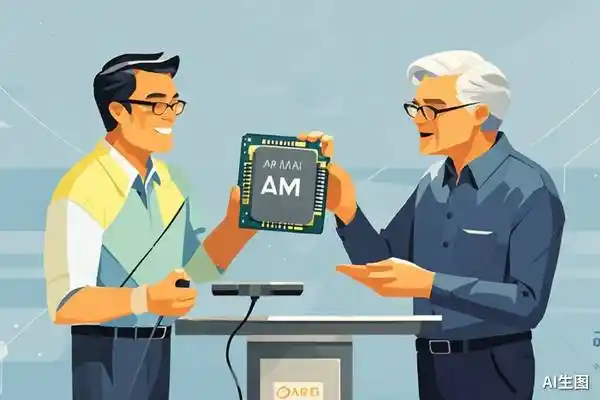
**Summary:** At Computex 2026, Arm CEO Rene Haas announced that ByteDance and Oracle have adopted Arm's self-designed Arm AGI data center CPU. The company expects significant revenue growth from this product, projecting $20 billion in demand for the 2027/2028 fiscal years. Haas noted that restricting AI-capable CPUs from the US to China is nearly impossible due to their widespread applications. Arm's stock has surged dramatically this year, notably rising 16% after NVIDIA's Arm-based Vera CPU and RTX Spark announcements. A highlight was the informal, humorous on-stage conversation between Haas and NVIDIA CEO Jensen Huang. Huang joked about NVIDIA's failed attempt to acquire Arm and playfully lamented selling his Arm shares. Both executives showed a clear sense of camaraderie and shared regret over the missed merger. Key technical topics were discussed: 1. **AI PC Design:** Huang explained NVIDIA's RTX Spark superchip (with a 20-core Arm CPU) is designed for future AI agents that will autonomously run and use tools on PCs, blending local and cloud processing. 2. **Agent vs. OS:** Huang emphasized the operating system remains crucial, as AI agents rely on its APIs and tools to function. 3. **Growth Constraints:** He identified the shift to "useful AI" that generates profitable tokens as a primary driver for immense, almost limitless, computational demand. Haas outlined Arm's strategy across PC and data centers. For PCs, Arm collaborates with partners like NVIDIA and MediaTek, offering its compute subsystem (CSS) for custom SoCs. In data centers, its Arm AGI CPU (built on TSMC's 3nm process) has gained major partners including OpenAI, Meta, and now ByteDance and Oracle. Arm presented a multi-year roadmap for its in-house CPU line. The article concludes that while GPUs dominated the AI training race, the explosion of AI agents is shifting significant focus to CPUs for inference, state management, and tool orchestration. The industry is trending towards vertical integration, with companies like cloud providers designing chips and chip/IP firms offering full solutions, all competing to deliver more efficient computing per watt.

marsbitHá 10m

ByteDance Adopts Arm CPUs, Jensen Huang: So Sad I Didn't Buy Arm

marsbitHá 10m

New Wall Street Play: Yen Shorts Still Adding, But Japan Stocks Don't Rely on Carry Trade Unwinding

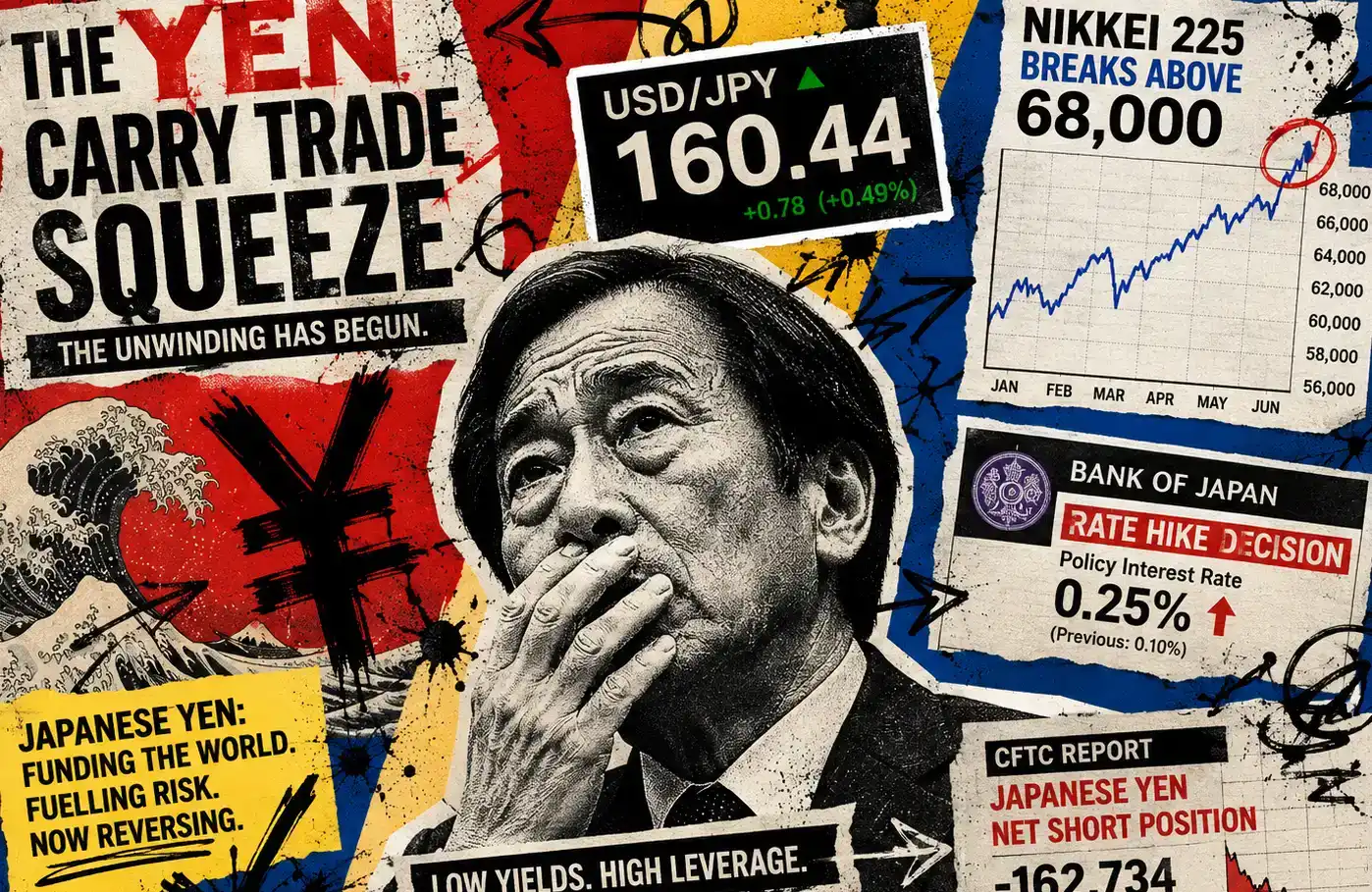
On June 3rd, USD/JPY hit 160.44, its highest level since July 2024, while the Nikkei 225 surged past 68,000 points. Contrary to popular narratives of an imminent "carry trade unwind" akin to August 2024, data reveals a more complex picture. Speculative net short positions in yen futures have actually increased, reaching -114,667 contracts by late May, suggesting traders are doubling down rather than retreating. Meanwhile, Japan's Finance Ministry conducted its largest-ever single-round FX intervention (11.73 trillion yen) in April-May but failed to hold the 160 yen line. The Nikkei's rally is not driven by carry trade dynamics. Foreign investors are aggressively buying Japanese stocks, with net purchases in 2026 running nearly 16 times higher than 2025 levels. This inflow is concentrated in AI and semiconductor-related stocks like SoftBank and Socionext, fueled by positive sector outlooks, rather than being a flight from unwinding yen shorts. Furthermore, the Nikkei has continued climbing despite the Bank of Japan's (BOJ) rate hikes to 0.75%. This disconnect exists because the current equity boom is fueled by AI-driven foreign investment, not reliant on cheap yen funding. However, this relationship remains fragile. Should the BOJ hike rates further (e.g., to 1.0%) while dollar weakness increases carry trade costs, the trajectories of the yen and Japanese stocks could reconverge, potentially triggering volatility.

marsbitHá 15m

New Wall Street Play: Yen Shorts Still Adding, But Japan Stocks Don't Rely on Carry Trade Unwinding

marsbitHá 15m

Broadcom's Q3 Guidance Misses Expectations by $12 Billion, After-Hours Trading Plummets Over 13%, AI Narrative "Cooling"?

On June 3, Broadcom released record Q2 FY26 results with revenue of $22.19B, up 48% YoY, and AI chip sales of $10.8B, up 143%. Adjusted EPS of $2.44 beat estimates. However, its Q3 AI semiconductor revenue guidance of $16B, while up over 200% YoY, fell roughly $1.2B (7%) short of analyst consensus expectations of $17.2B. This miss, coupled with slightly weaker-than-expected software revenue, triggered a severe market reaction. CEO Hock Tan maintained the FY26 AI revenue outlook of over $100B but did not raise it, disappointing investors who had priced in more robust growth. The stock plummeted over 13% in after-hours trading, erasing roughly $270B in market cap. The sell-off extended to peers like Marvell. A key concern for markets, particularly for Chinese optical module suppliers, was Tan's comment that the contribution of AI networking (e.g., Ethernet switches, optical interconnect chips) to AI revenue, currently near 40%, is expected to normalize to around 30% over time, signaling a potential peak in growth for that segment. Despite the guidance shortfall, Tan reiterated that AI demand remains "insatiable" and reaffirmed the long-term target of exceeding $100B in AI revenue by FY27. The reaction highlights the heightened sensitivity and premium valuation placed on AI-exposed stocks, where anything less than stellar guidance can prompt significant profit-taking. The broader question is whether this represents a cooling AI narrative or a correction in overstretched valuations.

marsbitHá 15m

Broadcom's Q3 Guidance Misses Expectations by $12 Billion, After-Hours Trading Plummets Over 13%, AI Narrative "Cooling"?

marsbitHá 15m

Trading

Spot
Futuros
活动图片