Brother Sun "Rights Protection" Stands Up Against the Trump Family, WLFI Is the Real Scythe in the Crypto Circle

Odaily星球日报Publicado em 2026-04-13Última atualização em 2026-04-13

Resumo

The article details the controversy surrounding World Liberty Financial (WLFI), a cryptocurrency project linked to the Trump family. It reports that WLFI allegedly used the DeFi lending protocol Dolomite, whose co-founder is also a WLFI advisor, as a disguised channel to sell tokens by collateralizing around 5 billion WLFI tokens to borrow approximately $75 million in stablecoins. Despite WLFI's claims that the loans were for ecosystem development and posed no liquidation risk, critics argue it was a way for insiders to cash out, shifting risk to retail investors. The piece highlights WLFI's significant price decline—over 66% since its September 2025 launch—and suggests the Trump family and insiders are the main source of selling pressure, as they control nearly 74% of the token supply. It also revisits WLFI’s prior move to blacklist 272 addresses, including those of investor Justin Sun, under the pretext of preventing large-scale sell-offs, which now appears to be an effort to reduce competition for their own sales. Sun publicly accused WLFI of exploiting users, freezing assets, and treating the crypto community as a "personal ATM." WLFI countered by threatening legal action. The author notes that while Sun’s criticism may gain sympathy, a legal battle in the U.S. against the well-connected Trump family would be risky for him. Finally, the article concludes that WLFI exemplifies how powerful elites can exploit crypto’s regulatory gray areas for profit, and urges the commu...

Original | Odaily Planet Daily (@OdailyChina)

Author | Golem (@web3_golem)
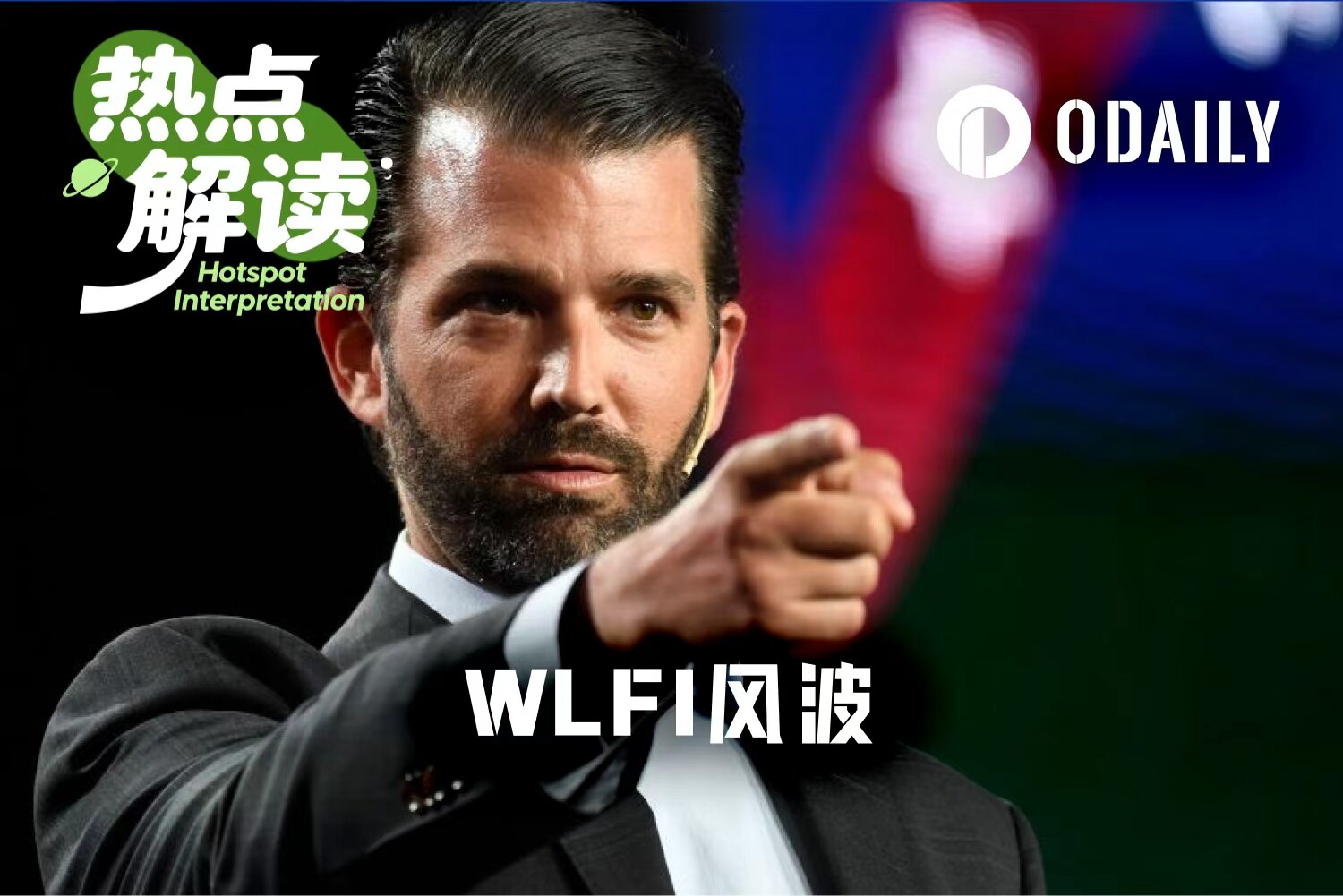
The true face of WLFI has finally been seen clearly by the crypto circle.

On April 9th, foreign media reported that the Trump family's crypto project, World Liberty Financial (WLFI), had conducted multiple collateralized loans through the DeFi lending protocol Dolomite, sparking market concerns about insider trading and USD1 liquidity risks. According to statistics, WLFI used approximately 5 billion WLFI tokens as collateral and mobilized about 75 million USD in stablecoins cumulatively through Dolomite and Coinbase Prime.

Coincidentally, Dolomite co-founder Corey Caplan is also an advisor to WLFI. Although WLFI responded that borrowing stablecoins was to create value for the ecosystem and there was no liquidation risk, and WLFI even repaid 25 million USD1 loans on April 11th, tracking the on-chain path of the borrowed stablecoins makes it clear to anyone that Dolomite is essentially a disguised token selling channel for the WLFI team.

Well-known trader Pickle Cat also believes that WLFI is performing a confidence trick by buying back at high prices with the left hand while borrowing real money with low-value collateral with the right hand. In the end, only the retail investors locked in the Dolomite pool are bearing the risk, so she decisively chose to liquidate all her WLFI spot holdings.

WLFI's price performance since its listing has already said it all. WLFI officially launched on September 1, 2025, and began executing token buybacks in late September of the same year. However, the token has since fallen by over 66%, down about 70% from its peak. So, where is the selling pressure in the market coming from? Most likely from the Trump family and their related interests. Firstly, because it's unlikely they only have Dolomite as one disguised selling channel. Secondly, only they hold large amounts of WLFI tokens and can "sell without restrictions."

Even before WLFI officially launched, Odaily Planet Daily had analyzed WLFI's token holding structure and selling pressure, concluding that the Trump family was the largest source of selling pressure. Out of a total supply of 100 billion tokens, the pre-sale accounted for only 26.05%, while the remaining 73.95% was entirely controlled by the team. (Related reading:WLFI Unlock Countdown: Trump's 15.75% Whale Holdings, Can the Market Withstand the "Presidential Selling Pressure"?)

Furthermore, after the WLFI token officially launched, the team blacklisted 272 addresses, including addresses belonging to Sun Yuchen, under the pretext of protecting user funds and preventing large-scale selling by whales. This move was applauded by the community at the time. But only now, faced with the continuous decline of WLFI, have we come to our senses: the real purpose of freezing the whale addresses was to facilitate their own selling.

The story doesn't end here. After the WLFI team's actions were exposed, Sun Yuchen couldn't sit still anymore. The renowned "Sun Cut" (Sun Ge) doesn't take losses like this—only you can sell, but I can't? So he confronted WLFI once more.

Sun Yuchen Confronts WLFI Again

On April 12th, Sun Yuchen posted on platform X, condemning the WLFI team for extracting fees from users, secretly implanting backdoors to control user assets, freezing investor funds, and using the crypto community as a personal ATM, among other actions. The WLFI team didn't just let Sun's accusations slide; they responded by saying Sun Yuchen is best at playing the victim, fabricating baseless accusations to cover up his own misconduct, and stated they would see him in court.

To understand this drama, we need to review the relationship between Sun Yuchen and WLFI.

WLFI and Sun Yuchen had a honeymoon period. In November 2024, Sun Yuchen announced an investment of 30 million USD into WLFI through the entity TRON DAO, becoming WLFI's largest investor and project advisor at the time. This deal was interpreted then as a political donation from Sun Yuchen to Trump, especially since Trump's election as president was already a foregone conclusion, and crypto figures wanted to build good relations. So it was a win-win: WLFI got the money, and Sun Yuchen opened a channel to connect with the US President.

But when the WLFI token actually launched, the WLFI team kicked Sun Yuchen to the curb. On September 5, 2025, World Liberty Financial (WLFI) blacklisted addresses related to Sun Yuchen, involving approximately 540 million unlocked tokens and 2.4 billion locked tokens. The WLFI team's reason was straightforward: they suspected someone was selling off to suppress the token price. WLFI blacklisted 272 addresses in one go.

Although Nansen CEO Alex Svanevik later stated that Sun Yuchen had not engaged in dumping, and his transfers occurred after the WLFI token had already plummeted, the truth behind WLFI's drop might have been mass profit-taking by retail investors and further panic-driven price crashes. But because WLFI used the community as a shield, Sun Yuchen didn't step out to confront them head-on.

However, some still spoke up for Sun Yuchen. CryptoQuant CEO Ki Young Ju believed that even if Sun Yuchen sold his unlocked tokens, it was his right, as he had autonomy over his assets, and WLFI had no right to freeze user addresses. It's ironic—the Trump family has repeatedly stated in public that "de-banking" was a major reason they chose to join the crypto space, as their family assets had been frozen by the banking system multiple times. But how is their action of blacklisting user addresses any different from the banks that rejected them? This kind of "pseudo-decentralized" behavior deserves condemnation.

That said, although Sun Yuchen's situation is worthy of sympathy, if he chooses to go head-to-head with WLFI, he might not come out ahead. Because behind WLFI stands the Trump family and a group of top-tier elites with deep roots in both American politics and business. Which one can Sun Yuchen afford to offend?

Moreover, given Sun Yuchen's own regulatory history, political situation, and past controversies, if he really ends up in a US court against WLFI, winning the lawsuit might be out of the question; escaping unscathed might be something to be庆幸 (grateful) for.

So, for Sun Yuchen's "rights protection" campaign, he can make noise in the court of public opinion and posture alongside retail investors. But actually taking it all the way to a US courtroom? Better forget it.

The Second Lesson the Trump Family Taught the Crypto Circle

We have to admit that WLFI is the second lesson the Trump family taught the crypto circle (the first lesson was, of course, TRUMP). Its real purpose was never to break traditional banking restrictions or make DeFi better, but to疯狂敛财 (frantically amass wealth) in the grey areas of financial regulation.

Many people were unwilling to admit or ignored this before because the name Trump was still very valuable. In the bull market sentiment, power and influence were automatically translated into a sense of security and a moat. Coupled with Trump's extremely friendly attitude towards crypto during the campaign and early in his term, crypto users did not launch large-scale protests or FUD. The Trump family ate the meat in the crypto market, and we could跟着喝口汤 (follow along and have some soup).

But things are different now. In the broader context, with "Crypto Czar" David Sacks shifting his focus to AI, and Trump being deeply involved in the US-Iran conflict with no time to spare for the crypto industry, the光环 (halo) of the Trump name isn't worth as much anymore. When Trump is no longer our crypto president, what光环 (halo) does his family have left? (Related reading:"Crypto Czar" Steps Down: 130-Day Political Performance Ends, How Much of Trump's Crypto Promises Remain?)

At the same time, specifically regarding the WLFI project, influenced by the token's performance, governance controversies, freezing incidents, and other factors, this滤镜 (filter) has long been torn to shreds in the minds of users. The crypto circle is certainly not innocent; being willing to pay a premium for power and influence, to pay for political backgrounds, is itself a form of speculative collusion. But from now on, when facing "shoddy projects" like WLFI, crafted by American elites in the crypto field, we should have the courage to say no.


Perguntas relacionadas

QWhat is the main controversy surrounding the World Liberty Financial (WLFI) project as described in the article?

AThe main controversy involves WLFI, a Trump family-affiliated crypto project, being accused of using the DeFi lending protocol Dolomite as a disguised channel for the team to sell tokens. WLFI allegedly collateralized around 5 billion WLFI tokens to borrow approximately $75 million in stablecoins, raising concerns about insider trading and liquidity risks for USD1.

QWhy did WLFI freeze addresses, including Justin Sun's, and what was the alleged real reason behind this action?

AWLFI officially froze 272 addresses, including Justin Sun's, claiming it was to protect user funds and prevent large holders from massive selling. However, the article suggests the real reason was to restrict selling by major holders, making it easier for the WLFI team themselves to sell their own tokens without competition.

QWhat was the nature of the initial relationship between Justin Sun and the WLFI project?

AInitially, Justin Sun, through TRON DAO, invested $30 million in WLFI, becoming its largest investor and a project advisor. This was widely seen as a political donation to gain favor with then-President-elect Donald Trump, creating a mutually beneficial relationship for both parties.

QWhat does the article suggest is the 'second lesson' the Trump family taught the crypto circle with WLFI?

AThe article suggests the 'second lesson' is that WLFI's true purpose was not to break traditional banking limitations or improve DeFi, but to amass wealth疯狂敛财 in the gray areas of financial regulation, exploiting the initial value of the 'Trump' name during the bull market.

QAccording to the article, what are the key reasons cited for the declining value and光环 (halo) of the Trump name in the crypto space?

AThe declining value is attributed to a shift in the macro environment: 'Crypto Czar' David Sacks focusing on AI, President Trump being preoccupied with the U.S.-Iran conflict and having less time for crypto, and the project's own issues like token performance, governance controversies, and the address freezing scandal, which collectively damaged its reputation.

Leituras Relacionadas

7 Key Questions Regarding 'DeepSeek Completes Over 50 Billion Yuan in Financing'

DeepSeek, the prominent Chinese AI company, has reportedly completed its first external funding round, raising over 50 billion RMB (approximately $6.9 billion USD), according to foreign media reports. This financing values the company at over $50 billion USD, a significant increase from a $10 billion valuation when the round began in April 2026. Founder Liang Wenfeng personally contributed 20 billion RMB, with other investors including Tencent, CATL (Contemporary Amperex Technology), JD.com, NetEase, and IDG Capital. Notably, the National Artificial Intelligence Industry Investment Fund also participated with a direct investment of 1 billion RMB. The funding round is distinctive for its structure. Most investors' capital is channeled into a limited partnership controlled by CEO Liang Wenfeng, rather than directly into DeepSeek. These investors face a five-year lock-up period, have no voting rights, but receive priority financial information and future investment rights. This arrangement is seen as a measure to ensure Liang's absolute control over the company's direction, aligning with its stated principles of prioritizing groundbreaking AGI (Artificial General Intelligence) research over short-term profitability. The report highlights strategic reasons for key investors. Tencent's involvement is viewed as a strategic alignment, building on existing collaborations. CATL's investment is linked to the critical energy and power infrastructure needed for AI data centers, a key growth area for the battery giant. The participation of a state-backed fund underscores the national strategic importance of AI development. Post-funding, DeepSeek is expected to accelerate infrastructure development, including building its own data centers, hire more talent, and release new model versions with enhanced capabilities like image and audio support. While this marks a major step, the company's long-term journey towards AGI remains a challenging path that will require balancing its foundational ideals with the expectations of its new investors.

marsbitHá 12m

7 Key Questions Regarding 'DeepSeek Completes Over 50 Billion Yuan in Financing'

marsbitHá 12m

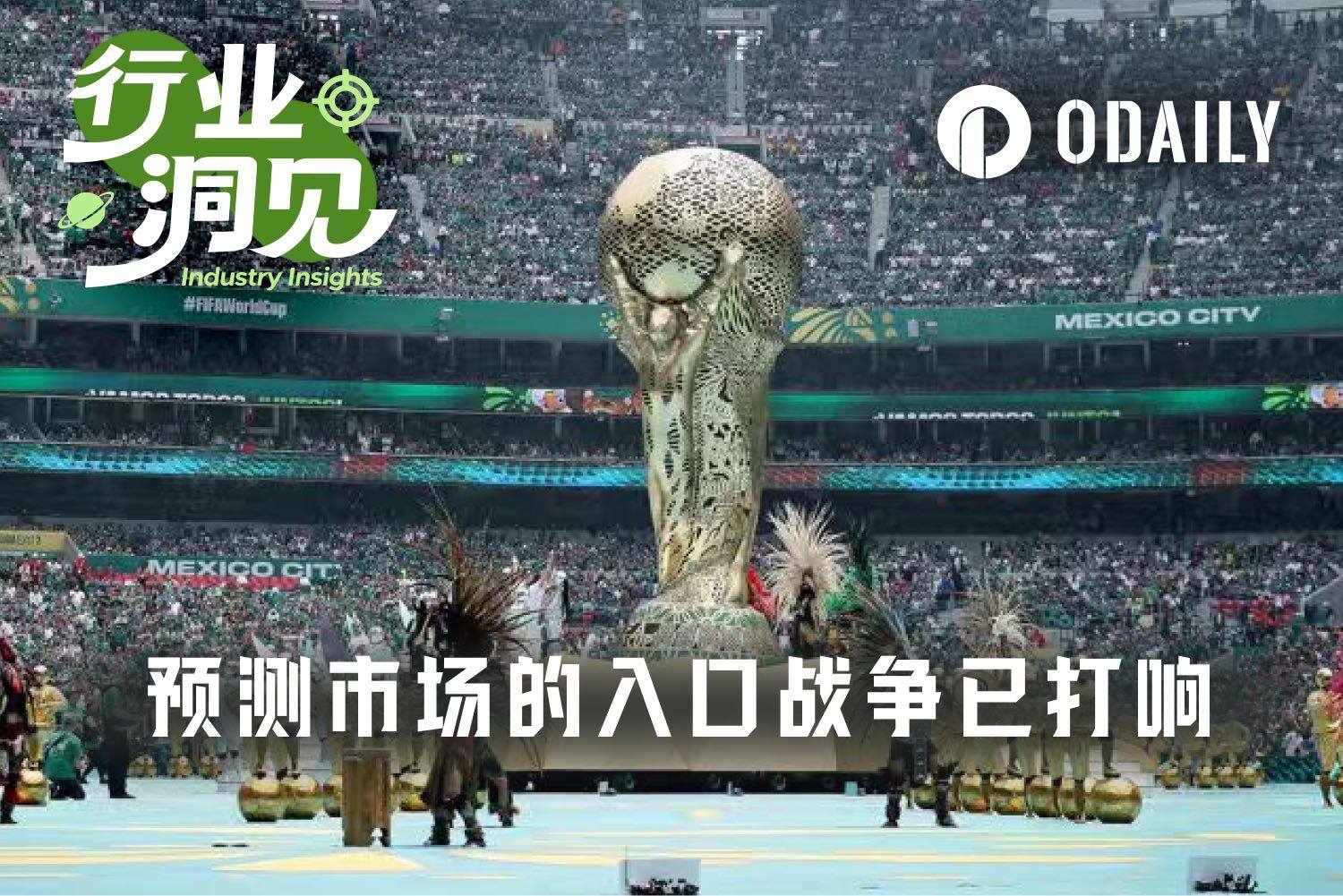
The World Cup is Here: The Battle for Entry into Prediction Markets Has Begun

The 2026 FIFA World Cup has begun, and alongside the on-field competition, a new off-field battleground is emerging: prediction markets. These blockchain-based platforms, which convert crowd wisdom into tradable probabilities, are gaining significant traction. However, their complexity—involving wallets, gas fees, and smart contracts—has historically limited participation to crypto-native users. Centralized exchanges (CEXs), like Gate, are tackling this adoption barrier. By integrating with leading prediction market protocol Polymarket, Gate simplifies the user experience. Users can participate directly with their exchange account and USDT, bypassing complex Web3 steps. Gate offers a streamlined "Prediction Mode" for casual users and a professional "Trading Mode" with advanced tools. Key features include two-way trading (allowing users to buy or sell positions before event resolution), support for diverse markets (sports, crypto, macroeconomics), and a suite of information tools like a "Smart Money" leaderboard, wallet tracking, and AI-powered insights. For the World Cup, Gate launched a dedicated hub aggregating schedules, standings, and relevant markets. This allows fans to seamlessly follow games and trade on outcomes, transforming passive viewing into active participation where they can monetize their predictions and trade on shifting consensus throughout a match. The article argues that prediction markets have proven their value in event forecasting. The next challenge is mass adoption. The competition is shifting from building effective protocols to creating accessible user entry points. By lowering technical barriers and building a complete ecosystem for information and trading, platforms like Gate aim to transition prediction markets from a niche crypto tool to a mainstream platform for expressing and trading on collective intelligence.

Odaily星球日报Há 22m

The World Cup is Here: The Battle for Entry into Prediction Markets Has Begun

Odaily星球日报Há 22m

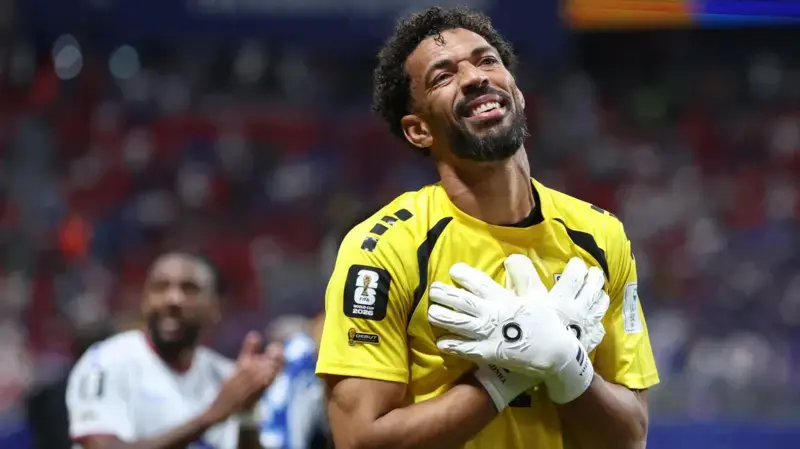
Spain Held to a Draw by Cape Verde, Jucom Prediction Market Witnesses Historic Upset

In a major upset at the 2026 FIFA World Cup, tournament favorites Spain were held to a surprising 0-0 draw by debutants Cape Verde in their Group H opener on June 16, Beijing time. Despite dominating possession (74%) and recording 27 shots with an expected goals figure of 2.16, Spain failed to break down a resilient Cape Verde defense, with their 40-year-old goalkeeper Vozinha making 7 saves to earn Man of the Match. Pre-match predictions on the Jucom prediction market had heavily favored Spain, assigning them a 92% win probability. The actual result, a goalless draw, triggered significant volatility across related prediction markets. This outcome forces a market-wide reassessment of several key probabilities, including Spain's likelihood of winning the group and the tournament itself, while Cape Verde's previously near-zero chance of advancing is now being re-evaluated. The event highlights both the efficiency and the inherent limitations of prediction markets. While prices aggregate known information, football's low-scoring, high-variance nature means unquantifiable in-game factors can lead to unlikely results. The core value of such markets lies not in perfect foresight but in their ability to dynamically reflect how new information is incorporated into collective expectations. Platforms like Jucom, which track outcomes from single matches to the final champion, provide a real-time lens into how global consensus evolves with each game.

链捕手Há 25m

Spain Held to a Draw by Cape Verde, Jucom Prediction Market Witnesses Historic Upset

链捕手Há 25m

Trading

Spot
Futuros

Artigos em Destaque

Como comprar SUN

Bem-vindo à HTX.com!Tornámos a compra de SUN (SUN) simples e conveniente.Segue o nosso guia passo a passo para iniciar a tua jornada no mundo das criptos.Passo 1: cria a tua conta HTXUtiliza o teu e-mail ou número de telefone para te inscreveres numa conta gratuita na HTX.Desfruta de um processo de inscrição sem complicações e desbloqueia todas as funcionalidades.Obter a minha contaPasso 2: vai para Comprar Cripto e escolhe o teu método de pagamentoCartão de crédito/débito: usa o teu visa ou mastercard para comprar SUN (SUN) instantaneamente.Saldo: usa os fundos da tua conta HTX para transacionar sem problemas.Terceiros: adicionamos métodos de pagamento populares, como Google Pay e Apple Pay, para aumentar a conveniência.P2P: transaciona diretamente com outros utilizadores na HTX.Mercado de balcão (OTC): oferecemos serviços personalizados e taxas de câmbio competitivas para os traders.Passo 3: armazena teu SUN (SUN)Depois de comprar o teu SUN (SUN), armazena-o na tua conta HTX.Alternativamente, podes enviá-lo para outro lugar através de transferência blockchain ou usá-lo para transacionar outras criptomoedas.Passo 4: transaciona SUN (SUN)Transaciona facilmente SUN (SUN) no mercado à vista da HTX.Acede simplesmente à tua conta, seleciona o teu par de trading, executa as tuas transações e monitoriza em tempo real.Oferecemos uma experiência de fácil utilização tanto para principiantes como para traders experientes.

543 Visualizações TotaisPublicado em {updateTime}Atualizado em 2025.03.21

Como comprar SUN

Discussões

Bem-vindo à Comunidade HTX. Aqui, pode manter-se informado sobre os mais recentes desenvolvimentos da plataforma e obter acesso a análises profissionais de mercado. As opiniões dos utilizadores sobre o preço de SUN (SUN) são apresentadas abaixo.

活动图片