Monad nhắm mốc cao nhất mọi thời đại: Dòng tiền tích lũy tăng mạnh khi phe mua thử thách kháng cự chủ chốt

ambcryptoPublicado em 2026-04-09Última atualização em 2026-04-09

Resumo

Monad (MON) đang có dấu hiệu tăng mạnh với mức tăng 13% trong 24 giờ, thuộc nhóm dẫn đầu thị trường tiền điện tử. Tuy nhiên, giá đang gặp phải một vùng kháng cự quan trọng có thể hạn chế đà tăng. Chỉ báo Accumulation/Distribution và Money Flow Index (MFI) cho thấy dòng tiền đang chảy mạnh vào MON, với khối lượng giao dịch vượt 2.69 tỷ. Dù vậy, Bollinger Bands cảnh báo MON đang trong vùng quá mua, có thể dẫn đến điều chỉnh giảm. Để chạm mức đỉnh cao mọi thời đại, MON cần tăng thêm 56%, đòi hỏi thị trường giao ngay và phái sinh duy trì xu hướng tích cực, cùng với tâm lý chung của thị trường crypto ổn định hoặc tăng.

Monad [MON] có thể nằm trong top những tài sản tăng trưởng mạnh nhất thị trường nếu sức mua duy trì, đặc biệt khi tài sản này ghi nhận mức tăng 13% trong ngày qua, đưa nó vào nhóm dẫn đầu thị trường crypto trong 24 giờ gần đây.

Tuy nhiên, đợt tăng giá vẫn đối mặt với một trở ngại lớn khi giá giao dịch trong vùng kháng cự dự kiến sẽ hạn chế đà tăng tiếp theo. Câu hỏi then chốt là liệu Monad có thể phá vỡ mức này và mở đường chạm mốc cao nhất mọi thời đại hay không.

Monad tăng giá nhờ dòng tiền tích lũy

Đà tích lũy gia tăng gần đây đã hỗ trợ động lực tăng của MON, và các chỉ báo hiện tại cho thấy xu hướng này có thể không chậm lại sớm.

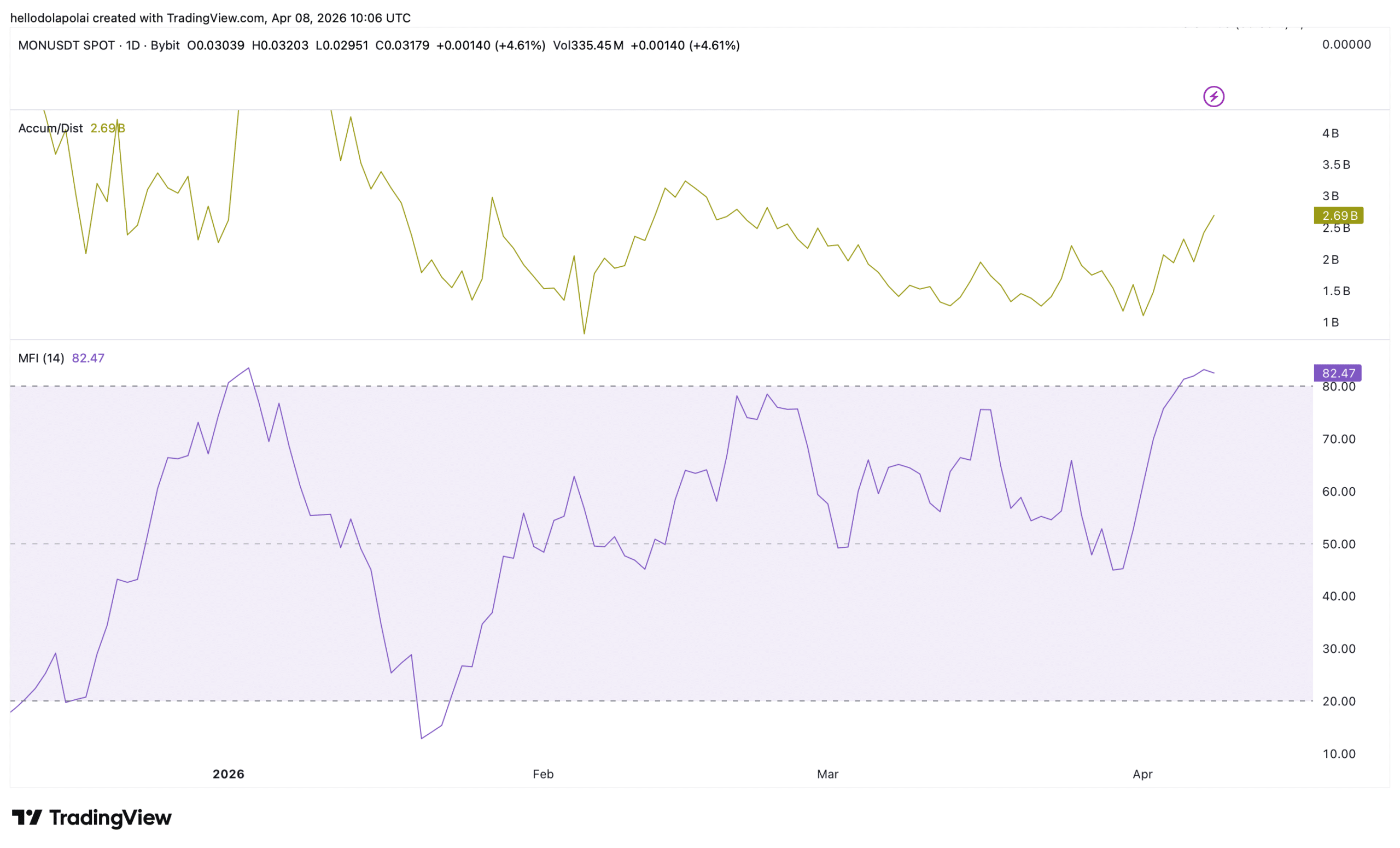
Chỉ báo Accumulation/Distribution tiếp tục xu hướng tăng, cho thấy khi giá tăng, nhà đầu tư vẫn tiếp tục mua vào. Khối lượng giao dịch cũng được củng cố, vượt 2,69 tỷ trong ngày qua.

Tích lũy chỉ kể một phần câu chuyện. Chỉ số Money Flow (MFI), theo dõi dòng tiền vào và ra, cũng cho thấy dòng vào mạnh hơn trong cùng kỳ.
Nguồn: TradingView

MFI vẫn duy trì trên mức 80 và có xu hướng tăng, cho thấy nhà đầu tư đang định vị cho các khoản lợi nhuận tăng thêm.

Dù triển vọng vẫn tích cực, biến động thị trường đòi hỏi theo dõi sát sao, vì tâm lý có thể thay đổi nhanh chóng, đặc biệt khi thị trường tổng thể vẫn trong giai đoạn giảm.

Dấu hiệu cảnh báo xuất hiện

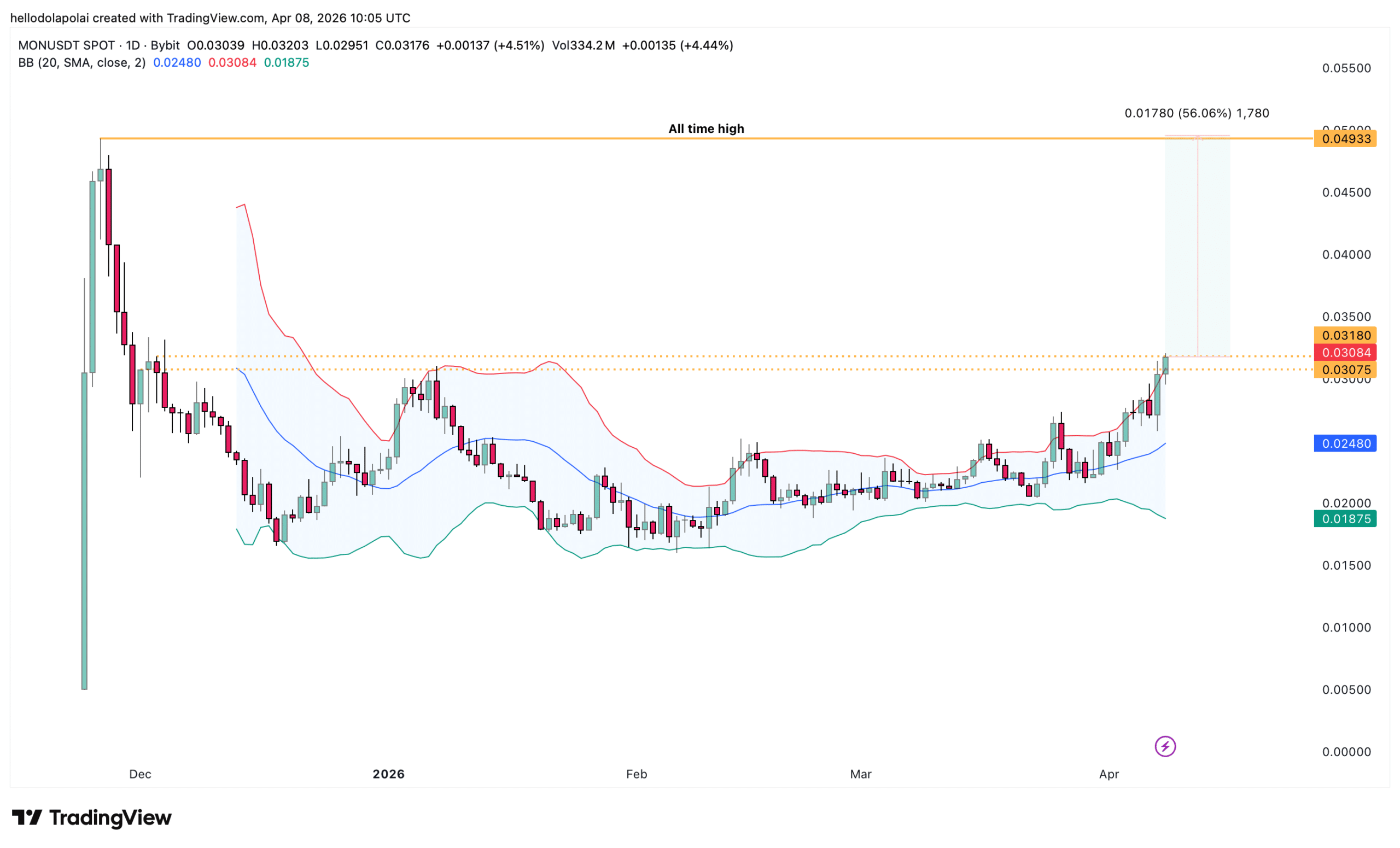
Định vị mua kèm theo thận trọng. Chỉ báo Bollinger Bands, đo lường mức mua quá mức hoặc bán quá mức, cho thấy MON đã vào vùng quá mua.

Mức này, được đánh dấu bởi dải trên, cho thấy áp lực mua có thể suy yếu, khả năng dẫn đến điều chỉnh giảm về các mức thấp hơn, dù không nhất thiết là đảo chiều ngay lập tức.
Nguồn: TradingView

Điều này phù hợp với vùng kháng cự trên biểu đồ, có thể đóng vai trò rào cản mạnh và đẩy giá xuống. Trong kịch bản đó, MON có thể tạo đáy thấp hơn hoặc tiếp tục đi ngang, với khả năng thứ hai xảy ra nếu tích lũy tiếp tục tăng.

Mặt khác, một đợt breakout sẽ củng cố đáng kể cấu trúc của MON. Giá sẽ ít gặp kháng cự hơn trên đường tăng, do ít vùng cung hơn ở phía trên.

Khả năng chạm mốc cao nhất mọi thời đại?

Một động thái hướng tới mức cao mới phụ thuộc vào nhiều yếu tố, với dòng vốn vào vẫn là quan trọng nhất.

Một đợt tăng từ mức hiện tại lên mốc cao nhất mọi thời đại tương đương mức tăng khoảng 56%. Với vốn hóa thị trường 1,52 tỷ USD, điều này sẽ yêu cầu thêm 851 triệu USD, đẩy tổng định giá hướng tới 2,37 tỷ USD.

Để điều này thành hiện thực, tâm lý tích cực phải đồng bộ trên nhiều mặt. Tích lũy trên thị trường giao ngay phải duy trì mạnh, Futures vĩnh viễn nên tiếp tục hỗ trợ định vị mua, và tâm lý thị trường crypto tổng thể phải chuyển tích cực hoặc ổn định.

Hiện tại, dữ liệu ngắn hạn từ cả thị trường vĩnh viễn và giao ngay cho thấy phe mua vẫn kiểm soát. Trong 10 ngày qua, dòng tiền vĩnh viễn của MON đạt 12,88 triệu USD, trong khi dòng vào thị trường giao ngay duy trì ở 7,31 triệu USD trong 5 ngày qua, theo CoinGlass.


Tóm tắt cuối cùng

  • MON tiếp tục tăng khi dòng tích lũy lại tăng mạnh, trong khi dòng vốn vào thị trường tiếp tục tăng.
  • Một trở ngại kháng cự chủ chốt vẫn là mức quan trọng cần theo dõi để xác định liệu MON có thể duy trì một đợt tăng giá lớn hay không.


Perguntas relacionadas

QMonad (MON) đã tăng bao nhiêu phần trăm trong 24 giờ qua?

AMonad (MON) đã tăng 13% trong 24 giờ qua, đưa nó trở thành một trong những loại tiền điện tử có hiệu suất hàng đầu trên thị trường.

QChỉ báo nào cho thấy các nhà đầu tư tiếp tục mua vào MON bất chấp giá tăng?

AChỉ báo Tích lũy/Phân phối (Accumulation/Distribution) tiếp tục xu hướng tăng cao hơn, cho thấy các nhà đầu tư vẫn đang mua vào khi giá tăng.

QTín hiệu cảnh báo nào xuất hiện đối với đà tăng của MON?

AChỉ báo Bollinger Bands cho thấy MON đã bước vào vùng quá mua, điều này cho thấy áp lực mua có thể suy yếu và dẫn đến một đợt điều chỉnh giảm giá.

QMức vốn hóa thị trường bổ sung cần thiết để MON đạt mức giá cao nhất mọi thời đại (ATH) là bao nhiêu?

AĐể đạt mức giá cao nhất mọi thời đại, MON cần thêm khoảng 851 triệu USD, đẩy tổng định giá thị trường lên khoảng 2,37 tỷ USD từ mức hiện tại là 1,52 tỷ USD.

QCác yếu tố nào cần thiết để MON có thể thiết lập một mức cao mới mọi thời đại?

AĐể thiết lập mức cao mới, cần có sự đồng thuận về mặt tâm lý tích cực trên nhiều phương diện: tích lũu trên thị trường giao ngay phải mạnh, thị trường Futures vĩnh cửu tiếp tục hỗ trợ các vị thế mua, và tâm lý chung của thị trường crypto phải chuyển sang tích cực hoặc ổn định.

Leituras Relacionadas

After 'Bessent Put', How Far Is the U.S. from Restarting QE?

Following an unscheduled announcement from the U.S. Treasury Department on August 19th, investor discussions have intensified regarding the potential for future policy interventions in long-term bond markets. The Treasury increased the maximum size of its regular buyback operations for 10-to-30 year bonds from $2 billion to $4 billion, citing a desire to improve liquidity. This move came shortly after a surge in long-term yields, with the 30-year Treasury yield briefly touching 5.34%. Market analysts, rather than focusing on the modest operational size, have interpreted the timing—outside the normal quarterly communication window—as a significant signal. The move has been dubbed the "Bessent Put," implying the market's growing expectation that Treasury officials, led by Deputy Secretary Josh Bessent, may act to prevent a disorderly rise in long-term borrowing costs. This perception represents a potential shift in the market's view of the government's "policy reaction function." The underlying pressures on long-term bonds are multifaceted, including large fiscal deficits, increased Treasury supply, a rise in corporate debt issuance for AI infrastructure (creating a "crowding out" effect), and uncertainty around foreign holdings, particularly from Japan. Geopolitical risks in the Middle East further complicate the policy landscape, potentially creating conflicting pressures between fighting inflation and managing financing costs. However, the article clarifies that this Treasury buyback program is distinct from Quantitative Easing (QE). It is a debt management operation, not a Federal Reserve balance sheet expansion. While the announcement opens the door for market speculation about more forceful tools like Yield Curve Control (YCC) or a return to QE, analysts note that conditions would need to deteriorate significantly for such measures to be implemented. For now, the "Bessent Put" reflects a change in market expectations about possible policy boundaries, not an imminent launch of new monetary stimulus.

marsbitHá 1m

After 'Bessent Put', How Far Is the U.S. from Restarting QE?

marsbitHá 1m

Is Stablecoin Really Necessary for Cross-border Payments?

"Is Stablecoin Truly Necessary for Cross-Border Payments? While stablecoins are often praised as superior for cross-border transfers—especially if the recipient desires crypto—their advantage is less clear in traditional cross-currency scenarios (e.g., USD to Mexican Peso). The existing correspondent banking system is slow and costly (≈15% fees) due to multiple intermediaries. Modern fintech solutions like Wise have dramatically improved this by using a netting model: they hold local currency pools and settle payments domestically, avoiding actual cross-border fund movement. This offers near-instant transfers with low, transparent fees (averaging ~0.52%). The 'stablecoin sandwich' model (convert fiat to stablecoin, transfer on-chain, convert to local fiat) offers similar user experience but doesn't inherently provide major cost or speed advantages over fintech. Its on-chain transfer is cheap, but fiat conversion spreads remain. Stablecoin's real innovation is 'unbundling' the cross-border payment stack. Instead of requiring a proprietary global network like Wise, businesses only need reliable on- and off-ramps in specific corridors. This lowers market entry barriers, fosters competition among local providers, and can drive down costs, particularly for niche or underserved corridors (e.g., US to Africa). While vertical integration may reoccur, the open, permissionless nature of the underlying blockchain layer makes monopolistic pricing difficult. The long-term benefit is the potential redistribution of value—previously captured as intermediary rents—to consumers through lower costs."

marsbitHá 5m

Is Stablecoin Really Necessary for Cross-border Payments?

marsbitHá 5m

Ethereum Finally 'Bounces Back'! ETH Returns to the Golden Line, What's Different About This Rally?

Ethereum has surged above $2,300, a level not seen in over three months, marking a significant recovery and technical breakthrough by reclaiming key resistance levels, including the weekly EMA50 for the first time in the current bear market. The rally has been fueled by a combination of factors: improved market risk appetite, positive regulatory sentiment, and a major short squeeze where over 88% of recent ETH liquidations were short positions. The ETH/BTC ratio has also broken its long-term downtrend, indicating renewed strength for Ethereum relative to Bitcoin. Fundamentally, Ethereum spot ETFs have shown strong inflows, outperforming their Bitcoin counterparts in recent months. Wall Street institutions like Morgan Stanley and JPMorgan have notably increased their ETH exposure, while several banks have added or expanded positions in ETH ETFs. On-chain fundamentals remain robust, with the proportion of staked ETH reaching a new all-time high of nearly 33.7%. Data indicates long-term holding sentiment, as small wallet holdings increased while large outflows were often directed towards staking or contracts, not selling. However, potential headwinds include declining staking yields and community debate over proposals to adjust staking rewards at high participation levels. The upcoming Glamsterdam upgrade, featuring improvements to validator exit efficiency, could enhance liquidity and further attract institutional stakers. While the rebound is supported by sentiment, capital flows, and fundamentals, its sustainability hinges on continued positive developments.

marsbitHá 5m

Ethereum Finally 'Bounces Back'! ETH Returns to the Golden Line, What's Different About This Rally?

marsbitHá 5m

Trading

Spot
活动图片