[ETH Merge] ETH2's Decentralization Is under Questioning by the Crypto OGs

TwitterPublicado em 2022-08-16Última atualização em 2022-08-17

Resumo

ETH2 may not keep its decentralization promise

I want to shed light on a few questions that I think have been whitewashed by the Ethereum community over past couple of weeks.

While I'm extremely excited the Merge is happening, I'm also extremely worried we have not answered CRITICAL questions.

esp in light of recent news.

Start with the big, current one.

Currently it looks like over 66% of the beacon chain validators will adhere to OFAC regulations,
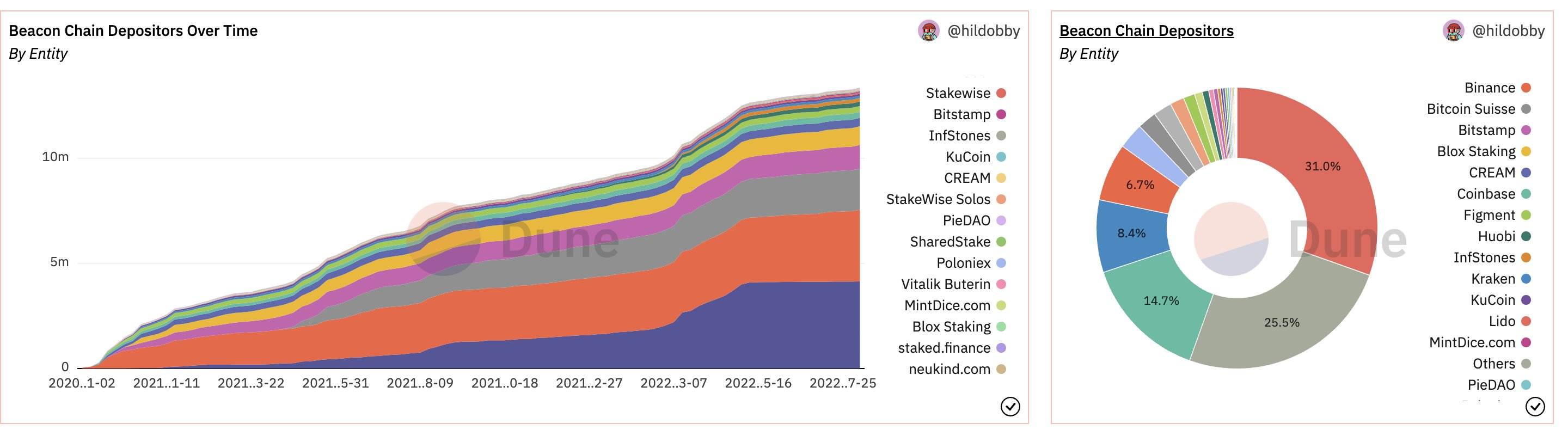
And while PBS is meant to prevent validators from censoring specific TX, i somehow believe will find a way to make sure it doesn't validate a block with T0rnado TXs.

If 66% of the validators will not sign specific blocks.

block builders / relayers who propose blocks with sanctioned tx's are less likely to be included, meaning these block builders will lose money, making the inclusion of such TX's economically inviable.

Now over the past month ethereum foundation, together with VitalikButerin has been scrambling to figure out the whole Block Proposer Separation methodology.

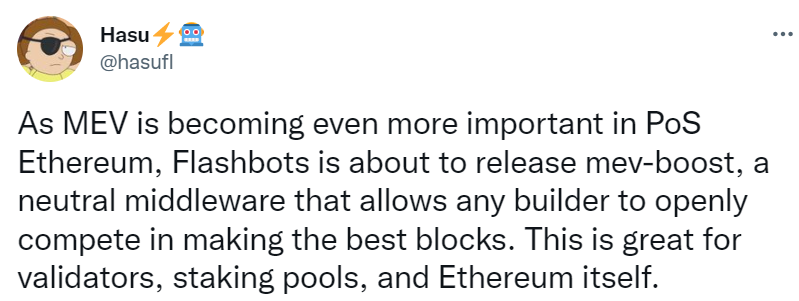
The likely interim winner is MEVBoost

What do you think, will they sanction OFAC addresses?
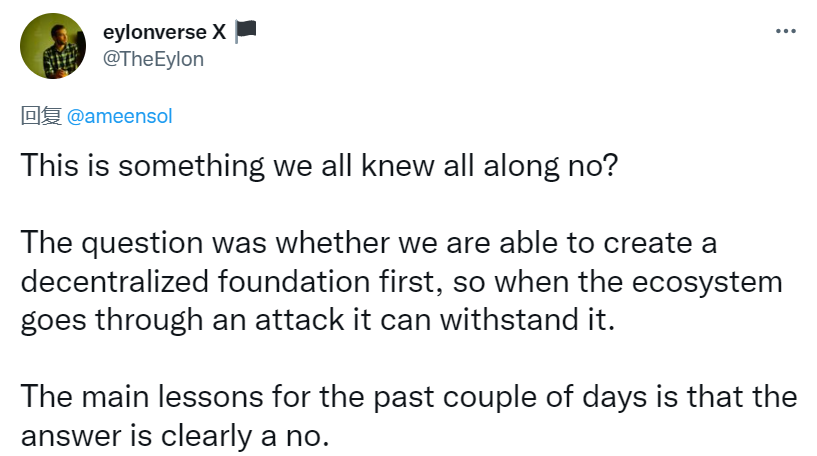
There is a case to be made here that the ethereum ecosystem has not reached sufficient social decentralization, and we are charting in very dangerous, nation state capture territory.

Leituras Relacionadas

No Sales Team, $20 Million in Revenue: How Did AI Employee Viktor Win Over 30,000 Companies?

The AI employee Viktor, developed by a team with DeepMind background, has achieved $20 million in annual revenue without a traditional sales team, serving over 30,000 companies. Its core innovation lies in positioning itself as a "Tier 3 AI Coworker" capable of "end-to-end execution and delivery of results," moving beyond the "draft and wait for human completion" model of typical AI assistants. Users can simply mention Viktor in Slack or Microsoft Teams using natural language commands, and it autonomously performs tasks like pulling sales data from a CRM, generating reports, or even cross-tool operations like creating board meeting PPTs by aggregating data from six different sources. Key to its growth is a pure Product-Led Growth (PLG) model, eliminating complex implementation cycles and per-seat licensing. Instead, it charges based on task credits or consumption, lowering the trial barrier with a $100 free credit offer and no credit card required. This enabled viral, bottom-up adoption within organizations. Viktor's interaction paradigm removes the barrier of prompt engineering, allowing non-technical employees to delegate complex workflows seamlessly. It also features proactive, automated task execution (e.g., overnight bookkeeping, scheduled reports) based on triggers, effectively embedding AI as an automated "process layer" within business operations. However, its expansion into Microsoft Teams—a platform with 320 million users—highlights challenges. Large enterprises require stringent IT compliance, security reviews (e.g., SOC 2), and governance, potentially hindering the frictionless, user-driven adoption that succeeded in Slack. Additionally, the "black box" nature of its autonomous decision-making raises concerns about operational risks, data integrity, and the need for robust audit logs and permission controls. Balancing efficiency gains with security and trust remains a critical hurdle for Viktor and similar AI agents aiming to become core enterprise infrastructure.

marsbitHá 2h

No Sales Team, $20 Million in Revenue: How Did AI Employee Viktor Win Over 30,000 Companies?

marsbitHá 2h

Trading

Spot
Futuros
活动图片