Author: Deep Tide TechFlow
Customer acquisition anxiety in Web3 projects is already a cliché.
Users leave after airdrops, KOL shillings can't sustain hype for more than three days, addresses bought for tens of dollars might just be another bot... Everyone is looking for a solution for 'sustainable customer acquisition,' but most projects' answer is still to throw more money and issue more tokens.
Actually, sports fans are a good direction for customer acquisition.
Strong emotional attachment, stable attention cycles, seasons, events, and transfer windows are natural active nodes. A few years ago, projects tried fan economy related to football, but the Fan Token path hasn't produced great case studies.
Recently, a project wanted to try the fan economy play in the fighting sports arena.
Fight.ID is an official partner of the UFC, and the UFC is the world's largest mixed martial arts league, hosting over 40 events annually, reaching 700 million viewers. The token $FIGHT completed a public sale of nearly $200 million last October, with TGE imminent.
But just these past few days, the project announced a move: 100% of the funds raised in the ICO will be refunded to all participants, while an additional airdrop of 85 million tokens (0.85% of total supply) will be given to early supporters.
In other words, those who participated in the ICO not only get their principal back but also earn an airdrop for free.
This move is uncommon in the industry. Raising nearly $200 million and refunding it just like that shows the team isn't short on money, and also shows they want to leave the TGE筹码 (chips/supply) for the community rather than locked up with early investors.
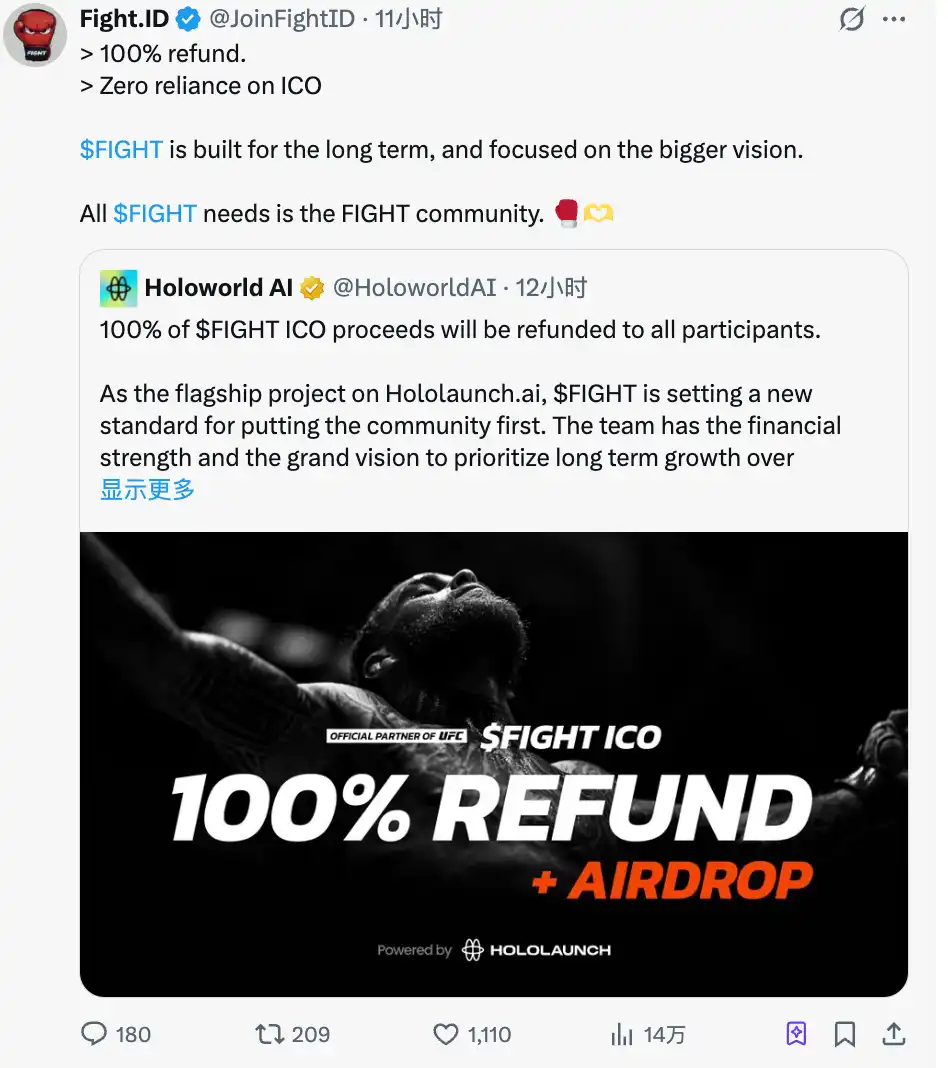
On January 22nd, Binance Alpha announced the listing of $FIGHT, and Coinbase added it to its listing roadmap a few days ago.
In the current market environment, where most projects are still trying to extract money from the community's pockets, Fight.ID is instead putting money into the community's pockets.
How much recognition and participation can this kind of格局 (vision/gesture) buy? Binance Alpha confirmed the listing on January 22nd, Coinbase added it to the roadmap, the market is giving its first round of feedback.
Also, fighting sports are among the most popular sports categories in the US, with a solid audience base. Can this project's model hold up, and what value does the token have worth exploring?
Securing UFC's On-Chain IP, Aligning Fighter Interests
The value of the UFC IP license lies in its usage scenarios.
UFC hosts over 40 events a year, each event's broadcast, live audience, and social media are exposure channels. Getting the IP license means Fight.ID can run events, publish content, and onboard users following the event schedule, instead of spending money to buy traffic. It's like renting a continuously running customer acquisition machine.
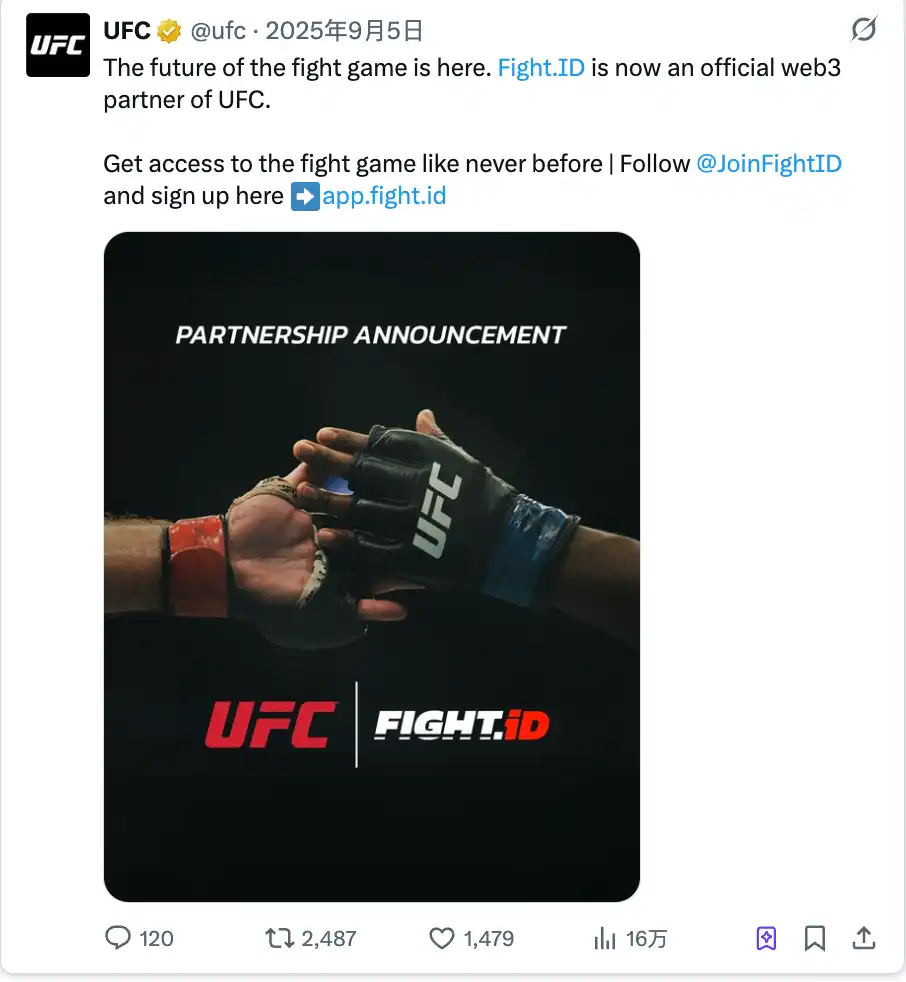
Concept Labs got this license because of prior collaboration.
In 2022, it took over the UFC Strike NFT project, focused on fighter imagery, from Dapper Labs, and has been operating it since.
The project also has an interesting design with an Athlete Committee.
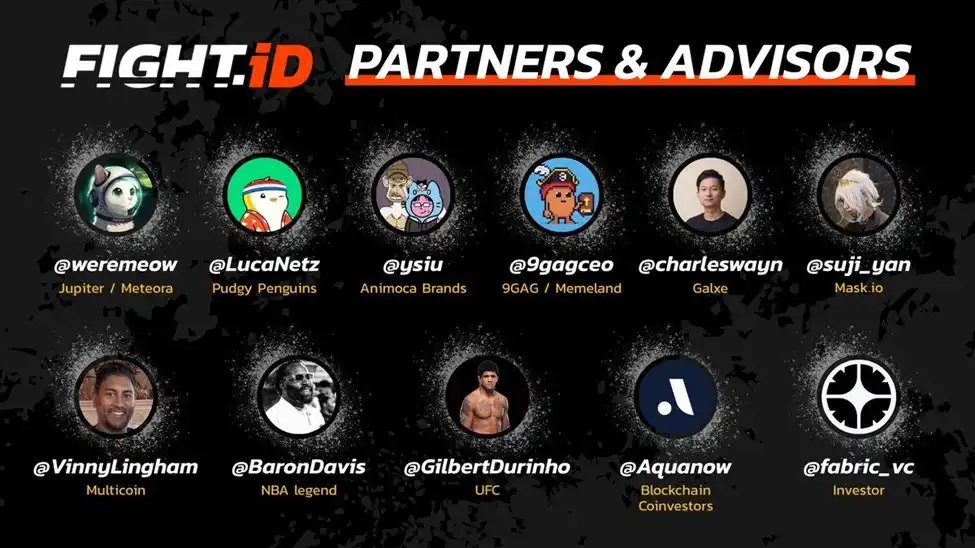
Simply put, it involves active UFC fighters in project governance, not just photo ops. Committee members include Gilbert Burns, Alexandre Pantoja, Dan Ige, etc., all ranked active fighters. Their duties include reviewing product features, deciding bonus pool distributions, etc.
The fighters are compensated in tokens, vested based on participation; they don't get the full amount if they don't participate. The intent of this design is clear:
To give athletes real skin in the game, not just a one-time endorsement fee.
Regarding funding, an institutional round was completed in September 2025, with investors including Aptos Foundation, Jupiter, Memeland, etc. The amount was not disclosed.
Every UFC Event is a User Entry Point
With the IP license and event exposure, the next question is how to turn viewers into on-chain users.
Fight.ID designed a three-tier structure to do this.
First, the base layer is Fight.ID itself, an on-chain identity. After registration, this identity can be used across platforms to participate in various activities;
The middle layer is FP, short for Fight Points, a reputation score. FP cannot be bought, sold, or transferred; it can only be earned by participating in activities. Watching fights, playing prediction games, buying digital collectibles, engaging in the community—all earn FP.
The top layer is the $FIGHT token, many of its functions are tied to FP: staking rewards are boosted based on FP level, some athlete communities require an FP threshold to join.
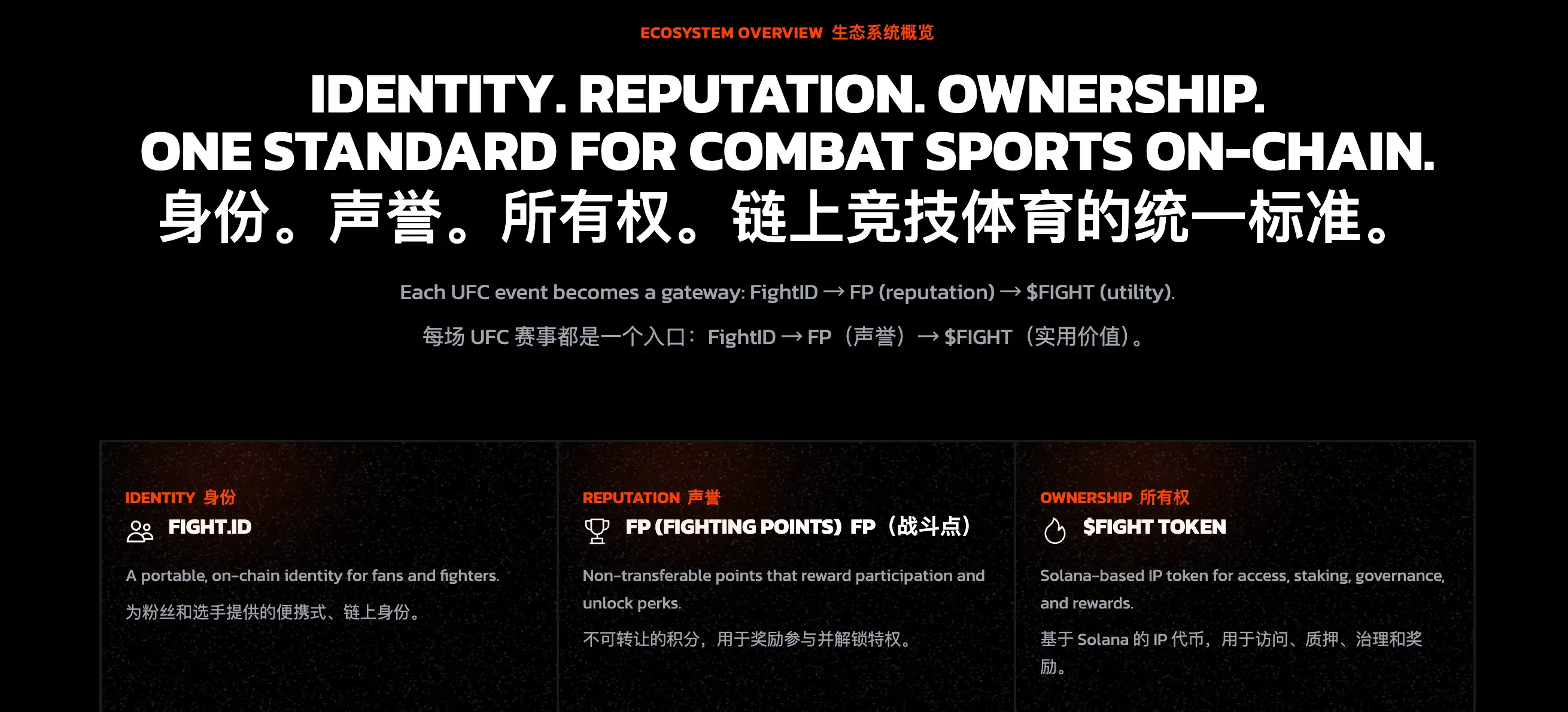
The intention behind this design is also quite clear: to figure out how to make the fan economy work through points and tokens:
First, use UFC events to pull users in; second, use FP points to keep users engaged, giving them an expectation of earning points; finally, use token functions to realize the value of FP.
Every UFC event can become an entry point for this acquisition funnel, not a one-off marketing event.
From a cost perspective, this model has another advantage:
A large part of the customer acquisition cost is borne by UFC's content production and event operations. UFC was going to host events, do broadcasts, run social media anyway; Fight.ID is essentially catching a ride. Compared to buying ads and traffic, this cost structure is healthier.
Of course, whether the model is good still depends on data validation. An event last December provided the first data sample.
60,000 Digital Collectibles, Sold Out in 4 Hours
On December 7, 2025, Fight.ID配合 (coordinated with) the UFC event that week and ran a digital collectible campaign on Telegram.
The玩法 (gameplay/mechanic) was to purchase UFC Strike digital collectible packs and earn FP points. You might think this kind of sports fan economy is niche and not very hot, but the actual results were pretty good.
Official data shows 60,000 packs sold out in 4 hours, with sales of $4.5 million, about 20,000 buyers, and over 600,000 on-chain transactions. During the event, Fight.ID rose to number 4 among social DApps on BNB Chain.
Against the backdrop of a crypto bear market, these numbers are actually quite good, also demonstrating the appeal of the UFC brand.
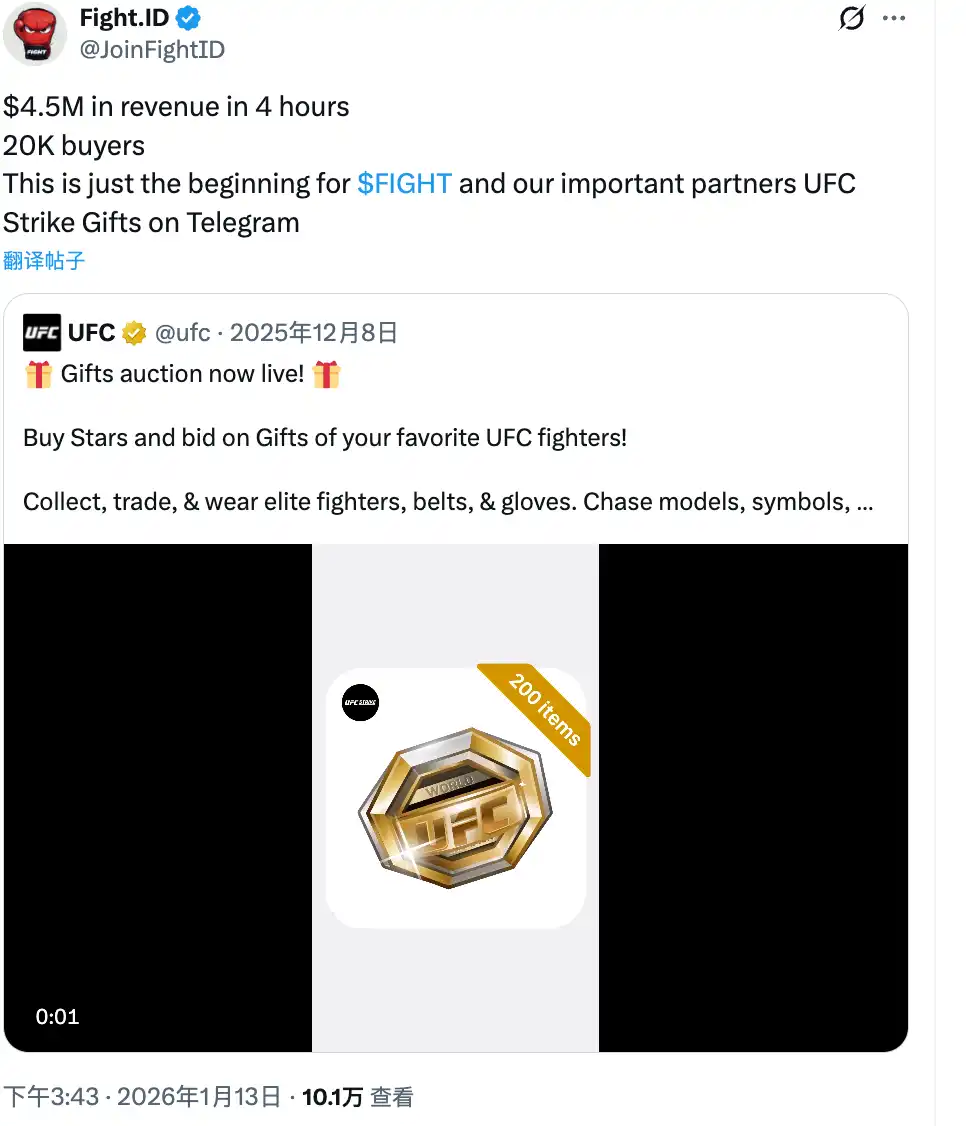
It's also necessary to clearly recognize that $FIGHT's TGE hasn't happened yet; this event was essentially pre-TGE warm-up and user accumulation.
The persuasiveness of a single event is limited; one cannot simply extrapolate linearly to subsequent events. How many of the 20,000 buyers were there for potential airdrop expectations is not publicly available data.
Additionally, this event leveraged the traffic入口 (entry point) of Telegram Gifts. Telegram has been pushing its digital collectibles feature recently, with UFC Strike being one合作案例 (case study/collaboration), and the platform itself was also driving traffic.
There is a reference point: the previous UFC Strike project operated for over two years,累计 (cumulatively) selling over $20 million in digital collectibles, accumulating 110,000 wallet addresses.
But this December event alone did $4.5 million, equivalent to over 20% of the historical total. Even with TGE hype加成 (boost), this conversion efficiency suggests the event-cycle-driven model is at least workable in the startup phase.
The next question is: users are in, how does the token capture this activity?
$FIGHT Analysis: 57% to Community, Utility Tied to Reputation Points
First, the basics.
$FIGHT is a native Solana token, total supply 10 billion. Public sale price was $0.05, putting the FDV at around $500 million at that price. The circulating supply at TGE is expected to be around 20%.
In terms of allocation, the community gets 57%, which is the largest portion. Investors 17.5%, team 15%, liquidity 6.5%, advisors 4%. The portions for team, investors, and advisors have a 12-month lock-up, followed by linear vesting over 18 to 24 months. In other words, there will be no selling pressure from this portion for a year after TGE, but it will start unlocking continuously after that.
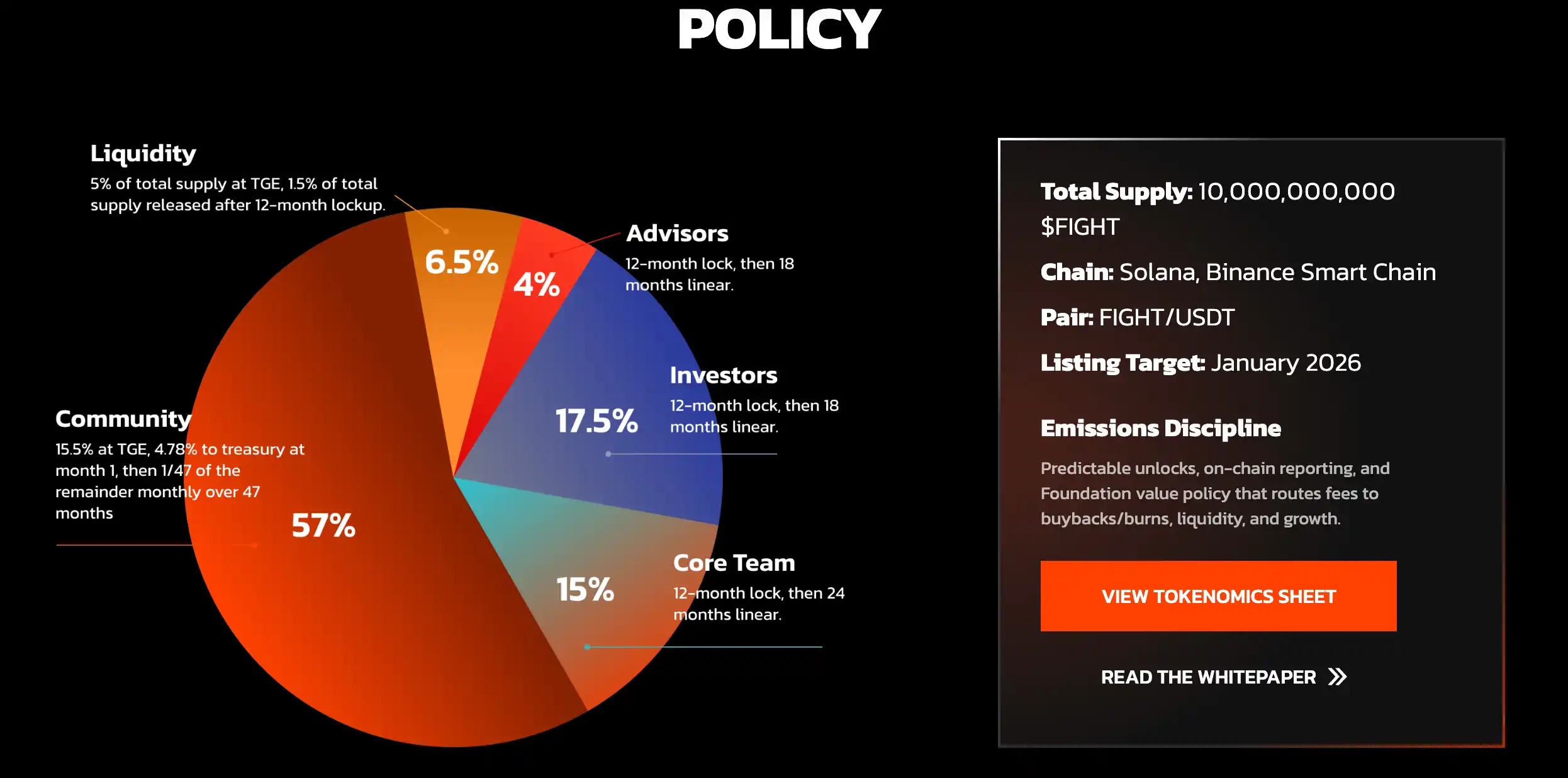
The allocation ratio is standard for Web3 projects, the community share isn't particularly high but not low either. The key is whether the utility design can create real demand for the token.
In terms of utility design, $FIGHT has several scenarios.
First is staking and Fighter Communities. Users stake $FIGHT to join specific athletes' on-chain fan clubs, gaining access to exclusive content, AMAs, priority purchase for merch, watch parties, etc.
There are a few design details: the more members a community has, the higher the staking entry threshold, giving early supporters an advantage; entry fees and community revenue are distributed proportionally to existing members and the DAO treasury; members with higher FP levels get yield boosts and priority access.
This mechanism locks tokens within communities. Each UFC fight week could bring new members, pushing up entry prices and generating more fees.
Second is Partner Ecosystem Access, officially defined as a core utility. Ecosystem partners who want to reach the Fight.ID user base need to use FIGHT to purchase FP distribution allowances, then use tasks, activities, and challenges to distribute FP to users as incentives. This is a B2B model:
Partners pay for access to the audience, users earn FP, FIGHT becomes the ecosystem access currency. As the Fight.ID user base grows, more partners are willing to pay to reach this identified, reputational user base, creating sustained token demand.
Third is peripheral scenarios. FightGear is a apparel brand, with limited edition collaborations and event-themed series; FIGHT holders have priority purchase windows and can pay with the token. PrizeFight is an on-chain prize pool, funded by sponsors, communities, DAOs, rewarding great fight performances and fan participation, with funds and fees denominated in $FIGHT. UFC Strike digital collectibles continue operating, future integration with the Fight ecosystem is planned, holding collectibles can accelerate FP accumulation.
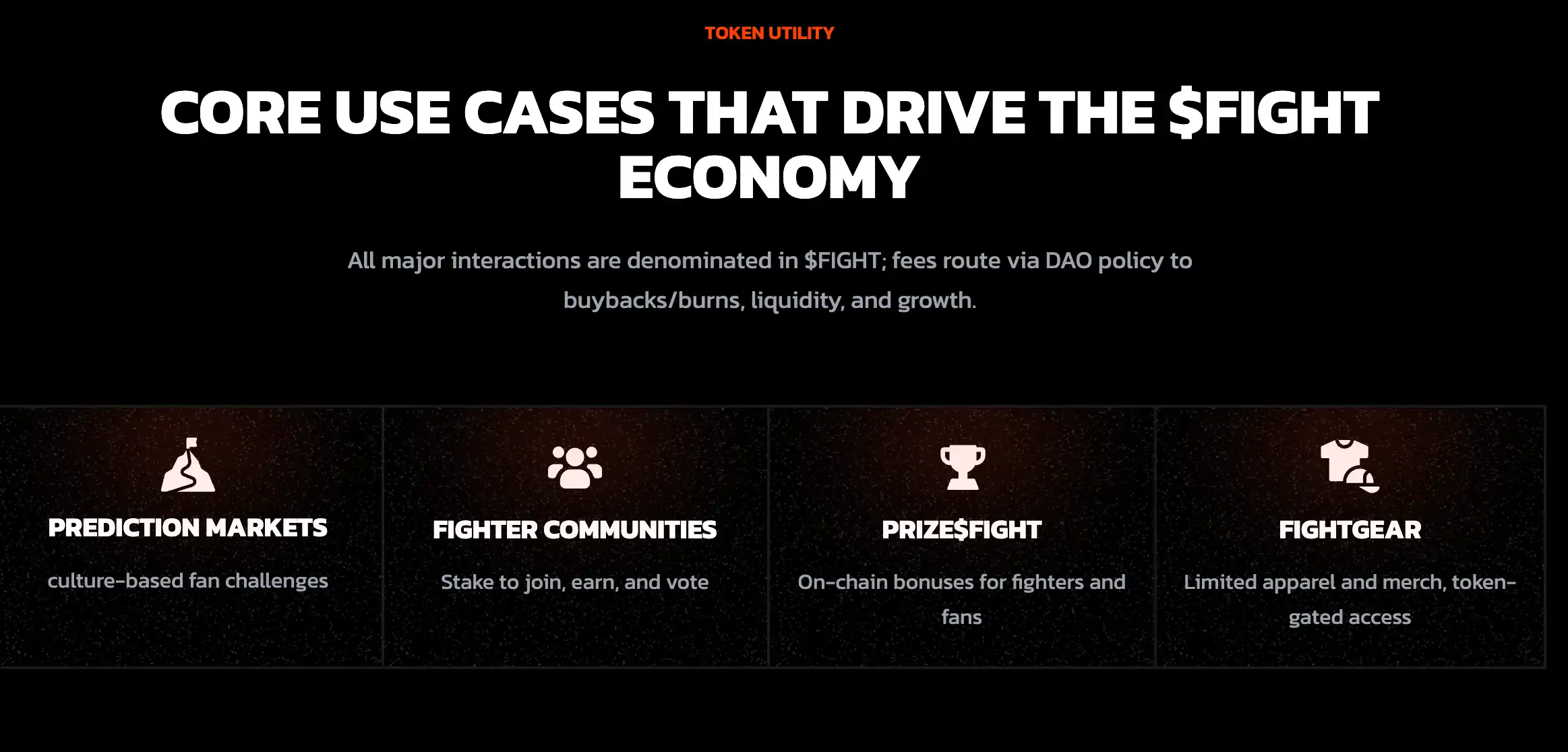
On the governance level, $FIGHT holders can vote on treasury allocation, emission schedules, ecosystem grants, etc. All revenue generated from utility scenarios flows into the DAO treasury for ecosystem support and growth.
Will it work? Honestly, it's impossible to conclude now.
Athlete community activity, real demand from ecosystem collaborators—these still need validation. But at least from a design perspective, $FIGHT isn't a 'buy and hold' token; its utility is deeply tied to the FP reputation system, forcing holders to participate in the ecosystem.
A New Approach to Fan Tokens
Looking at Fight.ID in a broader context, it's trying to answer an old question: how exactly should sports fan economy work in Web3?
Chiliz and Socios started issuing Fan Tokens for football clubs since 2019; Barcelona, Juventus, Paris Saint-Germain all have them. The model was to buy tokens for voting rights on minor things like jersey colors, walk-out music.
After a few years, the problems are obvious: voting rights are too thin, nothing to do after voting, fans buy tokens and either hold waiting for price increase or sell at a loss, no reason for持续参与 (sustained participation).
Fight.ID wants to try a different entry point. We can make a table for a clear comparison:
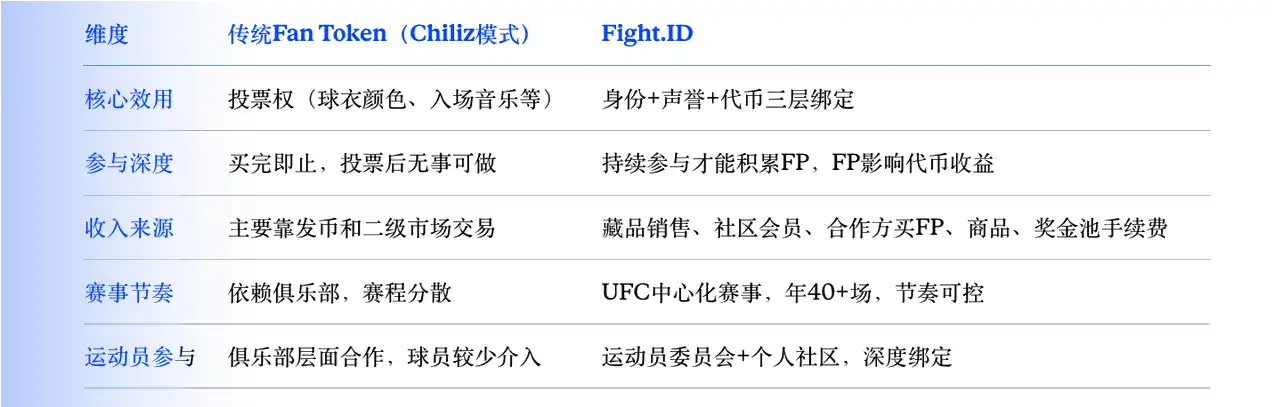
From a design perspective, Fight.ID does one more layer than traditional Fan Tokens: it's not just selling tokens, but first building identity, then nurturing reputation, and finally token monetization.
This three-tier structure of 'Identity - Reputation - Token' pulls users from 'buy and leave' into a cycle of 'sustained participation'.
This is an iterative attempt at sports fan economy in Web3. Whether the direction is right, Q1 product launches and user data will give the first round of feedback.
Back to the initial question: can the event-cycle-driven customer acquisition model work?
Fight.ID's answer is a combination: using UFC's IP license for exposure foundation, a three-tier architecture to pull users from registration to sustained participation, token utility tied to reputation forcing holders to be active.
For players interested in the project, you can watch the following validation nodes:
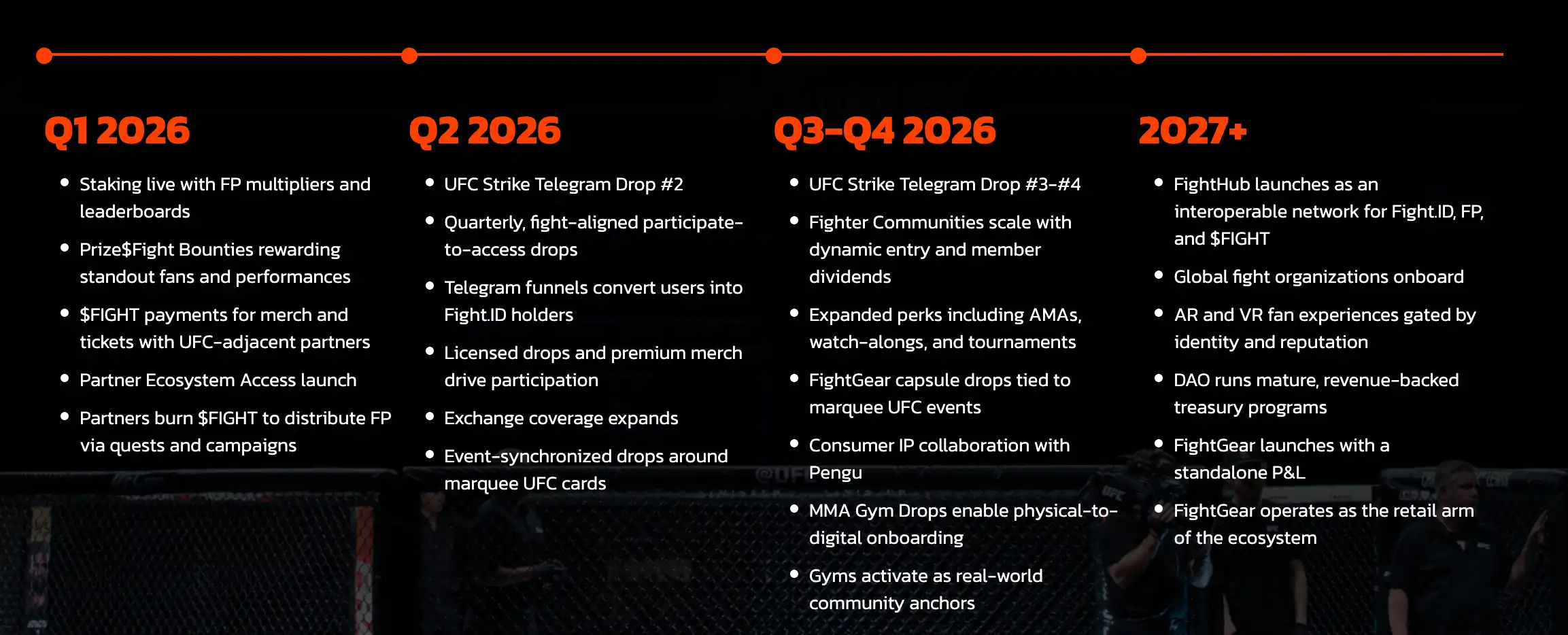
Near-term (Jan-Feb): January 22nd Binance Alpha listing, TGE execution, Coinbase listing review progress. This is the first test for liquidity and price discovery.
Q1 2026: Staking功能上线 (function goes live) (with FP multipliers and leaderboards), Partner Ecosystem Access launches (partners start burning tokens to buy FP distribution allowances), PrizeFight prize pool goes live, FightGear payment for goods and tickets goes live. This is the core validation period for token utility.
Q2 2026: Second round of UFC Strike Telegram airdrop, exchange coverage expansion, quarterly event联动活动 (tie-in activities) become regular. This is the observation window for whether the acquisition model can be sustained.
Q3-Q4 2026: Fighter Communities scale (dynamic entry price + member dividends), FightGear apparel collaborations, MMA offline gym partnerships materialize. This is the critical period for whether the ecosystem can extend from online to offline.
Fighting is one of the most popular sports categories in the US; UFC's base of over 40 events a year and 700 million viewers is there.
If Fight.ID can convert even 1% of the audience into on-chain users, that volume is enough to support a vertical ecosystem.
The path of fan economy in Web3, most previous attempts stopped at the 'issue tokens, collect money' stage. Fight.ID wants to take one more step forward, turning fans into participants, turning events into customer acquisition engines.
The direction is interesting, execution will tell.







