三分钟了解韩国「Facebook」支持的公链 Klaytn

深潮TechFlowPublicado em 2022-08-09Última atualização em 2022-08-09

Resumo

Klaytn 正在为 Klaytn 2.0 做准备,它包括扩展 L2 解决方案、元宇宙文件、创建 DAO 的 DAO (工具)以及更多的基础设施。

Klaytn 正在为 Klaytn 2.0 做准备,它包括扩展 L2 解决方案、元宇宙文件、创建 DAO 的 DAO (工具)以及更多的基础设施。

Klaytn 是韩国的(非)官方公链,于 2019 年推出,它是:

OpenSea 支持的 4 个区块链之一;

TVL 在 DeFi 中排名第 14 位;

$KLAY 按市值排名第 66 位。

然而,韩国以外的人很少听说过它,在这次的 KBW 中,让我们来一起了解它。

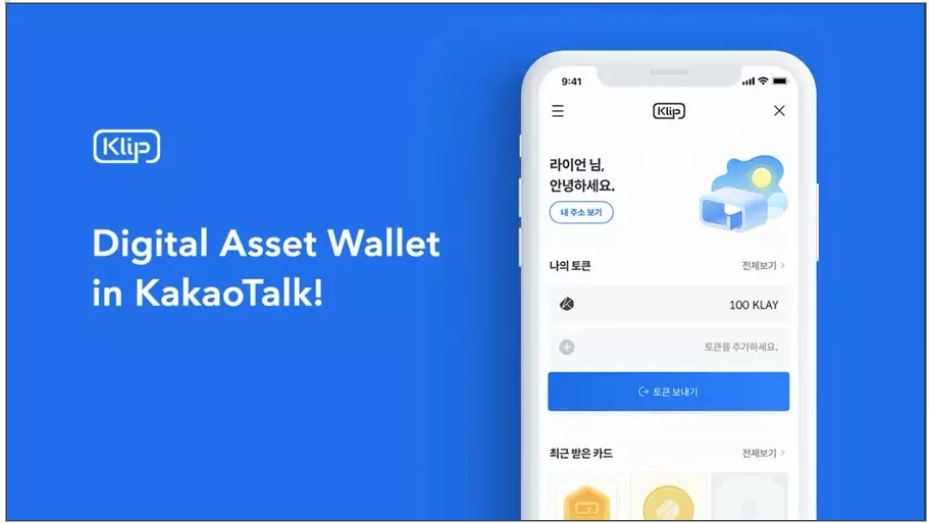
Klatyn 得到了韩国的「Facebook」—— Kakao 的支持。Kakao 是韩国使用最多的短信应用,拥有 5300 万活跃用户。而这些用户可以在 Kakao 应用中使用 Klaytn 的区块链钱包。可以想像,在 Facebook 的 Messenger 或 WhatsApp 中拥有一个 Ethereum 钱包,会给 Web3 带来多大的流量。
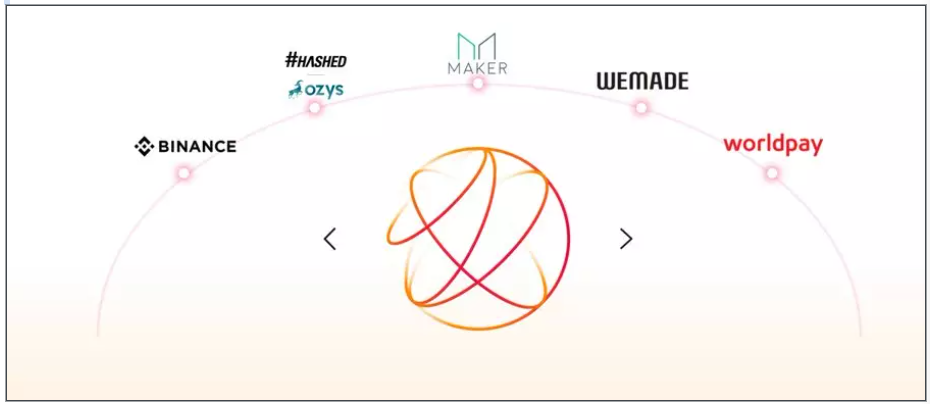
Klatyn 最初是以太坊的一个分叉,它通过治理委员会(GC)专注于可扩展性和性能。它的运营商是 DAO 和跨国组织,如:

LG;

MakerDAO;

Binance;

Hashed/Ozys;

Kakao 等等。
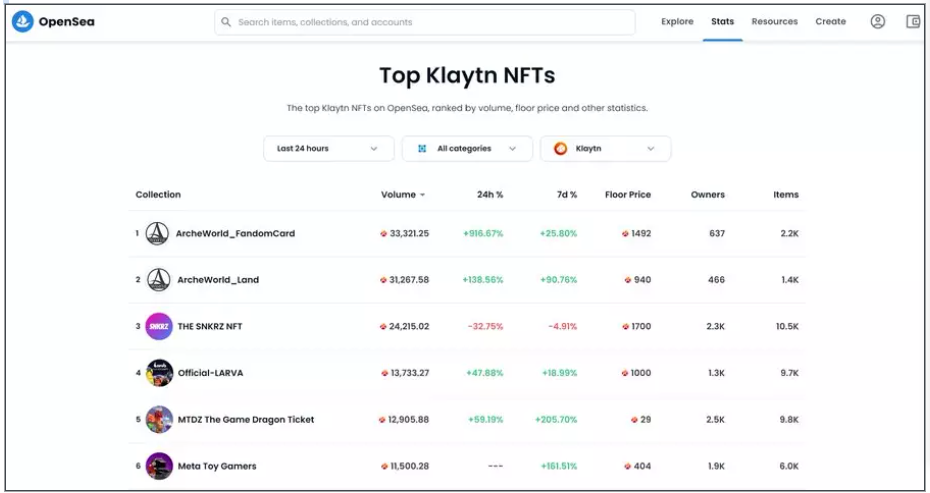
多亏了那些坚定的支持者,Klaytn 才能成为了第二个集成在 OpenSea 上 的公链,甚至在 Polygon 或 Solana 之前。正如他们在 KBW 的团队成员告诉我的那样,他们在 OpenSea 的早期就接触了 OpenSea,当时 NFT 板块还没有那么火热。
Klaytn 的 DeFi 生态同样在 4 月份遭受到了打击,TVL 从 12 亿美元下降到目前的 4.15 亿美元。当前,其链上最受欢迎的 dApp 是:

DEX——KLAYswap 和 Kokonutswap;

借贷市场 Klapfinance;

流动性 KLAY 质押;

虽然 KlaySwap 占领了其 50% 的 TVL。
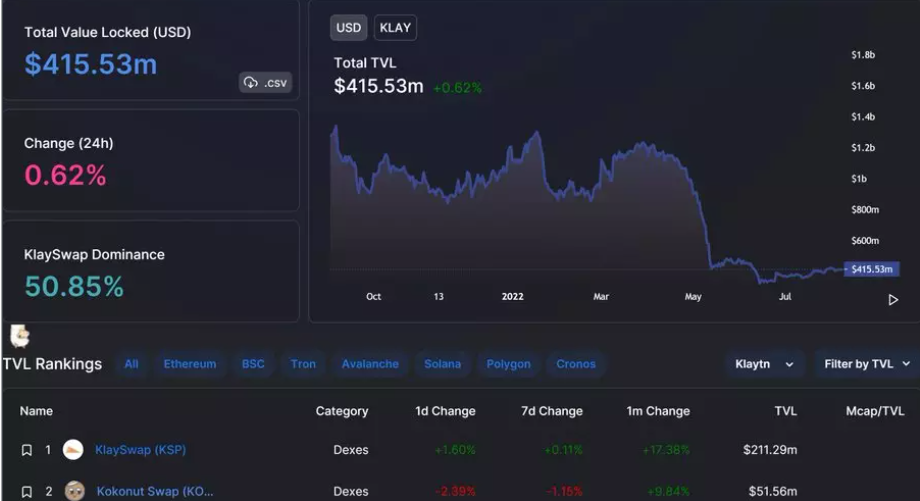
考虑到这一点,Klaytn 的第一目标是元宇宙。Klaytn 首席 Sangmin SEO 在 KBW 上介绍了他对 Klaytn 在加密货币生态系统中的愿景和定位。

我参加了他的演讲,这是他说的内容:

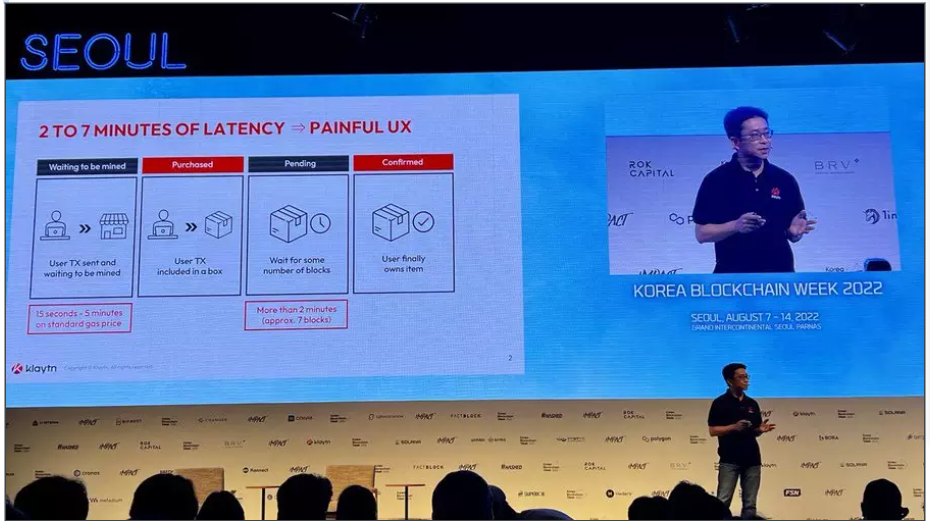
忘记 TPS。区块链上的不同元宇宙用户体验需要低延迟,交易延迟=交易被纳入区块的时间 - 交易被提交给网络的时间,这是一个输入和接收输出之间的时间延迟。
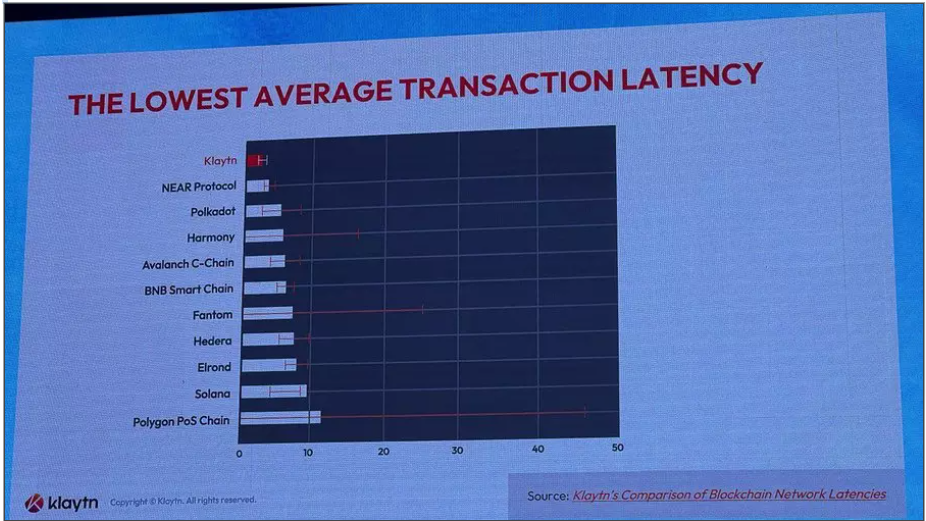
根据 Klaytn 自己的研究,Klaytn 的交易延迟最低,平均为 2.1 秒。 其次是 NEAR 在 2 到 5 秒之间,Solana 在 2 到 30 秒之间,而 Polygon 平均为 10.9 秒,而且还经常超过 100 秒。
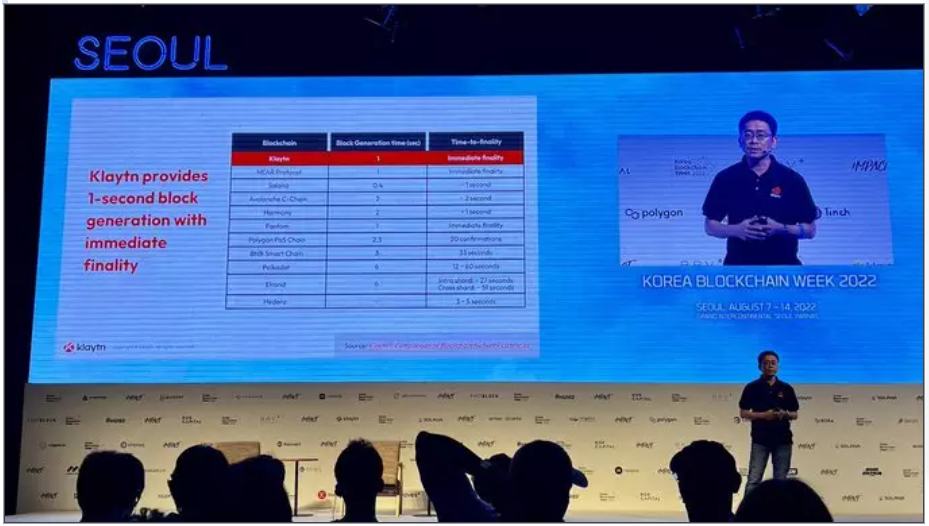
更重要的是,Klaytn 拥有 1 秒的区块生成时间和即时的最终确认时间。作为比较,$ETH 需要 14 次网络确认才能被纳入区块链上的一个区块中。
不过,如果按每秒交易量(TPS)计算,它并没有使 Klaytn 成为最快的区块链。在 4k TPS 时,它远远落后于 Polygon、Fantom 或 Solana,但 Klaytn 正计划对此进行改进。
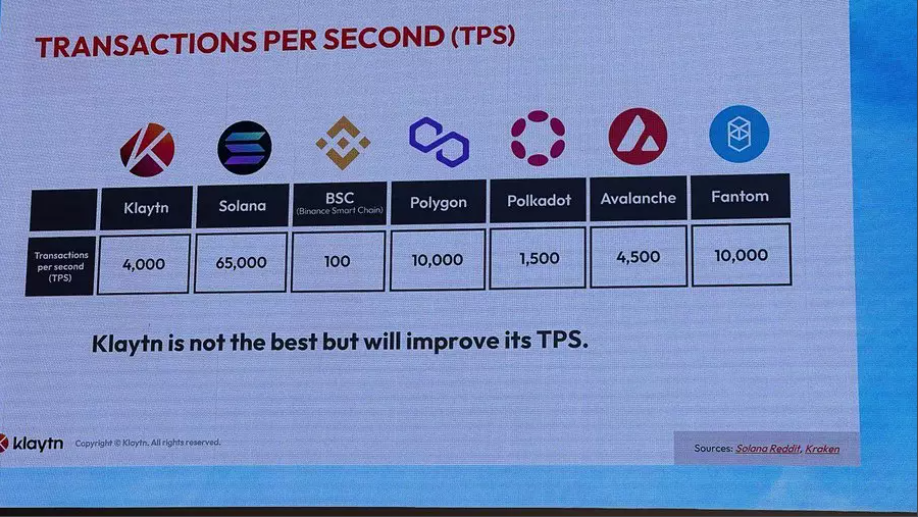
最后,Klaytn 正在为 Klaytn 2.0 做准备,它包括扩展 L2 解决方案、元宇宙文件、创建 DAO 的 DAO (工具)以及更多的基础设施。

Leituras Relacionadas

Valuation Rout of Old Titans: The Demise of a Generation's Asset Valuation Framework

"The Old Titans' Valuation Collapse: The Death of an Era's Valuation Framework" Between Alibaba's 2014 NYSE debut at $93.89 and its 2026 price of ~$95, twelve years have passed with zero price appreciation. This stagnation symbolizes a wholesale valuation reset for an entire generation of Chinese internet assets. Companies like Tencent, Pinduoduo, Meituan, Bilibili, and Kuaishou have seen catastrophic declines of 80-98% from their peaks. The core question arises: what framework now prices these companies, or has the framework itself expired? The valuation logic for Chinese internet stocks followed a clear "anchor-setting and anchor-removing" process. From 2014-2017, the dominant narrative was "US comparable discounting" – applying a growth premium and governance discount to US peers' multiples. This anchor loosened with the 2018 US-China trade war and the VIE structure risk, then was violently uprooted by the 2020-2021 regulatory crackdowns (Ant Group, Didi, anti-monopoly fines). The 2022 delisting panic and subsequent 2025-2026 geopolitical shocks (US military lists, AI espionage accusations) completed the demolition. The old "US对标打折" model is dead. However, this is not solely a China story. A structural mirror exists in US "old titan" stocks ("老登股"). In 2026, even Microsoft – with robust fundamentals – saw its PE compress from a 34x median to 22x, its worst performer status among the "Magnificent Seven" driven by a $190 billion annual AI capex crushing free cash flow. The core dilemma is universal: legacy platform giants, whether Alibaba or Microsoft, are spending colossal sums to chase an AI paradigm that may颠覆 their own high-margin, user/subscription-based business models. They have shifted from "companies defining the future" to "companies needing to prove they won't be淘汰ed by the future." This phenomenon of a dying valuation坐标系 has a historical precedent: post-1989 Japan. After its bubble burst, the "Japan premium" narrative ("most efficient manufacturing + perpetual growth") collapsed. A 25-year valuation vacuum ensued until Warren Buffett provided a new language in the 2010s: "low valuation + high dividend + governance reform." China's internet sector is now in a similar vacuum six years into its reset. While different from Japan's deflationary context, the parallel is clear: the old macro assumption of "deep integration with global capital" is falsified, but a new pricing framework is absent. Potential "new languages" for Chinese internet valuations are contradictory. AI transformation requires gutting profitable core businesses (e.g., Alibaba's ad-driven e-commerce) for an unproven consumption-based model, risking a Microsoft-like cash flow crunch. Alternatively, shareholder returns (buybacks/dividends) could build a floor, following Buffett's Japanese playbook, but current scales are insufficient to form a standalone anchor. The current state mirrors mid-1990s Japan: the old framework is dead, the new one unborn. The market waits in a vacuum for a重新定义ing force – a person, event, or proven business model shift – to answer "why buy." This may only be the middle phase of a prolonged re-rating.

marsbitHá 9m

Valuation Rout of Old Titans: The Demise of a Generation's Asset Valuation Framework

marsbitHá 9m

STRC Trading at Significant Discount, mNAV Falls Below Break-Even, Strategy's Valuation Logic Has Been Rewritten

Title: STRC Deeply Discounted, mNAV Falls Below Break-even, Strategy's Valuation Logic Redefined The recent volatility in MSTR and STRC highlights the need to reassess the core business model of Bitcoin reserve companies. These entities function more like leveraged, single-asset banks rather than software/tech firms. Consequently, they should be valued using banking metrics, not based on their total Bitcoin holdings. The key valuation metric is mNAV (market net asset value), akin to a price-to-book ratio. It compares the company's market capitalization to the equity value of its Bitcoin holdings after deducting all senior debt and preferred equity (like STRC). As of June 24, Strategy's mNAV was 1.10x. The focus should be on "net Bitcoin per share" (the Bitcoin claim per share after senior claims) and its growth rate, equivalent to a bank's book value and return on assets. Given STRC's 19% discount to its $100 par value (yielding 14.2%), issuing new MSTR equity at the current price to buy more Bitcoin is inefficient. It slightly dilutes the widely watched "total Bitcoin per share" metric while providing minimal improvement to the more critical "net Bitcoin per share." The article analyzes four potential uses for $1 billion in new equity: 1. **Buy Bitcoin:** Least effective. Improves net Bitcoin per share only marginally while diluting total Bitcoin per share. 2. **Repurchase STRC:** Most effective for balance sheet repair. The discount creates immediate value, increasing net Bitcoin per share by 1.0%, reducing debt burden, and lowering future dividend obligations. 3. **Boost Cash Reserves:** Dramatically improves the "cash coverage ratio" for STRC dividends from 9.8 months to 16.8 months, a crucial liquidity metric in a tightening funding environment. 4. **50/50 Split (STRC buyback & cash):** A balanced approach improving all key metrics. Strategy's own Q1 report indicates its internal break-even mNAV for profitable equity issuance to buy Bitcoin is 1.22x. With the current mNAV at 1.10x, such a move would be value-destructive. The core assumptions of its previous expansion model—issuing STRC at par and maintaining ample dividend coverage—have broken down. The recommended path is to use new capital to optimize core financial health: repurchasing discounted STRC and/or bolstering cash reserves. This would repair the balance sheet, signal liquidity strength, support STRC's price, lower its yield, and potentially reopen the par-value issuance channel. The current STRC discount represents a low-cost capital opportunity to restart this positive cycle. Bitcoin reserve companies must be evaluated as banks, focusing on book value, leverage, and liquidity resilience.

Foresight NewsHá 10m

STRC Trading at Significant Discount, mNAV Falls Below Break-Even, Strategy's Valuation Logic Has Been Rewritten

Foresight NewsHá 10m

South Korean Institutions' Crypto Race: Dual Explosion of Stablecoins and RWA

**Summary: South Korea's Institutional Crypto Race: Stablecoins and RWA Take Off** South Korea is undergoing a structural shift in its crypto ecosystem, moving beyond its historical role as a major retail trading hub. Major financial institutions and internet platforms are now building institutional-grade blockchain infrastructure, with stablecoins and Real-World Asset (RWA) tokenization as the primary drivers. The push for a regulated Korean won stablecoin market is a major policy and corporate focus. This is driven partly by an estimated $115 billion outflow into dollar stablecoins like USDC, threatening the domestic financial system. Banks (e.g., KB Financial, Hana), payment giants (e.g., Shinhan Card, BC Card), and internet super-apps (KakaoPay, NAVER Pay) are all conducting pilots. The goal is to anchor future digital finance to the Korean won and local regulations. In RWA, South Korea is advancing rapidly within regulatory sandboxes, focusing on unique domestic assets beyond typical global templates like US Treasuries. Projects involve tokenizing ships (with Hyundai Heavy Industries), defense supply chain assets, and K-pop intellectual property, alongside more conventional assets. A legal framework is set for 2027, and platforms like NXT are preparing for regulated trading. Key opportunities for crypto-native projects lie in providing the underlying technology these traditional institutions lack: global distribution channels for tokenized assets, cross-chain liquidity solutions, and enabling infrastructure tools (e.g., for asset packaging and management). Partnerships, such as Solana with Shinhan Card or LayerZero with the Korea Gold Exchange, exemplify this proactive approach. Crucially, user access is being shaped by consumer platforms. NAVER's planned acquisition of Upbit's operator Dunamu and Kakao's development of a unified wallet aim to seamlessly integrate crypto with everyday payments for tens of millions of users. The race is now about which protocols and projects will become the foundational standards as regulation solidifies and institutional adoption accelerates.

Foresight NewsHá 1h

South Korean Institutions' Crypto Race: Dual Explosion of Stablecoins and RWA

Foresight NewsHá 1h

Trading

Spot
活动图片