KITE surges 12% as liquidity spikes – Yet ONE hurdle remains!

ambcryptoPublicado em 2026-02-19Última atualização em 2026-02-19

Resumo

KITE surged 12% in 24 hours, extending its monthly gain to 67%, driven by aggressive speculative buying in perpetual futures. Open Interest rose 27% to $105M, with a positive funding rate confirming bullish control. However, the funding rate is declining and nearing neutral, risking a flip to negative—which would signal a shift to bearish sentiment. Despite the uptrend, Binance, which accounts for over 50% of KITE's liquidity, shows a Taker Buy/Sell Ratio of 0.61, indicating strong sell-side pressure. Liquidation heatmaps suggest two-way volatility, with price likely to move toward the nearest liquidity cluster. While monthly gains and inflows support KITE, concentrated selling on Binance poses a significant near-term hurdle.

Kite [KITE] has emerged as one of the market’s top performers, attracting substantial liquidity even as broader crypto conditions remain fragile.

The token climbed 12% in the past 24 hours, extending its monthly advance to 67% at the time of writing. The move builds on sustained bullish momentum that has defined much of the past quarter.

However, beneath the surface of the rally, positioning data reveals a developing divergence that could challenge the current trajectory.

Liquidity expansion fuels upside momentum

The latest leg higher for KITE was driven by aggressive speculative positioning in the derivatives market.

Bulls seized control as liquidity in the perpetual futures market expanded sharply, with capital flows favoring long contracts. At press time, Open Interest (OI), which tracks the total value of outstanding derivatives positions, surged 27% over the past day to roughly $105 million.

More importantly, the OI-Weighted Funding Rate, a metric that reflects whether longs or shorts dominate leveraged exposure, remained positive at 0.0031%. This confirms that buyers currently hold the upper hand.

Still, the margin of dominance remains thin.

The Funding Rate has begun to trend lower and is approaching neutral territory. A decisive move below zero would signal a shift in control toward short sellers. If that occurs, it would mark the first negative OI-Weighted Funding reading since the 9th of December.

Over the past three months, KITE has delivered cumulative growth of 161%, with December standing as the only month that closed with a bearish candlestick. A funding flip at this stage would represent a meaningful structural shift in sentiment.

Binance volume skews bearish

Despite the bullish funding structure, emerging pressure from Binance warrants close attention.

The Taker Buy/Sell Ratio, which measures whether aggressive buyers or sellers dominate derivatives trading, has fallen below the neutral threshold of 1. A reading below 1 indicates that sell-side market orders outweigh buy-side activity.

At the time of writing, the ratio stood at 0.61, signaling strong seller dominance among Binance traders.

This development carries weight because Binance controls more than 50% of KITE’s total liquidity across both volume and OI. At the time of writing, Binance accounted for $57.67 million in OI and $89.16 million in trading volume.

Sustained sell-side aggression at this scale could exert meaningful pressure on short-term price direction, even if broader funding metrics remain positive.

Heatmap signals two-way volatility

Liquidation heatmap data further reinforces the market’s delicate balance.

Liquidity clusters, areas where large concentrations of leveraged positions could be liquidated, currently sit both above and below the price. This positioning suggests that the market has yet to commit to a definitive directional breakout.

In such conditions, price typically gravitates toward the nearest dense liquidity pocket to trigger liquidations before establishing its next move.

With clusters stacked on both sides, momentum will likely dictate KITE’s immediate path. Continued bullish pressure could drive the price upward to clear overhead liquidity before a corrective move. Conversely, if seller dominance intensifies, downside liquidity pools may act as the next magnet.

For now, KITE stands at a technical crossroads, supported by strong monthly gains and liquidity inflows, yet increasingly challenged by concentrated sell-side activity on Binance.


Final Summary

  • KITE’s rally follows a sharp liquidity expansion in the perpetual futures market.
  • Binance traders tilt bearish on volume, exposing the token to downside risk despite a month-long uptrend.


Criptomoedas em alta

Perguntas relacionadas

QWhat is the percentage increase of KITE in the past 24 hours and over the past month?

AKITE increased by 12% in the past 24 hours and 67% over the past month.

QWhat key metric surged 27% to $105 million, indicating aggressive speculative positioning?

AOpen Interest (OI), which tracks the total value of outstanding derivatives positions, surged 27% to roughly $105 million.

QWhat does a Taker Buy/Sell Ratio below 1 indicate, and what was its value on Binance?

AA Taker Buy/Sell Ratio below 1 indicates that sell-side market orders outweigh buy-side activity. On Binance, the ratio stood at 0.61, signaling strong seller dominance.

QWhy is the activity on the Binance exchange particularly significant for KITE's price?

ABinance controls more than 50% of KITE’s total liquidity across both volume and Open Interest (OI), so sustained sell-side aggression there could exert meaningful pressure on the short-term price.

QAccording to the liquidation heatmap data, what does the presence of liquidity clusters on both sides of the price suggest?

AIt suggests that the market has yet to commit to a definitive directional breakout, and price will likely gravitate toward the nearest dense liquidity pocket to trigger liquidations before establishing its next move.

Leituras Relacionadas

Goldman Sachs: July Smashes Through Crowded Trades, U.S. Stock Bull Market Not Broken but Harder to Navigate

Goldman Sachs: July Sees Crowded Trades Unwound, U.S. Bull Market Intact but Getting Tougher. The U.S. stock market in July did not see an index-level crash, but rather a significant unwinding of speculative positions. While the S&P 500 remained stable—trading within a narrow 3.5% range and staying within 2% of its high—underlying market dynamics were volatile. Heavily crowded trades, particularly in high-momentum tech, AI-linked stocks, and Asian strategies, faced severe pressure and forced deleveraging. Data indicates this was a meaningful cleanse, not a minor adjustment. Global tech exposure saw its largest sell-off in over five years, leverage in Korean equity ETFs plummeted, and Goldman's prime brokerage recorded the largest gross exposure reduction since late 2022. Leverage on momentum factors among fundamental long/short clients fell to the 28th percentile of its one-year range. The AI trade narrative shifted from pure potential to a focus on tangible returns. While Meta failed to show clear AI monetization, Microsoft and Amazon provided evidence that massive capital expenditure is translating into scalable revenue and product growth, preventing a blanket sell-off of the AI sector. The Federal Reserve's more opaque communication style and volatility in long-end Treasury yields have introduced new friction, particularly for rate-sensitive growth and tech stocks. The broader outlook for U.S. equities remains favorable, supported by a strong economy, robust earnings, and substantial AI capital expenditure. However, risk/reward is no longer cheap, and the market's upward elasticity has weakened. The Nasdaq 100's trajectory—up 12% year-to-date despite significant pullbacks—illustrates that the bull trend persists but the path is becoming more difficult. The key lesson from July is that the market no longer rewards crowded, highly leveraged trades, requiring more disciplined and liquid portfolio approaches.

marsbitHá 2h

Goldman Sachs: July Smashes Through Crowded Trades, U.S. Stock Bull Market Not Broken but Harder to Navigate

marsbitHá 2h

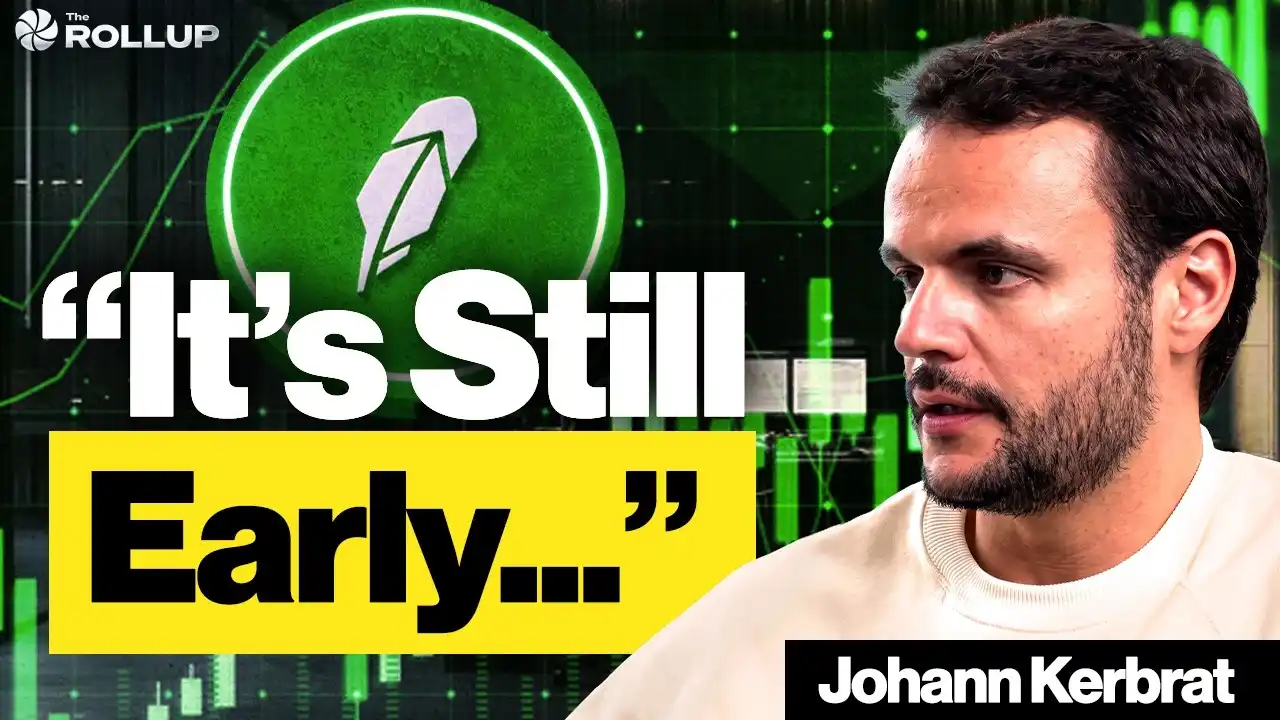
Interview with Robinhood Executive: Meme + Tokenized US Stocks as "Barbell" Customer Acquisition Strategy, All Business Lines Achieve Hundreds of Millions in Revenue

Interview with Robinhood executive Johann Kerbrat reveals the company's "barbell" customer acquisition strategy for its new Robinhood Chain, combining meme tokens with tokenized stocks. Three weeks after mainnet launch, the chain has seen over $3B in weekly DEX volume and 105M transactions. Kerbrat explains the logic behind the permissionless chain: meme tokens attract DeFi users, while tokenized real-world assets (RWA), currently over 90 US stocks and ETFs accessible in 120+ countries, serve global users. The goal is to bring Robinhood's 27 million funded accounts on-chain by simplifying DeFi with a user-friendly interface, exemplified by features like Robinhood Earn which offers yield without requiring wallet management. Built on Arbitrum's technology stack for its speed, low cost, and Ethereum's security, the chain focuses on financial products like Earn, spot trading, and perpetuals. Kerbrat downplays direct competition with platforms like Base, emphasizing the goal of expanding the overall market for on-chain assets. He details selective partnerships (e.g., Morpho, Lighter) based on compliance, unique UX, and differentiation. While regulatory clarity is pending for US perpetuals, the expansion continues via Bitstamp in Europe. Finally, Kerbrat positions Robinhood as a "super app" integrating stocks, options, crypto, banking, and AI trading, with all major business lines generating hundreds of millions in revenue. For the chain, current priority is driving adoption over maximizing gas fee revenue.

marsbitHá 4h

Interview with Robinhood Executive: Meme + Tokenized US Stocks as "Barbell" Customer Acquisition Strategy, All Business Lines Achieve Hundreds of Millions in Revenue

marsbitHá 4h

Trading

Spot

Artigos em Destaque

Como comprar KITE

Bem-vindo à HTX.com!Tornámos a compra de Kite AI (KITE) simples e conveniente.Segue o nosso guia passo a passo para iniciar a tua jornada no mundo das criptos.Passo 1: cria a tua conta HTXUtiliza o teu e-mail ou número de telefone para te inscreveres numa conta gratuita na HTX.Desfruta de um processo de inscrição sem complicações e desbloqueia todas as funcionalidades.Obter a minha contaPasso 2: vai para Comprar Cripto e escolhe o teu método de pagamentoCartão de crédito/débito: usa o teu visa ou mastercard para comprar Kite AI (KITE) instantaneamente.Saldo: usa os fundos da tua conta HTX para transacionar sem problemas.Terceiros: adicionamos métodos de pagamento populares, como Google Pay e Apple Pay, para aumentar a conveniência.P2P: transaciona diretamente com outros utilizadores na HTX.Mercado de balcão (OTC): oferecemos serviços personalizados e taxas de câmbio competitivas para os traders.Passo 3: armazena teu Kite AI (KITE)Depois de comprar o teu Kite AI (KITE), armazena-o na tua conta HTX.Alternativamente, podes enviá-lo para outro lugar através de transferência blockchain ou usá-lo para transacionar outras criptomoedas.Passo 4: transaciona Kite AI (KITE)Transaciona facilmente Kite AI (KITE) no mercado à vista da HTX.Acede simplesmente à tua conta, seleciona o teu par de trading, executa as tuas transações e monitoriza em tempo real.Oferecemos uma experiência de fácil utilização tanto para principiantes como para traders experientes.

625 Visualizações TotaisPublicado em {updateTime}Atualizado em 2026.06.02

Como comprar KITE

Discussões

Bem-vindo à Comunidade HTX. Aqui, pode manter-se informado sobre os mais recentes desenvolvimentos da plataforma e obter acesso a análises profissionais de mercado. As opiniões dos utilizadores sobre o preço de KITE (KITE) são apresentadas abaixo.

活动图片