Crypto dan AI, Perlu Eksekutif Perempuan

marsbitPublicado em 2026-01-21Última atualização em 2026-01-21

Resumo

Ringkasan: Industri AI dan crypto memiliki kesamaan dalam membutuhkan eksekutif perempuan untuk menjembatani kesenjangan antara teknologi dan dunia luar. Di AI, kita melihat semakin banyak perempuan seperti CZ Chen (COO Manus, diakuisisi Meta), Yun Yeyi (COO MiniMax, valuasi miliaran), Daniela Amodei (Presiden Anthropic), dan lainnya yang memimpin operasi, komersialisasi, dan narasi produk. Fenomena serupa terjadi di crypto era 2017-2021 dengan figur seperti He Yi (CMO Binance) dan Cynthia Wu (COO Matrixport). Kehadiran mereka menandai transisi industri dari teknologi murni ke adopsi massal, karena membawa empati, kemampuan bercerita, dan kepekaan bisnis yang crucial untuk menghadapi publik dan regulator. Aliran talenta perempuan berkelas ini adalah indikator kematangan dan nilai industri – AI sedang mengalaminya, sementara crypto perlu belajar mempertahankan mereka yang bisa menjembatani dunia teknis dengan manusia biasa.

Penulis: Alice, Deep Tide TechFlow

Baru-baru ini, saya melihat fenomena menarik di kalangan AI: semakin banyak eksekutif perempuan yang mulai tampil di panggung utama.

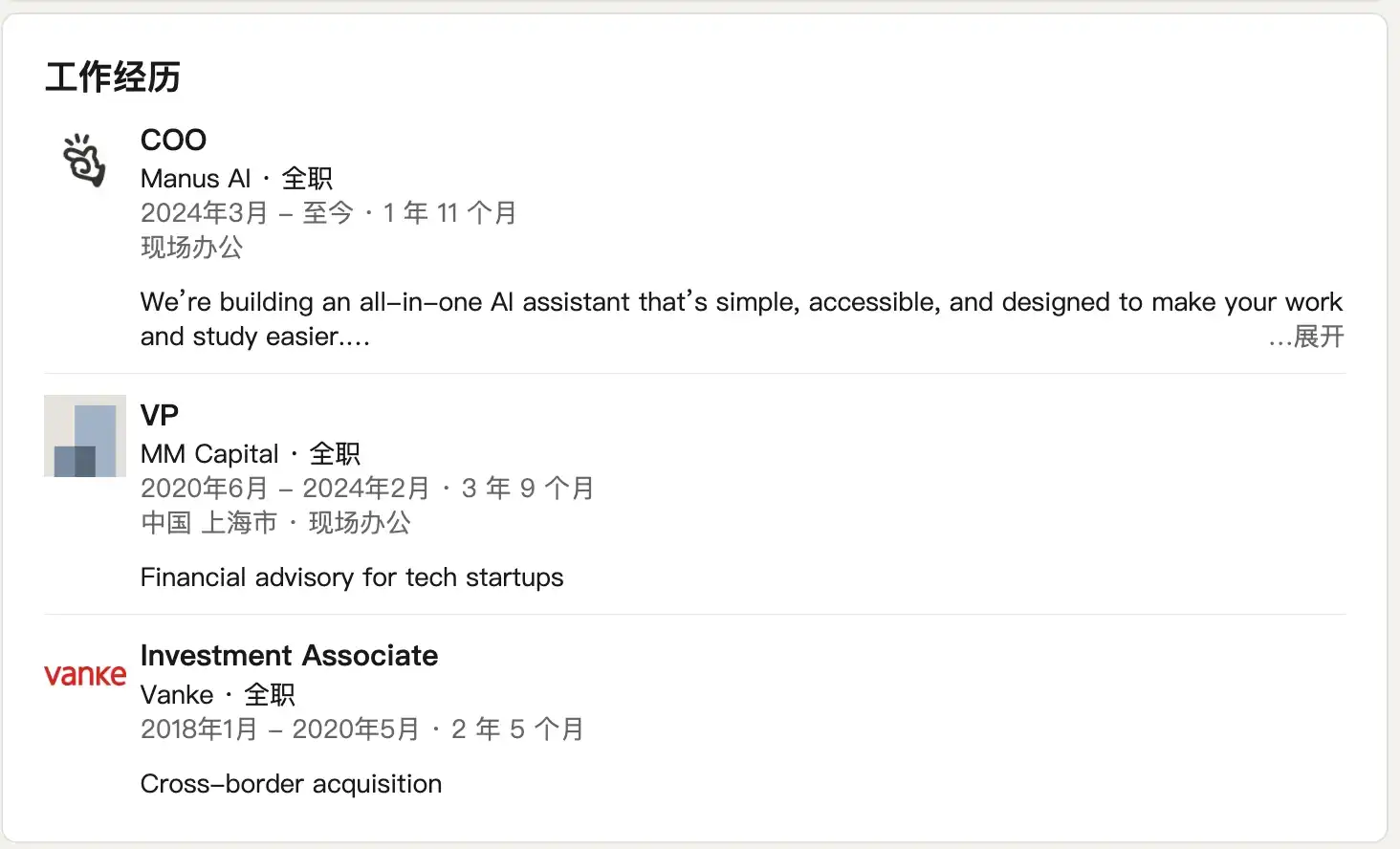
Pada 30 Desember, Meta mengumumkan akan mengakuisisi Manus dengan harga tinggi 2 miliar dolar AS. COO Manus, CZ Chen, yang lahir tahun 1990-an, mulai dikenal publik. Lulusan S1 Universitas Keuangan dan Ekonomi Shanghai, master Universitas Columbia, mulai bekerja pada 2018, pernah bekerja di Vanke dan lembaga FA, dan pada 2024 melompat terakhir ke Manus, langsung mencapai kebebasan finansial.
Pada 9 Januari, dalam upacara pembukaan perdagangan saham MiniMax, berdiri di samping pendiri berusia 36 tahun, Yan Junjie, adalah seorang wanita kelahiran 1994, Yun Yeyi.
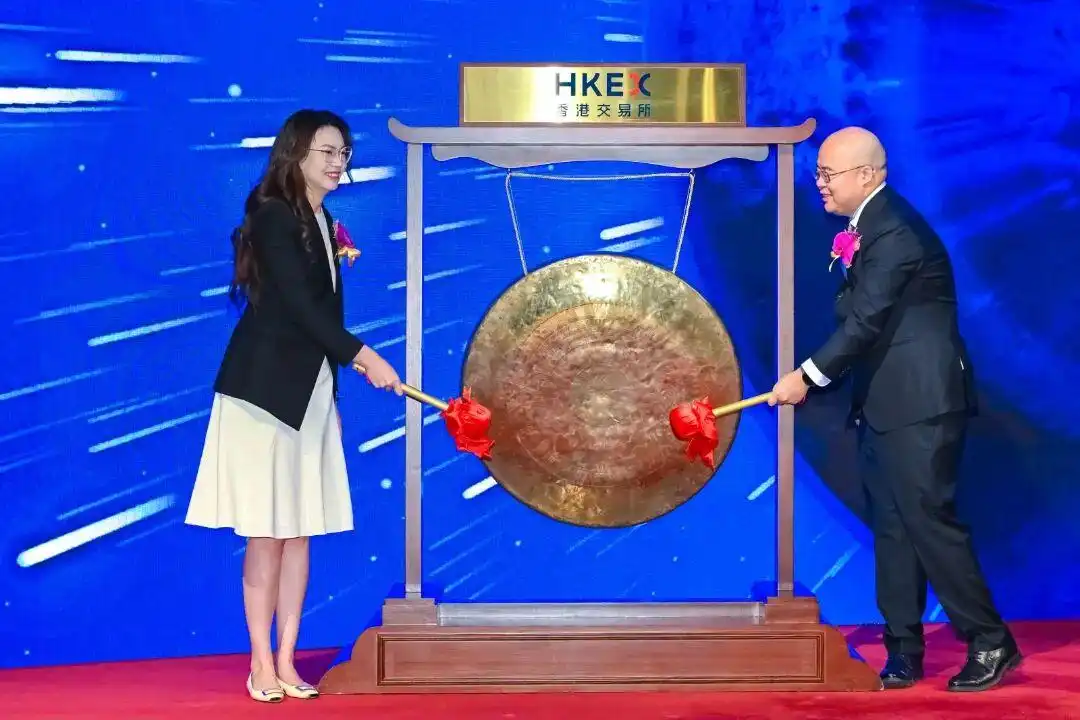
COO berusia 31 tahun ini sekarang memiliki kekayaan bersih mencapai 4,8 miliar dolar Hong Kong.

Apa latar belakang Yun Yeyi?

Teknik Elektro Universitas Johns Hopkins, minor ekonomi dan matematika; lulus pada 2017 langsung bergabung dengan SenseTime, dari Manajer Pendanaan menjadi asisten CEO Xu Li, lalu menjadi Direktur Departemen Bisnis Inovasi, mengalami langsung proses SenseTime dari unicorn hingga IPO di Hong Kong.

Pada 2022, Yan Junjie memutuskan keluar dari SenseTime dan mendirikan MiniMax, Yun Yeyi hampir tidak ragu dan langsung mengikutinya.

Nilai dirinya bukan hanya sekadar mengikuti.

Prospektus MiniMax menunjukkan bahwa Yun Yeyi hampir mengurus semua hal di perusahaan selain pengembangan teknologi: produk, komersialisasi, dewan direksi, operasi, manajemen... Gajinya adalah 1,479 juta dolar AS per tahun, lebih banyak dari semua direktur eksekutif lainnya digabungkan, jumlah ini sudah menjelaskan segalanya.

Bukan hanya di Tiongkok, melihat secara global di kalangan AI, kekuatan perempuan tidak boleh diremehkan.

Daniela Amodei, lulusan sastra Inggris, setelah berkarier di Stripe dan OpenAI, pada 2021 mendirikan Anthropic bersama kakaknya Dario, menjabat sebagai Presiden, fokus pada operasi sehari-hari dan komersialisasi, mendorong pemasaran produk Claude.

Lila Ibrahim, mantan eksekutif Intel, bergabung dengan DeepMind pada 2018 menjadi COO pertama, bertanggung jawab atas operasi sehari-hari, kemitraan, dampak sosial, urusan eksternal dan hubungan pemerintah.

Mira Murati, mantan CTO OpenAI keturunan Albania ini, pada usia 16 tahun mendapat beasiswa ke AS, dari tim Tesla Model X ke OpenAI, akhirnya keluar dan mendirikan Thinking Machines Lab, valuasi 9 miliar dolar AS...

Pemandangan ini terasa familiar.

2017-2021, era keemasan crypto penuh bintang, salah satu pemandangan indah adalah, CMO dan COO perempuan.

Yang paling dikenal tentu saja adalah Pendiri Bersama Binance dan CMO He Yi (sekarang sudah menjadi Co-CEO), dari Shanghai ke Tokyo, lalu dari Malta ke Paris lalu ke Dubai, setiap pergeseran strategis ada dirinya, membantu perusahaan menjadi bursa cryptocurrency terbesar di dunia.

Lisa Loud, dari insinyur Apple ke kepala pasar Kanada PayPal, 2017 pindah ke BitMEX menjadi CMO, setelah itu BitMEX pernah menjadi platform perdagangan derivatif crypto terbesar di dunia.

Cynthia Wu, COO Matrixport, mantan Wakil Presiden Pengembangan Produk Hong Kong Exchange, membawa pengalaman keuangan tradisional ke layanan keuangan crypto, membantu perusahaan menjadi platform layanan aset digital terbesar di Asia.

......

Dulu, crypto adalah fokus aset dunia, sorotan lampu tentu juga menyinari para eksekutif perempuan yang berdiri di tengah panggung ini.

Tapi air surut, pemeran utama berganti.

Sekarang, AI lah yang menjadi sorotan, sehingga kita melihat Daniela Amodei masuk daftar orang kaya Forbes, melihat Yun Yeyi bersemangat di lokasi pembukaan perdagangan saham MiniMax.

Dari segi esensi, Crypto dan AI memiliki kesamaan yang mencolok, "baik mutakhir maupun kampungan".

Mutakhir terlihat pada teknologi itu sendiri, blockchain membangun kembali mekanisme kepercayaan, AI membangun kembali produktivitas, keduanya adalah teknologi dasar yang dapat mengubah dunia.

Kampungan terlihat pada profil pendiri, kebanyakan latar belakang teknik, sangat paham kode, tetapi asing dengan pemasaran, terutama hubungan pemerintah, hubungan publik.

Inilah nilai COO/CMO perempuan, mereka adalah jembatan antara jenius teknologi dan dunia luar, dapat berbicara mendalam dengan tim teknologi, juga dapat menceritakan kisah yang menarik bagi investor dan pengguna.

Daniela Amodei mengubah filosofi keamanan AI menjadi strategi bisnis yang dapat dieksekusi, membuat Claude menembus kepungan di bayang-bayang ChatGPT; Yun Yeyi membuat MiniMax melangkah dari laboratorium ke pasar C; He Yi lama menjabat sebagai kepala pelanggan, secara pribadi menjawab keraguan pengguna, membangun kepercayaan.

Ketika sebuah produk meninggalkan tahap murni teknologi, semakin perlu menghadap ke C, keunggulan eksekutif perempuan semakin jelas.

Lagipula, hubungan masyarakat dan produk tidak membutuhkan pemikiran konfrontasi, tetapi kemampuan empati.

Dari sudut pandang lain, eksekutif perempuan yang berkemampuan akan memilih dengan kaki mereka pergi ke tempat yang memungkinkan mereka mengembangkan bakat dan menciptakan nilai. Jika mereka mulai meninggalkan suatu industri, itu menunjukkan kepastian komersial industri itu menghilang.

Masalah industri crypto sekarang sangat jelas, kurangnya talenta yang dapat mengubah teknologi menjadi produk yang diterima massa, adopsi massal dan eksternalitas positif masih omong kosong. Mengamati setiap industri baru dapat menemukan pola ini, ketika para eksekutif perempuan yang memiliki pemahaman teknologi, kepekaan bisnis dan kemampuan narasi mulai bangkit, industri benar-benar beralih dari dorongan teknologi ke komersialisasi dan massalisasi.

Kemunculan mereka menandakan kematangan sejati industri.

Lingkaran AI sudah mengalami titik balik ini, eksekutif perempuan seperti Daniela Amodei dan Yun Yeyi sedang mendorong produkisasi teknologi, membuat AI melangkah dari algoritma laboratorium ke kehidupan sehari-hari dan dunia bisnis.

Sedangkan industri crypto, jika tidak bisa mempertahankan "elit yang bisa bicara bahasa manusia", maka pantas terus ber-PVP di kubangan.

Aliran talenta adalah penunjuk arah industri.

Mereka pergi ke mana, nilai diciptakan di sana; tempat mereka tinggalkan, seringkali adalah tempat gelembung pecah.


Criptomoedas em alta

Perguntas relacionadas

QMengapa artikel ini berpendapat bahwa Crypto dan AI membutuhkan eksekutif perempuan?

AArtikel ini berpendapat bahwa baik industri Crypto maupun AI memiliki karakteristik 'canggih sekaligus kuno'—canggih dalam teknologi, tetapi sering kali didirikan oleh pendiri dengan latar belakang teknis yang kurang terampil dalam pemasaran, hubungan pemerintah, dan hubungan masyarakat. Eksekutif perempuan (seperti COO/CMO) berperan sebagai jembatan antara tim teknis dan dunia luar, membawa kemampuan empati, narasi yang menarik, dan kepekaan bisnis yang membantu mentransformasikan teknologi menjadi produk yang diterima secara massal.

QSiapa saja contoh eksekutif perempuan sukses yang disebutkan dalam artikel di industri AI?

AArtikel ini menyebutkan beberapa eksekutif perempuan sukses di industri AI, termasuk Daniela Amodei (Presiden dan Co-founder Anthropic), Lila Ibrahim (COO DeepMind), Mira Murati (mantan CTO OpenAI dan pendiri Thinking Machines Lab), serta贠烨祎 (COO MiniMax, yang membantu perusahaan tersebut go public dengan valuasi signifikan).

QBagaimana peran贠烨祎 (Yun Yeyi) dalam kesuksesan MiniMax?

A贠烨祎 (Yun Yeyi) adalah COO MiniMax yang bertanggung jawab atas hampir semua aspek non-teknis perusahaan, termasuk produk, komersialisasi, dewan direksi, operasi, dan manajemen. Dengan latar belakangnya di Johns Hopkins University dan pengalaman sebelumnya di SenseTime, ia membantu MiniMax berkembang dari laboratorium ke pasar konsumen, dan gajinya yang tinggi (USD 147,9 juta per tahun) mencerminkan nilai kontribusinya yang besar.

QApa persamaan antara industri Crypto dan AI menurut artikel ini?

AMenurut artikel, Crypto dan AI memiliki kesamaan dalam hal menjadi teknologi yang 'canggih sekaligus kuno'. Canggih karena teknologi blockchain merekonstruksi mekanisme kepercayaan, sementara AI merekonstruksi produktivitas. Namun, 'kuno' karena banyak pendirinya berasal dari latar belakang teknis yang kuat tetapi kurang terampil dalam aspek komersial seperti pemasaran dan hubungan eksternal, sehingga membutuhkan bantuan eksekutif non-teknis (seperti COO/CMO) untuk menjembatani kesenjangan tersebut.

QMengapa artikel ini menyatakan bahwa arah aliran talenta adalah indikator kematangan industri?

AArtikel ini menyatakan bahwa aliran talenta (khususnya eksekutif perempuan yang memiliki pemahaman teknis, kepekaan bisnis, dan kemampuan narasi) menandai di mana nilai diciptakan dan industri mana yang matang. Ketika talenta seperti ini memasuki suatu industri (seperti AI saat ini), itu menandakan bahwa industri tersebut sedang beralih dari tahap teknologi ke komersialisasi dan adopsi massal. Sebaliknya, jika mereka meninggalkan suatu industri (seperti Crypto), itu bisa menandakan hilangnya kepastian komersial dan pecahnya gelembung.

Leituras Relacionadas

Two Legends Lost in Three Days: Is Google's AI Talent Dam Cracking?

In three days, Google lost two AI legends. On June 18, Noam Shazeer, co-author of the seminal "Attention is All You Need" paper and Gemini co-lead, left for OpenAI. Just 48 hours later, John Jumper, 2024 Nobel laureate and AlphaFold lead, departed DeepMind for Anthropic. This follows Andrej Karpathy joining Anthropic in May. These moves highlight a structural trend: top AI talent is concentrating at mission-driven, pre-IPO firms like OpenAI and Anthropic, while Google becomes a primary source. The exodus stems from a core mission mismatch. Google's ad-centric model often subordinates AI research to product and revenue goals, creating friction for pioneers like Shazeer, who returned in 2024 only to leave again. In contrast, OpenAI and Anthropic offer singular focus on pushing AI boundaries, whether towards AGI or safety-aligned models, which deeply appeals to top researchers like Jumper. Financial incentives amplify the pull. With both OpenAI and Anthropic nearing IPO, employees stand to gain immensely from equity, an upside Google's mature stock cannot match. Furthermore, the 2023 merger of Google Brain and DeepMind, intended to consolidate strength, has instead created cultural tension and slowed the path from research to product, as evidenced by Gemini's pace. This talent redistribution is reshaping the AI landscape. While Google retains vast data and compute resources, its true crisis is the quiet, continuous loss of the people who define the field's future. The real moat in AI is not infrastructure, but the concentration of brilliant minds—a battle Google is currently losing.

marsbitHá 1h

Two Legends Lost in Three Days: Is Google's AI Talent Dam Cracking?

marsbitHá 1h

Behind the AI Report Card, Lies a Chinese 'Exam Setter'

Beyond the familiar performance charts like MMLU-Pro and MMMU, which major AI models strive to ace, stands a key "examiner": Chinese-Canadian researcher Wenhu Chen. An assistant professor at the University of Waterloo and founder of TIGERLab, Chen addresses the crucial need for more rigorous AI evaluation. As models like GPT-4 began scoring near-perfect results on older benchmarks like MMLU, it became difficult to distinguish their true capabilities. In response, Chen introduced MMLU-Pro in 2024, featuring harder, more reasoning-focused questions with more answer choices, successfully reintroducing meaningful performance gaps. His work extends to multi-modal evaluation with MMMU and its enhanced version, MMMU-Pro. These benchmarks test a model's ability to understand and reason with complex information from images, charts, and text across diverse academic subjects, exposing the significant challenges even top models face in genuine comprehension. Chen's background in complex QA, table reasoning, and his experience at Google DeepMind on projects like Gemini inform his approach. He understands that effective benchmarks must anticipate how models might "cheat" by memorizing data or avoiding visual analysis. His lab also actively researches video understanding and generation models (e.g., UniVideo, Vamba), ensuring his evaluation work is grounded in practical model-building challenges. Now at Meta's Super Intelligence Lab, Chen continues his focus on multi-modal data and evaluation, representing the deep yet often unseen contributions of Chinese talent in shaping the fundamental tools of the AI industry.

marsbitHá 2h

Behind the AI Report Card, Lies a Chinese 'Exam Setter'

marsbitHá 2h

Alliance Co-founder's Letter to Entrepreneurs: Written at the Moment Cursor Sold for $600 Billion

Alliance Co-founder's Letter to Entrepreneurs: On Cursor's $60 Billion Sale Many aspiring founders see massive exits like Cursor's $60B sale and wonder why they can't achieve the same, often concluding opportunities are exhausted. But great companies aren't built in obvious, crowded spaces. Cursor, like Stripe, Figma, and Shopify before it, started with a non-consensus belief about the future. Before ChatGPT, they believed AI would transform knowledge work. They focused on a genuinely exciting domain, became their own customer, and obsessed over power users. Their journey involved years of "glass-chewing" effort before the market was ready. The pattern is consistent: identify a long-term technological shift, find a missed entry point, and execute for years before the trend becomes obvious. First-generation products (PayPal, Adobe, Amazon) prove a market exists. Second-generation winners (Stripe, Figma, Shopify) rebuild that market around new insights, technology, or changing customer behaviors. Founders must identify their phase in the cycle. Early entrants like Coinbase or Cursor focus on making new technology usable for power users. Later entrants find the "yin" to the established "yang"—the blind spots incumbents miss as they grow distant from individual users. The key is deep market immersion. Use every product in your space. Talk to users. Build an audience. Stop looking for ideas and start *seeing* them everywhere. Then, choose one. The idea must offer a 10x improvement or solve a "hair-on-fire" pain point—something severe enough that users are already crafting workarounds. When building, avoid feature bloat. Ask: why would someone switch? Great startups rarely force new behaviors; they improve familiar workflows with drastically lower friction (e.g., Cursor forked VS Code instead of creating a new editor). Distribution is the underestimated moat. Before product-market fit, achieve distribution-market fit. How do customers discover new tools? Founders like those at Airbnb, Stripe, and Cursor did unscalable, manual work to recruit early users. The final, unteachable ingredient is resilience. Cursor built for years pre-market, faced rejection, and persisted. So did Airbnb, Nvidia, and Rain (which launched post-FTX collapse). The lesson isn't that these founders were smarter, but that they stayed in the game long enough for their insights to compound. Framework: Spot technological cycles. Cultivate unique insight. Obsess over your market. Talk to customers. Find a hair-on-fire problem. Build the simplest wedge. Win your distribution channel. Above all, don't quit when it gets hard. Most people won't do these things consistently. The few who do build the next generation of great companies. Go build.

marsbitHá 2h

Alliance Co-founder's Letter to Entrepreneurs: Written at the Moment Cursor Sold for $600 Billion

marsbitHá 2h

Weekly Editor's Picks (0613-0619)

Weekly Editor's Picks (0613-0619): Market Insights & Analysis This weekly digest curates in-depth analysis often lost in the information flow, focusing on key insights across macro trends, investment, and technology. **Macro & Geopolitics:** With the Strait of Hormuz reopening and military conflict shifting to negotiation, markets are pivoting from "war shock" to "supply restoration." Trades include shorting crude risk premiums, longing airlines/tourism, Asian energy importers, and bond duration, while shorting inflation expectations. LNG, fertilizer, and chemical chains are also being repriced. **Investment & VC:** Ray Dalio advises against betting on concentrated AI giants dominating indices, advocating for diversified portfolios of high-quality, low-correlation assets instead. Analysis covers the 4-year crypto cycle, predicting the core surviving product by 2029 will be asset trading markets. Current BTC metrics suggest a potential bottoming zone, presenting a patient accumulation window. SpaceX's high-profile IPO at a $2.1T valuation faces scrutiny over fundamentals, with key watchpoints being its likely inclusion in the Nasdaq index and Q2 earnings. Concerns are raised about potential "gamma squeeze" and systemic risks if its narrative-driven valuation gets amplified by passive index funds. Robinhood (HOOD) is noted for breaking its high correlation with crypto, bolstered by its stock trading and new underwriting business. **Web3 & AI:** A warning highlights ~$1.8T in off-balance-sheet AI infrastructure commitments (purchase commitments, leases) as a potential systemic risk if AI monetization lags. AI models are being used for World Cup predictions, adding a new layer for betting markets. A cost breakdown of a $20 AI subscription reveals the supply chain from model companies to cloud, GPUs, and power. **Prediction Markets:** The emergence of prediction market "concept stocks" is noted, with Robinhood developing its own platform, Rothera, signaling a shift from market competition to a "channel war" for user access. **CeFi & DeFi:** The SpaceX IPO tested perpetual contract mechanisms for pre-IPO assets, highlighting challenges in handling corporate actions like stock splits on-chain. The de-pegging of STRC (Strategy's preferred share) to ~$89 reflects market concerns over MicroStrategy's capital structure and BTC-backed leverage model. BlackRock's covered-call Bitcoin ETF (BITA) offers yield but caps upside, appealing to yield-seeking institutions. **Ethereum:** An opinion piece argues Ethereum's core strength is its vast developer community and composability, solidifying its role as the default operating system for the financial internet. **Weekly Hot Topics:** Include the US-Iran deal reopening the Strait of Hormuz, Fed's hawkish hold, Anthropic restricting model access, SpaceX acquiring Cursor, and a humorous stock surge for "Liuliumei" due to its "LLM" ticker.

marsbitHá 2h

Weekly Editor's Picks (0613-0619)

marsbitHá 2h

Alliance's Co-Founder's Letter to Entrepreneurs: Written on the Occasion of Cursor's $60 Billion Sale

In this letter to entrepreneurs, Alliance reflects on the success of Cursor's $60 billion sale to Elon Musk, using it as a case study to counter the misconception that opportunities in crowded fields like AI or crypto are exhausted. The piece argues that great companies like Cursor, Stripe, Figma, and Shopify are not built by geniuses with perfect ideas, but by founders who start with a non-consensus belief about the future and build for years before that future becomes obvious to everyone. They identify long-term shifts, find overlooked entry points, and execute relentlessly. The framework for success involves: 1. **Identifying your place in the technology cycle**: Early-stage opportunities focus on making new tech usable for power users (e.g., Coinbase, Cursor). Later-stage opportunities involve finding the "yin" to an existing "yang"—the blind spots of first-generation players (e.g., Stripe vs. PayPal, Figma vs. Adobe). 2. **Cultivating unique insights**: Immerse yourself deeply in the market. Use every product, talk to users, and build an audience. Insights will emerge naturally from deep engagement. 3. **Finding a "hair-on-fire" problem**: Look for a 10x improvement or a severe, urgent pain point. The strongest signal is people already building clumsy workarounds. 4. **Building a focused MVP**: Don't just add features because you can. Ask why users would abandon their current tool for yours. The best startups rarely force new behaviors; they improve familiar workflows with drastically lower friction. 5. **Winning a distribution channel**: Distribution is often the moat. Before product-market fit, achieve channel-market fit. Find where your customers are and build an engine to reach them, even through unscalable, manual efforts initially. 6. **Persistence**: The final, unteachable ingredient is resilience. Success stories like Cursor, Airbnb, and Nvidia involved years of grinding, rejection, and perseverance when the path forward seemed unclear. The conclusion is that there is no secret. Most people fail to consistently execute these steps over the long term. The few who do build the companies that define the next era. The world is yours to create.

链捕手Há 2h

Alliance's Co-Founder's Letter to Entrepreneurs: Written on the Occasion of Cursor's $60 Billion Sale

链捕手Há 2h

Trading

Spot
Futuros

Artigos em Destaque

Como comprar ALICE

Bem-vindo à HTX.com!Tornámos a compra de My Neighbor Alice (ALICE) simples e conveniente.Segue o nosso guia passo a passo para iniciar a tua jornada no mundo das criptos.Passo 1: cria a tua conta HTXUtiliza o teu e-mail ou número de telefone para te inscreveres numa conta gratuita na HTX.Desfruta de um processo de inscrição sem complicações e desbloqueia todas as funcionalidades.Obter a minha contaPasso 2: vai para Comprar Cripto e escolhe o teu método de pagamentoCartão de crédito/débito: usa o teu visa ou mastercard para comprar My Neighbor Alice (ALICE) instantaneamente.Saldo: usa os fundos da tua conta HTX para transacionar sem problemas.Terceiros: adicionamos métodos de pagamento populares, como Google Pay e Apple Pay, para aumentar a conveniência.P2P: transaciona diretamente com outros utilizadores na HTX.Mercado de balcão (OTC): oferecemos serviços personalizados e taxas de câmbio competitivas para os traders.Passo 3: armazena teu My Neighbor Alice (ALICE)Depois de comprar o teu My Neighbor Alice (ALICE), armazena-o na tua conta HTX.Alternativamente, podes enviá-lo para outro lugar através de transferência blockchain ou usá-lo para transacionar outras criptomoedas.Passo 4: transaciona My Neighbor Alice (ALICE)Transaciona facilmente My Neighbor Alice (ALICE) no mercado à vista da HTX.Acede simplesmente à tua conta, seleciona o teu par de trading, executa as tuas transações e monitoriza em tempo real.Oferecemos uma experiência de fácil utilização tanto para principiantes como para traders experientes.

162 Visualizações TotaisPublicado em {updateTime}Atualizado em 2026.06.02

Como comprar ALICE

Discussões

Bem-vindo à Comunidade HTX. Aqui, pode manter-se informado sobre os mais recentes desenvolvimentos da plataforma e obter acesso a análises profissionais de mercado. As opiniões dos utilizadores sobre o preço de ALICE (ALICE) são apresentadas abaixo.

活动图片