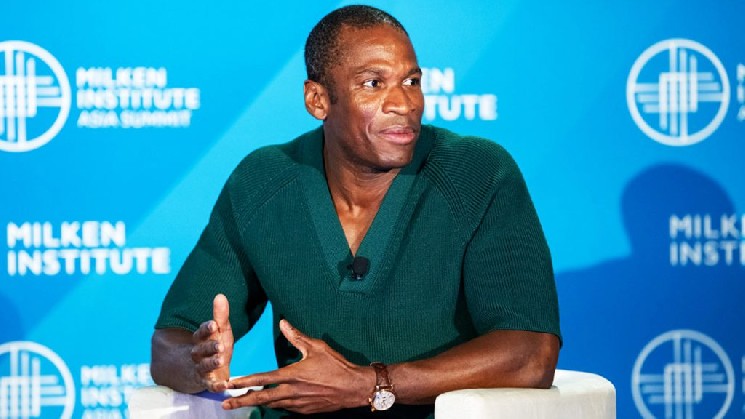
Video của Hageman thổi bùng tin đồn tại Thượng viện khi Lummis bỏ trống ghế ở Wyoming

cointelegraphPublicado em 2025-12-23Última atualização em 2025-12-23

Resumo

Đại diện Wyoming Harriet Hageman, thông qua một video ngắn với chú thích "Sớm thôi", đã làm dấy lên đồn đoán về việc bà sẽ tranh cử vào Thượng viện năm 2026 sau khi Thượng nghị sĩ Cynthia Lummis tuyên bố không tái tranh cử. Lummis được coi là đồng minh lớn của ngành công nghiệp crypto tại Thượng viện, người đã ủng hộ Bitcoin từ sớm và đồng bảo trợ các dự luật quan trọng. Việc bà rời đi có thể tạo ra khoảng trống cho tiếng nói ủng hộ crypto. Dù chưa tập trung nhiều vào crypto, Hageman nhận được sự ủng hộ từ cộng đồng blockchain Wyoming, điển hình là Caitlin Long - người sáng lập Custodia Bank. Cuộc đua tranh ghế này sẽ là phép thử xem Wyoming có tiếp tục duy trì vị thế là tiểu bang dẫn đầu về ủng hộ crypto hay không.

Dân biểu Wyoming Harriet Hageman đã làm dấy lên những đồn đoán về việc tranh cử Thượng viện năm 2026 bằng cách đăng một video chỉ vài ngày sau khi Thượng nghị sĩ Cynthia Lummis tuyên bố sẽ không tái tranh cử.

​Đoạn clip năm giây cho thấy nữ nghị sĩ bên cạnh một dòng chú thích một từ: “Sớm thôi.” Động thái này phá vỡ sự im lặng kéo dài nhiều tháng trên tài khoản của bà và thúc đẩy suy đoán rằng bà đang nhắm đến chiếc ghế bỏ trống của Lummis.

Ghế Thượng viện của Wyoming từ lâu đã là tiếng nói đáng tin cậy trong việc thúc đẩy sự rõ ràng về quy định cho ngành công nghiệp crypto, từ các dự luật cấu trúc thị trường, quy định stablecoin đến quyền tiếp cận ngân hàng. Bất kỳ ai thay thế Lummis cũng sẽ giúp quyết định liệu crypto có tiếp tục có một người ủng hộ tận tụy trong Thượng viện hay không.

Tweet của Hageman đã thổi bùng tin đồn rằng bà có thể nhắm mục tiêu vào ghế Thượng viện tập trung vào crypto đang bỏ trống của Wyoming. Nguồn: Harriet Hageman

Một đồng minh crypto từ chức

Lummis dự kiến sẽ nghỉ hưu khi kết thúc nhiệm kỳ, loại bỏ một trong những đồng minh lên tiếng mạnh mẽ nhất của ngành công nghiệp tài sản kỹ thuật số khỏi Thượng viện ngay khi các nhà lập pháp tiến gần hơn đến những cuộc bỏ phiếu tiềm năng cho các dự luật mang tính bước ngoặt về cấu trúc thị trường.

​Lummis đã xây dựng hình ảnh toàn quốc với tư cách là một tiếng nói ủng hộ crypto đáng tin cậy, sớm chấp nhận Bitcoin và đồng tài trợ cho các nỗ lực lập pháp được xem rộng rãi là nhằm thúc đẩy ngành công nghiệp blockchain, bao gồm Đạo luật Đổi mới Tài chính Có trách nhiệm và Đạo luật Minh bạch Hoa Kỳ đang diễn ra.

Việc bà rời đi khiến ngành công nghiệp này mất đi một người bảo chứng trong một cơ quan ngày càng trở nên trung tâm đối với các quyết định về giám sát nền tảng giao dịch, quy tắc stablecoin và quyền tiếp cận ngân hàng cho các công ty crypto.

Related: Cộng đồng crypto ‘rất tiếc’ trước quyết định tái tranh cử của Thượng nghị sĩ Lummis

​Thành tích của Hageman và kỳ vọng của crypto

Với tư cách là thành viên Hạ viện đại diện chung cho Wyoming, cho đến nay bà chủ yếu tập trung vào các chủ đề bảo thủ rộng hơn như quyền của phụ huynh trong giáo dục, phản đối sự lạm quyền của liên bang và ủng hộ các chính sách năng lượng ủng hộ nhiên liệu hóa thạch, đồng thời liên kết với Tổng thống Donald Trump. Một chiến dịch tranh cử Thượng viện sẽ là bài kiểm tra xem bà sẵn sàng dựa vào di sản crypto của Lummis như thế nào bên cạnh những ưu tiên đó.

Cộng đồng crypto của Wyoming đã đang thúc giục bà theo hướng đó. Caitlin Long, người sáng lập Custodia Bank và là kiến trúc sư trưởng của các luật thân thiện với blockchain của tiểu bang, đã ca ngợi Hageman là “người chân chất”. Long đã phản ứng trước thông tin về việc Hageman dự kiến tham gia cuộc đua.
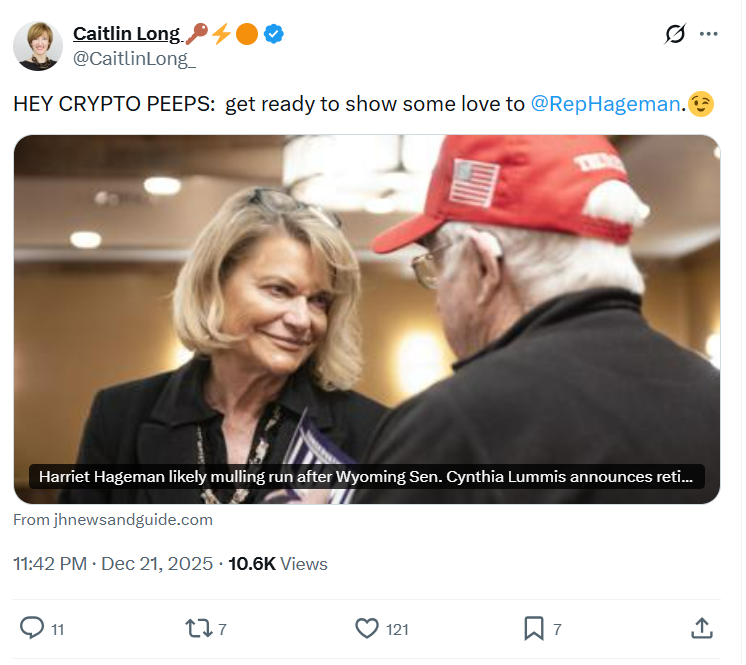
Giới thiệu Harriet Hageman | Nguồn: Caitlin Long

Related: Crypto nằm trong số các lĩnh vực bị ‘debanked’ bởi 9 ngân hàng lớn: nhà quản lý Mỹ

Việc ủng hộ của Long về cơ bản đã giới thiệu Hageman với khán giả crypto như là người kế nhiệm được ưa chuộng, mặc dù nữ dân biểu vẫn chưa thực sự tập trung vào tài sản kỹ thuật số như một trọng tâm chữ ký.

Cuộc đua tranh ghế Thượng viện Wyoming 2026 giờ đây sẵn sàng trở thành một bài kiểm tra xem liệu tiểu bang có muốn bảo tồn danh tính là nơi có nhà vận động crypto nổi bật nhất Thượng viện, hay gộp chính sách tài sản kỹ thuật số vào một chương trình nghị sự rộng lớn hơn của Đảng Cộng hòa thời Trump.


Perguntas relacionadas

QHarriet Hageman đã làm gì để thúc đẩy đồn đoán về việc bà tranh cử vào Thượng viện năm 2026?

ABà đã đăng một video ngắn với chú thích một từ 'Soon' (Sớm thôi) trên tài khoản mạng xã hội của mình, phá vỡ sự im lặng kéo dài nhiều tháng và làm dấy lên suy đoán rằng bà đang nhắm đến chiếc Thượng nghị sĩ sắp bỏ trống.

QTại sao việc Thượng nghị sĩ Cynthia Lummis không tái tranh cử lại quan trọng đối với ngành công nghiệp crypto?

ABởi vì bà Lummis là một trong những đồng minh công khai ủng hộ crypto mạnh mẽ nhất tại Thượng viện, người đã ủng hộ Bitcoin từ sớm và đồng bảo trợ các nỗ lực lập pháp quan trọng. Việc bà rời đi khiến ngành công nghiệp này mất đi một người bảo vệ đáng tin cậy.

QCaitlin Long, người sáng lập Custodia Bank, đã có phản ứng gì trước khả năng Harriet Hageman tranh cử?

ACaitlin Long đã ca ngợi Harriet Hageman là 'salt of the earth' (người chân chất, đáng tin). Sự ủng hộ này giới thiệu Hageman với cộng đồng crypto như là người kế nhiệm được ưa chuộng.

QKỷ lục chính trị của Harriet Hageman tại Hạ viện tập trung vào哪些 chủ đề chính?

AKỷ lục của bà tại Hạ viện chủ yếu tập trung vào các chủ đề bảo thủ rộng hơn như quyền của phụ huynh trong giáo dục, phản đối sự can thiệp quá mức của liên bang và ủng hộ các chính sách năng lượng nhiên liệu hóa thạch, đồng thời liên kết với cựu Tổng thống Donald Trump.

QCuộc đua tranh ghế Thượng viện Wyoming năm 2026 sẽ kiểm tra điều gì?

ACuộc đua này sẽ là một phép thử để xem liệu tiểu bang có muốn duy trì danh tiếng là nơi có nhà vận động crypto nổi bật nhất tại Thượng viện hay không, hay sẽ gộp chính sách tài sản kỹ thuật số vào một chương trình nghị sự rộng lớn hơn của Đảng Cộng hòa thời kỳ Trump.

Leituras Relacionadas

Google TPU Shipments Revised Up by 50%

Recent industry research indicates a significant upward revision in the shipments of Google's TPU (Tensor Processing Unit) chips. Previous expectations for 2027 were set at around 10 million units, but new estimates now point to 15 million units, a 50% increase. This substantial boost directly translates to higher demand across the entire supporting supply chain. Google's TPU clusters utilize a standardized all-optical interconnect architecture. Consequently, key hardware components are deeply integrated and scaled in fixed ratios with the chips. The 15 million TPU target will drive corresponding demand increases for NPO optical engines (roughly a 1:1 match), 1.6T optical modules, OCS optical switches, high-end server power supplies, fiber optics & MPO connectors, and liquid cooling solutions. Among these, liquid cooling is highlighted as the sector experiencing the most significant transformation and offering the most stable potential for excess returns. As next-generation TPU chips reach power levels where traditional air cooling is insufficient, liquid cooling becomes essential. 2026 is forecasted as the first year of substantial adoption for Google's liquid cooling solutions. This shift, coupled with delivery and capacity bottlenecks faced by incumbent overseas manufacturers, is creating a prime window for domestic Chinese suppliers to enter and secure Google's core supply chain. The market size for Google-specific liquid cooling is projected to potentially triple from a baseline of hundreds of billions to around 300 billion units by 2028. The logic for the fiber optic sector is also being rewritten. Once considered a cyclical commodity tied to telecom operator procurement, fiber is now a strategic and scarce resource for AI Data Centers (AIDC). A severe supply-demand imbalance, driven by the long lead time for preform production (18-24 months) and surging demand from cloud giants, is supporting strong performance. Chinese fiber manufacturers are well-positioned to capture a significant share of global AIDC demand, with exports potentially reaching 200-300 million core kilometers in 2026. Overall, the investment focus within the AI computing industry is shifting from pure "chip performance speculation" towards the more certain incremental growth in computing infrastructure and its supporting ecosystem. The upward revision in Google TPU shipments, along with the potential for further doubling by 2028, is seen as solidifying performance visibility for the entire supporting supply chain over the next two years.

marsbitHá 1h

Google TPU Shipments Revised Up by 50%

marsbitHá 1h

What Wall Street Really Wants After the Crypto Story Recedes

The tide of speculative crypto narratives has receded, revealing Wall Street's true objective: building a controlled, yield-generating, and compliant financial pipeline on distributed ledgers. They are migrating core functions onto blockchains, not for decentralization, but for efficiency and new revenue streams. Key developments include BlackRock's BUIDL fund, a tokenized treasury fund acting as a foundational reserve asset, and the rise of Securitize, which is going public and partnering with the NYSE to build a 24/7 digital securities trading and settlement system. This signals a major shift of securities clearing to blockchain technology. To make volatile assets like Bitcoin palatable for institutional investors, firms like BlackRock and Goldman Sachs are creating "covered call" ETFs (e.g., BITA). These products systematically sell options on Bitcoin holdings, transforming price volatility into stable monthly income, effectively repackaging crypto as a yield-bearing asset. Stablecoins are being positioned not as speculative tools but as efficient payment rails. Companies like Stripe and Mastercard are integrating them for instant, low-cost merchant settlements and cross-border card payments, respectively. Critically, new legislation like the GENIUS Act shapes them as non-interest-bearing, heavily regulated extensions of the US dollar system. In summary, Wall Street is quietly constructing a parallel, blockchain-based financial infrastructure featuring tokenized traditional assets, structured crypto yields, and programmable dollar pipelines—all under its control and fully integrated with existing regulatory and credit frameworks.

marsbitHá 1h

What Wall Street Really Wants After the Crypto Story Recedes

marsbitHá 1h

Tying Itself to SpaceX: Cursor's $60 Billion Rise

This article recounts the rapid rise of AI-powered coding startup Cursor and its 25-year-old MIT graduate CEO, Michael Truell. Launched in 2023, Cursor achieved explosive growth, reaching over 10 billion USD in revenue by late 2025. However, its journey highlights a central dilemma for AI application companies: dependence on foundational model providers. Cursor initially relied heavily on Anthropic's models but faced an existential threat when Anthropic launched its own competing coding tool, Claude Code. In response, Cursor declared an internal emergency in early 2026 and accelerated development of its own model, Composer. To secure the immense computing power needed, Truell struck a pivotal deal with Elon Musk's SpaceX in April 2026. The collaboration grants Cursor access to SpaceX's supercomputing resources for Composer, while SpaceX's Grok model benefits from Cursor's programming data. The agreement includes a potential 600 billion USD acquisition of Cursor by SpaceX later in the year, though a substantial termination fee is in place if the deal falls through. The story explores Cursor's intense, sometimes controversial hiring practices involving lengthy unpaid "work trials," its complex partnership-turned-rivalry with Anthropic, and its high-stakes gamble to ensure independence through the SpaceX alliance. The core question remains: will Cursor evolve into a defining, independent "generational" software company, or become a key piece in a tech giant's AI arsenal?

marsbitHá 1h

Tying Itself to SpaceX: Cursor's $60 Billion Rise

marsbitHá 1h

Trading

Spot
Futuros

Artigos em Destaque

Como comprar OPEN

Bem-vindo à HTX.com!Tornámos a compra de OpenLedger (OPEN) simples e conveniente.Segue o nosso guia passo a passo para iniciar a tua jornada no mundo das criptos.Passo 1: cria a tua conta HTXUtiliza o teu e-mail ou número de telefone para te inscreveres numa conta gratuita na HTX.Desfruta de um processo de inscrição sem complicações e desbloqueia todas as funcionalidades.Obter a minha contaPasso 2: vai para Comprar Cripto e escolhe o teu método de pagamentoCartão de crédito/débito: usa o teu visa ou mastercard para comprar OpenLedger (OPEN) instantaneamente.Saldo: usa os fundos da tua conta HTX para transacionar sem problemas.Terceiros: adicionamos métodos de pagamento populares, como Google Pay e Apple Pay, para aumentar a conveniência.P2P: transaciona diretamente com outros utilizadores na HTX.Mercado de balcão (OTC): oferecemos serviços personalizados e taxas de câmbio competitivas para os traders.Passo 3: armazena teu OpenLedger (OPEN)Depois de comprar o teu OpenLedger (OPEN), armazena-o na tua conta HTX.Alternativamente, podes enviá-lo para outro lugar através de transferência blockchain ou usá-lo para transacionar outras criptomoedas.Passo 4: transaciona OpenLedger (OPEN)Transaciona facilmente OpenLedger (OPEN) no mercado à vista da HTX.Acede simplesmente à tua conta, seleciona o teu par de trading, executa as tuas transações e monitoriza em tempo real.Oferecemos uma experiência de fácil utilização tanto para principiantes como para traders experientes.

190 Visualizações TotaisPublicado em {updateTime}Atualizado em 2026.06.02

Como comprar OPEN

Discussões

Bem-vindo à Comunidade HTX. Aqui, pode manter-se informado sobre os mais recentes desenvolvimentos da plataforma e obter acesso a análises profissionais de mercado. As opiniões dos utilizadores sobre o preço de OPEN (OPEN) são apresentadas abaixo.

活动图片