Celsius Lowers Aave, Compound Debt Amid New Restructuring Plans

CoingapePublicado em 2022-07-11Última atualização em 2022-07-11

Resumo

Beleaguered crypto lender Celsius continues its strategy to pay off outstanding Aave and Compound loans after it paid off its Maker loan last week.

Beleaguered crypto lender Celsius continues its strategy to pay off outstanding Aave and Compound loans after it paid off its Maker loan last week. However, the company has now hired Kirkland & Ellis LLP, the law firm Voyager Digital hired for its bankruptcy filing. This has spurred fresh FUD among its customers, as it’s almost a month since withdrawals have been paused.
Celsius Remains Non-Transparent to the Community
Celsius on July 7 closed its outstanding Maker loan of 41.23 million DAI, paying off over $220 million in just a week. Thereafter, the crypto lender moved almost $500 million worth of wBTC to FTX.
Today, Celsius paid off 20 million USDC for its Aave loan, as reported by PeckShieldAlert. The company also paid off its Aave and Compound loans last week. According to Zapper.fi, the Celsius Wallets Combined shows an outstanding debt of $216 million, which has reduced from $258 million on July 7.
The outstanding Aave debt is $130 million worth USDC and $80,000 worth REN. Also, the outstanding Compound debt is $85 million in DAI. The crypto lender also has a $3 million fUSDC loan from Notional Finance, which is to be repaid by September 25.
Despite paying its loans, Celsius remains non-transparent in disclosing upcoming plans to its customers and shareholders. The company has now hired Kirkland & Ellis LLP to help assist in restructuring. The latest move has increased FUD, as it’s the same law firm that assisted Voyager Digital to file for bankruptcy. It could mean that Celsius is exploring a possible restructuring or bankruptcy filing.
Aave Price Analysis: $76.6 Breakout May Drive AAVE by 23%
News
Earlier, Akin Gump Strauss Hauer & Feld LLP and Citigroup recommended Celsius to file for bankruptcy. However, the firm continues to explore other options.
Meanwhile, KeyFi, a former assistant manager for Celsius, has filed a lawsuit against the crypto lender for running a Ponzi Scheme. It alleges Celsius of using customer deposits to inflate its CEL token prices, manipulating the broader crypto market.
Simon Dixon Claims Celsius is Hiding Numbers
Simon Dixon, CEO of BnkOfTheFuture, has become aggressive in the last few days as Celsius fails to share details under the non-disclosure agreement (NDA). He wants the company to share its financial position to be transparent with its customers and shareholders.
“There is a reason why BlockFi survived. They shared the numbers under NDA with the partners that could help. There is a reason why Bitfinex survived in 2016. They disclosed the issue & launched their plan. Celsius Network was too busy hiding numbers.”

Criptomoedas em alta

Leituras Relacionadas
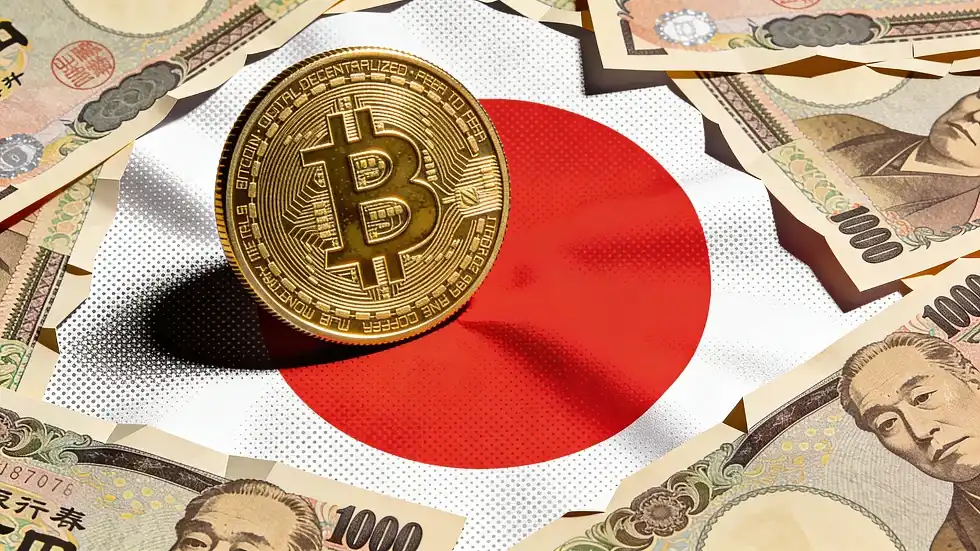
Why Is the World Nervous About Japan Raising Interest Rates?

In June 2026, the Bank of Japan raised its policy rate to 1%, marking its first hike to this level since 1995. While this rate remains low compared to global peers like the US and Europe, the move signals a profound shift for a nation that has been a global source of ultra-cheap funding for decades. Japan's long-standing near-zero or negative interest rates had facilitated massive "yen carry trades," where international investors borrowed low-cost yen to invest in higher-yielding assets worldwide, such as US tech stocks and emerging market bonds. This made Japan a critical, often overlooked, source of global liquidity. Japan's ultra-loose policy stemmed from structural challenges post-1990s asset bubble: aging demographics, chronic low inflation/deflation, and high public debt. Recent shifts, including sustained wage growth (exceeding 5% in recent years) and inflation consistently above the 2% target, have created a "wage-price spiral" possibility, prompting the policy normalization. The global market's concern lies not in the absolute rate but in the potential unwinding of the yen carry trade. As Japanese borrowing costs rise, the economics of these leveraged global investments change, potentially triggering deleveraging and capital outflows from risk assets. Market anxiety focuses on the end of a thirty-year consensus that Japan would perpetually provide cheap funding. Ultimately, the global impact will depend on the interplay with US monetary policy. While Japan is tightening, the significant interest rate differential with the US remains. The key future dynamic is whether simultaneous Japanese hikes and eventual US rate cuts will narrow this gap, forcing a major recalibration of global capital flows and asset pricing built on an era of abundant, cheap yen liquidity.

marsbitHá 57m

Why Is the World Nervous About Japan Raising Interest Rates?

marsbitHá 57m

Research Report Analysis: MRVL's Optical AI Booming, Why High Valuation Keeps Morgan Stanley's Star Analyst Sidelined?

Report Recap: MRVL Optical AI Boom - Why High Valuation Led Morgan Stanley's Star Analyst to Stay Neutral? Morgan Stanley analyst Joseph Moore maintained an "Equal-weight" (Neutral) rating on Marvell Technology (MRVL) on May 28, raising the price target from $172 to $195, below the trading price. This stance comes despite Marvell reporting a record quarter and significantly raising its full-year outlook (FY27 revenue ~$11.5B, up ~40%). Moore's neutral view is based on valuation. The $195 target implies ~40x CY2027 P/E. He contrasts MRVL with NVDA: both trade near ~$200, but Nvidia's forward EPS is more than double Marvell's. For MRVL's valuation to hold, it needs consistent earnings upgrades, proof of networking market share gains, or certainty on large-scale custom AI chip shipments—none of which are confirmed yet. Growth is driven by two pillars: **1) Optical Interconnect** (the faster runner): Moore raised FY27 growth expectations to >70%, with the optical module product line nearing a $1B annualized run rate. **2) Custom AI Chips** (the climber): Confidence in FY28 is growing, but a major new customer project only ramps in FY28, with no current revenue visibility. Key risks are the underperforming Storage, Enterprise, and legacy Networking segments. Moore acknowledges the real AI opportunity but believes the current price already reflects it. For the stock to work from here, investors need to see the optical business hit its targets, custom chips ramp as planned, and a recovery in the weaker business units.

marsbitHá 2h

Research Report Analysis: MRVL's Optical AI Booming, Why High Valuation Keeps Morgan Stanley's Star Analyst Sidelined?

marsbitHá 2h

qinbaFrank: Review and Outlook of the AI Computing Power Wave — From the Three Debates on NVIDIA to Optical Interconnect and SpaceX IPO, How is Capital Rotating?

**Summary: Retrospective and Outlook on the AI Computing Wave - A Framework for Capital Rotation** Based on a presentation by investor qinbaFrank, this analysis reviews the AI computing market trajectory since 2023 and outlines a forward-looking framework. **Key Phases and Market Debates:** The AI bull market progressed through three major debates: 1) The necessity of massive capital expenditure (late 2023). 2) The sustainability of tech giants' spending (early 2024-early 2025). 3) Potential overestimation of compute needs (early 2025). Consensus solidified in late 2025 as model capabilities and utility demonstrably improved. **Core Thesis: Penetration Rate Drives Commercialization.** Unlike the 2000 dot-com bubble, the current AI wave benefits from mature digital infrastructure, enabling faster adoption. The critical threshold is 10% penetration; surpassing it (with recent enterprise intent surveys showing ~18%) indicates entry into a rapid growth "golden period" where user scale and willingness to pay increase simultaneously. **AI vs. Internet: A Fundamental Difference.** While the internet enhanced connection efficiency, AI directly substitutes human cognition and labor. Once AI performance exceeds the "societal average" human level, its commercial value scales exponentially as payment shifts from human labor costs to AI service fees. **Investment Logic Evolution in the Compute Chain.** The focus has expanded from GPUs to a systemic re-rating of the entire hardware stack: storage/HBM, CPUs, interconnects, power, and advanced packaging. The framework is: **short-term "scarcity pricing," mid-term "upgrade pricing" (e.g., optical interconnects, power networks), and long-term "Physical AI" pricing** (edge computing, robotics). **Market Focus Shift and Adjustment Framework.** The market is transitioning from "hardware scarcity" to "commercialization validation." The ultimate anchor for the narrative is sustained high growth in model providers' Annual Recurring Revenue (ARR) and cloud business revenue, which justifies continued capital expenditure. Adjustments are categorized into three levels: * **L1 (Minor):** Driven by valuation compression or macro noise (e.g., single CPI print). Fundamentals intact. * **L2 (Moderate):** Triggered by significant macro events requiring risk repricing. Requires new data for confidence restoration. * **L3 (Major):** Involves a reset of the core industrial narrative or macro regime (e.g., AI commercialization growth stalling). The **crucial dividing line** is whether AI commercialization growth slows. Without a slowdown, pullbacks are likely L1/L2 "repricing" events. A genuine growth deceleration would signal an L2/L3 narrative reset. **Conclusion: A Foundational Civilizational Leap.** AI represents a foundational upgrade to "intelligence" itself—akin to humanity mastering fire—rather than a single-point industrial revolution. This底层能力跃迁 (underlying capability leap) will spawn successive waves of innovation (Agent, robotics, industry workflow重构). The journey will be波浪式的 (wavelike), driven by cycles of scarcity, technological upgrades, and远期兑现 (long-term realization).

marsbitHá 2h

qinbaFrank: Review and Outlook of the AI Computing Power Wave — From the Three Debates on NVIDIA to Optical Interconnect and SpaceX IPO, How is Capital Rotating?

marsbitHá 2h

A Country That Mined Bitcoin for 8 Years Has Built Its Own Dedicated Crypto Bank

A country that has been mining Bitcoin for eight years has established its own dedicated crypto bank. DK Bank, located in Bhutan's newly developed GMC special administrative zone, aims to fill the significant banking service gap for the cryptocurrency industry. Its CEO, Zheng YD, explained that most banks avoid crypto businesses due to a lack of risk management frameworks for decentralized and anonymous protocols. Operating under a unique "one country, two systems" governance model separate from mainland Bhutan, GMC aspires to become a financial hub for South Asia. DK Bank differentiates itself by offering integrated multi-currency accounts where users can manage both fiat currencies and stablecoins like USDT and USDC in one place, alongside services like Bitcoin-backed loans. The bank faces technical challenges in merging traditional banking systems with 24/7 crypto markets and implements rigorous on-chain and off-chain transaction monitoring for risk control. GMC's regulatory framework draws from Singaporean common law and Abu Dhabi's ADGM rules, offering a fast-track licensing process for already licensed firms while maintaining high standards. The initiative is part of Bhutan's longer-term crypto strategy, which includes Bitcoin mining since 2018. The focus, however, is on building a diversified institutional-grade crypto ecosystem—including custody and asset management—rather than retail speculative tokens. Proponents argue such sovereign crypto infrastructure is necessary, and Bhutan's early, measured approach exemplifies the thoughtful integration needed in global finance.

Foresight NewsHá 2h

A Country That Mined Bitcoin for 8 Years Has Built Its Own Dedicated Crypto Bank

Foresight NewsHá 2h

Trading

Spot
Futuros

Artigos em Destaque

Como comprar AAVE

Bem-vindo à HTX.com!Tornámos a compra de Aave Protocol (AAVE) simples e conveniente.Segue o nosso guia passo a passo para iniciar a tua jornada no mundo das criptos.Passo 1: cria a tua conta HTXUtiliza o teu e-mail ou número de telefone para te inscreveres numa conta gratuita na HTX.Desfruta de um processo de inscrição sem complicações e desbloqueia todas as funcionalidades.Obter a minha contaPasso 2: vai para Comprar Cripto e escolhe o teu método de pagamentoCartão de crédito/débito: usa o teu visa ou mastercard para comprar Aave Protocol (AAVE) instantaneamente.Saldo: usa os fundos da tua conta HTX para transacionar sem problemas.Terceiros: adicionamos métodos de pagamento populares, como Google Pay e Apple Pay, para aumentar a conveniência.P2P: transaciona diretamente com outros utilizadores na HTX.Mercado de balcão (OTC): oferecemos serviços personalizados e taxas de câmbio competitivas para os traders.Passo 3: armazena teu Aave Protocol (AAVE)Depois de comprar o teu Aave Protocol (AAVE), armazena-o na tua conta HTX.Alternativamente, podes enviá-lo para outro lugar através de transferência blockchain ou usá-lo para transacionar outras criptomoedas.Passo 4: transaciona Aave Protocol (AAVE)Transaciona facilmente Aave Protocol (AAVE) no mercado à vista da HTX.Acede simplesmente à tua conta, seleciona o teu par de trading, executa as tuas transações e monitoriza em tempo real.Oferecemos uma experiência de fácil utilização tanto para principiantes como para traders experientes.

420 Visualizações TotaisPublicado em {updateTime}Atualizado em 2026.06.02

Como comprar AAVE

Discussões

Bem-vindo à Comunidade HTX. Aqui, pode manter-se informado sobre os mais recentes desenvolvimentos da plataforma e obter acesso a análises profissionais de mercado. As opiniões dos utilizadores sobre o preço de AAVE (AAVE) são apresentadas abaixo.

活动图片