FCA тестирует шаблоны раскрытия информации о криптовалютах в рамках подготовки нового регулирования

cryptonews.ruPublicado em 2025-11-17Última atualização em 2025-11-26

Управление по финансовому регулированию и надзору Британии (FCA) одобрило компанию Eunice, специализирующуюся на регулятивных технологиях (RegTech), для проведения экспериментов в своей регулятивной «песочнице». Это одно из наиболее явных свидетельств того, как страна планирует выстраивать предстоящее регулирование криптосектора.

В среду FCA объявило, что Eunice протестирует набор стандартизированных шаблонов раскрытия информации о криптовалютах на крупных биржах, включая Coinbase, Crypto.com и Kraken. Компания проверит, повышают ли шаблоны прозрачность при использовании в реальных условиях.

FCA также отметило, что ее регулятивная «песочница» по‑прежнему принимает заявки от компаний, желающих протестировать свои идеи.

«Мы призываем любые компании подать заявку, если они хотят испытать аналогичное решение, которое поможет сформировать наш регулятивный подход к криптоактивам», — заявил Колин Пейн, руководитель направления инноваций в FCA.

Тестируя инструменты, разработанные отраслью, а не опираясь на теоретическую политику, FCA дает понять: будущие правила регулирования криптовалют будут формироваться на основе практических испытаний и обратной связи из реального мира.

Британия стремится повысить стандарты прозрачности в криптосекторе

Сооснователь и генеральный директор Eunice И Луо заявила, что «песочница» создает пространство, где регуляторы и участники отрасли могут совместно укреплять основы крипторынков Британии.

Она отметила, что проект направлен на повышение добросовестности и прозрачности в криптосекторе в период роста институционального участия.

«Для Eunice большая честь возглавить работу над раскрытием информации. Компания была создана для того, чтобы привнести добросовестность и прозрачность в сферу цифровых активов в период, когда в нее приходят институциональные игроки», — сказала она.

Пилотный проект также напрямую связан с более широкой регулятивной повесткой FCA. По данным регулятора, шаблоны раскрытия информации были созданы в ответ на дискуссионный документ прошлого года о допуске и раскрытии информации, который призывал отрасль внести технический вклад и сформировать первоначальные представления о будущих правилах.

Дорожная карта FCA для криптосектора

Испытание в «песочнице» Eunice соответствует более масштабным регулятивным усилиям и дополняет многолетнюю «Дорожную карту» FCA по криптосектору. Ожидается, что она завершится публикацией окончательных правил регулирования криптовалют в Британии в 2026 году.
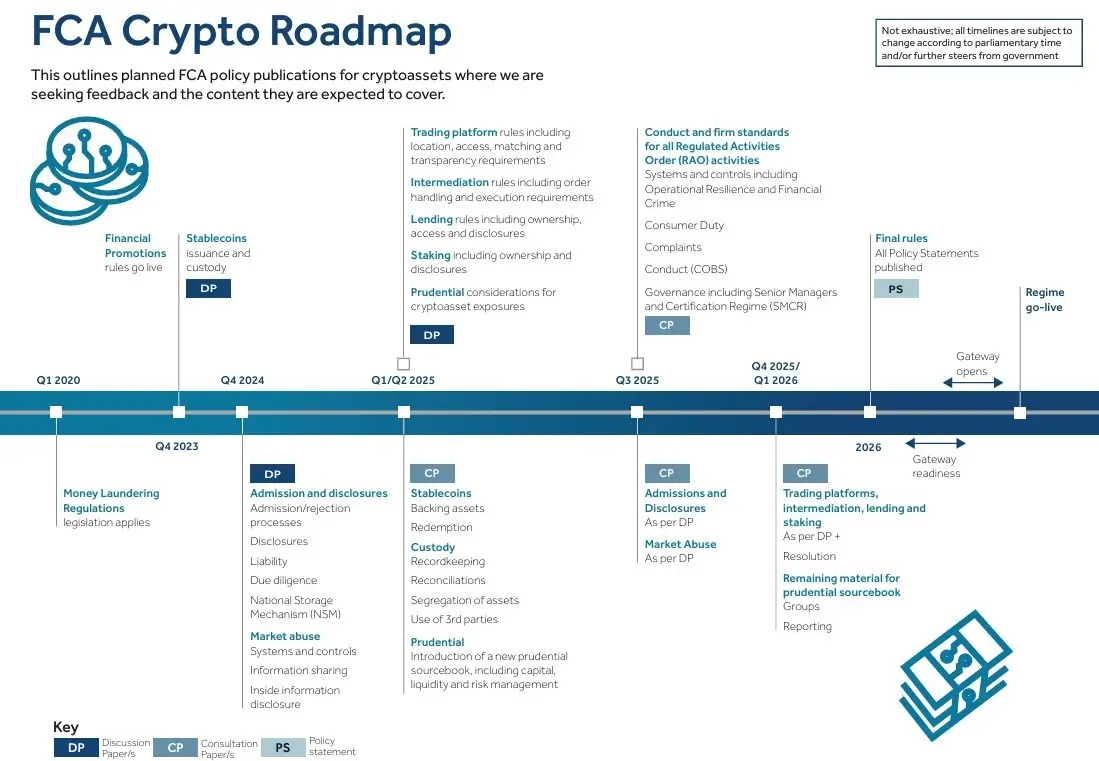

Дорожная карта FCA по криптосектору. Источник: FCA

За последний год Британия внедрила ряд регулятивных изменений, направленных на обеспечение ясности для криптосектора.

FCA ужесточило правила продвижения финансовых услуг для криптокомпаний, вынесло предупреждения нелицензированным криптобиржам, работающим в стране, и опубликовало всеобъемлющий дискуссионный документ о допуске, раскрытии информации и рисках злоупотребления рынком в отношении криптоактивов.

В последнее время регулятор предпринял шаги, сигнализирующие о более поддерживающем подходе к криптосектору. 1 августа FCA отменило запрет на биржевые ноты, связанные с криптовалютами (ETN), для розничных инвесторов. Это позволило британским потребителям работать с продуктами ETN на основе криптовалют.

17 сентября FCA начало консультации о том, следует ли применять к криптосектору традиционное финансовое правило «Обязанность перед потребителем» (Consumer Duty). Это правило требует от компаний обеспечивать хорошие результаты для потребителей.


Leituras Relacionadas

Will History Repeat Itself? Fidelity Lists Five Catalysts to End the Crypto Winter

Fidelity's new report suggests that the current crypto winter for Bitcoin may be nearing its end, identifying five potential catalysts that could drive a market turnaround based on historical patterns. First, Bitcoin's approximately four-year cycle, driven by its halving mechanism, historically marks peaks and troughs. The last bottom was in November 2022, potentially pointing to the next around November 2026, though cycle length can vary. Second, clearer regulation has often preceded past bull markets. The focus is now on the CLARITY Act, which aims to clarify US digital asset oversight between the SEC and CFTC. Its passage could unlock domestic activity currently held back by legal uncertainty. Third, Federal Reserve monetary policy plays a role. A shift to lower interest rates tends to correlate with rising crypto prices by reducing borrowing costs and boosting risk appetite, though markets may price this in well ahead of any official change. Fourth, the emergence of breakthrough applications can fuel investor interest. Current trends like real-world asset tokenization, AI-related crypto infrastructure, and stablecoins are being watched, but history shows the biggest catalysts are often unexpected. Fifth, a new wave of institutional adoption could be a trigger. While ongoing adoption in 2026 hasn't sparked a new bull run, a major unexpected move—like a significant purchase by a tech giant or adoption as a hedge in a global crisis—could create a powerful new narrative. Fidelity concludes that while the market is in a downturn, historical turning points have often resulted from a combination of such factors, and the next phase for Bitcoin may depend on which of these catalysts materializes first.

Foresight NewsHá 2m

Will History Repeat Itself? Fidelity Lists Five Catalysts to End the Crypto Winter

Foresight NewsHá 2m

US CFTC Launches Broad Investigation into Polymarket, Is the Prediction Market Party Coming to an End?

The U.S. Commodity Futures Trading Commission (CFTC) is conducting a broad investigation into the prediction market platform Polymarket, focusing on its business practices including social media promotions. This follows a bipartisan letter from U.S. senators urging the CFTC to probe alleged fraudulent marketing tactics used to promote gambling-like products. The action coincides with a period of explosive growth for the prediction market sector, driven by events like the World Cup, with platforms like Kalshi and Robinhood reporting record trading volumes and revenue. The investigation signals a potential end to the sector's unregulated expansion and may lead to clearer federal oversight, particularly regarding investor protection and distinguishing prediction markets from traditional sports betting. The CFTC's move has also intensified a jurisdictional conflict with multiple U.S. states (including Kentucky and New York), which have sued platforms like Polymarket and Kalshi, accusing them of operating illegal sports betting and threatening state gambling tax revenues. Furthermore, the CME Group has sued the CFTC, challenging its approval of certain prediction market products. The report also highlights the political and capital interests intertwined with the industry. Donald Trump Jr. holds advisory and investment roles in both Kalshi and Polymarket, and the Trump administration has previously emphasized federal regulatory authority over these markets. The CFTC's investigation into Polymarket is framed as a step towards formalizing the industry's regulatory landscape, moving it from a phase of "wild growth" towards a more structured future.

marsbitHá 2h

US CFTC Launches Broad Investigation into Polymarket, Is the Prediction Market Party Coming to an End?

marsbitHá 2h

U.S. CFTC Launches Extensive Investigation into Polymarket, Is the Prediction Market Frenzy Season Cooling Down?

The U.S. Commodity Futures Trading Commission (CFTC) has launched a broad investigation into the prediction market platform Polymarket, focusing on its business practices including social media activities. This follows a bipartisan letter from U.S. senators urging the CFTC to probe allegations of paid influencer false marketing and fraudulent promotion of gambling-like products to American users. The investigation comes as the prediction market sector experiences explosive growth, largely driven by the World Cup. Weekly trading volumes have hit record highs, exceeding $14.4 billion, with platforms like Kalshi and Robinhood's new venture seeing significant activity. Major firms like Meta are also showing interest in the space. This regulatory scrutiny signals a potential end to the sector's "wild growth" phase. The CFTC's move also highlights an escalating jurisdictional conflict between federal regulators and state authorities. Over a dozen states, including Kentucky and New York, have sued platforms like Polymarket and Kalshi, accusing them of operating illegal sports betting, which threatens state gambling tax revenues. The CFTC is countersuing to assert its exclusive federal jurisdiction over these "event contracts" as derivatives. Furthermore, the CFTC's approval of Kalshi's Bitcoin perpetual futures contract has sparked a lawsuit from traditional exchange CME, alleging regulatory overreach. The political and capital landscape is intricate, with Donald Trump Jr. holding advisory roles and investments in both Kalshi and Polymarket. This connects capital, political influence, and regulatory bodies, suggesting the current investigation may be a step toward formalizing the industry's rules rather than halting its progress.

Odaily星球日报Há 2h

U.S. CFTC Launches Extensive Investigation into Polymarket, Is the Prediction Market Frenzy Season Cooling Down?

Odaily星球日报Há 2h

Trading

Spot
活动图片