Эрик Трамп постарался опровергнуть связь World Liberty Financial с Россией и Северной Кореей

cryptonews.ruPublicado em 2025-01-23Última atualização em 2025-11-24

Сын президента США Эрик Трамп постарался опровергнуть обвинения, выдвинутые группой сенаторов-демократов в отношении кредитной платформы World Liberty Financial о продаже токенов WLFI лицам, связанным с Россией, Северной Кореей и подсанкционными компаниями.

Эрик Трамп назвал смехотворными подозрения сенаторов Элизабет Уоррен (Elizabeth Warren) и Джека Рида (Jack Reed), будто через платформу World Liberty Financial пользователи могут отмывать деньги, а токены WLFI продаются недружественным странам. По его словам, платформа знает своих клиентов — каждый человек, покупающий на ней токены, проверен. Бизнесмен раскритиковал Уоррен, заявив, что она уже несколько лет преследует его семью и обвиняет его в государственной измене.

«Я никак не связан с администрацией США. Я не вмешиваюсь в политику. Я управляю компаниями. Мой отец, вернувшийся в Белый дом, не имеет никакого отношения к криптовалютам или семейным проектам», — заявил Эрик Трамп.

На вопрос, что он думает о падении биткоина до $80 000, Эрик Трамп ответил, что сейчас самое время покупать монеты. Два года назад биткоин стоил $36 500, три года назад — $16 000, а недавно он торговался на отметке $91 000. По мнению бизнесмена, ни один другой актив не может похвастаться подобными результатами.

Исполнительный вице-президент Trump Organization отметил, что все больше крупных компаний, такие как Fidelity, BlackRock и Coinbase, добавляют биткоин на свои балансы. Это делают даже государства, в частности, Сальвадор, который легализовал биткоин как платежное средство еще в сентябре 2021 года.

Эрик Трамп назвал одним из главных преимуществ криптовалюты возможность переводить деньги в любое время.

«Почему нельзя отправить денежный перевод в пятницу после 17:00? Это несправедливо, это не финансовая свобода. А с криптовалютой я могу перевести деньги в субботу с телефона за бокалом вина», — сказал сын президента.

Он также похвалил возможности токенизации, признав, что она расширит доступ к сфере искусства, музыки, недвижимости и нефтяной отрасли, позволяя обойтись без посреднических услуг брокеров и других третьих лиц. По словам Эрика Трампа, блокчейн заменяет все, что раньше контролировали банки.

Недавно Эрик Трамп рассказал, что его майнинговая компания American Bitcoin заняла 25 место в США по объему накопленной первой криптовалюты среди публичных компаний, и назвал биткоин лучшей защитой от растущей инфляции.
Leituras Relacionadas

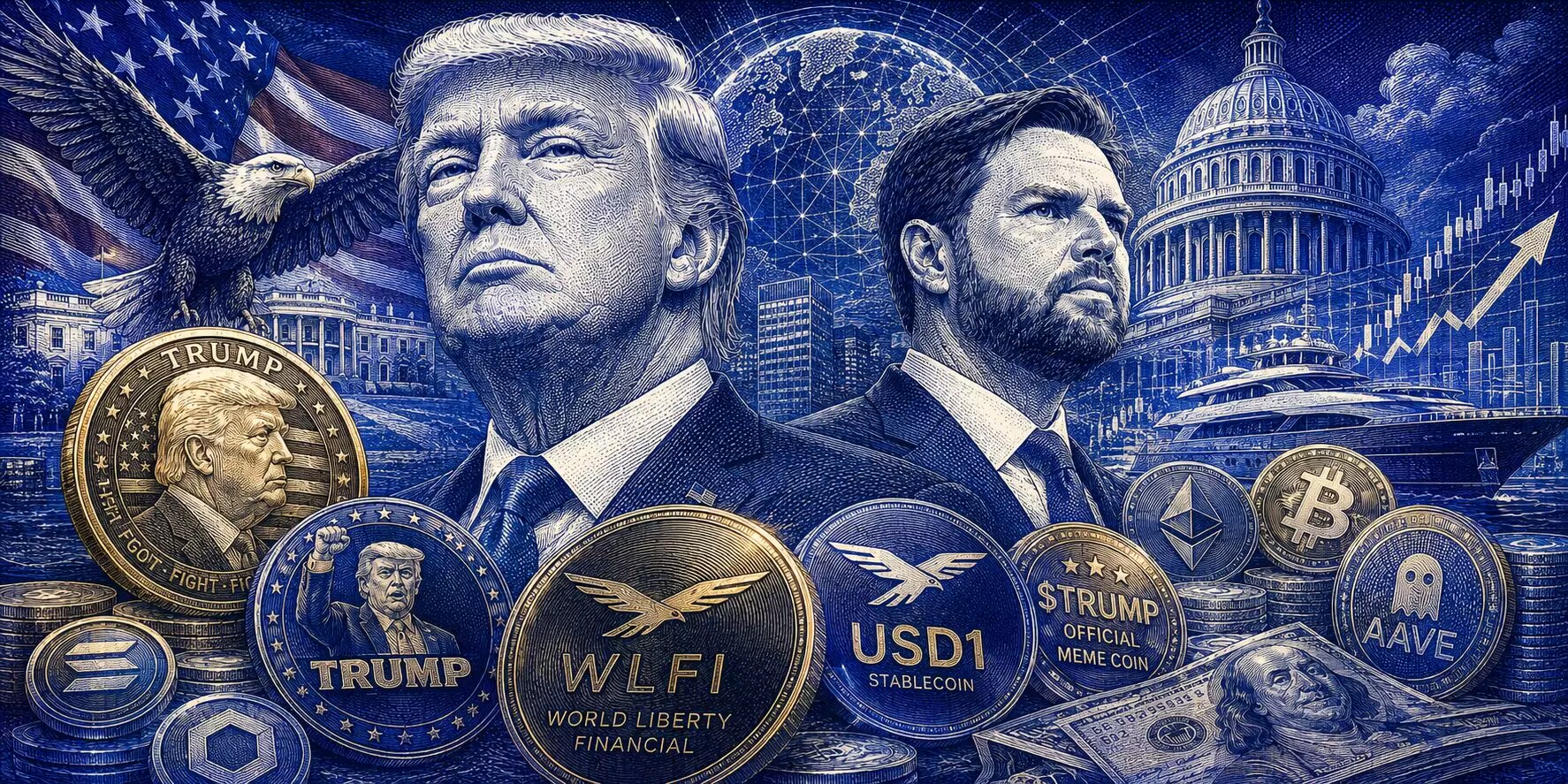
Trump's 25-Year Financial Report: Family Earns Over $1 Billion Annually from Crypto, While Retail Investors Lose Money on $TRUMP

Former President Donald Trump's family earned approximately $1.2 billion from cryptocurrency ventures in 2025, according to a financial disclosure report. This revenue stream, outlined in a 927-page filing, now surpasses income from most of his long-established real estate holdings. The crypto earnings originated from two main sources: over $500 million from the sale of products like "governance tokens" by World Liberty Financial, a DeFi project co-owned by the Trump family, and roughly $635 million in royalties from the Trump-themed meme coin $TRUMP, issued by CIC Digital LLC. While Trump's entities profited, retail investors faced significant losses. The $TRUMP token, which peaked above $74 shortly after its January 2025 launch, has plummeted to around $1.68. World Liberty Financial's token has also fallen roughly 80% since its debut. Reports indicate that the majority of meme coin buyers have lost money, with Trump-linked entities still holding about 80% of $TRUMP's supply under vesting plans. The disclosure highlights a stark contrast: Trump's crypto and real estate businesses flourished—with new international property deals bringing in tens of millions—even as his administration shifted to crypto-friendly policies, relaxing the stringent regulatory stance of the previous Biden administration. The White House maintains that Trump acts only in the public interest, with his businesses placed in a trust managed by his sons, denying any conflict of interest. However, the report notes the difficulty of assessing such conflicts, particularly regarding foreign business dealings with countries that later received favorable U.S. policy decisions.

marsbitHá 6m

Trump's 25-Year Financial Report: Family Earns Over $1 Billion Annually from Crypto, While Retail Investors Lose Money on $TRUMP

marsbitHá 6m

From 'Address Clustering' to 'Evidence Standards': Why is Chainalysis Redefining Blockchain Tracing?

**Summary:** In June 2026, Chainalysis introduced the **Blockchain Tracing Ontology (BTO)**, a proposed data framework aiming to establish standardized, transparent, and verifiable models for blockchain analysis. This initiative addresses a core industry issue: despite public blockchain data, different firms often produce inconsistent results (e.g., differing entity labels for the same address) due to non-uniform methodologies, particularly in **address clustering**. This lack of standardization poses challenges for judicial investigations, AML, and enforcement. The BTO is not a new clustering algorithm but a **common "language" or conceptual framework**. It moves beyond the simplistic "cluster" model by introducing a hierarchical structure: **Entity → Wallet → Wallet Segment → Address**, which better reflects complex organizational wallet management. A key shift is from presenting mere results to ensuring **process trust and explainability**. The framework emphasizes documenting the **Evidence** and **Confidence** behind each analytical claim—specifying the on-chain/off-chain data, rules applied, and certainty levels—enabling third-party verification. This focus is partly informed by legal precedents like the **Bitcoin Fog** case, where Chainalysis's methods underwent rigorous judicial scrutiny (Daubert hearing), highlighting the need for reproducible, scientifically sound analysis. The proposal clarifies that on-chain analysis identifies address relationships and flow patterns, not real-world identities, which still require off-chain evidence (e.g., KYC data). Ultimately, Chainalysis envisions steering the industry from an "experience-driven" to a **"standards-driven"** future, where competition centers on **data quality, analytical transparency, and judicial admissibility** rather than just label coverage. Widespread adoption could facilitate cross-agency collaboration, reduce disputes, and provide a more reliable foundation for global compliance and enforcement.

marsbitHá 33m

From 'Address Clustering' to 'Evidence Standards': Why is Chainalysis Redefining Blockchain Tracing?

marsbitHá 33m

The 'Conference Circuit' for the Second Half of the Year Begins! A Complete Overview of the 2026 Web3 Global Summit Schedule

"Web3 Global Summit Calendar for the Second Half of 2026" provides a comprehensive list of major Web3 and blockchain conferences worldwide, focusing on events from July to December 2026. The schedule starts in July with IVS in Kyoto, WebX in Tokyo, Canada Crypto Week in Toronto, and Malaysia Blockchain Week in Kuala Lumpur. August features Conviction in Ho Chi Minh City, Coinfest Asia in Bali, and Bitcoin Hong Kong. September is the most intense month, with notable events like NFT NYC in New York, ETHRome in Rome, Money20/20 in Saudi Arabia, European Blockchain Convention in Barcelona, and Korea Blockchain Week in Seoul. The fourth quarter begins with the significant TOKEN2049 Singapore in October, which will be the sole TOKEN2049 event of the year following the cancellation of the Dubai edition. November includes Devcon 8 and Bitcoin Amsterdam in Amsterdam, Digital Asset Summit and Solana Breakpoint in London. The year concludes in December with Blockchain Life in Dubai and Bitcoin MENA in Abu Dhabi. The article also lists key events from the first half of the year (January to June, marked as concluded) for reference, including Consensus Hong Kong, ETHDenver, and Paris Blockchain Week. The guide serves as a resource for planning attendance at these industry gatherings across Asia, Europe, North America, and the Middle East.

Foresight NewsHá 43m

The 'Conference Circuit' for the Second Half of the Year Begins! A Complete Overview of the 2026 Web3 Global Summit Schedule

Foresight NewsHá 43m

Video Edition Nano Banana Arrives: Built-in Gemini World Knowledge, Original Banana Generates Images in Just 4 Seconds

Google has unveiled two new multimodal AI models: Gemini Omni Flash and Nano Banana 2 Lite. Gemini Omni Flash is a video generation and editing model that leverages Gemini's world knowledge. It allows for conversational video editing using natural language prompts, maintains scene consistency, and integrates text/graphics with video actions. Priced at $0.10 per second of output, its current limitations include a 10-second video cap. Nano Banana 2 Lite (gemini-3.1-flash-lite-image) is an optimized image generation model focused on speed and cost. It produces a 1K resolution image in about 4 seconds at a cost of roughly $0.034, making it significantly faster and cheaper than its predecessor. It retains strong text rendering capabilities. A key highlight is the combined workflow: users can rapidly generate images with Nano Banana 2 Lite and then seamlessly feed them into Gemini Omni Flash to create videos. Google demonstrated this with three application demos: "Anywhere" for creating travel videos from photos, "Space Lift" for generating interior design walkthroughs, and "Omni Product Studio" for automating e-commerce ad creation from product photos. The release underscores Google's strategic focus on advancing multimodal AI for practical, commercial applications in areas like marketing, design, and content creation, despite competitive pressures in other AI domains.

marsbitHá 51m

Video Edition Nano Banana Arrives: Built-in Gemini World Knowledge, Original Banana Generates Images in Just 4 Seconds

marsbitHá 51m

Trading

Spot
活动图片