Over 65 Crypto Firms Unite In Letter To Trump: Lead Or Fall Behind

bitcoinistPublicado em 2025-11-22Última atualização em 2025-11-22

Resumo

According to reports, more than 65 crypto firms and advocacy groups have sent a joint letter to US President Donald...

Trusted Editorial content, reviewed by leading industry experts and seasoned editors. Ad Disclosure

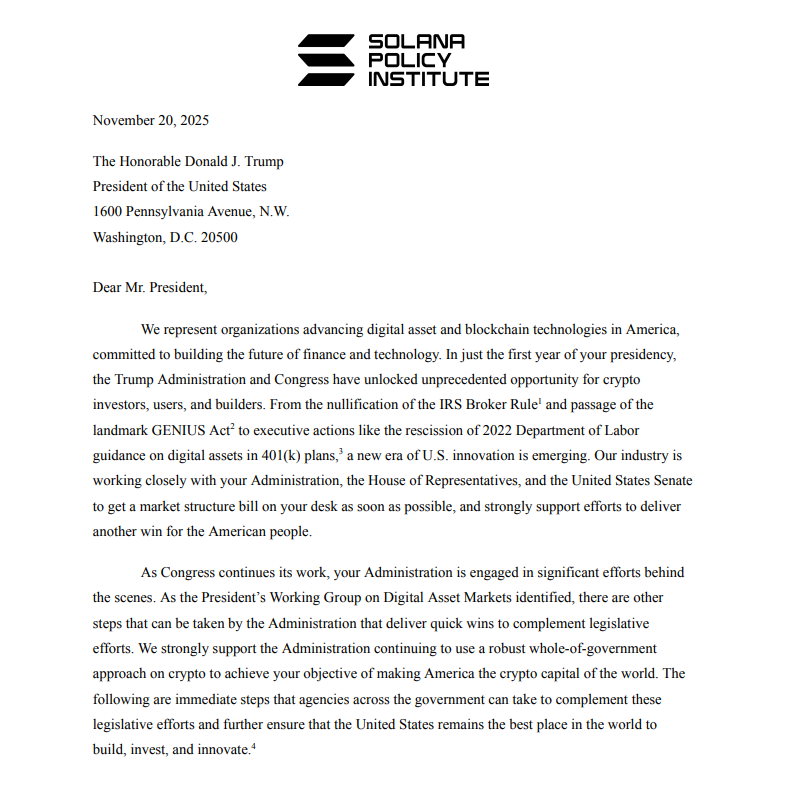
According to reports, more than 65 crypto firms and advocacy groups have sent a joint letter to US President Donald Trump urging immediate action to clarify tax and regulatory rules for digital assets.

The groups said agencies can move now to protect US innovation without waiting for Congress, and they laid out a set of specific fixes they want applied quickly.

The letter was signed by some of the biggest names in the blockchain and crypto industry, including Coinbase, Uniswap Labs, Exodus, Pantera, the Blockchain Association, the Solana Foundation, and the Solana Policy Institute, which helped lead the effort.

Reports also say other groups such as Block, Paradigm, Multicoin Capital, and the Crypto Council for Innovation joined the call for immediate action.

Tax Rules And Developer Protections

The letter asks for clearer tax treatment for everyday crypto activity, including a call to treat staking and mining rewards as self-created property that would be taxed only when sold or converted, not when received.

The groups also proposed a “de minimis” carve-out — an example figure mentioned in coverage was $600 — to avoid taxing tiny transfers that users don’t think of as taxable events.

The signers want rules that say routine operations like bridges, forks, airdrops, collateral moves, and liquidations should not automatically trigger tax events.
Regulators Urged To Move First

Industry leaders told the White House that agencies such as the SEC, CFTC, Treasury and DOJ can grant interim guidance, “no-action” letters, or exemptive relief to give builders room to work.

Reports say the groups pressed for targeted safe harbors and regulatory sandboxes to protect developers who publish open source code and to support self-custody options for everyday users. The push is framed as a short-term administrative fix while longer rulemaking proceeds.

BTCUSD trading at $85,298 on the 24-hour chart: TradingView

A Call Over A High-Profile Case

The coalition also asked the administration to urge the Department of Justice to drop or reconsider charges against Roman Storm, the developer tied to Tornado Cash, arguing that his work should be treated as publishing software rather than a criminal act.

That request reflects broader industry concern about cases that, they say, blur the line between building code and committing a crime.

Where This Fits In The White House Agenda

The letter lands in the context of an executive push on crypto that began with an order signed on January 23, 2025, which set up a Presidential Working Group on Digital Asset Markets to coordinate a whole-of-government approach.

The industry frames the new letter as a practical follow-up: these are steps agencies could take now to make the rules clearer while the working group’s longer reports and proposals move forward.

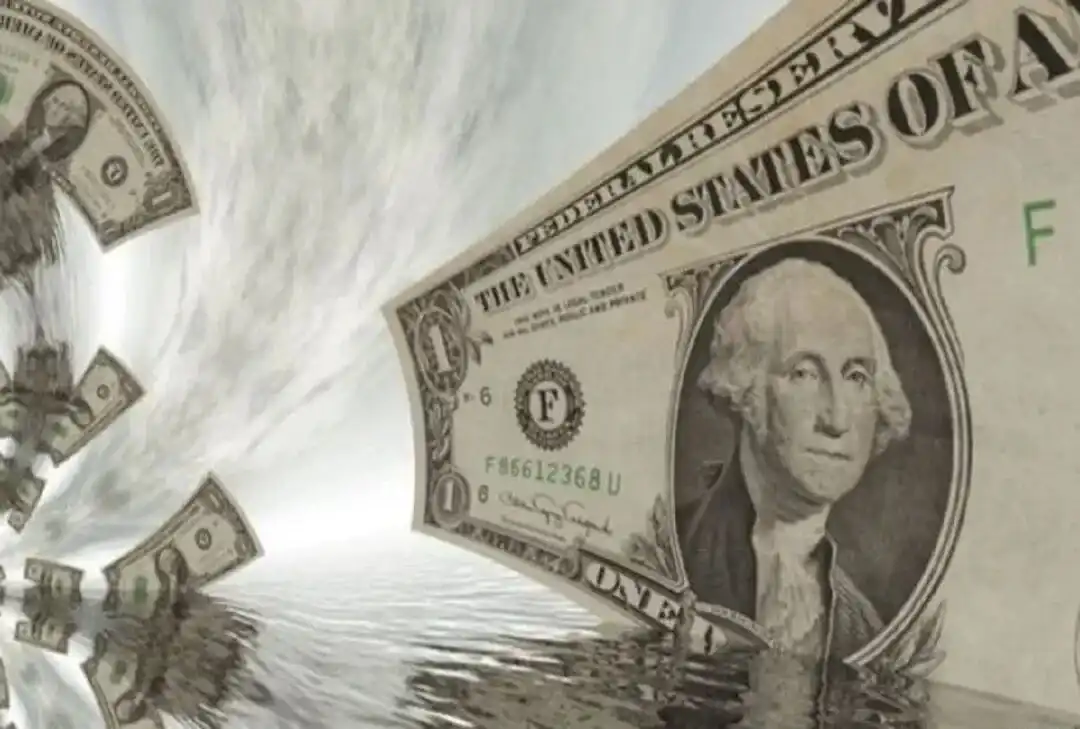
Featured image from CP Image/Policy Options, chart from TradingView

Editorial Process for bitcoinist is centered on delivering thoroughly researched, accurate, and unbiased content. We uphold strict sourcing standards, and each page undergoes diligent review by our team of top technology experts and seasoned editors. This process ensures the integrity, relevance, and value of our content for our readers.

Christian, a journalist and editor with leadership roles in Philippine and Canadian media, is fueled by his love for writing and cryptocurrency. Off-screen, he's a cook and cinephile who's constantly intrigued by the size of the universe.

Leituras Relacionadas

IPO Imminent, OpenAI Faces Major Personnel Upheaval

OpenAI, preparing for a potential IPO, is experiencing significant leadership turmoil. In mid-August 2026, longtime "GPU geek" Scott Gray quietly left, and within three days, Chief Operating Officer Brad Lightcap (8-year veteran) and Chief Revenue Officer Denise Dresser (8-month tenure) departed. This follows a broader exodus of at least 10 senior executives in 2026, including heads of product, safety, and ethics. Analysts view this as a strategic "surgery" to transform from a research lab into a sales-driven enterprise company before going public. Revenue now tilts toward enterprise clients, surpassing consumer income sooner than expected, with annualized revenue reaching $40 billion. The new CRO, Dali Rajic, is a veteran enterprise sales leader. Concurrently, OpenAI has disbanded independent safety teams like "Preparedness," which assessed catastrophic risks, integrating their functions into core research. Critics warn this removes dedicated "brakes" on AI development. The leadership vacuum raises questions about who is the clear second-in-command after former apps CEO Fidji Simo moved to an advisory role. Co-founder Greg Brockman appears to be consolidating power. As OpenAI races against rival Anthropic ($47B annualized revenue), it faces the dual challenge of commercial execution while managing the departure of foundational technical talent and ensuring responsible AI development remains a priority.

marsbitHá 1h

IPO Imminent, OpenAI Faces Major Personnel Upheaval

marsbitHá 1h

AI Can 'Have Moods Too'! New Research from USTC: Confusion and Anxiety Make AI Work Better

The article discusses research from the University of Science and Technology of China and Oxford, revealing that allowing AI to recognize and act upon simulated "internal emotions" can significantly improve its performance. The study demonstrates a coherent pairing between specific emotional states in AI agents and their subsequent skill choices. For instance, an agent feeling curious and desirous will search for products, while one feeling confused and tense will rephrase queries. This mirrors human decision-making influenced by emotions. Statistical validation showed a 76.5% semantic consistency in these pairings. Crucially, the research challenges the traditional view of AI errors as flaws to be eliminated. It found that "bad" emotions like confusion, tension, or frustration serve as useful metacognitive signals, indicating a mismatch between the current strategy and the environment. By responding to these signals, AI can proactively adjust before a failure occurs. This is particularly effective in complex tasks prone to failure. For example, in tasks like "heating an item" and "picking up two items," success rates surged from 9.6% to 56.9% and 4.4% to 31.3%, respectively, when using the emotion-driven skill selection method (EMOTION2SKILL). The AI's "nervous" state about a closed microwave, for instance, prompted it to check and open it first, preventing failure. The article also mentions related work from Tianjin University, which embeds emotional prediction into world models (Large Emotional World Model, LEWM), significantly improving prediction accuracy in human-centric environments. Removing emotional data was found to degrade performance even in unrelated logical reasoning tasks. These studies build on earlier findings, like those from Anthropic, that identifiable emotional representations exist within large language models (LLMs). The focus is shifting from philosophical debate about AI emotion to practically harnessing these internal states as functional signals to enhance AI robustness and capability.

marsbitHá 2h

AI Can 'Have Moods Too'! New Research from USTC: Confusion and Anxiety Make AI Work Better

marsbitHá 2h

Trading

Spot
活动图片