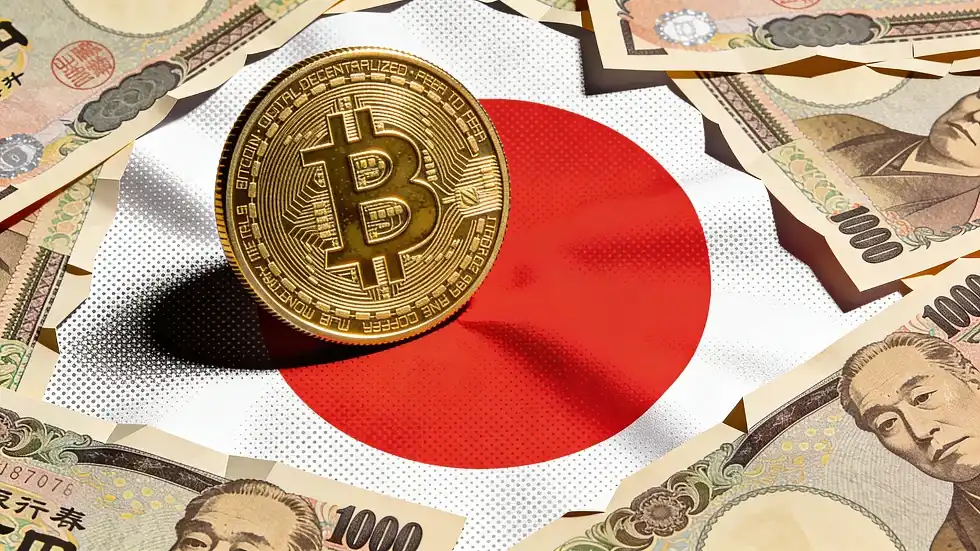
Bitcoin price approaches potential springboard to $23K as DXY cools surge

CointelegraphPublicado em 2022-07-06Última atualização em 2022-07-06

Resumo

With support and resistance inches from spot price, BTC/USD has increasingly little room to consolidate.

Bitcoin (BTC) approached the July 6 Wall Street open near $20,000 as a fresh battle between support and resistance loomed.

BTC/USD 1-hour candle chart (Bitstamp). Source: TradingView

Whale levels close by

Data from Cointelegraph Markets Pro and TradingView showed BTC/USD wedged in a tight trading range with liquidity creeping closer to spot on the day.

After recovering 6% losses from the day before, order book data confirmed that support and resistance was now almost shoulder-to-shoulder.

According to on-chain monitoring resource Whalemap, a cluster of whale positions between $20,546 and $21,327 meant that this large area was now the zone to beat.

Buyer interest, meanwhile, stayed at around $19,200, this also formed of whale bids which formed after BTC/USD dipped to multi-year lows of $17,600 in Q2.
“D1 close above 20.5k and maybe we’ll finally get D1 trend retest,” popular trader Pierre meanwhile tweeted in a fresh update.

“Warned few weeks ago this was setting up like May for a lot of chop while D1 trend would catch down with price. So far that’s exactly what we got, I’d just like a proper D1 trend retest, last one was at 32k…”

An accompanying chart showed moving averages between 10 days and 30 days keeping spot in check.

At $20,200 at the time of writing, BTC/USD thus traded immediately below an important line in the sand on lower timeframes. For Cointelegraph contributor Michaël van de Poppe, breaking through this could open up the path to the other side of resistance at $23,000.

Industry news meanwhile had little impact on BTC price action, this coming in the form of crypto exchange Voyager Digital filing for bankruptcy, the latest domino in a chain reaction sparked by the breakdown of lending platform Celsius.

USD takes a breather

On macro, Asian markets drifted lower, with Hong Kong’s Hang Seng down 1.2% and the Shanghai Composite Index down 1.4% at the time of writing.

The U.S. dollar index (DXY), fresh from a surge to new twenty-year highs, meanwhile consolidated immediately below the peak, still above 106.

"First time we're seeing such a recovery after a severe correction + strength on the $DXY," Van de Poppe added.

"Strength on the equities as well. Wouldn't be surprised if this continues in the coming period, despite the overall sentiment being ultra bearish."

U.S. dollar index (DXY) 1-month candle chart. Source: TradingView


Leituras Relacionadas

Why Is the World Nervous About Japan Raising Interest Rates?

In June 2026, the Bank of Japan raised its policy rate to 1%, marking its first hike to this level since 1995. While this rate remains low compared to global peers like the US and Europe, the move signals a profound shift for a nation that has been a global source of ultra-cheap funding for decades. Japan's long-standing near-zero or negative interest rates had facilitated massive "yen carry trades," where international investors borrowed low-cost yen to invest in higher-yielding assets worldwide, such as US tech stocks and emerging market bonds. This made Japan a critical, often overlooked, source of global liquidity. Japan's ultra-loose policy stemmed from structural challenges post-1990s asset bubble: aging demographics, chronic low inflation/deflation, and high public debt. Recent shifts, including sustained wage growth (exceeding 5% in recent years) and inflation consistently above the 2% target, have created a "wage-price spiral" possibility, prompting the policy normalization. The global market's concern lies not in the absolute rate but in the potential unwinding of the yen carry trade. As Japanese borrowing costs rise, the economics of these leveraged global investments change, potentially triggering deleveraging and capital outflows from risk assets. Market anxiety focuses on the end of a thirty-year consensus that Japan would perpetually provide cheap funding. Ultimately, the global impact will depend on the interplay with US monetary policy. While Japan is tightening, the significant interest rate differential with the US remains. The key future dynamic is whether simultaneous Japanese hikes and eventual US rate cuts will narrow this gap, forcing a major recalibration of global capital flows and asset pricing built on an era of abundant, cheap yen liquidity.

marsbitHá 2h

Why Is the World Nervous About Japan Raising Interest Rates?

marsbitHá 2h

Research Report Analysis: MRVL's Optical AI Booming, Why High Valuation Keeps Morgan Stanley's Star Analyst Sidelined?

Report Recap: MRVL Optical AI Boom - Why High Valuation Led Morgan Stanley's Star Analyst to Stay Neutral? Morgan Stanley analyst Joseph Moore maintained an "Equal-weight" (Neutral) rating on Marvell Technology (MRVL) on May 28, raising the price target from $172 to $195, below the trading price. This stance comes despite Marvell reporting a record quarter and significantly raising its full-year outlook (FY27 revenue ~$11.5B, up ~40%). Moore's neutral view is based on valuation. The $195 target implies ~40x CY2027 P/E. He contrasts MRVL with NVDA: both trade near ~$200, but Nvidia's forward EPS is more than double Marvell's. For MRVL's valuation to hold, it needs consistent earnings upgrades, proof of networking market share gains, or certainty on large-scale custom AI chip shipments—none of which are confirmed yet. Growth is driven by two pillars: **1) Optical Interconnect** (the faster runner): Moore raised FY27 growth expectations to >70%, with the optical module product line nearing a $1B annualized run rate. **2) Custom AI Chips** (the climber): Confidence in FY28 is growing, but a major new customer project only ramps in FY28, with no current revenue visibility. Key risks are the underperforming Storage, Enterprise, and legacy Networking segments. Moore acknowledges the real AI opportunity but believes the current price already reflects it. For the stock to work from here, investors need to see the optical business hit its targets, custom chips ramp as planned, and a recovery in the weaker business units.

marsbitHá 4h

Research Report Analysis: MRVL's Optical AI Booming, Why High Valuation Keeps Morgan Stanley's Star Analyst Sidelined?

marsbitHá 4h

Trading

Spot
Futuros
活动图片