Vitalik Buterin Flags Modexp as ZK Scaling Bottleneck

TheCryptoTimesPublicado em 2025-11-04Última atualização em 2025-11-04

Ethereum Co-Founder Vitalik Buterin has called out the network’s modular exponentiation (modexp) precompile as one of the biggest barriers to scaling Ethereum’s zero-knowledge (ZK) ecosystem.

In a recent X post, Buterin said modexp is “by far the worst offender” when it comes to ZK-EVM prover efficiency, estimating it can be up to 50 times more computationally complex than an average block.

He suggested that Ethereum should consider introducing a new Ethereum Improvement Proposal (EIP) to replace the modexp precompile with functionally equivalent EVM code, even if it would incur higher gas costs.

Legacy code holding back efficiency

Modexp is one of Ethereum’s early precompiled contracts. It was built to handle modular exponentiation, a key operation behind RSA encryption and digital signatures. Buterin argued that these cryptographic functions can now be handled more efficiently using SNARK-based systems, which are better suited for zero-knowledge proofs and modern scaling solutions.

Buterin, as the original creator of modexp, admitted that it has now become a burden on Ethereum’s progress. He said its inefficiency makes zero-knowledge proof generation far more expensive and complex, slowing the development of ZK-based scaling solutions such as ZK-rollups and ZK-EVMs. He also warned that the precompile’s intricate code path has exposed the protocol to unnecessary consensus risks over time.

Buterin said improving modexp would take “heroic efforts” for a feature that very few apps use. He thinks Ethereum should stop trying to optimize it and instead focus on removing or replacing it. 

The feature is used by only a small number of applications. Most of these, such as RSA verification or cross-chain bridges, could migrate to newer proof methods based on modern cryptography. 

Although no EIP has been drafted so far, the topic is likely to be discussed by the developers in future core developer calls and Ethereum Foundation updates. Should the change go through, it may prove a watershed moment in Ethereum’s development-the first meaningful step away from legacy cryptographic designs toward a future wholly optimized for zero-knowledge technology.

Rethinking Ethereum’s cryptography

Buterin’s criticism of modexp reflects his broader effort to make Ethereum’s cryptographic systems faster and easier to verify. He recently introduced the GKR protocol, a method to speed up complex mathematical checks in blockchain systems. He also called on developers to use clearer performance metrics for zero-knowledge and fully homomorphic encryption systems.

He also urged developers to use clearer performance metrics for zero-knowledge (ZK) and fully homomorphic encryption (FHE) systems. Instead of focusing on raw speed, he suggested measuring how much efficiency is lost when switching to cryptographic systems. 

Together, these ideas illustrate Buterin’s bigger ambition: to simplify the core of Ethereum and to make sure its security tools scale seamlessly with the growth of the network. His attention has increasingly turned to methods like SNARKs and ZK proofs, which promise stronger privacy and faster verification without a heavy computational load from older cryptography such as RSA.

Also Read: Ethereum Foundation Launches New Site for Institutions and TradFi


Mobile Only ImageMobile Only Image

Criptomoedas em alta

Leituras Relacionadas

Hefei 30 Billion for 1 Trillion: The First Year of Equity Finance, Who Can Copy This Assignment

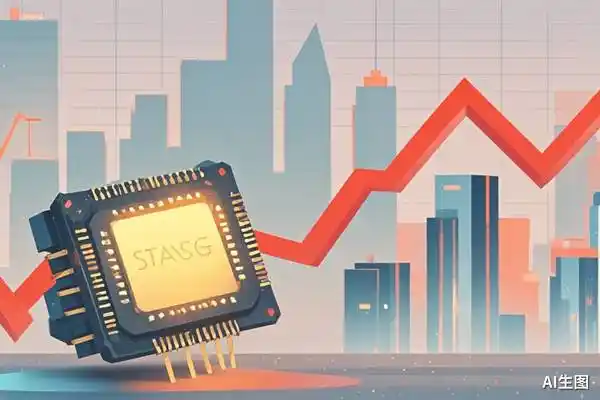
In July 2026, Hefei’s state-owned assets system reaped over 1 trillion RMB in floating gains from the IPO of ChangXin Memory—a return stemming from a cumulative investment of less than 30 billion RMB over the preceding decade. This marks a prominent case of China’s emerging “equity-based fiscal model,” where local governments act as long-term industrial investors rather than relying solely on land sales. The story traces back to 2016, when Zhu Yiming, founder of Gigadevice and later ChangXin, sought funding for a domestic DRAM chip project amid high risks and intense international competition. Hefei, despite its limited fiscal resources, committed to the venture. Over the next ten years, ChangXin accumulated over 36 billion RMB in losses, yet Hefei’s state capital persisted, providing continuous funding and “nanny-style” support while building a surrounding industrial cluster. This approach—now termed the “Hefei Model”—originated earlier with the city’s 2008 decision to pause subway construction to invest in BOE’s struggling LCD panel production line. That bet later spurred a display industry ecosystem in Anhui. Similarly, ChangXin’s eventual profitability in 2026, driven by AI-driven demand for memory chips, validated Hefei’s patience. The model reflects a strategic shift in Chinese local public finance: from land-revenue dependence to nurturing strategic industries through equity participation, leveraging state capital to attract private investment, and ultimately securing long-term fiscal and industrial benefits. However, replicating Hefei’s success is challenging. It requires exceptional political continuity across administrations, professionalized state-capital management teams, precise timing in catching industry cycles, and the resilience to endure prolonged losses without withdrawing—factors not easily copied through policy documents or study tours. Beyond the headline financial gains, Hefei’s deeper achievement lies in cultivating a robust semiconductor cluster, with over 450 upstream and downstream firms and a sevenfold increase in integrated circuit industry output from 2016 to 2025. While the equity-fiscal concept is spreading, the patience, expertise, and historical contingencies behind Hefei’s execution remain its distinctive, hard-to-replicate core.

marsbitHá 24m

Hefei 30 Billion for 1 Trillion: The First Year of Equity Finance, Who Can Copy This Assignment

marsbitHá 24m

Trading

Spot

Artigos em Destaque

Como comprar ZK

Bem-vindo à HTX.com!Tornámos a compra de ZKsync (ZK) simples e conveniente.Segue o nosso guia passo a passo para iniciar a tua jornada no mundo das criptos.Passo 1: cria a tua conta HTXUtiliza o teu e-mail ou número de telefone para te inscreveres numa conta gratuita na HTX.Desfruta de um processo de inscrição sem complicações e desbloqueia todas as funcionalidades.Obter a minha contaPasso 2: vai para Comprar Cripto e escolhe o teu método de pagamentoCartão de crédito/débito: usa o teu visa ou mastercard para comprar ZKsync (ZK) instantaneamente.Saldo: usa os fundos da tua conta HTX para transacionar sem problemas.Terceiros: adicionamos métodos de pagamento populares, como Google Pay e Apple Pay, para aumentar a conveniência.P2P: transaciona diretamente com outros utilizadores na HTX.Mercado de balcão (OTC): oferecemos serviços personalizados e taxas de câmbio competitivas para os traders.Passo 3: armazena teu ZKsync (ZK)Depois de comprar o teu ZKsync (ZK), armazena-o na tua conta HTX.Alternativamente, podes enviá-lo para outro lugar através de transferência blockchain ou usá-lo para transacionar outras criptomoedas.Passo 4: transaciona ZKsync (ZK)Transaciona facilmente ZKsync (ZK) no mercado à vista da HTX.Acede simplesmente à tua conta, seleciona o teu par de trading, executa as tuas transações e monitoriza em tempo real.Oferecemos uma experiência de fácil utilização tanto para principiantes como para traders experientes.

238 Visualizações TotaisPublicado em {updateTime}Atualizado em 2026.06.02

Como comprar ZK

Discussões

Bem-vindo à Comunidade HTX. Aqui, pode manter-se informado sobre os mais recentes desenvolvimentos da plataforma e obter acesso a análises profissionais de mercado. As opiniões dos utilizadores sobre o preço de ZK (ZK) são apresentadas abaixo.

活动图片