预测:MegaETH 的首个积分计划项目,能有多少收益?

深潮Publicado em 2025-10-30Última atualização em 2025-10-31

随着我们越来越接近 MegaETH 的上线,以及它正式上线后,Cap 的关注度和 TVL 都会持续增长。

作者:Chef Goose

编译:深潮TechFlow

本文的目的并不是要教你了解 Cap,而是一次大胆且可能不完全准确的推测,聚焦于 MegaETH 的首个积分计划。Cap 是一个正在创新的稳定币协议——关于它的更多细节我可以另找时间解释,或者你可以在这篇文章中观看 @phtevenstrong 最近发布的视频。

Cap 是首个被纳入 MegaMafia(@megaeth 的加速器项目)的项目。他们已经在以太坊网络上线,并且运行着一个积分计划。

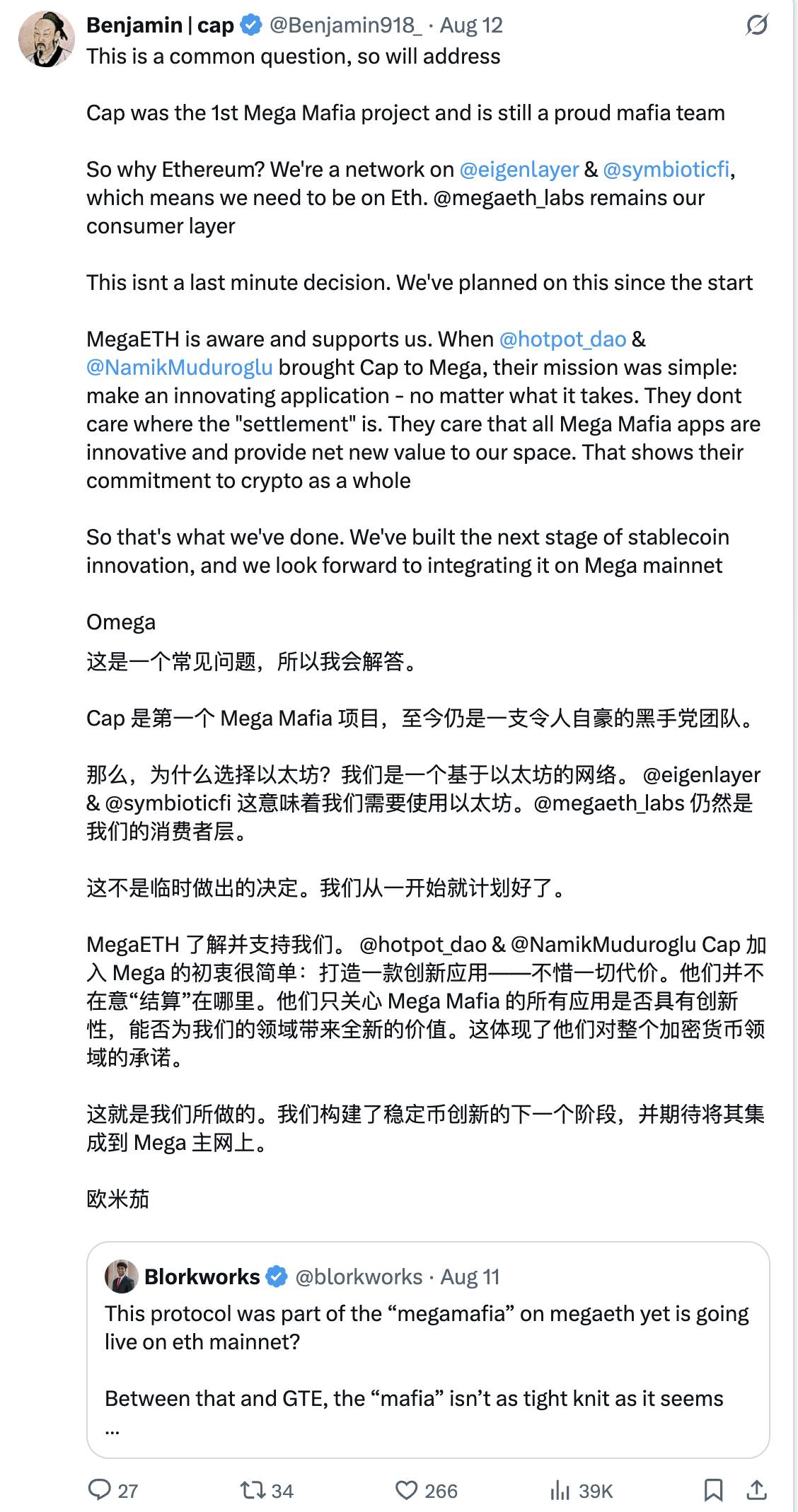
至于为什么选择在以太坊上线,我们不妨听听创始人 @Benjamin918_ 的解释:
这个积分计划名为 Cap Frontier Program,自 8 月 18 日起开始运行。如果你想了解更多细节,可以参考以下相关文章:

可用数据

那么,一个积分究竟值多少钱呢?

我们先从现有数据的概览开始:

根据 Dune 数据仪表板,截至本文撰写时,已经分发了 115,947,711,804 个 Caps。
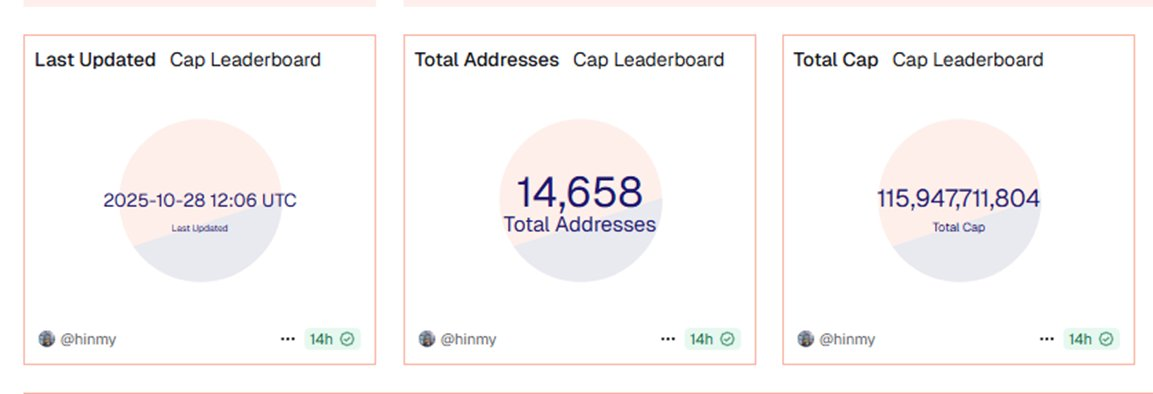
第 1 阶段(Epoch #1)于 8 月 18 日启动——该计划已运行 71 天。

平均每天发放 1,633,066,363 个积分。

该计划预计将持续到 2026 年 1 月 18 日(但可能会根据内部指标提前结束)。

这意味着该计划还有 83 天的运行时间。

大胆推测

免责声明:我经常在数学上出错,希望这次没有。

基于以下假设进行推测:

  • 该计划将持续到 2026 年 1 月 18 日

  • 每日积分发放速度保持不变

按照这些假设,积分总量将达到大约 250,000,000,000 个。

基于此,我们可以通过下列表格来探索不同的场景:
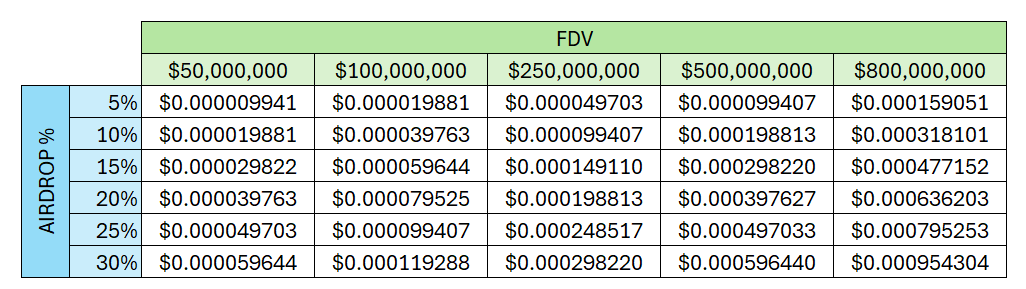
提供 Excel 表格,让我的数学推测看起来更有可信度。

对于不太熟悉这些表格的人来说,这里是使用方法说明:

  • 行表示 Cap Frontier Program 的参与者将获得的空投供应量比例。通常,比较慷慨的空投比例大约在 20%-30% 之间。

  • 列表示代币在上线时的完全稀释估值(Fully Diluted Value, FDV)。坦白说,我对估值预期没有太多把握,所以设置了一个较宽的数值范围。至于具体值,我就交给比我更聪明的人来大胆推测了。

那么,这到底值多少钱?

目前来看,每个积分的美元价值并不高——原因是他们发放了大量积分。因此,让我们看看在不同场景下可能会是什么样子:
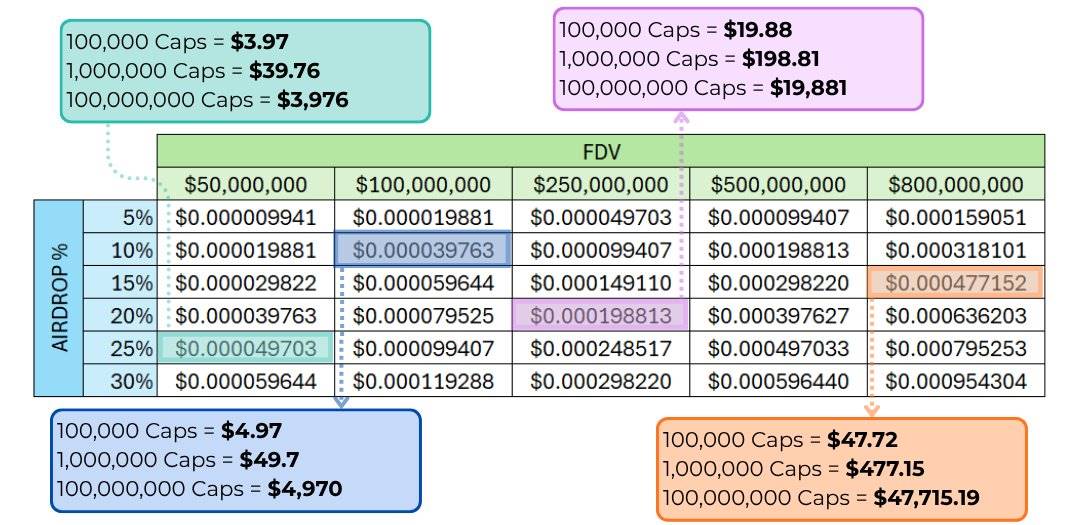
让我们换个角度来看:

  • 目前需要 1.5 亿积分才能进入前 1%

  • 目前需要 590 万积分才能进入前 10%

我个人预计,随着我们越来越接近 MegaETH 的上线,以及它正式上线后,@capmoney_ 的关注度和锁仓总价值(TVL)都会持续增长。

我应该投资 Cap 吗?

我个人在积分计划中属于前 1%,所以我可能有偏见,但我认为你应该考虑。以下是我的理由:

  • 有才华的团队

  • 优秀的创意和执行力

  • 计划还剩一半以上的时间(所以,你还不算晚)

  • 社区关注度在提升(当前锁仓总价值达 3.5 亿美元)

  • 接触 MegaETH 生态系统的机会。MegaETH 和生态系统中的其他项目一定在关注 Cap 的用户。第一个信号就是,Cap 用户更有机会参与公募!你肯定不想错过下一个机会!

  • 鲜有人知的优质项目,目前几乎没有人听说过 Cap,因此它的潜力可能还未被充分挖掘。

即使你本周无法参与公募预售,也没有什么能阻止你提前布局 @megaeth 生态系统。

感谢你的时间阅读。

P.S. 感谢 @0xasrequired 允许我使用他标志性的“大胆推测”标签。
Leituras Relacionadas

Robert Kiyosaki Shares His Mentor's Predictions About the Emergence of Bitcoin and AI

American entrepreneur and author of "Rich Dad Poor Dad," Robert Kiyosaki, discussed the influence of futurist R. Buckminster Fuller on his worldview, linking Fuller's past technological predictions to the emergence of Bitcoin and the development of artificial intelligence. In an X post, Kiyosaki also reflected on personal purpose, sharing his journey from the music business—where he worked with bands like The Police and Iron Maiden—to creating the "Cashflow" board game and writing his famous book. He described feeling an inner emptiness despite his success, a turning point that came after meeting Fuller, whom he studied with for three summers. Kiyosaki described Fuller as a "friendly genius" who foresaw world-changing developments like Bitcoin and AI. However, the core of his post focused on Fuller's philosophical impact, particularly a quote about belonging to the universe and finding purpose by dedicating one's life to the maximum benefit of others. The entrepreneur remains a vocal advocate for cryptocurrencies. He regularly advises buying Bitcoin during market panics, viewing it and assets like Ethereum, gold, and silver as hedges against traditional financial system failures. Kiyosaki has predicted a major market crash by 2026, seeing it as an opportunity for prepared investors, with long-term price targets including $750,000 for Bitcoin and $95,000 for Ethereum.

cryptonews.ruHá 32m

Robert Kiyosaki Shares His Mentor's Predictions About the Emergence of Bitcoin and AI

cryptonews.ruHá 32m

Etherealize CEO Calls Wall Street's Private Blockchains a 'Race to the Bottom'

Etherealize co-founder and CEO Vivek Raman criticized Wall Street's growing interest in private, permissioned blockchains, calling them a "race to the bottom." In an interview with CoinDesk, Raman argued that consortium networks fragment liquidity and return the industry to the siloed systems that blockchain technology was meant to overcome. He stated that closed networks do not interoperate, undermining two key advantages of the technology: system compatibility and liquidity concentration. Etherealize promotes Ethereum as an open, foundational layer for institutional players. Raman insists that privacy and access restrictions should be built on top of public infrastructure—at the application or L2 level—rather than creating separate, closed networks. He compared Ethereum to HTTP as a base layer, with additional permissioned and private layers akin to HTTPS. Examples of this new wave of "closed" solutions mentioned include Canton Network from Digital Asset, Circle's Arc project, and Stripe's Tempo. Raman termed this trend "consortium chains 2.0," recalling earlier initiatives like the R3 interbank consortium and the Hyperledger corporate ecosystem from 2016 that failed to gain significant traction. He reiterated his firm belief that a global, open, permissionless infrastructure is necessary as a foundational base layer. Raman previously noted in June that traditional financial institutions had begun implementing Ethereum-based solutions into real business processes.

cryptonews.ruHá 33m

Etherealize CEO Calls Wall Street's Private Blockchains a 'Race to the Bottom'

cryptonews.ruHá 33m

Trading

Spot
活动图片