Deutsche Digital Assets and Safello Launch Staked TAO ETP

TheCryptoTimesPublicado em 2025-10-29Última atualização em 2025-10-29

Deutsche Digital Assets (DDA) has teamed up with Nordic crypto platform Safello to roll out a new exchange-traded product (ETP) that gives traditional investors easy exposure to Bittensor (TAO), the AI-focused blockchain network.

The product, called the Safello Bittensor Staked TAO ETP, is expected to begin trading on the SIX Swiss Exchange under the ticker STAO in the coming weeks.

According to the official announcement, the ETP is designed for investors who want regulated access to Bittensor without navigating crypto custody or on-chain staking. The product is 100% physically backed, meaning the issuer holds real TAO as collateral, which is stored in ‘cold storage’ by BitGo Europe.

DDA said the product was issued through its white-label platform, which provides the regulatory and technical framework behind the listing. 

Maximilian Lautenschläger, CEO and founder of DDA, said the structure lets partners like Safello “bring their crypto investment strategies to market, while ensuring compliance with regulatory standards,” positioning the platform as a way to lower entry barriers for new issuers.

Making a broader AI-focused shift

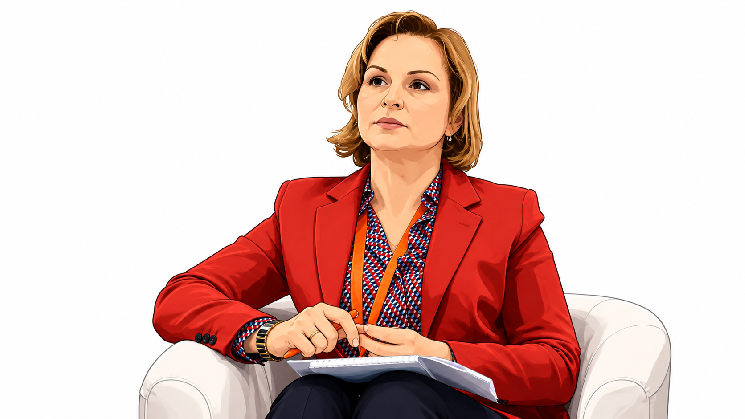
Safello framed the listing as part of a broader shift toward AI-linked digital assets. Emelie Moritz, CEO of Safello, said the launch reflects the company’s belief that decentralized AI networks like Bittensor will play a growing role in the digital asset market. 

She also noted, “Together with DDA, we’re making it possible for investors to easily access this innovation through a regulated and transparent investment vehicle.”

The product tracks the Kaiko Safello Staked Bittensor Index, is domiciled in Liechtenstein, and charges a total expense ratio of 1.49%. Staking rewards are accumulated into the ETP’s NAV rather than distributed separately, allowing investors to benefit from yield alongside price performance.

The launch follows a wider trend in Europe toward staking-based crypto ETPs, as asset managers introduce yield-bearing products that can be held inside traditional brokerage accounts.

Also Read: 21Shares Submits S-1 Filing to SEC For Hyperliquid ETF


Mobile Only ImageMobile Only Image

Leituras Relacionadas

Same $5 Rate, Bill Differs by 30%, OpenAI Exec: Token Pricing Is Never Directly Comparable

Here is a summary of the article in English: **Title: Priced at $5, Bills Vary by 30%. OpenAI Executive: Token Prices Are Not Directly Comparable** A key takeaway from OpenAI's Codex lead, Tibo, is that a "token" is not a standardized unit for comparing AI model costs, akin to grams or kilowatt-hours. He uses an analogy: two identical pizzas priced per slice can yield different total costs depending on how they're cut. Similarly, different models use different "tokenizers" to segment text, meaning the same input text can produce vastly different token counts. For instance, the same text was tokenized as 766 tokens by GPT-5.6 Sol and 1170 tokens by Claude Opus 5—a 34.5% difference—despite both models advertising the same input price of $5 per million tokens. This discrepancy arises because each company trains its own tokenizer based on its training data, affecting how common or rare word combinations are split. The problem isn't cross-vendor only. Even Anthropic warns that its newer models (Claude 4.7+) use a different tokenizer, producing roughly 30% more tokens for the same text than earlier versions, so cost estimates shouldn't be reused across model generations. Bill differences stem from four main factors: 1) Tokenizer efficiency (input token count), 2) Caching (e.g., GPT-5.6 Sol offers a much lower cache input rate), 3) Output pricing (which can outweigh input savings in agent workflows), and 4) Context length pricing tiers (e.g., GPT-5.6 Sol charges double the input rate for entire requests exceeding 272K tokens). Tibo also addressed user reports of GPT-5.6 Sol's context window being limited in practice, sharing configuration code to manually expand it to 1 million tokens. However, he cautioned that larger windows increase the risk of hitting higher pricing tiers as longer session histories are processed repeatedly. The article concludes that the true metric should shift from "price per million tokens" to "price per successful outcome." The most accurate way to compare costs is to run identical real-world tasks (with the same prompts, tools, and data) through different models, accounting for all variables like tokenization, caching, output length, and context pricing. Ultimately, what matters is the total cost to complete a specific job, not the nominal token price.

marsbitHá 3m

Same $5 Rate, Bill Differs by 30%, OpenAI Exec: Token Pricing Is Never Directly Comparable

marsbitHá 3m

Are Big VC Funds Monopolizing the Seed Round, Leaving Small VCs with No Choice but to Give Up?

**Title: Are Big VCs Monopolizing Seed Rounds? Is Giving Up the Only Path for Small VCs?** In a frank and critical commentary, the author argues that the venture capital landscape has shifted dramatically: large, multi-stage funds are aggressively moving into seed-stage investing, leveraging their brand recognition, massive capital, and resources to dominate deals. They outcompete smaller, specialized funds for stakes in even the earliest startups, as founders increasingly prefer established names. The piece asserts that success in VC now hinges almost entirely on securing a position in the handful of globally transformative companies each year (e.g., OpenAI, Anthropic). For funds that miss these "winner-takes-most" opportunities, relevance fades. The author sarcastically suggests small fund managers should advise their portfolio companies to seek acquisition by such giants and then invest via SPVs, or abandon early-stage investing altogether to chase less ambiguous growth rounds. Further, the author claims the "best" founders—those from elite backgrounds—command premium valuations and align with top-tier funds, leaving little room for others. The relentless focus on AI is presented as another pressure point; not dedicating a fund entirely to AI is deemed a path to irrelevance, akin to missing prior cycles like SaaS or crypto. Ultimately, the letter delivers a cynical conclusion: with capital and power concentrating, true differentiation is nearly impossible. It suggests that for many small VCs, surrendering to this new reality—rather than evolving, competing, or trying something different—might be the most rational, if grim, course of action. The piece serves as a stark warning about capital concentration and the existential challenges facing smaller investment firms.

marsbitHá 4m

Are Big VC Funds Monopolizing the Seed Round, Leaving Small VCs with No Choice but to Give Up?

marsbitHá 4m

Bank of Russia: 12 Largest Banks to Connect Digital Ruble from September 1, 2026

The Central Bank of Russia (CBR) announced that all 12 of the country's systemically important banks will be ready to offer clients digital ruble accounts and transactions starting September 1, 2026. According to Alla Bakina, director of the CBR's national payment system department, these banks cover over 80% of the domestic payment market. The digital ruble is described as a new form of the existing currency, functioning as a cashless payment method but held directly in a user's wallet on the CBR platform. Nine other banks designated as significant payment market participants are also expected to provide access, with most aiming to complete integration by autumn 2026. Starting from the September launch date, major retail chains with annual revenue exceeding 120 million rubles will be required to accept digital ruble payments, though adoption for citizens remains voluntary. The rollout follows a delayed pilot phase, with mass implementation postponed from 2025. The CBR's model currently offers basic account functionality without interest accrual, unlike China's digital yuan, which began paying interest in early 2026. The announcement positions Russia among dozens of countries testing Central Bank Digital Currencies (CBDCs), though the digital ruble's potential role in cross-border settlements, particularly within BRICS, remains an open question for its future international relevance.

cryptonews.ruHá 9m

Bank of Russia: 12 Largest Banks to Connect Digital Ruble from September 1, 2026

cryptonews.ruHá 9m

Trading

Spot
活动图片