DeFi Security Crisis: Bunni DEX Folds After Major Exploit, Leaving Users Empty-Handed

bitcoinistPublicado em 2025-10-24Última atualização em 2025-10-24

Resumo

In another blow to the decentralized finance (DeFi) sector, Bunni DEX, a Uniswap V4-based decentralized exchange, has announced its permanent...

Trusted Editorial content, reviewed by leading industry experts and seasoned editors. Ad Disclosure

In another blow to the decentralized finance (DeFi) sector, Bunni DEX, a Uniswap V4-based decentralized exchange, has announced its permanent shutdown following an $8.4 million exploit that crippled its operations. The team cited an inability to cover relaunch and audit costs, marking one of the most significant DeFi collapses of 2025.

The exploit, which occurred on September 2, targeted Bunni’s Liquidity Distribution Function (LDF), a custom mechanism designed to optimize liquidity for traders.

Hackers used flash loans to manipulate internal calculations, triggering rounding errors that allowed them to drain funds across Ethereum and Unichain networks. Despite prior audits by Trail of Bits and Cyfrin, the logic-level flaw went undetected.

Users Allowed Withdrawals, But Recovery Looks Grim

Before the attack, Bunni had rapidly grown from $2.2 million to nearly $80 million in total value locked (TVL), according to DeFiLlama data. However, the breach erased months of progress in a matter of seconds.

Following the hack, Bunni’s team halted operations, paused all smart contracts, and urged users to withdraw their remaining assets “until further notice.” Remaining treasury funds will be redistributed to BUNNI, LIT, and veBUNNI tokenholders, with the team pledging to exclude themselves from the compensation process.

“The recent exploit has forced Bunni’s growth to a halt,” the team posted on X. “To securely relaunch, we’d need six to seven figures for audits and monitoring, capital that we simply don’t have.”

In a final act before winding down, Bunni relicensed its v2 smart contracts from Business Source License (BUSL) to MIT, opening its technology, including liquidity distribution functions, surge fees, and autonomous rebalancing, to other developers in the DeFi ecosystem.
Ethereum ETH ETHUSD

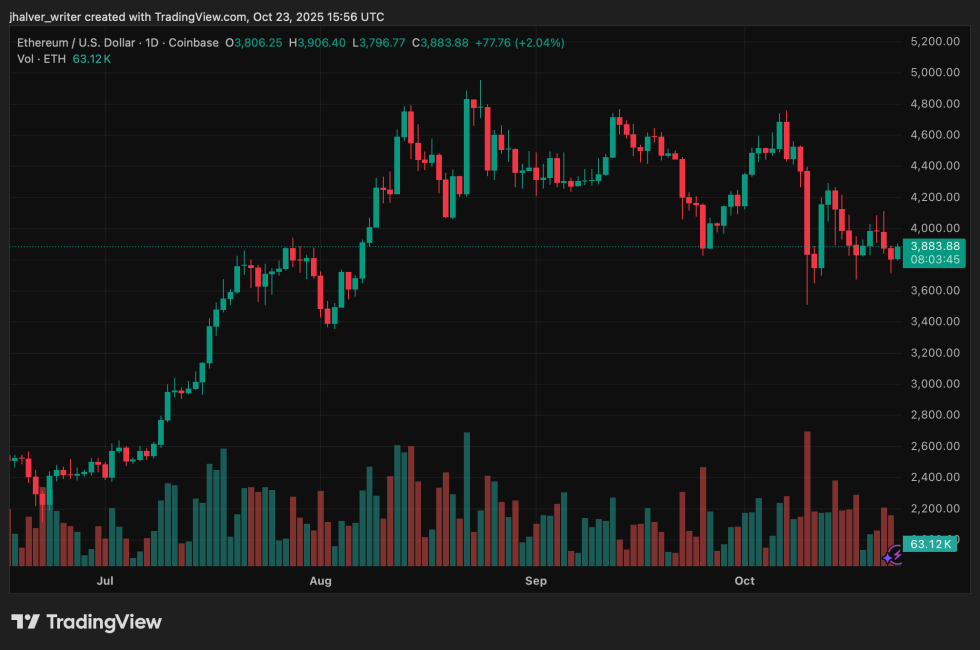
ETH's price trends sideways on the daily chart. Source: ETHUSD on Tradingview

The Broader Impact on DeFi Security

Bunni’s collapse spotlights a growing security crisis in DeFi, which has already seen over $3.1 billion lost to exploits in 2025 alone, according to Hacken’s report. The incident highlights the dangers of deploying custom smart contract logic without sufficient financial and technical safeguards.

Industry experts warn that the event could usher in a new era of cautious innovation, where developers prioritize comprehensive audits, real-time monitoring, and stricter bug bounty programs.

For users, the Bunni exploit serves as a stark reminder: in the high-yield world of decentralized finance, trust and transparency remain as valuable as the tokens themselves.

Cover image from ChatGPT, ETHUSD chart from Tradingview

Editorial Process for bitcoinist is centered on delivering thoroughly researched, accurate, and unbiased content. We uphold strict sourcing standards, and each page undergoes diligent review by our team of top technology experts and seasoned editors. This process ensures the integrity, relevance, and value of our content for our readers.

Leituras Relacionadas

From Mining Pool to Mars: Why Is Wang Chun in the SpaceX Cockpit?

Title: From Mining Pool to Mars: Why Wang Chun is in the SpaceX Cockpit? When SpaceX announced that Wang Chun, co-founder of F2Pool, would command the first commercial crewed interplanetary mission, many were shocked. Why would a Bitcoin mining pool founder be on a Mars mission roster? However, understanding Wang Chun's journey over the past decade and the deepening ties between the crypto industry and SpaceX reveals this is not accidental, but an inevitable result of a new era taking shape. Today's Mars plan is no longer just a space engineering project; it is evolving into a civilization-upgrading experiment driven by global tech capital, AI, computing power, energy, and the crypto economy. Wang Chun stands precisely at the intersection of these forces. Part 1: From F2Pool to SpaceX – Wang Chun's Leap F2Pool, founded when Bitcoin was still niche, is one of the earliest large-scale mining pools and once held a significant share of global Bitcoin hash rate. Wang Chun belongs to the first generation of Chinese Bitcoin advocates and infrastructure builders—idealists and engineers who believed in a new value network independent of traditional finance. Miners like him built the hardware, energy, and computing power foundational to decentralized networks. This aligns with the long-term, high-engineering, future-oriented vision required for space civilization. Elon Musk’s space endeavors value such long-term builders over mere capital players, which explains Wang Chun's entry into the SpaceX ecosystem. Part 2: Why Crypto and SpaceX Are Growing Closer The core of global tech competition is shifting from internet applications to next-generation infrastructure. Both crypto and SpaceX are part of this. SpaceX's goal is to drastically reduce space access costs. If successful, it could enable orbital servers, space-based energy, global satellite internet, and Martian bases. These new frontiers will require new payment systems, value networks, and global financial architectures. Cryptocurrencies, inherently global and trustless, are poised to become key to off-planet economies. Moreover, crypto and SpaceX share a high-risk, long-termist ethos—believing in ambitious, world-changing goals despite early skepticism. Part 3: Human Spaceflight Enters the Commercial Era Space exploration, long dominated by state actors, is now being transformed by commercial entities like SpaceX. Wang Chun's involvement signifies that future deep-space participants may include not just career astronauts, but also entrepreneurs, engineers, and AI researchers. This mirrors the Age of Exploration, where commercial capital eventually drove global expansion. Wang Chun has emphasized that Mars colonization must not be delayed for future generations, countering a potential over-focus on nearer-term, commercial lunar projects. His presence symbolizes how new capital, technical communities, and idealists from the crypto world are now entering the interstellar age. In summary, the true significance is not an individual's journey to Mars, but the shift in the driving force of human civilization expansion from state machinery to tech companies, AI systems, and global technology capital. Wang Chun's path—from mining pool to Mars, from the Bitcoin network to starships—may be a preview of technological civilization's evolution in the coming decades.

marsbitHá 8h

From Mining Pool to Mars: Why Is Wang Chun in the SpaceX Cockpit?

marsbitHá 8h

Trading

Spot
Futuros
活动图片