Eric Balchunas Teases ‘Cointober’ Ahead of Key ETF Decisions

TheCryptoTimesPublicado em 2025-09-29Última atualização em 2025-09-29

As October approaches, anticipation in the crypto market is building for what Bloomberg ETF analyst Eric Balchunas has called “Cointober.” In a recent post on X, Balchunas wrote, “Who’s ready for Cointober? Spot crypto ETF deadlines start this week! Litecoin and Solana up first. Should be a wild month.” 

His remark captures the growing attention around a month that could prove decisive for the future of altcoin-focused exchange-traded funds (ETFs) in the United States.

The excitement comes as the U.S. Securities and Exchange Commission (SEC) prepares to rule on several key spot ETF applications, many of which have final decision dates falling in October. 

These ETFs would let investors buy cryptocurrencies without having to hold the coins themselves, which is why both institutions and regular investors are keeping a close eye on them.

Uptober’s Recent Performance

October is often called “Uptober” in crypto circles because it has a history of strong price moves.

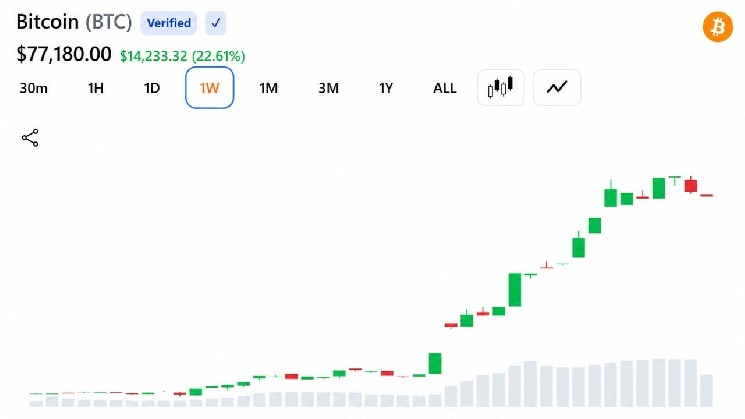
In 2023, Bitcoin rose nearly 28%, going from around $26,900 to about $34,500 during the month. That rally helped boost market sentiment after a long period of slow price movement and reinforced the idea that October can be a key month for gains.

In 2024, even though it was a tough year for many altcoins, October again brought some recovery and positive momentum to the market. Bitcoin picked up again, and the market mood got better, which is why October is often seen as a month that shapes the rest of the year.

Cointober: A Wave of ETF Deadlines

That history is now colliding with one of the most significant regulatory moments the industry has faced. According to Bloomberg ETF analyst James Seyffart, 16 spot crypto ETF filings are heading toward key SEC deadlines in October. These include proposed funds tracking major altcoins such as Litecoin (LTC), Solana (SOL), XRP, and even Dogecoin (DOGE).

Major issuers — including Grayscale, VanEck, Franklin Templeton, 21Shares, CoinShares, Bitwise, WisdomTree, and Fidelity- are behind these filings. Most of the assets involved are classified as commodities by the SEC and already have CFTC-regulated futures markets, factors that improve their chances of approval. Analysts place the odds for many of these ETFs at around 95%.

Upcoming ETF Deadlines

Several important ETFs have key dates coming up this October. For Litecoin, the first filing was made on October 15, 2024, and the SEC’s final decision is expected by July 2, 2025. 

Solana ETFs were filed on January 24, 2025, and the SEC is expected to give its decision by October 10, 2025. XRP ETFs, which went in on January 30, 2025, are set for a final ruling on October 17, 2025.

Why This October Matters

If these ETFs get approved, it will be much easier for investors to get into coins like Litecoin, Solana, and XRP without having to hold or manage the crypto themselves. Investing becomes simpler, safer, and more convenient.

October has done well in 2023 and 2024, and with ETF decisions coming soon, this year’s “Cointober” could do more than push prices up. It could affect how altcoins are included in regular investment portfolios and how traditional financial institutions deal with the crypto market.

Also Read: Vanguard Prepares to Offer Crypto ETFs to Its Clients On Its Brokerage Platform


Mobile Only Image

Leituras Relacionadas

Report Interpretation: J.P. Morgan Details Micron's Pre-Earnings Sentiment, Current Hardware Sector Dynamics

Morgan Stanley analyst Joshua Meyers' report (June 21, 2026) highlights key trends in the hardware and semiconductor sector ahead of Micron's earnings. The core takeaways are: 1. **Micron & Memory:** Memory remains a high-conviction long theme, driven by strong AI demand and rising ASPs. However, investor focus is shifting to the sustainability of Micron's >80% gross margins and the specifics of potential new long-term supply agreements (SCAs). 2. **Hardware Supply Chain:** AI-related demand for servers, networking, and storage remains robust, but company performance is diverging. Celestica (CLS) shows improved margin confidence, Western Digital and Seagate benefit from pricing, Fabrinet (FN) sees predictable AI optics growth, and Teradyne (TER) anticipates a new Google customer. 3. **AI Capex & WFE Forecasts:** JPMorgan increased its Wafer Fab Equipment (WFE) market growth forecasts to 28% in 2026 and 29% in 2027. AI infrastructure financing is evolving, with higher project-level debt reducing constraints on capex expansion. The report signals that while the AI-driven hardware cycle is strong, the market is entering a phase focused on execution verification (e.g., Micron's SCA details, Fabrinet's ramp with Amazon) and valuation sustainability. Key near-term signals include Micron's guidance, Arista Networks' outlook, and the pace of demand normalization post potential tariff-related pull-ins.

marsbitHá 9h

Report Interpretation: J.P. Morgan Details Micron's Pre-Earnings Sentiment, Current Hardware Sector Dynamics

marsbitHá 9h

Research Report Analysis: The Fed's New Chair's Debut – New Leader, But Same Script?

Report Analysis: Federal Reserve's New Chair Debut – A New Captain, But the Same Script? Morgan Stanley's chief global economist Seth B. Carpenter analyzes the first FOMC meeting under new Fed Chair Kevin Warsh in a June 21 report. Warsh deliberately avoided providing forward guidance on interest rates, aligning with his philosophy. However, market expectations for a rate hike this year were reinforced. Key signals lie elsewhere: inflation may fall more than expected, and quantitative tightening (QT) could be more aggressive than anticipated. The FOMC's "dot plot" suggests only one rate hike in 2026. Carpenter argues that if inflation undershoots forecasts, the logic for even a single hike weakens, especially as projections indicate potential rate cuts in 2027. On QT, Warsh's stance is clear. Carpenter notes that measures like halving the Treasury's account balance could shrink the Fed's balance sheet by around $500 billion with minimal market impact. Combined with adjustments to reserve interest and liquidity rules, the ultimate QT scale may exceed expectations, though its market effect might be less disruptive unless the Fed actively sells Mortgage-Backed Securities (MBS). While Warsh initiated a review of the Fed's policy framework, the 2% inflation target remains intact for now. The report concludes that the market may be overestimating the significance of reduced forward guidance and the near-term rate hike risk, while potentially underestimating the scope and manageable nature of the coming balance sheet reduction. The key debates will hinge on upcoming core PCE data, the specifics of the QT path, and the framework review's findings.

marsbitHá 9h

Research Report Analysis: The Fed's New Chair's Debut – New Leader, But Same Script?

marsbitHá 9h

Trading

Spot
Futuros
活动图片