Blockchain Enters The City: London Stock Exchange Launches Private Funds Platform

bitcoinistPublicado em 2025-09-16Última atualização em 2025-09-16

Resumo

London Stock Exchange Group (LSEG) has launched a blockchain-based platform aimed at private funds and completed its first live transaction,...

Trusted Editorial content, reviewed by leading industry experts and seasoned editors. Ad Disclosure

London Stock Exchange Group (LSEG) has launched a blockchain-based platform aimed at private funds and completed its first live transaction, a move that seeks to bring tokenization and faster settlement to traditionally slow fund markets.

According to LSEG, the new system — called Digital Markets Infrastructure (DMI) — runs on Microsoft Azure and is designed to handle everything from issuance through to post-trade servicing.

Blockchain: Platform Handles Full Life Cycle

Reports have disclosed that DMI is built to cover the whole lifecycle of an asset. That means issuance, tokenization, distribution, post-trade settlement and servicing can be recorded and tracked on the platform rather than handled only by paper or siloed systems.

The exchange group said the design emphasizes interoperability between distributed ledger technologies and existing financial systems.
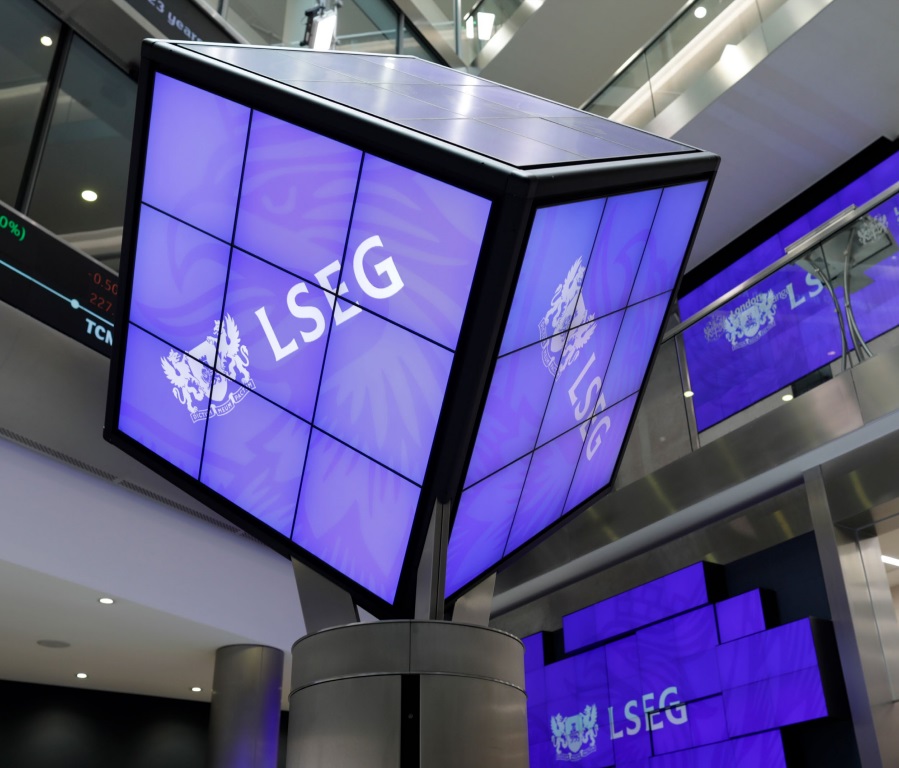
Image: EuropaWire

The First Deal And Who Took Part

LSEG said it facilitated its first transaction on the platform on Monday, with MembersCap acting as general partner for a primary fundraise of MCM Fund 1 and Archax serving as nominee.

Based on reports, MembersCap and Archax were onboarded as the first clients and executed the maiden fundraise live on DMI.

Financial outlets noted the transaction as a milestone because it was carried out on a regulated exchange’s blockchain system.

Total crypto market cap currently at $3.93 trillion. Chart: TradingView

Regulatory Backing And Market Players

According to coverage, the involvement of Archax — an FCA-regulated digital securities exchange — gives the project a regulatory anchor, which market participants say matters when tokenized private assets are issued to professional investors.

Microsoft’s role is also highlighted: the platform runs on Azure, and earlier business ties between Microsoft and LSEG were noted in reporting. Those ties have framed the project as a partnership between a major cloud provider and a major exchange.

What This Might Mean For Private Funds

Observers say tokenization could reduce manual steps, speed up settlement and make ownership records easier to audit, though none of that is automatic.

Secondary market activity for tokenized fund interests will depend on rules, market structure and how custodians and platforms respond.

Adoption by fund managers is another question: managers will weigh costs, investor appetite and legal clarity before shifting large pools of assets onto a ledger.

Reports indicate LSEG plans to expand DMI beyond private funds to other asset types over time.

Featured image from Yuichiro Chino/Getty Images, chart from TradingView

Editorial Process for bitcoinist is centered on delivering thoroughly researched, accurate, and unbiased content. We uphold strict sourcing standards, and each page undergoes diligent review by our team of top technology experts and seasoned editors. This process ensures the integrity, relevance, and value of our content for our readers.

Christian, a journalist and editor with leadership roles in Philippine and Canadian media, is fueled by his love for writing and cryptocurrency. Off-screen, he's a cook and cinephile who's constantly intrigued by the size of the universe.

Leituras Relacionadas

Bitcoin Soars Over 24% in a Week, Best Weekly K in Recent Years, $2.7B Short Squeeze Sets Record, Policy Tailwinds Ignite Rally

Bitcoin surged over 24% this week, breaking above $78,000 and marking its best weekly performance since March 2024. The rally accelerated following a series of crypto-friendly signals from Washington and was further amplified by a record wave of forced short liquidations. Data from CoinGlass shows approximately $27.4 billion in crypto short positions were liquidated within 24 hours, the largest such event since the platform's records began in 2021. Total liquidations neared $30 billion, with shorts accounting for about 92%. Key drivers included a new SEC proposal ("Regulation Crypto Assets") to simplify token offerings, progress on the stalled CLARITY法案, comments from CFTC Chairman Michael Selig about moving forward independently if Congress delays, and former President Trump's remarks regarding bringing the Hyperliquid exchange into the US compliantly. Macroscopically, the US Treasury's announcement to double its long-term bond buyback program helped lower yields, improving liquidity expectations for risk assets. The market, previously stagnant near $60,000 with high short positioning, saw a violent squeeze. This created a self-reinforcing cycle where rising prices triggered further short liquidations. The interplay between shifting policy expectations and this massive deleveraging event fueled the historic weekly gain.

marsbitHá 27m

Bitcoin Soars Over 24% in a Week, Best Weekly K in Recent Years, $2.7B Short Squeeze Sets Record, Policy Tailwinds Ignite Rally

marsbitHá 27m

19 New Decacorns in Half a Year: Why is the Primary Market Chasing 'Certainty'?

In the first half of 2026, China’s primary market saw a notable increase in unicorns, adding 19 new companies each valued over 100 billion RMB, particularly in sectors like embodied AI and large language models (LLMs). Firms such as Galaxy General, Zibian, and ZhiPingFang even surpassed 200 billion RMB valuations within months. Moonshot AI's valuation surged from around $10 billion to $35 billion by July 2026, with a pre-IPO target of $50 billion. This concentration of capital into a few "certain" sectors highlights a market shift. The driving force is not a general abundance of capital but a chase for "certainty"—primarily clearer exit pathways like imminent IPOs. Companies with defined public listing timelines attract intense investment despite higher valuations, as they reduce exit uncertainty for investors. Secondary market valuations of listed peers also serve as new anchors, boosting the perceived value of private companies in similar fields, though this creates dependency on public market sentiment. Another form of certainty comes from the expectation of rising valuations in subsequent funding rounds. The investment logic has shifted in some cases from assessing long-term fundamental value to betting on the next round attracting higher prices. This dynamic is also seen in deep-tech areas like nuclear fusion, where firms like NeoFusion secured a 10.6 billion RMB valuation despite early commercial stages, driven by scarcity and strategic bets. However, this trend signals a risk transfer: technical uncertainties remain but are temporarily masked by valuation inflation. As valuations climb—50 billion to 200 billion or 500 billion RMB—companies face increasing pressure to demonstrate real revenue, profit, and sustainable business models. The danger lies not in the rise of unicorns itself, but if valuations become detached from value creation and rely merely on the expectation of future funding or exits. Ultimately, the surge reflects investors seeking perceived safety in shorter-term exit certainty and transactional momentum, rather than a renewed appetite for risk. The true test will come when the market inevitably refocuses on fundamentals, questioning how many of today’s high valuations are backed by genuine economic value.

marsbitHá 57m

19 New Decacorns in Half a Year: Why is the Primary Market Chasing 'Certainty'?

marsbitHá 57m

Trading

Spot
活动图片