Pakistan Opens Doors: Crypto Firms Invited To Serve 40 Million Users

bitcoinistPublicado em 2025-09-15Última atualização em 2025-09-15

Resumo

Pakistan’s crypto regulator has formally invited large overseas exchanges and virtual asset service providers to apply for local licenses, opening...

Trusted Editorial content, reviewed by leading industry experts and seasoned editors. Ad Disclosure

Pakistan’s crypto regulator has formally invited large overseas exchanges and virtual asset service providers to apply for local licenses, opening a new chapter for the country’s crypto market.

According to PVARA, the call comes through an Expression of Interest process and it follows the passage of a new Virtual Assets Ordinance this year.

Pakistan: Expression Of Interest Launched

Based on reports, the Pakistan Virtual Asset Regulatory Authority (PVARA) is asking established crypto firms to submit EOIs if they want to operate in the country’s market.

The authority says it will accept applications from global exchanges and VASPs that meet the set rules. This move is intended to create a formal, supervised avenue for international players to serve local customers.

Eligibility And Compliance Rules

Reports have disclosed that applicants must already hold licenses in at least one recognized jurisdiction, such as the US, UK, EU, UAE or Singapore.

They are also expected to show strong anti-money laundering, counter-terrorism financing and KYC procedures as part of their submissions. PVARA has asked firms to provide company profiles, details of operations and security plans when they express interest.

As of today, the market cap of cryptocurrencies stood at $3.94 trillion. Chart: TradingView

Market Size And Numbers

Pakistan’s authorities estimate the country’s virtual-asset user base at about 40 million people, with annual trading volumes around $300 billion, figures that underline the scale of the opportunity and the challenge for regulators.

Those numbers are being cited by PVARA and several local outlets as part of the justification for bringing international exchanges into a supervised system.

Image: TechJuice

Regulatory Background And Timing

The Virtual Assets Ordinance, which set up PVARA, came into effect earlier this year and gives the new authority powers to license and oversee virtual asset activity across Pakistan.

Central bank and finance officials have said the regulations aim to align local rules with global standards advocated by groups such as the FATF. The move follows months of planning that included talks about a possible central bank digital currency pilot.

Industry observers say regulated entry could attract established exchanges and help protect consumers, while also making it harder for illicit activity to hide in unregulated channels.

At the same time, companies face compliance costs and the need to adapt to local rules. Some experts point out that passing rules is one thing; enforcing them is another.

The quality of oversight will decide whether the licensing program meets its aims.

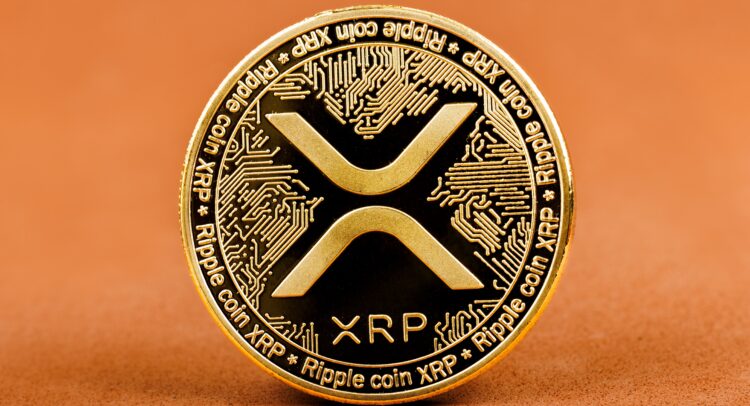
Featured image from PlanetofHotels.com, chart from TradingView
Editorial Process for bitcoinist is centered on delivering thoroughly researched, accurate, and unbiased content. We uphold strict sourcing standards, and each page undergoes diligent review by our team of top technology experts and seasoned editors. This process ensures the integrity, relevance, and value of our content for our readers.

Christian, a journalist and editor with leadership roles in Philippine and Canadian media, is fueled by his love for writing and cryptocurrency. Off-screen, he's a cook and cinephile who's constantly intrigued by the size of the universe.

Leituras Relacionadas

Arthur Hayes Ten Thousand Words Interview: ETH to $30,000; FLOP Will Surpass ETH

Arthur Hayes Interview Summary: In a wide-ranging interview, Arthur Hayes discusses macroeconomic drivers for crypto, bullish predictions for ETH and BTC, and details his new project, Flop Network. On Macroeconomics & Market Outlook: Hayes argues that unsustainable US debt and potential Yield Curve Control (YCC) will drive massive liquidity into hard assets like Bitcoin. He views recent Treasury bond回购 operations as a key signal, comparing the current environment to the 2008 financial crisis that birthed Bitcoin. He predicts Bitcoin will break its all-time high, reaching around $126,000 by year-end, and could soar to $500,000 if the Fed removes limits on its FEMA repo facility. On Ethereum & Altcoins: Hayes is particularly bullish on ETH, calling it his top large-cap altcoin pick. He believes it will significantly outperform in this cycle, potentially reaching $20,000-$30,000, as it hasn't yet broken its 2021 high unlike other major assets. He values ETH for its established developer community and Lindy effect. On Regulation: He dismisses the US Clarity Act as irrelevant for crypto's core value proposition, stating that macroeconomic liquidity, not regulation, is the primary driver. On Flop Network: Hayes unveils his new project, Flop Network, designed to be a native currency for the AI Agent economy. The core thesis is that AI Agents need a货币 that can be directly converted into compute power (measured in FLOPs - Floating Point Operations). The network will use a "Proof of Useful Inference" consensus where miners earn FLOP tokens for processing AI推理 tasks. It will also provide decentralized storage for AI memory/context. The token will be distributed via a massive airdrop (targeting 20% of the 10-year supply) to early testnet participants and users, with no VC预售 or public sale. Mainnet is slated for Q1 2025. Hayes believes FLOP has a "binary" outcome: it could become the base money for the AI economy and rival Bitcoin, or it could fail.

Odaily星球日报Há 19m

Arthur Hayes Ten Thousand Words Interview: ETH to $30,000; FLOP Will Surpass ETH

Odaily星球日报Há 19m

Goldman Sachs Research Report Analysis: Samsung Electronics' Shareholder Returns Fall Short of Expectations, FCF Expansion Supports Valuation Recovery

Gold Sachs research report analysis indicates Samsung Electronics' announced shareholder return pool for 2026 (projected 90-110 trillion KRW) fell short of market expectations for a larger one-time payout. However, Goldman emphasizes that sustained Free Cash Flow (FCF) expansion and a stable, phased return mechanism are the true drivers for valuation repair, not a single event. The report maintains a Buy rating on Samsung ordinary shares with a 740,000 KRW target price, implying 74% upside. Samsung plans a ~30 trillion KRW dividend in Q3 2024, with the remaining returns from the 2026 pool executed post-January 2027 earnings via dividends and share buybacks/cancellations. Goldman estimates 2024-2026 cumulative FCF at ~270 trillion KRW. Assuming a 50% return ratio, total shareholder returns would be ~135 trillion KRW. After accounting for 2024-2025 payouts, the 2026 return is estimated near 106 trillion KRW, at the high end of guidance. While Samsung's short-term return scale lags peers like SK Hynix, its future return capacity is underpinned by robust FCF growth from memory and HBM businesses. Goldman forecasts FCF will significantly rise in 2027-2028, potentially boosting annual return pools to 179 trillion and 232 trillion KRW respectively under the existing policy, potentially matching or exceeding peers. Samsung's current valuation (1.7x P/B for 2027) is seen as attractive given high ROE projections (40%-50%). The core thesis is that Samsung's shareholder return story represents a structural improvement based on durable cash flow generation, not a one-time event.

marsbitHá 26m

Goldman Sachs Research Report Analysis: Samsung Electronics' Shareholder Returns Fall Short of Expectations, FCF Expansion Supports Valuation Recovery

marsbitHá 26m

Trading

Spot
活动图片