ARK Invest покупает акции BitMine на сумму 4,4 млн долларов

cryptonews.ruPublicado em 2025-05-08Última atualização em 2025-09-09

Компания ARK Invest Кэти Вуд приобрела дополнительные акции BitMine, компании Тома Ли, занимающейся хранением эфира, после того как криптоказначейство достигло рекордного уровня владения эфиром.

В понедельник компания ARK Invest приобрела 101 950 акций BitMine Immersion Technologies (BMNR) на сумму около 4,4 млн долларов и распределила их между тремя фондами: Ark Innovation ETF, в котором сейчас доля BitMine составляет 2,6%, Ark Next Generation Internet ETF и ARK Fintech Innovation ETF, в которых доля BitMine аналогична.

Согласно проспектам фондов, в настоящее время три фонда в совокупности владеют 6,7 млн акций BitMine на общую сумму 284 млн долларов.

Инвестиционные фонды Вуда увеличивают вложения в BitMine с тех пор, как в апреле компания начала накапливать эфир (ETH) в качестве казначейского актива.
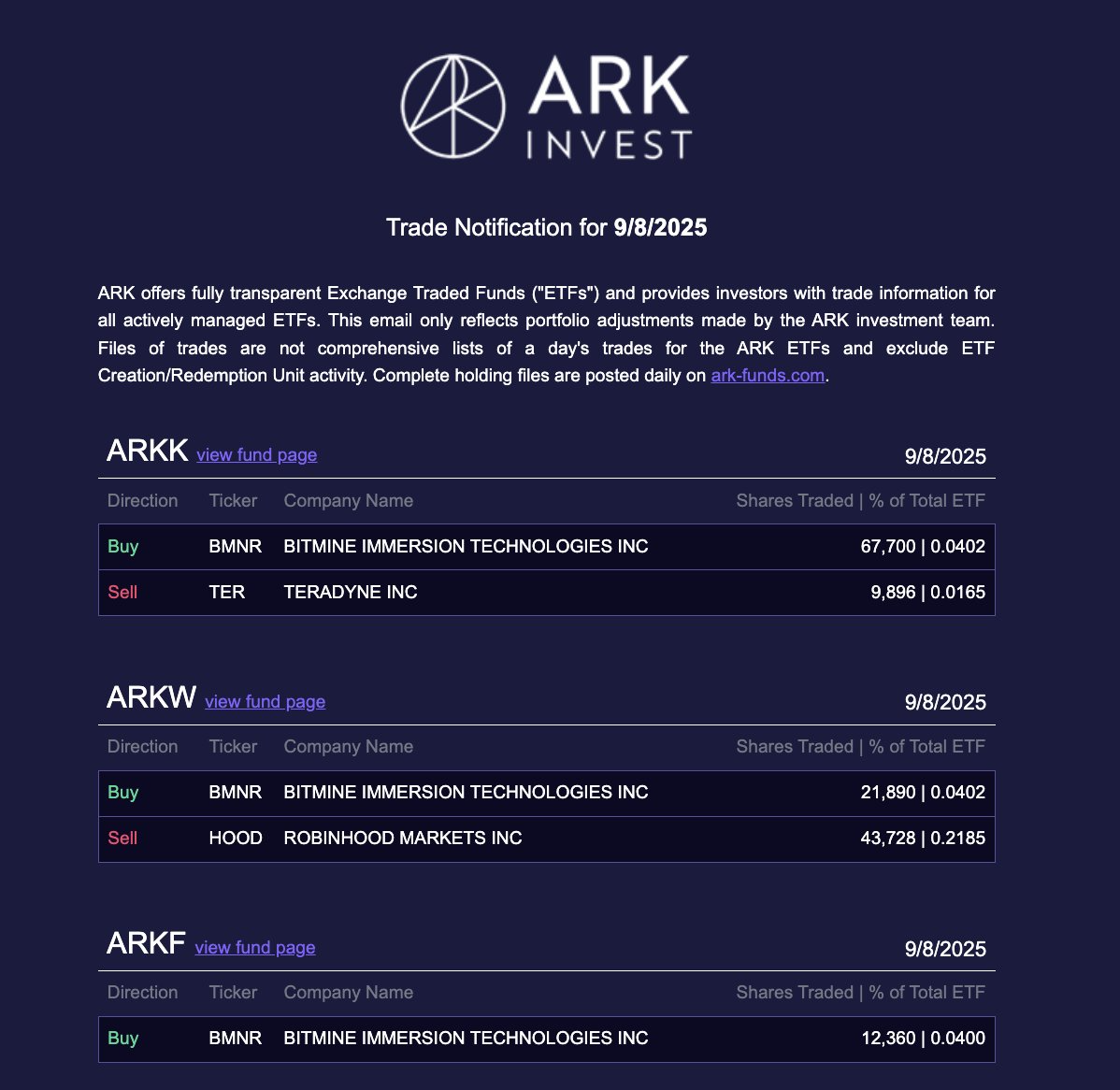
ARK Invest покупает больше акций BMNR для своих ETF. Источник: ArklInvest Tracker

По данным Google Finance, акции BitMine выросли на 4,1 % за день и достигли отметки в 44,10 доллара на торгах после закрытия основной сессии. С начала года акции выросли на целых 460 %.

BitMine преодолевает рубеж в 1 млн эфиров

Это произошло в тот же день, когда компания BitMine, председателем которой является Том Ли, объявила, что её общий объём активов превысил 2 миллиона ETH на сумму около 8,9 миллиарда долларов.

Всего за пять месяцев компания накопила 1,7 % от общего объёма эфира и стала крупнейшей в мире компанией, владеющей эфиром, с долей 42 % от всех 4,9 млн ETH, собранных корпорациями на сегодняшний день.

Покупки, скорее всего, продолжатся, поскольку BitMine владеет лишь 34 % от целевого показателя в 5 % от общего объёма предложения эфира.

«Мы по-прежнему считаем, что Ethereum — одна из крупнейших макроинвестиций на ближайшие 10–15 лет», — заявил председатель BitMine Том Ли.

Между тем в этом месяце цены на эфир не изменились и торгуются в узком диапазоне.

Том Ли настроен оптимистично

Ли также с оптимизмом смотрел на перспективы снижения процентных ставок Федеральной резервной системой на следующей неделе.

«Снижение процентных ставок ФРС будет иметь двойной положительный эффект: снизятся процентные ставки, в частности ставки по ипотечным кредитам, [и] повысится деловая уверенность», — сказал он в понедельник в интервью CNBC, добавив, что это окажет поддержку акциям, особенно компаниям малой капитализации, и криптовалютам.

Рынки фьючерсных прогнозов указывают на то, что вероятность снижения ставки на 25 базисных пунктов составляет 89,4 %, а вероятность снижения на 50 базисных пунктов — 10,6 %.


Leituras Relacionadas

CPU Makes a Comeback to the Table, A $170 Billion "Power Seizure" Drama Begins

A new era is dawning for the server CPU (Central Processing Unit), driven by the shift from AI model training to large-scale reasoning and the rise of Agentic AI. This article explores how the CPU is reclaiming a central role in the AI data center. For years, the focus has been on the GPU (Graphics Processing Unit) for AI training. However, as AI moves to the inference and Agent phase—where tasks involve complex, multi-step reasoning, tool calls, and data management—the workload balance is flipping. Studies show CPUs now handle over 70% of the workload in Agentic AI, up from 10-30% in training. This is because Agent tasks generate massive intermediate data (KV Cache) that exceeds GPU memory, forcing it to be offloaded to the CPU's larger, more scalable memory pools. This increased importance is translating into market changes. Major players are taking note: NVIDIA launched its first standalone CPU line, Vera, based on ARM architecture and optimized for Agent performance. AMD doubled its server CPU market forecast to over $1200 billion by 2030. Analyst reports project the total server CPU market could reach $1700 billion by 2030, with AI-driven demand being a primary driver. Furthermore, the classic ratio of CPUs to GPUs in AI servers is rapidly changing, converging from 1:8 toward 1:1 for Agent deployments. This surge in demand has led to a rare industry-wide price increase of 10-15% for server CPUs from Intel and AMD, breaking a decade-long trend of "more performance for the same price." Demand is bifurcating into high-core-count CPUs for in-rack GPU support and moderate-core CPUs for standalone Agent task orchestration. In China, this global trend presents an opportunity for domestic CPU manufacturers like Hygon (海光信息) and Huawei Kunpeng, who are bolstered by both growing AI infrastructure needs and national policies promoting technological self-reliance ("xin chuang"). The maturity of their software ecosystems is also accelerating, evidenced by faster adaptation to new AI models. In conclusion, the narrative is shifting from a GPU-centric view to one where CPU-GPU synergy is critical. The CPU is no longer a peripheral component but a performance-defining bottleneck and a key growth driver in the AI hardware stack, opening a massive new market estimated in the hundreds of billions of dollars.

marsbitHá 11h

CPU Makes a Comeback to the Table, A $170 Billion "Power Seizure" Drama Begins

marsbitHá 11h

TechFlow Intelligence: AMD AI Director Publicly Criticizes Claude Code for "Becoming Dumber and Lazier", Trump Claims Full Ceasefire in Hormuz But Strait Still Has 80 Unexploded Mines

TechFlow Intelligence Report: This daily digest covers key developments in AI, crypto, hardware, and geopolitics. In AI, SK Telecom faces US export control scrutiny over its partnership with Anthropic, while a Gemini user reports being misled in a scam scenario, sparking safety debates. China's Z.AI launches the GLM-5.2 model, rivaling Claude Opus without NVIDIA chips. In crypto, Bithumb lists ReProtocol, and Upbit delists KernelDAO. On the hardware front, MIT researchers build a custom OS to study chips, ASML denies US claims its advanced lithography machines are in China, and Amazon considers selling its in-house AI chips. Apple's future A21 Pro chip may use TSMC's latest N2P process. Major tech issues include 10,000 GitHub repositories distributing malware and Apple patching a critical eavesdropping flaw in Beats earbuds. US stocks rise, led by semiconductors, with Intel surging 10.6%, while SpaceX falls 3.5%. Geopolitically, despite a US-Iran deal, the Strait of Hormuz remains risky with ~80 uncleared mines, stalling 80M barrels of oil on standby tankers. Iran postpones Switzerland talks, and Trump calls the agreement an "unconditional surrender." The report highlights a contrast: temporary geopolitical calm versus the ongoing, fundamental restructuring of tech supply chains and chip independence.

marsbitHá 11h

TechFlow Intelligence: AMD AI Director Publicly Criticizes Claude Code for "Becoming Dumber and Lazier", Trump Claims Full Ceasefire in Hormuz But Strait Still Has 80 Unexploded Mines

marsbitHá 11h

Trading

Spot
Futuros
活动图片