До каких уровней может рухнуть биткоин

cryptonews.ruPublicado em 2025-02-17Última atualização em 2025-08-18

Падение биткоина до $115 000 в начале недели напугало многих инвесторов. Криптовалюта начала снижаться на фоне выхода негативных экономических данных из США, которые снизили вероятность понижения ключевой процентной ставки в сентябре

Редакция BeInCrypto собрала в одном обзоре прогнозы участников криптосообщества. Рассказываем, чего инвесторы ждут от самой капитализированной криптовалюты.

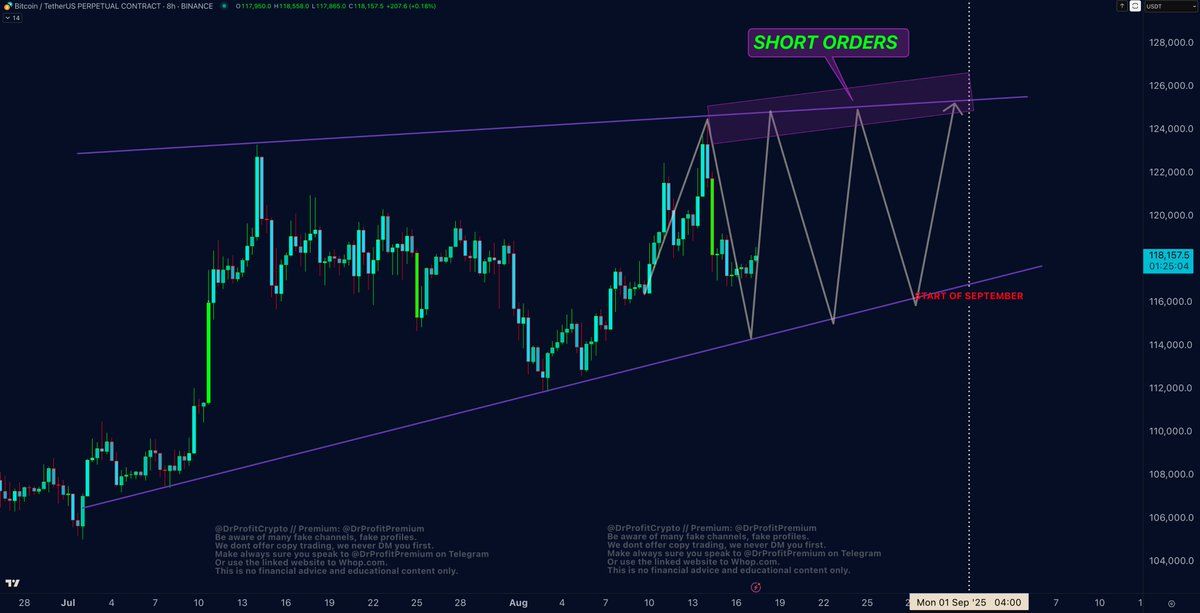
Аналитик Doctor Profit в своем отчете сделал несколько ключевых прогнозов по биткоину:

  • Текущая ситуация (август): до сентября он ожидает боковое движение в узком диапазоне около 8%. Сильных движений вверх или вниз в ближайшие недели не предвидит.
  • Сентябрь: по его мнению, рынок ждет сильная коррекция. Точные уровни и глубину падения он пока не называет, но уверен, что месяц будет «очень красным». Стратегия — готовить шорты и дождаться момента входа.
  • Долгосрочный взгляд: несмотря на ожидаемое сентябрьское падение, в целом прогноз остается бычьим на среднесрочной перспективе. После коррекции биткоин, по его мнению, продолжит рост.

Вот на каких аргументах построен прогноз биткоина Doctor Profit:

  • крупные кошельки продолжают накапливать BTC;
  • признаков массовых продаж пока нет;
  • фондирование выглядит «здоровым».

Единственный фактор, который может вызвать краткосрочную волатильность — выступление Джерома Пауэлла в пятницу.
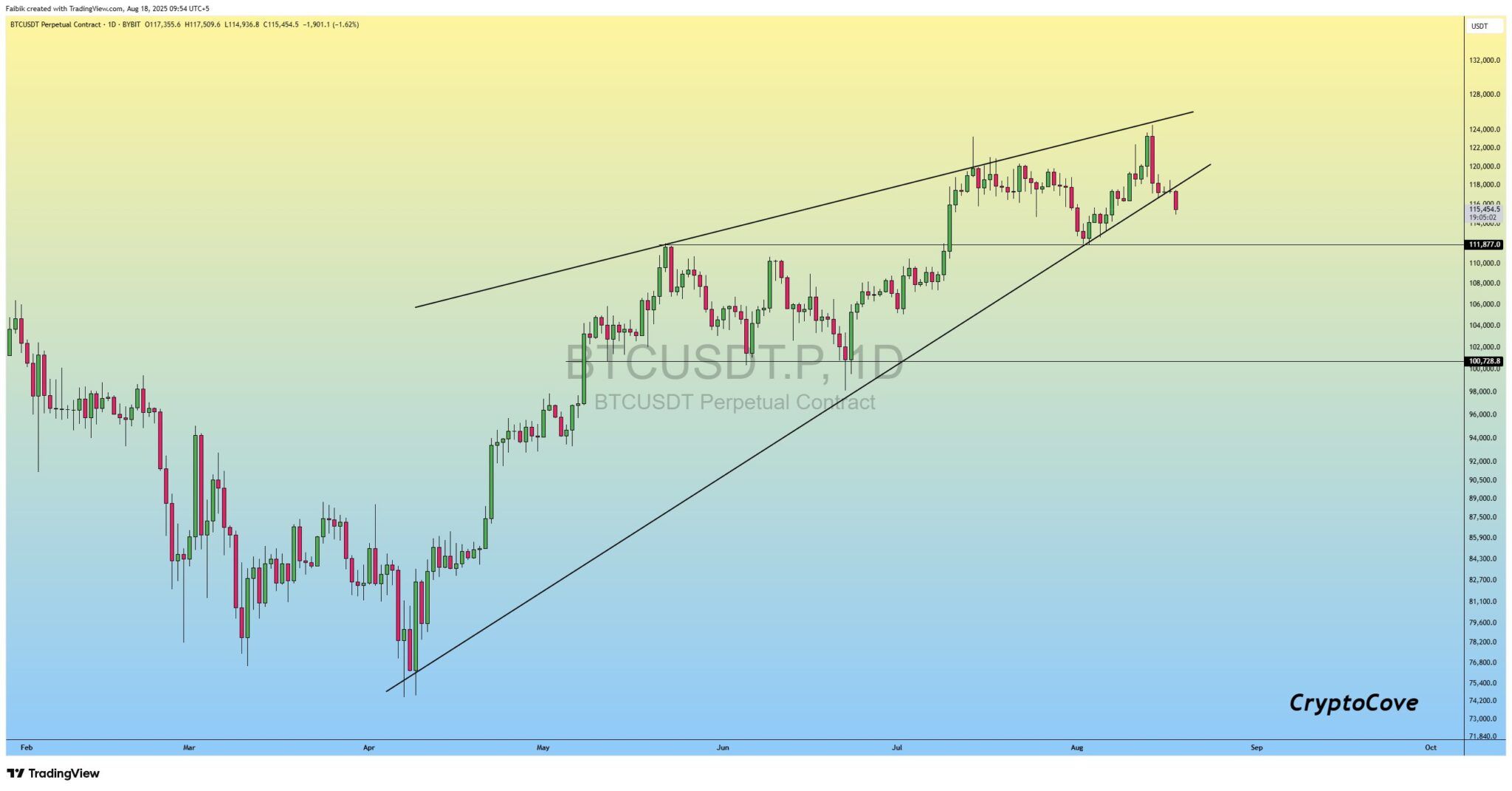
Трейдер Captain Baibik настроен менее оптимистично. Он считает, что в случае продолжения обвала биткоин рискует постепенно спуститься до диапазона $105 000-$108 000. Если медведи продолжат давить на монету, уверен трейдер, не исключено снижение до $98 000.
Многие участники криптосообщества сохраняют оптимизм благодаря тому, что ранее именитые аналитики прогнозировали долгосрочное продолжение ралли биткоина. Например, криптоинвесторы ссылаются на прогноз Тома Ли о движении курса криптовалюты к $250 000.

Аналитик Marty Party также придерживается оптимистичной точки зрения. Свой позитивный прогноз он построил на анализе соотношения меди к золоту (Copper to Gold ratio). Его считают индикатором для «умных денег». Он показывает момент, когда бизнес-цикл достигает дна.
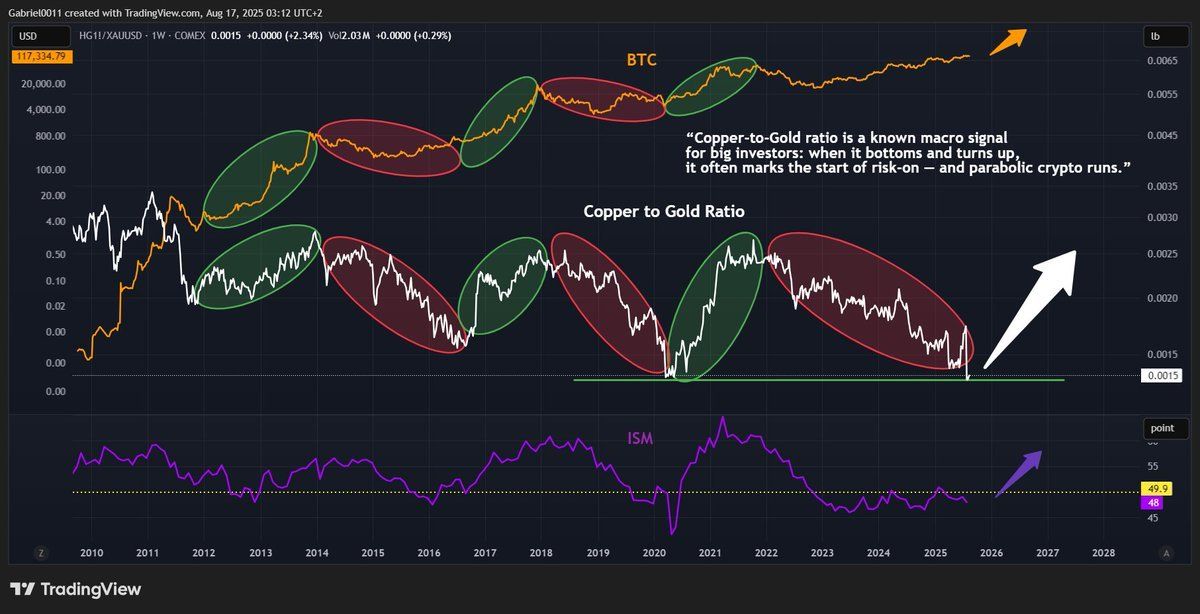
Медь отражает промышленную активность и рост экономики, золото же является защитным активом во время кризисов. Когда цена меди начинает расти относительно золота, это говорит о том, что экономика выходит из фазы спада. Исторически такое движение всегда происходило перед тем, как начинался параболический рост криптовалют. Поэтому сигнал роста этого показателя аналитик считает ранним намеком на предстоящий мощный бычий цикл биткоина.

Leituras Relacionadas

Building the Bright Path While Secretly Crossing Chencang: Is Walsh Paving the Way for a September "Rate Cut"?

The title "Building the Plank Road Openly While Secretly Crossing at Chencang: Is Walsh Paving the Way for a September 'Rate Cut'?" suggests Federal Reserve Chair Kevin Walsh's hawkish stance may be a deliberate smokescreen. Academy Securities analyst Peter Tchir argues in a report that markets, currently pricing a 75% chance of a September hike, are missing a potential path to a September rate cut that Walsh himself might be quietly preparing. Tchir posits that Walsh's hawkish rhetoric aims to suppress long-term yield risks (with the 10-year Treasury yield falling recently) while creating room for a narrative shift based on upcoming data. The potential political endgame, according to this view, could be rate cuts in September and October, ahead of the midterm elections. This hinges on a political logic where the Trump administration's preference for lower rates remains unchanged. A core part of Tchir's argument involves redefining inflation metrics. He contends the Fed under Walsh may deprioritize the PCE index, criticizing its lagging components like Owners' Equivalent Rent (OER). Instead, he points to alternative, more real-time indicators like the New Tenant Repeat Rent Index (NTRR) and the Truflation daily index, which shows core inflation around 1.45%. He suggests the Fed could shift its data narrative to justify policy easing. Furthermore, Tchir downplays AI-driven inflation fears. He argues that consumer price sensitivity, evidenced by negative market reactions to price hikes (e.g., Apple), contradicts persistent inflation narratives. He also separates AI/data center spending—which he sees as relatively rate-insensitive—from broader consumer affordability issues, implying rate hikes are misdirected. Based on this analysis, Tchir sees a re-pricing of rate cut expectations as likely, creating opportunities in short-duration Treasuries. He maintains a neutral-to-slightly-bullish view on the long end of the yield curve. For equities, he recommends a significant overweight in energy (especially global nuclear assets) and, within defense/security themes, an overweight in biotech/pharma versus an underweight in semiconductors, expressing caution on AI/data center valuations.

marsbitHá 25m

Building the Bright Path While Secretly Crossing Chencang: Is Walsh Paving the Way for a September "Rate Cut"?

marsbitHá 25m

"King of Shilling" Hayes Strikes Again, This Time Setting His Sights on Deribit

On June 29, BitMEX co-founder Arthur Hayes acquired approximately 6.16 million SYN tokens via OTC platform Flowdesk, valued at around $2.2 million. Subsequently, Hayes publicly endorsed SYN on X, calling it one of the most asymmetric investments he's seen since HYPE and declaring it time for an on-chain options DEX to challenge industry leader Deribit, naming Hypercall as that challenger. The article details the evolution of the Synapse Protocol, originally launched in 2021 as a cross-chain messaging and liquidity network. While its TVL peaked above $1 billion during the last bull market, it has since declined. The protocol's team has since built Hypercall, an on-chain options trading platform on Hyperliquid's HyperEVM, which supports trading options on "any asset" with features like 24/7 trading and defined risk limited to the premium paid. Deribit, founded in 2016, is highlighted as the dominant centralized crypto options exchange, commanding roughly 85% market share in BTC and ETH options. Its strengths include deep liquidity and professional tools, though it faces critiques over custody risk, KYC requirements, and regulatory uncertainty. The analysis suggests Hypercall's potential lies in decentralization, permissionless access, and transparency, potentially carving a niche in DeFi-native and emerging asset options. However, it faces significant challenges competing with Deribit's established network effect and liquidity depth. The piece concludes by noting Hayes's recent and mixed "call" history, referencing his previous promotion and subsequent sale of HYPE, as well as a controversial price target report for CARDS from his family office, Maelstrom, which was followed by a significant price drop for the asset. This activity has drawn criticism, with some accusing Hayes of creating exit liquidity for his followers.

Foresight NewsHá 1h

"King of Shilling" Hayes Strikes Again, This Time Setting His Sights on Deribit

Foresight NewsHá 1h

One Year After the Crash of Crypto Treasury Companies, Copycats Are Already Making a Comeback

One year after the collapse of digital asset treasury (DAT) companies, which wiped out up to 99% for early investors, the scheme has returned in a new guise. Recently, Triller Group announced it would become a "SpaceX treasury company," causing its market cap to surge. This follows the rebranding of another firm, LGHL, now targeting a token called HYPE. The original model, popularized by MicroStrategy (MSTR) and its "Bitcoin yield" narrative, saw companies trading at massive premiums to their underlying crypto holdings. However, most followers like TwentyOne, Metaplanet, and Nakamoto have crashed 80-95%+ from their peaks, erasing nearly all value for late investors. The author argues these structures have no fundamental reason to trade at premiums when low-fee Bitcoin ETFs or direct ownership exist. The cycle persists due to speculative demand driven by FOMO, gamification, and a belief the system is rigged, met by insiders and promoters who profit from the pump-and-dump dynamics. Drawing a parallel to the 1637 Tulip Mania, the piece concludes that such frenzies are not a bug but a recurring product of markets, where greater fools provide demand and insiders supply the schemes. Despite holding Bitcoin personally, the author condemns this specific packaging of assets into leveraged corporate vehicles marketed as innovation, a cycle seemingly unstoppable until a major crash.

marsbitHá 1h

One Year After the Crash of Crypto Treasury Companies, Copycats Are Already Making a Comeback

marsbitHá 1h

Trading

Spot
活动图片