США могут финансировать стратегический резерв биткоинов за счёт профицита от пошлин

cryptonews.ruPublicado em 2025-02-17Última atualização em 2025-08-18

По словам Адама Ливингстона, автора книги «Эпоха биткоина и Великая жатва», правительство США может закупить больше биткоинов для стратегического резерва США, направляя часть профицита от пошлин на приобретение BTC.

Также он советует использовать безопасное географически распределенное холодное хранение с мультиподписью, подтверждение наличия резервов и ограничение бюджета.

Ливингстон предложил ежемесячно изымать часть профицита, создаваемого торговыми пошлинами, и направлять его в безопасное холодное хранение BTC, которое не будет торговаться, ставиться, продаваться, перезакладываться, использоваться для финансирования программ, обеспечения кредитов или предоставляться в качестве доходности.

«По состоянию на июль мы собрали 135,7 млрд долларов таможенных пошлин — вдвое больше, чем в прошлом году. Повторюсь, у нас профицит от пошлин в размере 70 млрд долларов, и это при том, что финансовый год еще не закончился», — пишет он.

Этот излишек не распределен. Он не расходуется заранее. Он не связан с программой Medicare, социальными льготами или обслуживанием долга.

«Он просто висит в воздухе, ждет, ищет продуктивное применение», — продолжил Ливингстон.
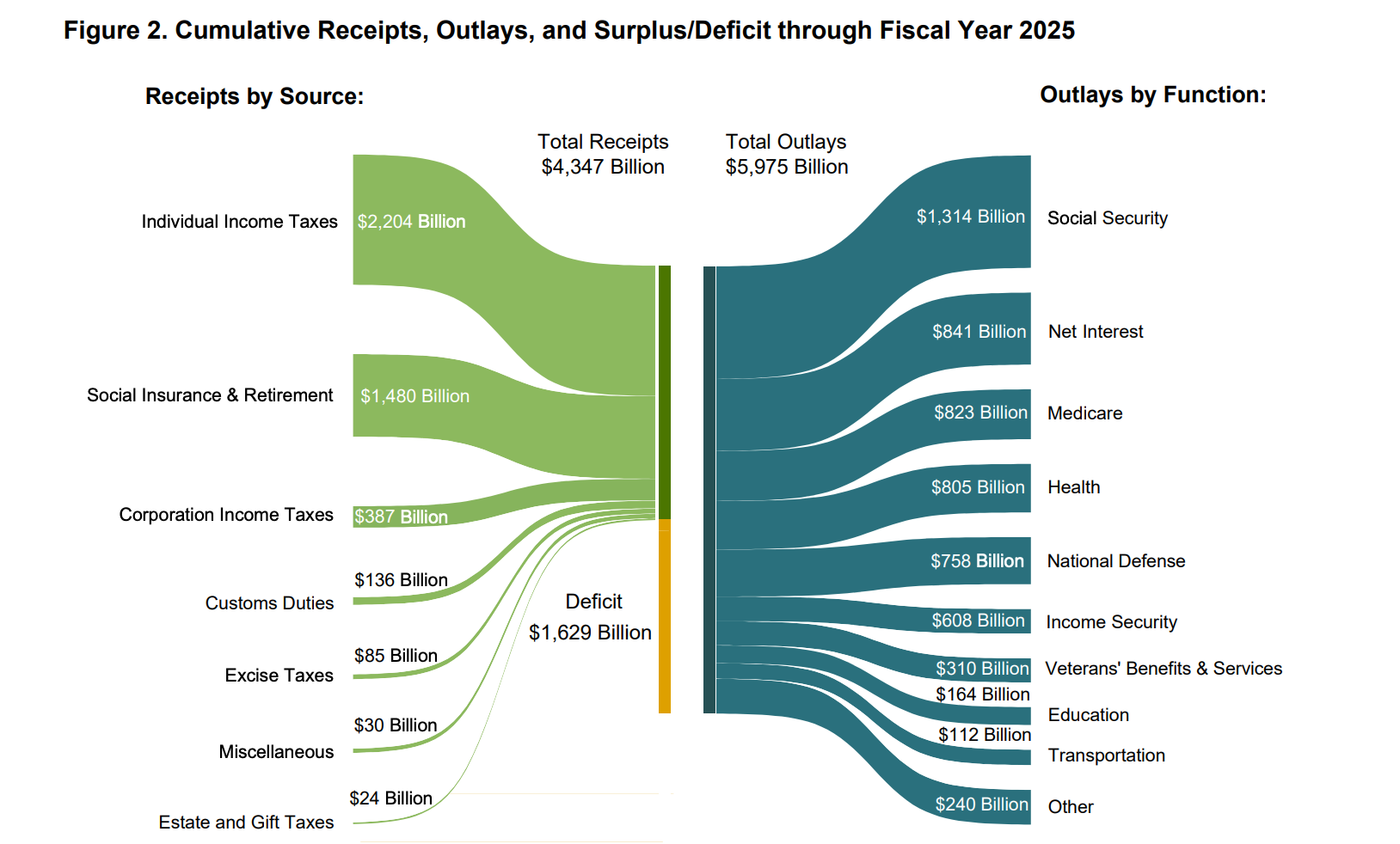

Совокупные поступления показывают, что правительство США собрало около 136 миллиардов долларов таможенных пошлин за 2025 финансовый год. Источник: Министерство финансов США.

Предложение о финансировании стратегического резерва биткоина США за счет профицита пошлин может стать для правительства способом покупки большего количества биткоинов в соответствии с указом президента США Трампа, согласно которому дополнительные биткоины могут быть приобретены только в рамках бюджетно-нейтральных стратегий.

Министр финансов США подает неоднозначные сигналы о стратегическом резерве

Скотт Бессент, министр финансов США, заявил в четверг, что правительство США не будет покупать новые биткоины для стратегического резерва.

«Мы не будем покупать их, но будем использовать конфискованные активы и продолжать их наращивать», — заявил Бессент в интервью Fox Business.

Однако позже в тот же день Бессент уточнил свою позицию, пояснив, что правительство США все еще «изучает бюджетно-нейтральные пути» для накопления большего количества цифровой валюты.

Было предложено несколько бюджетно-нейтральных стратегий, включая переоценку золотых резервов Казначейства, которые в настоящее время оцениваются всего в 42,22 доллара за тройскую унцию, в то время как золото торгуется на спотовых рынках примерно по 3335 долларов за унцию.

Другие бюджетно-нейтральные пути включают перераспределение части других существующих резервных активов правительства, например, продажу нефти из стратегического нефтяного резерва для приобретения большего количества BTC.

Leituras Relacionadas

Building the Bright Path While Secretly Crossing Chencang: Is Walsh Paving the Way for a September "Rate Cut"?

The title "Building the Plank Road Openly While Secretly Crossing at Chencang: Is Walsh Paving the Way for a September 'Rate Cut'?" suggests Federal Reserve Chair Kevin Walsh's hawkish stance may be a deliberate smokescreen. Academy Securities analyst Peter Tchir argues in a report that markets, currently pricing a 75% chance of a September hike, are missing a potential path to a September rate cut that Walsh himself might be quietly preparing. Tchir posits that Walsh's hawkish rhetoric aims to suppress long-term yield risks (with the 10-year Treasury yield falling recently) while creating room for a narrative shift based on upcoming data. The potential political endgame, according to this view, could be rate cuts in September and October, ahead of the midterm elections. This hinges on a political logic where the Trump administration's preference for lower rates remains unchanged. A core part of Tchir's argument involves redefining inflation metrics. He contends the Fed under Walsh may deprioritize the PCE index, criticizing its lagging components like Owners' Equivalent Rent (OER). Instead, he points to alternative, more real-time indicators like the New Tenant Repeat Rent Index (NTRR) and the Truflation daily index, which shows core inflation around 1.45%. He suggests the Fed could shift its data narrative to justify policy easing. Furthermore, Tchir downplays AI-driven inflation fears. He argues that consumer price sensitivity, evidenced by negative market reactions to price hikes (e.g., Apple), contradicts persistent inflation narratives. He also separates AI/data center spending—which he sees as relatively rate-insensitive—from broader consumer affordability issues, implying rate hikes are misdirected. Based on this analysis, Tchir sees a re-pricing of rate cut expectations as likely, creating opportunities in short-duration Treasuries. He maintains a neutral-to-slightly-bullish view on the long end of the yield curve. For equities, he recommends a significant overweight in energy (especially global nuclear assets) and, within defense/security themes, an overweight in biotech/pharma versus an underweight in semiconductors, expressing caution on AI/data center valuations.

marsbitHá 26m

Building the Bright Path While Secretly Crossing Chencang: Is Walsh Paving the Way for a September "Rate Cut"?

marsbitHá 26m

"King of Shilling" Hayes Strikes Again, This Time Setting His Sights on Deribit

On June 29, BitMEX co-founder Arthur Hayes acquired approximately 6.16 million SYN tokens via OTC platform Flowdesk, valued at around $2.2 million. Subsequently, Hayes publicly endorsed SYN on X, calling it one of the most asymmetric investments he's seen since HYPE and declaring it time for an on-chain options DEX to challenge industry leader Deribit, naming Hypercall as that challenger. The article details the evolution of the Synapse Protocol, originally launched in 2021 as a cross-chain messaging and liquidity network. While its TVL peaked above $1 billion during the last bull market, it has since declined. The protocol's team has since built Hypercall, an on-chain options trading platform on Hyperliquid's HyperEVM, which supports trading options on "any asset" with features like 24/7 trading and defined risk limited to the premium paid. Deribit, founded in 2016, is highlighted as the dominant centralized crypto options exchange, commanding roughly 85% market share in BTC and ETH options. Its strengths include deep liquidity and professional tools, though it faces critiques over custody risk, KYC requirements, and regulatory uncertainty. The analysis suggests Hypercall's potential lies in decentralization, permissionless access, and transparency, potentially carving a niche in DeFi-native and emerging asset options. However, it faces significant challenges competing with Deribit's established network effect and liquidity depth. The piece concludes by noting Hayes's recent and mixed "call" history, referencing his previous promotion and subsequent sale of HYPE, as well as a controversial price target report for CARDS from his family office, Maelstrom, which was followed by a significant price drop for the asset. This activity has drawn criticism, with some accusing Hayes of creating exit liquidity for his followers.

Foresight NewsHá 1h

"King of Shilling" Hayes Strikes Again, This Time Setting His Sights on Deribit

Foresight NewsHá 1h

One Year After the Crash of Crypto Treasury Companies, Copycats Are Already Making a Comeback

One year after the collapse of digital asset treasury (DAT) companies, which wiped out up to 99% for early investors, the scheme has returned in a new guise. Recently, Triller Group announced it would become a "SpaceX treasury company," causing its market cap to surge. This follows the rebranding of another firm, LGHL, now targeting a token called HYPE. The original model, popularized by MicroStrategy (MSTR) and its "Bitcoin yield" narrative, saw companies trading at massive premiums to their underlying crypto holdings. However, most followers like TwentyOne, Metaplanet, and Nakamoto have crashed 80-95%+ from their peaks, erasing nearly all value for late investors. The author argues these structures have no fundamental reason to trade at premiums when low-fee Bitcoin ETFs or direct ownership exist. The cycle persists due to speculative demand driven by FOMO, gamification, and a belief the system is rigged, met by insiders and promoters who profit from the pump-and-dump dynamics. Drawing a parallel to the 1637 Tulip Mania, the piece concludes that such frenzies are not a bug but a recurring product of markets, where greater fools provide demand and insiders supply the schemes. Despite holding Bitcoin personally, the author condemns this specific packaging of assets into leveraged corporate vehicles marketed as innovation, a cycle seemingly unstoppable until a major crash.

marsbitHá 1h

One Year After the Crash of Crypto Treasury Companies, Copycats Are Already Making a Comeback

marsbitHá 1h

Trading

Spot
活动图片