韩国稳定币许可制度下的既得利益者与腐败隐忧

比推Publicado em 2025-08-11Última atualização em 2025-08-11

作者:MORBID-19

编译:深潮TechFlow

原标题:韩国稳定币政策:谁在真正受益?


事后看来一切都很明显!

又是我,再次吐槽韩元稳定币。

但今天我终于搞明白了,为什么我们的“掌控者”如此热衷于推广稳定币。

我想我已经发现他们这一切背后的真正动机了!

我们先来看看《金融时报》的报道:

曾任经济与财政部第二副部长的安道杰 (Ahn Do-geol)最近与企划财政部、韩国银行、金融服务委员会、韩国资本市场研究所和其他相关机构组成了一个工作组,起草一份关于韩元计价稳定币的法案。

(…)

安道杰的办公室计划在法案中不仅涵盖稳定币发行方的基本资格和许可要求,还将纳入有关抵押资产要求、货币政策管理措施、外汇交易监管以及用户保护机制的条款。

韩国资本市场研究院的高级研究员黄世云(Hwang Se-woon),作为安安道杰韩元稳定币特别工作组的一员,强调只有符合严格资格标准的实体才应被允许发行稳定币,并且发行方的资格应通过许可制度授予。

TLDR:发行韩元稳定币很可能需要政府的许可

那么,谁最有可能获得政府的批准呢?可能是与政府关系密切的人?或者是那些已经暗示正在为此做准备的成熟企业?

目前还没有人真正知道这项仓促政策的最终赢家会是谁,但市场似乎已经在某些名字上押注得非常积极了。
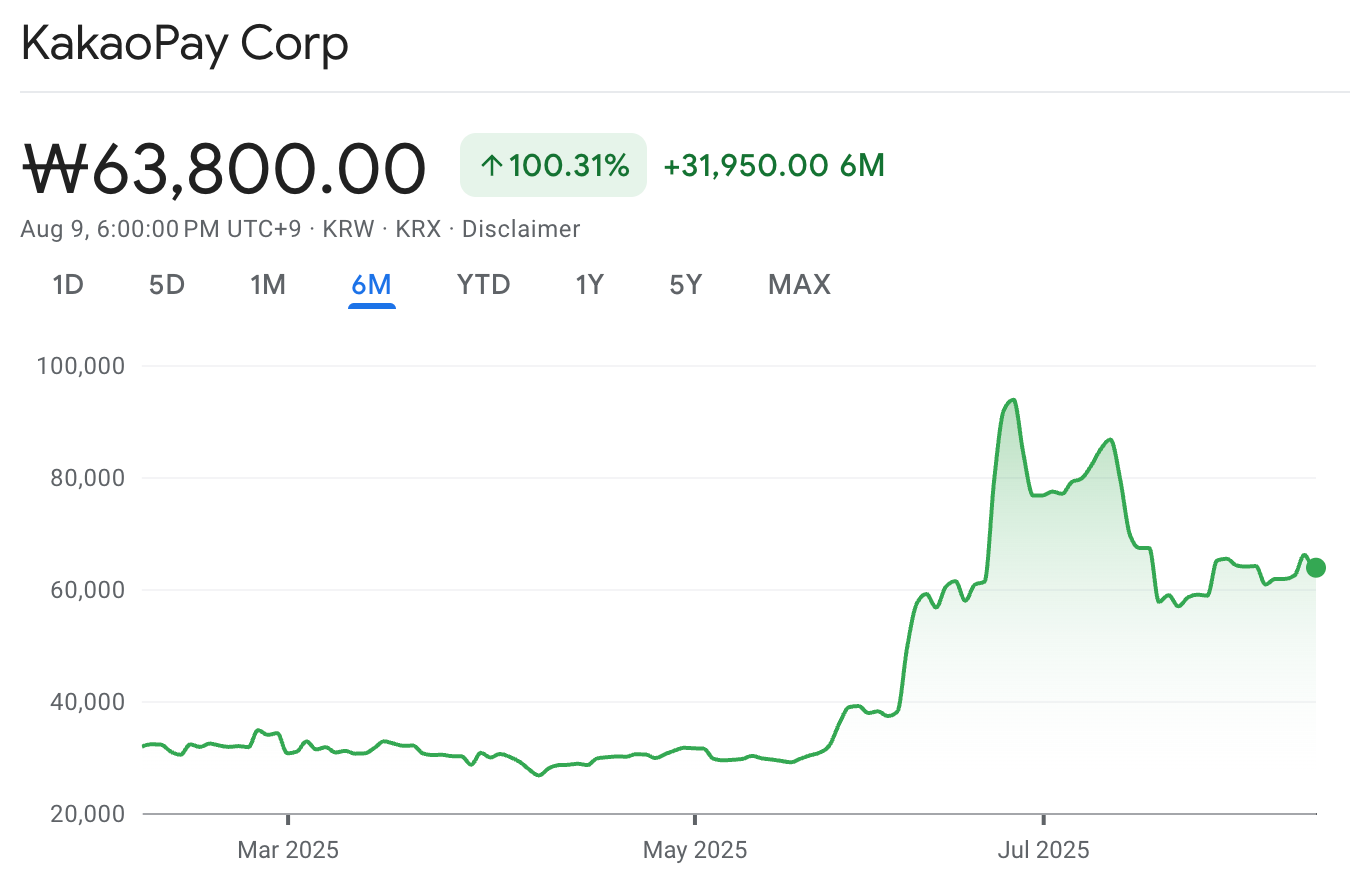
KakaoPay 是韩元稳定币潜在受益者中的显而易见的候选者之一,毕竟它是韩国最大的支付应用之一。

随着 KakaoPay走在前列,Kakao集团正计划部署自己的银行KakaoBank ,进一步推动其稳定币的梦想。

看来韩国的加密玩家们又要“吃饱了”,而那只“看不见的手”似乎在默默地发挥作用。

但这只手真的看不见吗?还是说对某些人来说,它其实是“看得见”的?

感谢4K摄像头,让那只“看不见的手”变得清晰可见

揭露那些宣称自己不持有证券却可能涉及内幕交易的民选官员。

图:韩国民主党议员李春锡(Lee Chun-seok)在国会以他人名义进行股票交易。

韩国民主党议员李春锡(Lee Chun-seok)在国会全体会议期间被拍到通过手机上的证券交易应用操作股票交易,例如交易Naver股票。问题在于,照片中的账户名称并非“李春锡”,而是他的助手车某(Mr. Cha)。

(…)

虽然在过去10个月内拍摄了两张类似的照片,但截至去年12月31日,李议员的资产披露声明中表明,他本人及其家属均未持有任何股票(证券)。根据《金融交易实名制法》,所有金融交易必须以真实姓名进行。任何人若以他人名义进行交易以达到非法目的,例如隐匿资产,可能面临最高五年监禁或最高5000万韩元的罚款。

——摘自《中央日报》(The Joongang)

这经典的“我才不在乎背后有能125倍变焦的摄像头呢,让我看看这些股票涨得怎么样,同时投个赞成票”真的让我无语了。

虽然目前尚无定论他是否真的涉及内幕交易,但仅仅是他用助手账户进行交易这一事实,就已经散发着犯罪的气息。

说到犯罪,很多事情都打着“教育内容”的旗号在进行。

原视频链接:点击此处

在上述视频的 17:06 时间点,讲述者声称韩流(K-Pop)和韩国文化(K-Culture)可能是韩元稳定币的一个良好应用场景,并重复了那些试图推动相关立法的政治人物的论点。

然而,这段视频真正令人震惊的并不是视频内容本身,而是当你查看评论区时,发现观众对频道主表达的全是失望之情:

  • “你怎么了?是在试图竞选吗?”

  • “看来我之前一直高估了孝锡(Hyoseok)……”

  • “这是怎么回事?政府是不是威胁你发这个视频了?哈哈……嗯。”

然而,看到评论区对这种“洗脑”企图表达不满的声音,反而让我感到一丝恐惧,因为我突然意识到,这些提出质疑的人可能只是这个国家中的绝对少数。

大多数人甚至完全不关心稳定币是什么,也不在意它如何运作。只有具备一定金融知识的人才有能力去关注并解决这些问题。

现任政府的支持率高达65%。当然,这和那张免费的100美元消费券绝对没有关系!

只要继续撒钱,或许他们最终真的能达到自己的目标。

我们都会成功。


Twitter:https://twitter.com/BitpushNewsCN

比推 TG 交流群:https://t.me/BitPushCommunity

比推 TG 订阅: https://t.me/bitpush

说明: 比推所有文章只代表作者观点,不构成投资建议

Leituras Relacionadas

Robotic GPT-3 Moment Shakes Silicon Valley: Zero Lines of Code, Learns Instantly, with Investments from Jensen Huang and Fei-Fei Li

Generalist AI's newly released robot foundation model GEN-1.5 is being hailed as the "GPT-3 moment" for embodied AI. The model demonstrates remarkable one-shot and few-shot learning capabilities in physical manipulation tasks. By watching a single 3-12 second demonstration video (physical prompting) without any training or code, the robot can attempt the task with a 59% average success rate across 10 tasks. With just 5 minutes of demonstration data and minimal fine-tuning (10 gradient steps), the success rate jumps to 83%. The most significant breakthrough is the emergence of spontaneous, improvisational problem-solving abilities not present in the training data. For instance, after learning to sweep blocks with a brush, the robot can adapt to use a banana similarly or switch to a completely new "scoop-and-pour" strategy when given a dustpan. Other emergent behaviors include removing obstacles, correcting errors, and spontaneously sorting objects. These capabilities stem from over 8 months of large-scale pre-training on physical interaction data, suggesting the existence of a Scaling Law for embodied intelligence—where model generalization improves with more data and training time. This approach drastically reduces the cost and expertise needed to teach robots new skills, potentially democratizing robot programming. The release coincides with a surge in the humanoid robotics sector, marked by events like the World Robot Conference and significant investments. While the demonstrated tasks are still relatively simple, the scaling trend and emergent behaviors point toward a future where general-purpose robot "brains" could be easily adapted to various hardware "bodies," reshaping the industry's competitive landscape.

marsbitHá 39m

Robotic GPT-3 Moment Shakes Silicon Valley: Zero Lines of Code, Learns Instantly, with Investments from Jensen Huang and Fei-Fei Li

marsbitHá 39m

Semiconductor Industry Sees a New Wave of Price Hikes, with STMicroelectronics, Maxscend and Others Increasing Prices Intensively

The semiconductor industry is experiencing a new wave of price increases driven by supply-demand dynamics and rising costs. Throughout August, multiple international and domestic semiconductor companies have issued price adjustment notices to clients, with a focus on analog and RF chips. Key companies adjusting prices include STMicroelectronics, which is implementing its third price hike in 2026 effective August 23, citing sustained demand pressure and rising costs across the supply chain. Analog Devices, Inc. (ADI) has also announced a second price increase for 2026, effective September 13, due to "unprecedented" demand growth and escalating manufacturing costs. In China, RF chip leader Zhuosheng Microelectronics issued a price adjustment notice for its full RF product line, effective September 1, its first hike this year, attributing it to rising raw material and foundry costs. Additionally, Chinese MCU manufacturer Nations Technologies announced a 10-20% price increase for some products from October 1. This new round of price hikes has shifted its focus to mature process nodes (e.g., analog, RF, power, MCUs), partly due to AI computing demand consuming 8-inch wafer capacity. This contrasts with the first half of 2026, when the surge was led by AI memory chips like HBM and server DRAM. Analysts note that the long lead time for expanding analog/power semiconductor capacity (18-24 months) may sustain price resilience in the short term. However, downstream manufacturers' cost tolerance and fluctuating global demand could become constraints, potentially limiting further significant price increases. Companies have linked the hikes to ensuring future supply stability by funding capacity expansion.

marsbitHá 42m

Semiconductor Industry Sees a New Wave of Price Hikes, with STMicroelectronics, Maxscend and Others Increasing Prices Intensively

marsbitHá 42m

Trading

Spot
活动图片