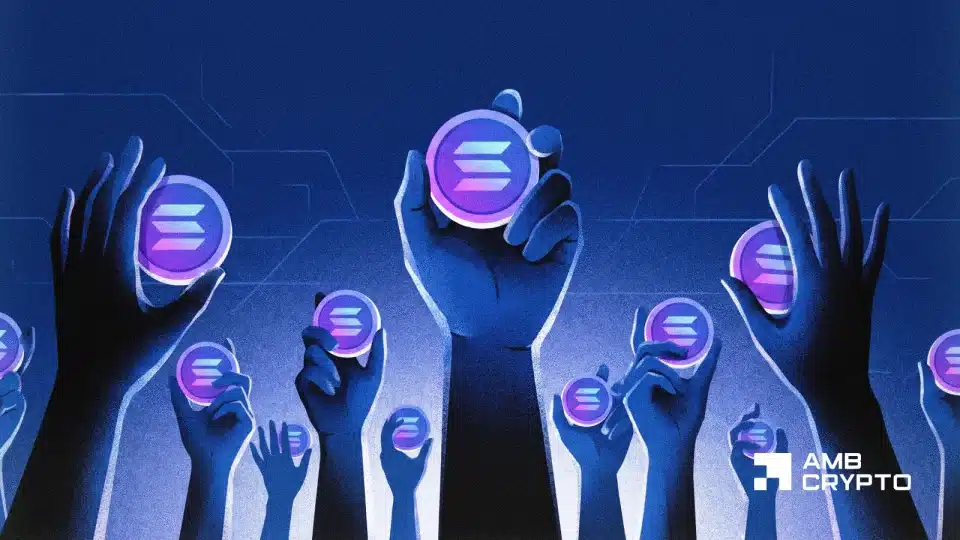
Solana Mobile began shipping its second-generation crypto phone, the Seeker, on August 4, 2025, marking the project’s most ambitious push yet to bring on-chain functionality into a mainstream handset. The company confirmed the rollout publicly to users in 50+ countries and preorders topping 150,000 units—orders that materially outpace the first-generation Saga’s production run.
The timing coincides with a wide-ranging interview with the When Shift Happens podcast by Kevin Follonier in which Solana co-founder Anatoly Yakovenko explained why a blockchain company would build a phone at all. “Mobile was like my baby,” he said, pointing to his years at Qualcomm and the latent security stack already inside modern chipsets.
Solana Seeker Phone — All You Need To Know
“As soon as I started taking crypto seriously, my instinct was [that] there is a whole stack for secure elements and a trusted display embedded in these chips… developed… for making cryptographic signatures be as secure as a Ledger. So all this technology is available in your phone.”
He framed the aim as both user- and developer-centric: “There is an opportunity to make something better for users… and an opportunity to make something for developers, which is, you know, get rid of the 30% fees. You have a crypto-friendly app store.” He also called the smartphone “the tricorder from Star Trek,” underscoring its centrality to how people access the internet.
At the heart of Seeker is a hardware-anchored Seed Vault—developed in partnership with Solflare—that keeps private keys and seed phrases isolated from the application layer while still allowing in-app transactions. Yakovenko described it as a way to avoid risky behavior like re-entering a primary wallet’s seed phrase across different apps: “Do not share your seed phrase between apps or wallets.
The Seed Vault keeps that seed phrase secure, but the wallet can be shared between applications.” Seeker refines what shipped on the Saga by making the confirmation flow feel “more like Apple Pay,” with secure prompts and trusted display for signing. Solana Mobile’s own materials similarly pitch the Seed Vault as the device’s core security boundary, now integrated with double-tap transactions and fingerprint entry.
Yakovenko was explicit that Seeker is not about replacing every iPhone overnight. Many corporate environments, he noted, lock workers into Apple’s security tooling. But he argued there is a large addressable market outside “iPhone land,” and he made a practical case for using Seeker as a second device: a dedicated, more secure “NFT cryptophone” for hot-wallet activity, while long-term holdings stay on hardware wallets and multi-sig setups. “Cold storage is separate… you should always have a cold and hot separation.”
On the developer and distribution side, Seeker ships with Solana dApp Store 2.0, a venue Solana Mobile positions as crypto-forward and free of the policy friction that has historically constrained web3 apps on mainstream stores. The device also introduces Seeker ID—a unified identity that ties a wallet address, a .skr username, and a Genesis Token to a user profile for smoother app onboarding and rewards. For developers, Solana markets this as proof-of-authenticity and a way to reach “high-value users.”
The commercial stakes are clear. Yakovenko said the project now sees a path from 150,000 preorders to one million devices—enough, in his view, to sustain a standalone mobile ecosystem—though he was candid that getting to 10 million remains an open challenge tackled “one step at a time.”
For context, Solana’s first handset, the Saga, ultimately moved ~20,000 units, struggling at launch but later selling out amid speculative demand around app incentives and memecoin airdrops.
Yakovenko’s strategic endgame is unambiguous: “To disrupt the duopoly.” Not by fiat, but by introducing a credible alternative where on-chain signing, wallet UX, and distribution economics are native rather than bolted on. As he put it, “A single participant—even a small one—can change the market equilibrium.”
At press time, SOL traded at $169.


Related Posts