Senate to Release CFTC Crypto Draft in September

TheCryptoTimesPublicado em 2025-07-20Última atualização em 2025-07-23

The U.S. Senate Agriculture Committee is planning to release a draft bill in early September that would guide how the Commodity Futures Trading Commission (CFTC) regulates the crypto industry. 

Senators will return from recess around that time, so this will align with the White House’s September deadline for action on digital asset rules after the signing of the GENIUS Act.

This update comes just one day after the Senate Banking Committee shared its own draft bill. That bill focused more on the Securities and Exchange Commission (SEC), which usually handles securities like stocks and bonds. Both drafts are expected to come together into a final market structure bill later on.

The Agriculture Committee, which oversees the CFTC, wants to outline the Commission’s powers in the crypto space, including what it can and can’t regulate. The upcoming draft will propose that the CFTC take charge of digital assets like Bitcoin and Ethereum, which are often seen as commodities.

According to a post by journalist Eleanor Terrett on X, the Agriculture Committee will share its draft in early September. She said it will be a “discussion draft”, meaning it’s not final and could change after feedback. She also shared that it will be bipartisan, which means members from both major political parties are working on it. One of the names mentioned was Democratic Senator Amy Klobuchar.

The draft will likely give the CFTC control over cryptocurrencies that are seen as digital commodities. That includes popular coins like Bitcoin and Ethereum. On the other hand, digital assets that are more like stocks will stay under the SEC’s control.

The draft is also expected to include new ideas on how to regulate stablecoins and decentralized finance (DeFi). These are two fast-growing parts of the crypto world, and many people have said they need better rules to protect users.

Under a current proposal, the CFTC would have 270 days to make decisions on applications related to crypto activities. The Senate Banking Committee has already asked the public for feedback on whether the current draft splits authority fairly between the two regulators.

Also Read: Crypto Bills Hit Roadblock in House Over CBDC Ban Demands


Leituras Relacionadas

Li Fei-Fei's Latest Long-Form Article: When Video Generation, Robotics, and NVIDIA All Call Themselves World Models, We Need a Taxonomy

In a new article, Dr. Fei-Fei Li addresses the widespread and often inconsistent use of the term "world model" in AI. She proposes a clear, functional taxonomy rooted in the classic Partially Observable Markov Decision Process (POMDP) loop (agent → action → state → observation → agent). According to this framework, current systems called "world models" are different projections of this loop, categorized by their primary output: 1. **Renderers**: Output observations (pixels). Their goal is visual fidelity for human consumption (e.g., video generation models like Sora). They are the most commercially mature but are limited by a focus on appearance over physical accuracy. 2. **Simulators**: Output states (geometric, physical, dynamic representations). They provide a structurally accurate world for both human professionals (e.g., architects) and computational agents (e.g., robots for training). Li argues simulators are the crucial, underappreciated bridge, as they can underpin both rendering and planning. 3. **Planners**: Output actions. Given an observation and a goal, they decide what an agent should do next (e.g., robotic action models). This area is highly promising but remains the least mature for real-world deployment. Li highlights a key trend: the boundaries between these three categories are beginning to blur, as they all rely on a shared underlying understanding of geometry, physics, and dynamics. The logical endpoint is a unified world foundation model capable of switching between rendering, simulation, and planning based on downstream needs. This convergence, she concludes, is central to advancing spatial intelligence—enabling machines not just to talk about the world, but to truly understand, imagine, and interact with it.

marsbitHá 4h

Li Fei-Fei's Latest Long-Form Article: When Video Generation, Robotics, and NVIDIA All Call Themselves World Models, We Need a Taxonomy

marsbitHá 4h

Forbes Feature: Stablecoin Cross-Border Payments Are Faster, But Not Yet Cheaper

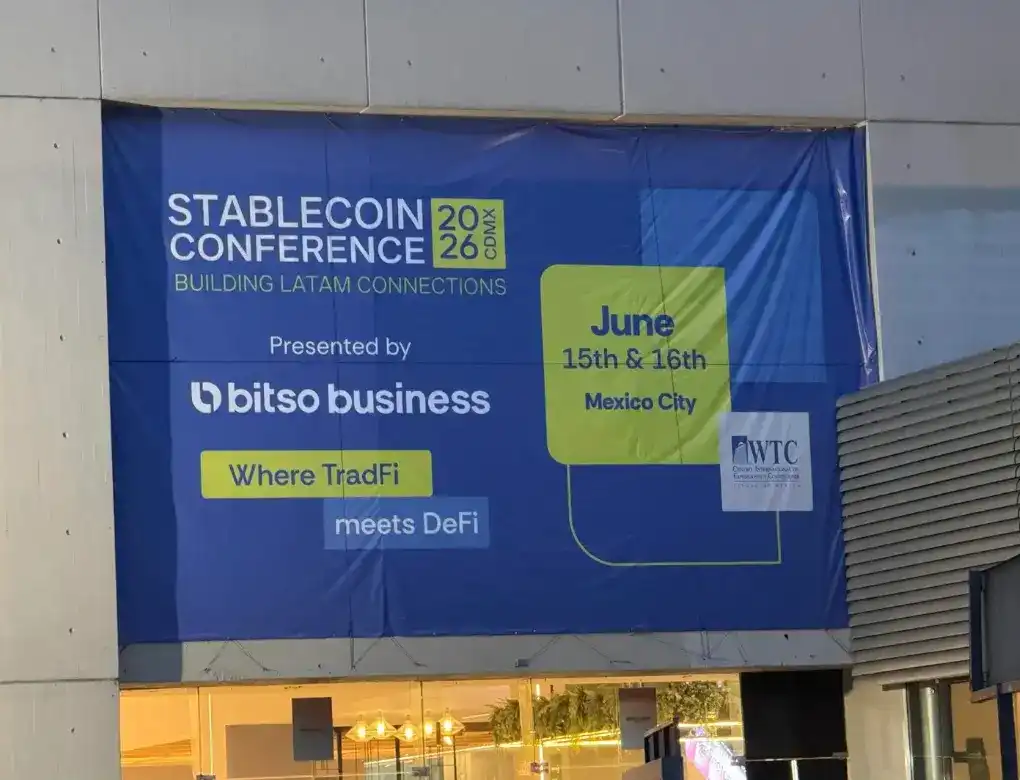
A Forbes feature delves into the state of stablecoin-based cross-border payments, noting rapid growth but a key shortfall: while faster and more accessible, they are not yet cheaper. At a recent industry conference in Mexico City, optimism about technology, regulation, and volume was tempered by discussions with practitioners. The core issue is liquidity. Traditional FX brokers charge 60-70 basis points, and stablecoins promise to slash this to 2-5 basis points. However, this theoretical cost advantage cannot be realized until deep liquidity pools are established at scale, requiring significant institutional capital inflow. A major adoption barrier is trust. Businesses often rely on long-standing relationships with traditional brokers, valuing reliability over marginal cost savings. This shift will be gradual. Furthermore, successful companies in the space are not positioning themselves as replacements for legacy systems like SWIFT, but as complements. They leverage stablecoins for speed while using traditional rails for their standardization and reliability in ensuring accurate payment details—a critical factor for supplier payments to avoid customs issues. Companies like Caliza, experiencing high monthly growth, exemplify this hybrid approach. The industry anticipates consolidation, as long-term viability will depend on securing the essential trifecta: proper licensing, robust fiat on/off-ramps, and deep liquidity. Without these, firms risk being mere intermediaries rather than building sustainable businesses.

marsbitHá 4h

Forbes Feature: Stablecoin Cross-Border Payments Are Faster, But Not Yet Cheaper

marsbitHá 4h

Trading

Spot
活动图片