Expert Shuts Down XRP Lawsuit Delay Rumors: ‘2026 Not Happening’

bitcoinistPublicado em 2025-06-23Última atualização em 2025-06-23

Resumo

Talk of the US Securities and Exchange Commission’s long-running enforcement action against Ripple Labs dragging on into 2026 flashed across...

Trusted Editorial content, reviewed by leading industry experts and seasoned editors. Ad Disclosure

Talk of the US Securities and Exchange Commission’s long-running enforcement action against Ripple Labs dragging on into 2026 flashed across X over the weekend, after the pseudonymous trader “Altcoin Bale” warned followers that “SEC v XRP final decision could be delayed until late 2026” — a claim that ricocheted through crypto-X in minutes.

Within hours, Australian solicitor and veteran XRP commentator Bill Morgan counter-punched. “This is not on the cards unless Judge Torres rules against the latest joint motion and rather that make the common sense decision to live with the summary judgement decision and the current penalty and permanent injunction, the settlement process breaks down completely and both parties run their appeals. An improbable outcome.”

XRP Lawsuit: Why 2026 Is A Stretch

Morgan’s confidence rests on hard procedural facts. On 13 June Ripple and the SEC filed a joint Rule 60(b)/62.1 motion asking Judge Analisa Torres to dissolve last year’s injunction and redistribute the $125 million civil penalty now sitting in escrow — $50 million would satisfy the SEC; the remaining $75 million would be returned to Ripple.

The filing also proposes that, if Torres signals she is inclined to grant it, both sides will seek a limited remand from the Second Circuit so the district court can enter a revised final judgment and terminate all appeals.
Critically, the Second Circuit has already paused those appeals and ordered the SEC to file a simple status report by 15 August 2025. That administrative date — now being mis-read as a litigation deadline, doesn’t mean the final decision will take until 2026.

Judge Torres’ July 2023 summary-judgment split the case, holding that institutional sales of XRP were unregistered securities offerings but programmatic exchange sales were not. After remedies briefing, she entered a $125 million penalty and a permanent injunction in August 2024. Both sides noticed appeals, but in March 2025 the SEC withdrew its challenge to the programmatic-sales ruling and signalling a broader retreat from crypto-first enforcement. The parties then began settlement talks that produced the current joint motion.

The renewed request goes further than the May version Torres rejected for procedural defects: it lays out “exceptional circumstances” — chiefly, the policy shift at the SEC and the parties’ mutual interest in ending the litigation — that courts require before modifying a final judgment under Rule 60(b)(6). If Torres issues the “indicative ruling” the motion seeks, the case would likely return to her docket on limited remand and close swiftly without full appellate briefing.

Morgan concedes that total settlement failure is “not impossible.” If Torres were to deny the joint motion and decline to dissolve the injunction, both sides would revive their cross-appeals. That procedural reset could indeed postpone a conclusive ruling into late 2026 — but only under that narrow, two-step scenario he deems “improbable”.

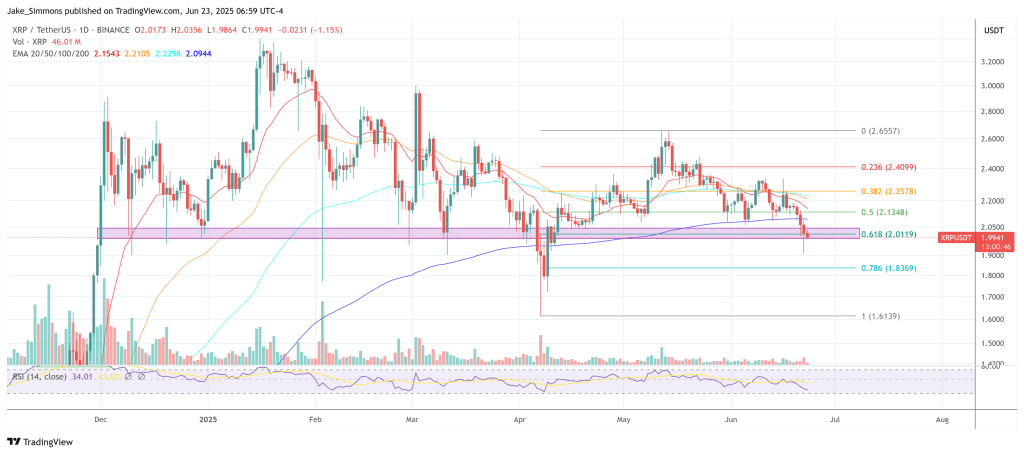
At press time, XRP traded at $1.99.
XRP price
XRP price, 1-day chart | Source: XRPUSDT on TradingView.com
Featured image created with DALL.E, chart from TradingView.com
Editorial Process for bitcoinist is centered on delivering thoroughly researched, accurate, and unbiased content. We uphold strict sourcing standards, and each page undergoes diligent review by our team of top technology experts and seasoned editors. This process ensures the integrity, relevance, and value of our content for our readers.

Jake Simmons has been a Bitcoin enthusiast since 2016. Ever since he heard about Bitcoin, he has been studying the topic every day and trying to share his knowledge with others. His goal is to contribute to Bitcoin's financial revolution, which will replace the fiat money system. Besides BTC and crypto, Jake studied Business Informatics at a university. After graduation in 2017, he has been working in the blockchain and crypto sector. You can follow Jake on Twitter at @realJakeSimmons.

Criptomoedas em alta

Leituras Relacionadas

Bitcoin’s path to $80K may hinge on THIS hidden trend

Bitcoin's potential path toward $80,000 is influenced by conflicting market signals. Data shows the Coinbase Bitcoin Premium Index has recorded its longest-ever streak of consecutive negative premiums, indicating muted institutional demand or net selling from U.S. institutions. While such a trend often signals short-term weakness, it doesn't necessarily forecast a long-term bear market. Additionally, a bearish crossover occurred in Bitcoin's Net Unrealized Profit/Loss (NUPL), with its short-term average falling below the longer-term average, suggesting declining investor profitability and waning market momentum. Historically, major bear market bottoms saw the 100-day NUPL drop below zero, but this cycle it remains positive, implying either an unprecedented bottom or a further decline is needed. Currently trading around $63,148, Bitcoin has seen weekly gains but remains below its May peak. Technical indicators present a mixed picture: the MACD shows bullish momentum, while the RSI signals bearish pressure. A positive development is the return of inflows to Bitcoin ETFs after eight weeks of outflows. Analysts hold divergent views; some highlight a key liquidity zone between $48,000-$50,000 where a market bottom could form, while others maintain a more optimistic long-term outlook. Ultimately, while some bullish signs exist, a strong push from institutional investors appears crucial for Bitcoin to challenge the $80,000 level.

ambcryptoHá 57m

Bitcoin’s path to $80K may hinge on THIS hidden trend

ambcryptoHá 57m

Unexpected Weak Non-Farm Payrolls Data Pushes BTC to Rebound 11%, FOMC Minutes to Test the Narrative of This Rally

Bitcoin has rebounded 11% from its 21-month low, but the sustainability of this rally hinges entirely on the Federal Reserve's release of the June FOMC meeting minutes. The bounce was triggered by a weaker-than-expected US jobs report, which showed only 57,000 jobs added in June—about half of economists' forecasts. This data prompted traders to scale back bets on further Fed rate hikes, fueling a rally in Bitcoin alongside gold and stocks. The upcoming minutes are critical. They will reveal whether Fed officials, in their mid-June meeting, were already expressing concerns about a weakening labor market, tight credit conditions, or the risks of overtightening—factors that would support the market's recent dovish shift. Conversely, if the discussion focused on persistent inflation and the conditions for more rate hikes, the rally's foundational narrative would crumble. Market indicators show the rebound's fragility. While US spot Bitcoin ETFs saw a significant single-day inflow, it followed a prolonged period of outflows. On-chain data indicates a substantial increase in Bitcoin being moved to exchanges, creating potential sell pressure. Options market positioning suggests key price levels around $60,000 and $62,000 that could either stabilize or accelerate price movement. In essence, Bitcoin's 11% gain is built on speculation about the Fed's private deliberations three weeks ago. The FOMC minutes will replace that speculation with concrete details, and the discrepancy between market expectations and the actual record will determine whether Bitcoin holds above $64,000 or falls back toward $58,000.

marsbitHá 1h

Unexpected Weak Non-Farm Payrolls Data Pushes BTC to Rebound 11%, FOMC Minutes to Test the Narrative of This Rally

marsbitHá 1h

Just Now, The World's First Ultra-High-Frame World Model Was Born, Nvidia Content 0, Racing to 50 FPS

Just Now, Global First Ultra-High-Frame World Model Born, 0% NVIDIA, Speeds to 50 FPS A Chinese team has developed MoWorld, the world's first Flash World Model, achieving real-time interactive inference exceeding 50 FPS. Crucially, it is entirely built on domestic NPUs (National Processing Units), bypassing NVIDIA GPUs. Developed by Moxin Technology in collaboration with Zhejiang University's Pan Yunhe academician team, MoWorld represents a complete, closed-loop system from training and distillation to deployment on domestic computing power. The model tackles the critical industry bottleneck of real-time performance, essential for applications like robotics, gaming, and digital worlds. MoWorld achieves this through a full-stack redesign for NPUs, including a proprietary 3D-annotated data pipeline, system-level optimizations for long-sequence training (up to 2000 frames), and inference optimizations like dynamic mixed-precision quantization. On a Huawei Ascend 910C platform, a 14B MoE parameter model achieves over 50 FPS, reducing typical inference costs by 70% compared to equivalent GPU solutions. This breakthrough lowers the deployment barrier, potentially accelerating the industrialization of world models. Key application areas include gaming/entertainment (offering 6-DoF camera control for immersive exploration), embodied AI/autonomous driving (providing a high-fidelity digital training ground), film pre-visualization, and 3D reconstruction/digital twins due to its strong geometric consistency. MoWorld demonstrates that a full-stack domestic compute ecosystem can support cutting-edge, real-time world models, positioning China at a competitive starting line in defining next-generation spatial intelligence standards. The project underscores a shift in competition from model scale to real-world usability and cost-effective deployment.

marsbitHá 1h

Just Now, The World's First Ultra-High-Frame World Model Was Born, Nvidia Content 0, Racing to 50 FPS

marsbitHá 1h

Pacific 'Fever': How Extreme Weather Becomes Wall Street's Cash Machine?

"Pacific Fever": How Extreme Weather Becomes Wall Street's ATM? The summer of 2026 sees unusually fierce weather across China and globally. The common driver behind this global pattern is a powerful El Niño event, potentially the strongest since 1950, as declared by NOAA. This phenomenon, characterized by warming central/eastern Pacific waters, disrupts global atmospheric circulation, raising risks of floods, droughts, and heatwaves, further intensified by climate change. For financial markets, especially commodities, El Niño is not just weather but a major trading theme. History shows its price impact is profound. In the 1970s, El Niño-driven anchovy collapse in Peru fueled a soybean boom, giving Richard Dennis his first million. Anthony Ward's cocoa empire was built on superior weather intelligence. Most recently in 2024, West African droughts caused cocoa prices to soar over 400%, delivering huge gains for trend-following hedge funds. In 2026, markets are again pricing in future El Niño-induced supply shocks. Despite high current inventories, prices for palm oil, rubber, and sugar have rallied on anticipation of upcoming Southeast Asian droughts and weak Indian monsoons. Analysts identify key indicators to watch: the Niño3.4 index, Indian monsoon rainfall, Malaysian palm oil stocks, and the fundraising scale of specialized weather funds like Moreton Capital. Beyond trading opportunities, a concerning narrative is gaining traction online, linking El Niño with fertilizer shortages and energy supply disruptions to warn of potential global food crises within months. While alarmist, it highlights a deeper truth: the cascading effects of climate-driven weather extremes ultimately translate into higher costs of living for everyone, far beyond the trading floor.

marsbitHá 1h

Pacific 'Fever': How Extreme Weather Becomes Wall Street's Cash Machine?

marsbitHá 1h

Pacific 'Fever': How Extreme Weather Becomes Wall Street's ATM?

"Pacific 'Fever': How Extreme Weather Becomes Wall Street's Piggy Bank" The article examines how the 2026-2027 El Niño, potentially the strongest since 1950, is not only disrupting global weather but also creating major financial opportunities. It links recent extreme events in China and worldwide to this climate phenomenon, which alters atmospheric patterns, increasing risks of floods, droughts, and heatwaves. The core narrative explores how financial markets capitalize on these disruptions. A hedge fund is raising $500 million specifically to bet on El Niño-affected crops like South African corn and Malaysian palm oil. Historically, such strategies have yielded massive profits. Examples include Richard Dennis ("Turtle Trader") making his first fortune in the 1970s soy boom triggered by El Niño's impact on Peruvian anchovies (a key fishmeal source), and Anthony Ward's cocoa empire built on superior weather intelligence. The 2024 cocoa price surge, driven by West African drought, enriched quantitative trend-following funds. Currently, markets are preemptively bidding up palm oil, rubber, and sugar futures based on anticipated future supply shocks, despite high current inventories. The article details El Niño's asymmetric global impacts: causing drought in Southeast Asia (hurting palm oil/rubber) and India (affecting sugar/cotton), but bringing beneficial rains to South American soy and sugarcane. Key metrics to watch include the Niño3.4 index, Indian monsoon data, and Malaysian palm oil stocks. The true price effects often materialize *after* the El Niño peaks, suggesting 2027 may see the real volatility. The conclusion warns that beyond trading gains, the convergence of El Niño, energy shortages, and fertilizer scarcity poses a systemic risk, potentially raising the cost of living for everyone, turning a climate event into a global economic story.

链捕手Há 1h

Pacific 'Fever': How Extreme Weather Becomes Wall Street's ATM?

链捕手Há 1h

Trading

Spot

Artigos em Destaque

O que é XRP 2.0

XRP 2.0: Uma Nova Fronteira no Landscape das Criptomoedas Introdução ao XRP 2.0 No reino em constante evolução das criptomoedas, novos projetos surgem continuamente, lutando por atenção e adoção. Uma dessas iniciativas promissoras é o XRP 2.0, um novo projeto de criptomoeda concebido para aproveitar a tecnologia de blockchain avançada e as metodologias de criptografia robustas. Embora o nome tenha paralelos com o XRP da Ripple, é crucial notar que o XRP 2.0 opera de forma independente, focando em melhorar a segurança das transações, a privacidade e a escalabilidade. À medida que o panorama financeiro digital abraça cada vez mais soluções descentralizadas, o XRP 2.0 visa contribuir de forma significativa para a web3 e a expansão global dos projetos de criptomoedas. O que é o XRP 2.0? No seu núcleo, o XRP 2.0 é um projeto de criptomoeda que visa criar um ecossistema de moeda digital seguro e descentralizado. Sua tecnologia fundamental integra princípios de blockchain sofisticados com técnicas de criptografia de ponta. O objetivo abrangente do XRP 2.0 é estabelecer-se como uma plataforma confiável e eficiente que possibilita a execução rápida de transações, priorizando a proteção de privacidade aprimorada para os seus usuários. O projeto é promovido como uma solução para muitas limitações enfrentadas pelas criptomoedas existentes, propondo um sistema que pode lidar com um volume maior de transações com velocidade e privacidade melhoradas. Esta versatilidade posiciona o XRP 2.0 como um concorrente significativo em um mercado repleto de várias moedas digitais. Quem é o Criador do XRP 2.0? A identidade do criador por trás do XRP 2.0 foi identificada como 'Wilbur.' No entanto, detalhes abrangentes sobre Wilbur ou a sua entidade associada permanecem elusivos. O anonimato de muitos criadores de criptomoedas não é um fenômeno incomum na indústria, muitas vezes concebido para manter um grau de privacidade e segurança. Quem são os Investidores do XRP 2.0? Até agora, informações específicas relacionadas às fundações ou organizações de investimento que apoiam o XRP 2.0 não estão disponíveis publicamente. No setor das criptomoedas, o apoio de investidores reputados pode influenciar significativamente a credibilidade e o sucesso de um projeto, no entanto, a transparência em relação aos apoiantes financeiros do XRP 2.0 não foi estabelecida. Como Funciona o XRP 2.0? O XRP 2.0 destaca-se por empregar uma combinação de tecnologia blockchain e algoritmos de criptografia avançados que asseguram transações seguras e descentralizadas. Sua estrutura inovadora inclui características únicas projetadas para fomentar o envolvimento dos usuários e ampliar as funcionalidades além das transações convencionais de criptomoedas. Entre essas características, o XRP 2.0 incorpora capacidades potenciadas por IA, como funcionalidades de texto-para-imagem e texto-para-fala. Estas adições são projetadas para melhorar a experiência interativa dos usuários, promovendo uma maior aplicabilidade em vários setores. Ao unir avanços tecnológicos com um design centrado no utilizador, o XRP 2.0 pretende captar a atenção de uma diversa gama de indivíduos e empresas que procuram integrar soluções de criptomoedas em suas estruturas operacionais. Cronologia do XRP 2.0 Compreender o XRP 2.0 requer examinar os marcos que definiram sua jornada até agora: 23 de Julho de 2023: O XRP 2.0 é apresentado como um novo projeto de criptomoeda, visando revolucionar as capacidades de transação seguras e descentralizadas no domínio do blockchain. 8 de Setembro de 2023: O lançamento de outro projeto, XRP20, ocorre, marcando o surgimento de um token ERC-20 na blockchain Ethereum que permanece não relacionado ao XRP 2.0. 13 de Novembro de 2023: O XRP Ledger passa por uma atualização significativa com o lançamento da versão 2.0.0 do software do servidor rippled. É importante notar que este desenvolvimento está desconectado do projeto de criptomoeda XRP 2.0. Pontos-chave sobre o XRP 2.0 Para destilar a essência do XRP 2.0, vários fatores críticos emergem: Características Únicas: A inclusão de características como texto-para-imagem e texto-para-fala potenciadas por IA diversifica ainda mais as aplicações potenciais do XRP 2.0. Tecnologia Blockchain: A estrutura utiliza mecanismos de blockchain avançados e protocolos de criptografia, assegurando um ambiente seguro e descentralizado para transações. Escalabilidade e Privacidade: O XRP 2.0 prioriza proteção de privacidade aprimorada nos processos de transação e a escalabilidade necessária para acomodar uma base de utilizadores crescente. Sem Afiliação com a Ripple: Importante, apesar do seu nome, o XRP 2.0 não tem qualquer lealdade ou colaboração com o XRP da Ripple, distinguindo sua estrutura operacional e objetivos dentro do ecossistema das criptomoedas. Conclusão O XRP 2.0 representa uma empreitada ambiciosa no domínio das criptomoedas, visando oferecer uma combinação de segurança, privacidade e eficiência em transações digitais. Ao integrar tecnologias sofisticadas e características amigáveis ao utilizador, o projeto propõe-se a ampliar os horizontes do que as criptomoedas podem alcançar na economia digital atual. Embora o anonimato do seu criador e a falta de investidores divulgados possam levantar questões para alguns, o foco do XRP 2.0 em funcionalidades avançadas e descentralização aumenta seu apelo num mercado de criptomoedas cada vez mais congestionado. À medida que o panorama das criptomoedas continua a evoluir, o XRP 2.0 pode ainda emergir como um jogador crucial na expansão de soluções de blockchain seguras e escaláveis.

112 Visualizações TotaisPublicado em {updateTime}Atualizado em 2024.12.03

O que é XRP 2.0

Como comprar XRP

Bem-vindo à HTX.com!Tornámos a compra de XRP (XRP) simples e conveniente.Segue o nosso guia passo a passo para iniciar a tua jornada no mundo das criptos.Passo 1: cria a tua conta HTXUtiliza o teu e-mail ou número de telefone para te inscreveres numa conta gratuita na HTX.Desfruta de um processo de inscrição sem complicações e desbloqueia todas as funcionalidades.Obter a minha contaPasso 2: vai para Comprar Cripto e escolhe o teu método de pagamentoCartão de crédito/débito: usa o teu visa ou mastercard para comprar XRP (XRP) instantaneamente.Saldo: usa os fundos da tua conta HTX para transacionar sem problemas.Terceiros: adicionamos métodos de pagamento populares, como Google Pay e Apple Pay, para aumentar a conveniência.P2P: transaciona diretamente com outros utilizadores na HTX.Mercado de balcão (OTC): oferecemos serviços personalizados e taxas de câmbio competitivas para os traders.Passo 3: armazena teu XRP (XRP)Depois de comprar o teu XRP (XRP), armazena-o na tua conta HTX.Alternativamente, podes enviá-lo para outro lugar através de transferência blockchain ou usá-lo para transacionar outras criptomoedas.Passo 4: transaciona XRP (XRP)Transaciona facilmente XRP (XRP) no mercado à vista da HTX.Acede simplesmente à tua conta, seleciona o teu par de trading, executa as tuas transações e monitoriza em tempo real.Oferecemos uma experiência de fácil utilização tanto para principiantes como para traders experientes.

1.7k Visualizações TotaisPublicado em {updateTime}Atualizado em 2026.06.02

Como comprar XRP

Discussões

Bem-vindo à Comunidade HTX. Aqui, pode manter-se informado sobre os mais recentes desenvolvimentos da plataforma e obter acesso a análises profissionais de mercado. As opiniões dos utilizadores sobre o preço de XRP (XRP) são apresentadas abaixo.

活动图片