UK FCA Seeks Public Feedback On Crypto Rules Ahead Of 2026 Regulatory Overhaul

bitcoinistPublicado em 2025-05-03Última atualização em 2025-05-04

Resumo

In the latest step of its regulatory overhaul roadmap, the UK’s financial watchdog has asked for the public’s feedback on...

Trusted Editorial content, reviewed by leading industry experts and seasoned editors. Ad Disclosure

In the latest step of its regulatory overhaul roadmap, the UK’s financial watchdog has asked for the public’s feedback on its proposed crypto regulations. This request follows the recent publication of a draft legislation to establish a more comprehensive regulatory framework for digital assets.

Financial Watchdog Seeks Public Input

On Friday, the UK FCA published a new Discussion Paper (DP) seeking public input as part of its digital assets’ roadmap, aiming to open a discussion on the features of the upcoming regulatory regime and how crypto assets’ “unique aspects” should be considered.

The financial authority stated it wishes to develop a safe, competitive, and sustainable crypto industry, noting that long-term confidence depends on “clear regulations to promote market integrity and appropriate consumer protection.”

Our aim is to achieve an appropriate degree of consumer protection, enhance market integrity, support effective competition whilst facilitating international competitiveness and encouraging growth as far as reasonably possible. We welcome feedback as to whether the policy proposals achieve an appropriate level.

As such, the Discussion Paper consults on the crypto community’s view on regulations related to trading platforms, intermediaries, staking, lending, borrowing, and decentralized finance. Additionally, it asks for feedback on using credit to purchase digital assets.

A recent Financial Times report alleges that the financial regulator plans to prohibit retail investors from borrowing money for their crypto investments, due to the FCA’s concern about “unsustainable debt, particularly if the value of their crypto asset drops and they were relying on its value to repay”.

The FCA Executive Director of Payments and Digital Finance, David Geale, stated, “Crypto is an area of potential growth for the UK but it has to be done right,” arguing, “To do that we have to provide an appropriate level of protection.”

The regulatory agency solicited feedback from firms, individuals, finance services, industry groups, professional advisors, experts, academics, think-tanks, policymakers, and other regulatory bodies. These entities will have until June 13, 2025, to submit their input, which will be considered to decide the FCA’s next steps.

UK’s 2026 Crypto Overhaul Advances

The Discussion Paper is part of the FCA’s crypto roadmap to expand from the current regime to a more comprehensive regulatory framework. It follows a recent publication of a draft legislation to establish a complete regime for digital assets.

As reported by Bitcoinist, the UK Treasury published the draft and an explainer document detailing the intended policy outcomes of these provisions. The proposed rules will bring exchanges, dealers, and agents into the regulatory limits to crack down “on bad actors while supporting legitimate innovation.”

Meanwhile, digital asset firms with UK customers must meet clear transparency, consumer protection, and operational resilience standards, similar to traditional financial institutions.

UK Finance Minister Rachel Reeves stressed the government’s commitment to making the country a global hub for digital asset technologies, “aligned with the Plan for Change to drive growth, innovation, and security.”

As the FCA stated, these proposals “have been informed by extensive engagement with the crypto asset industry, consumers, traditional finance participants, other regulatory regimes, and input from policy roundtables held in April and May 2024.”

crypto, Bitcoin, BTC, BTCUSDT

Bitcoin (BTC) trades at $96,787 in the one-week chart. Source: BTCUSDT on TradingView
Featured Image from Unsplash.com, Chart from TradingView.com
Editorial Process for bitcoinist is centered on delivering thoroughly researched, accurate, and unbiased content. We uphold strict sourcing standards, and each page undergoes diligent review by our team of top technology experts and seasoned editors. This process ensures the integrity, relevance, and value of our content for our readers.

Rubmar is a crypto enthusiast who likes learning and improving constantly. She enjoys reporting on the latest news and developments in the crypto industry. Rubmar also enjoys scrapbooking, crafting, simulation games, and watching football.

Leituras Relacionadas

Private Credit in US Dollar

Stablecoins are evolving into a new type of money market fund, channeling crypto deposits into the $2 trillion private credit market. This mirrors the 1970s innovation where money market funds pooled small deposits to buy high-yield government securities, bypassing bank restrictions. Today, platforms like Apollo's ACRED tokenized fund and Figure's on-chain lending system allow stablecoin holders to access institutional private credit strategies with no minimum investment, offering yields of 8-12%. On-chain tokenization enables greater liquidity and DeFi composability (e.g., using tokens as collateral for leveraged positions) compared to traditional, locked-up private credit funds. Consequently, on-chain private credit has grown 15x in a year to $5.87 billion, though it remains a tiny fraction (0.3%) of the global market. However, this model carries significant risks, as illustrated by the failure of Goldfinch. Launched in 2021, it directed crypto deposits to motorcycle loans in Kenya and Nigeria. Critical issues included a lack of local oversight, leading to unauthorized fund transfers and borrower defaults. With $56 million now trapped in non-performing loans, its collapse highlights that while blockchain streamlines capital transfer, the essential 90% of lending—underwriting, monitoring, and recovery—remains a costly, localized challenge. Success requires robust, traditional credit infrastructure, not just on-chain execution.

marsbitHá 8m

Private Credit in US Dollar

marsbitHá 8m

Goldman Sachs: How to Invest in Tech Stocks in the Second Half of the Year?

Goldman Sachs remains bullish on tech stocks in the second half of the year, advising a shift from "buying the sector" to "picking individual companies." The firm's latest report indicates the AI-driven tech cycle shows no signs of peaking, with supply exceeding demand or technological progress slowing yet to materialize. Recent pullbacks are viewed as healthy corrections following rapid gains, not a trend reversal. Three core investment themes are highlighted: 1) Maintain overweight positions in AI server and data center-related hardware stocks. 2) Conduct more nuanced risk-reward assessments in sub-sectors where supply and demand are tightening. 3) During periods of declining risk appetite, consider software and IT services companies leveraging AI to create new business opportunities as a defensive play. The report emphasizes that future outperformance will depend more on individual company competitiveness (alpha) rather than broad sector momentum (beta). Companies likely to excel are those benefiting from price increases, possessing strong capacity expansion capabilities, having undervalued AI growth potential, or holding unique catalysts. For defense, Goldman suggests focusing on AI-enabling software and service firms—such as those in AI consulting, data infrastructure, and cybersecurity—which may see efficiency gains and new demand, rather than retreating to traditional defensive sectors. Overall, the strategy balances offensive exposure to AI infrastructure with defensive positioning in AI-applicable software and services.

链捕手Há 13m

Goldman Sachs: How to Invest in Tech Stocks in the Second Half of the Year?

链捕手Há 13m

Wall Street's Take on the June Fed Meeting Minutes: Focus on Core Inflation, No Short-Term Urgency to Hike Rates

Wall Street's View on Fed June Minutes: Inflation is the Key, No Urgency for Near-Term Hike The minutes of the Federal Reserve's June FOMC meeting revealed a unified Wall Street interpretation: inflation remains the true determinant for future policy moves. Major institutions including Goldman Sachs, Morgan Stanley, and Citigroup concluded that the Fed remains data-dependent, with its path hinging on upcoming inflation data. Key takeaways from the minutes: * **No Immediate Tightening**: Despite "a few" participants seeing reasons to hike, none actively advocated for it at the June meeting. The consensus was to hold the federal funds rate steady at 3.5%-3.75%. * **Inflation as the Decisive Factor**: The Fed outlined two primary scenarios. If inflation declines "soon" toward the 2% target, "almost all" officials would support maintaining or eventually cutting rates. If inflation persists high due to factors like AI demand or supply shocks, "almost all" would see some policy tightening as necessary. * **Patience is Warranted**: Officials noted inflation remains above target but cited anchored inflation expectations and a labor market not currently driving price pressures as reasons for patience. The Fed is focused on the *direction* of inflation over the next few months. * **No Policy Framework Shift**: The minutes reaffirmed a data-dependent approach rather than a fundamental shift toward pre-emptive tightening. Institutional Forecasts: * **Morgan Stanley**: Expects rates on hold in 2026, with potential cuts in 2027 if inflation cools. * **Goldman Sachs**: Baseline scenario sees rates unchanged through 2026, with inflation moderating gradually. * **Citigroup**: Takes a more dovish view, suggesting market pricing for a July hike is too aggressive and forecasting potential rate cuts starting in late 2026. Overall, the minutes were perceived as marginally dovish, emphasizing a watchful stance on inflation data with no near-term urgency to hike.

marsbitHá 19m

Wall Street's Take on the June Fed Meeting Minutes: Focus on Core Inflation, No Short-Term Urgency to Hike Rates

marsbitHá 19m

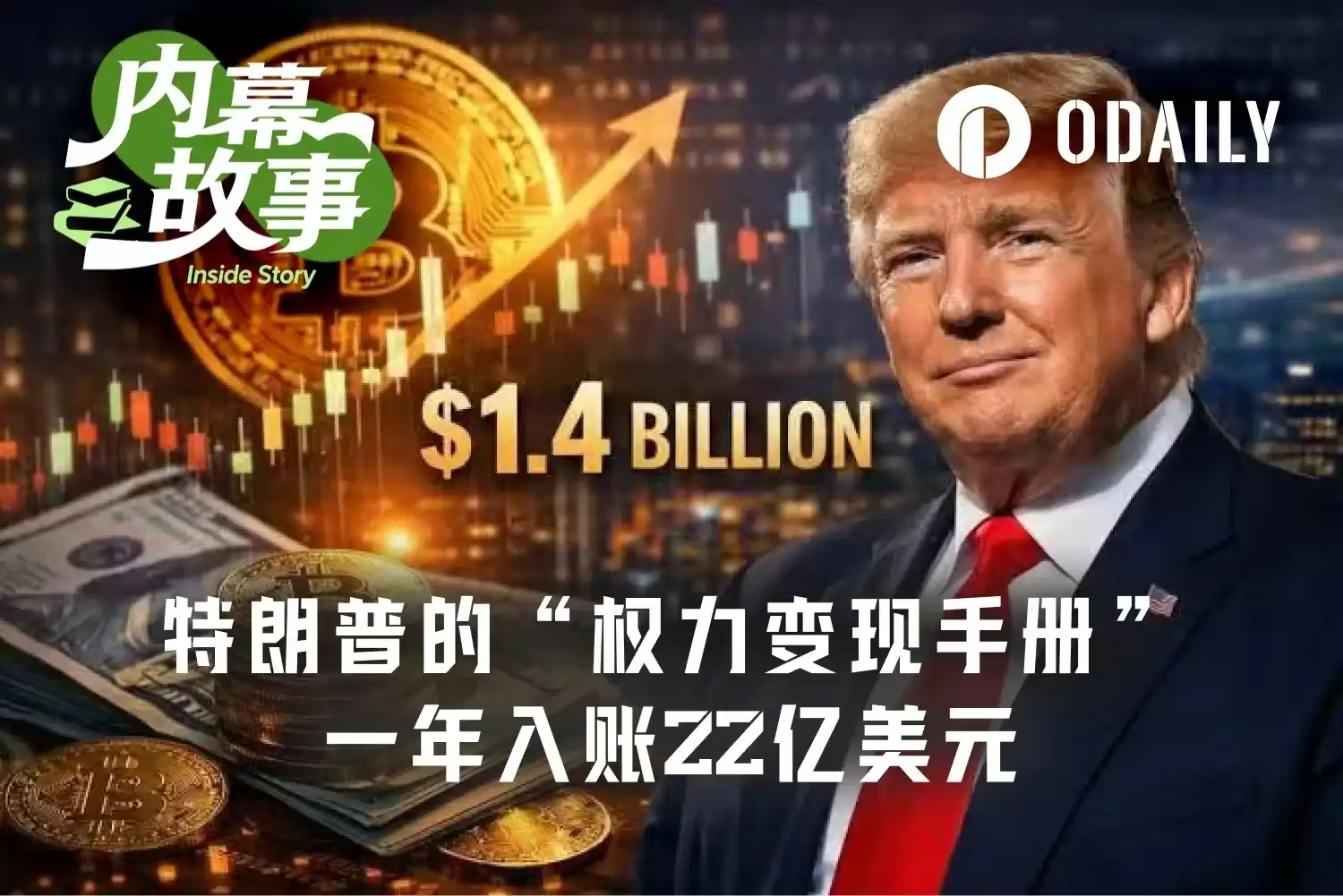
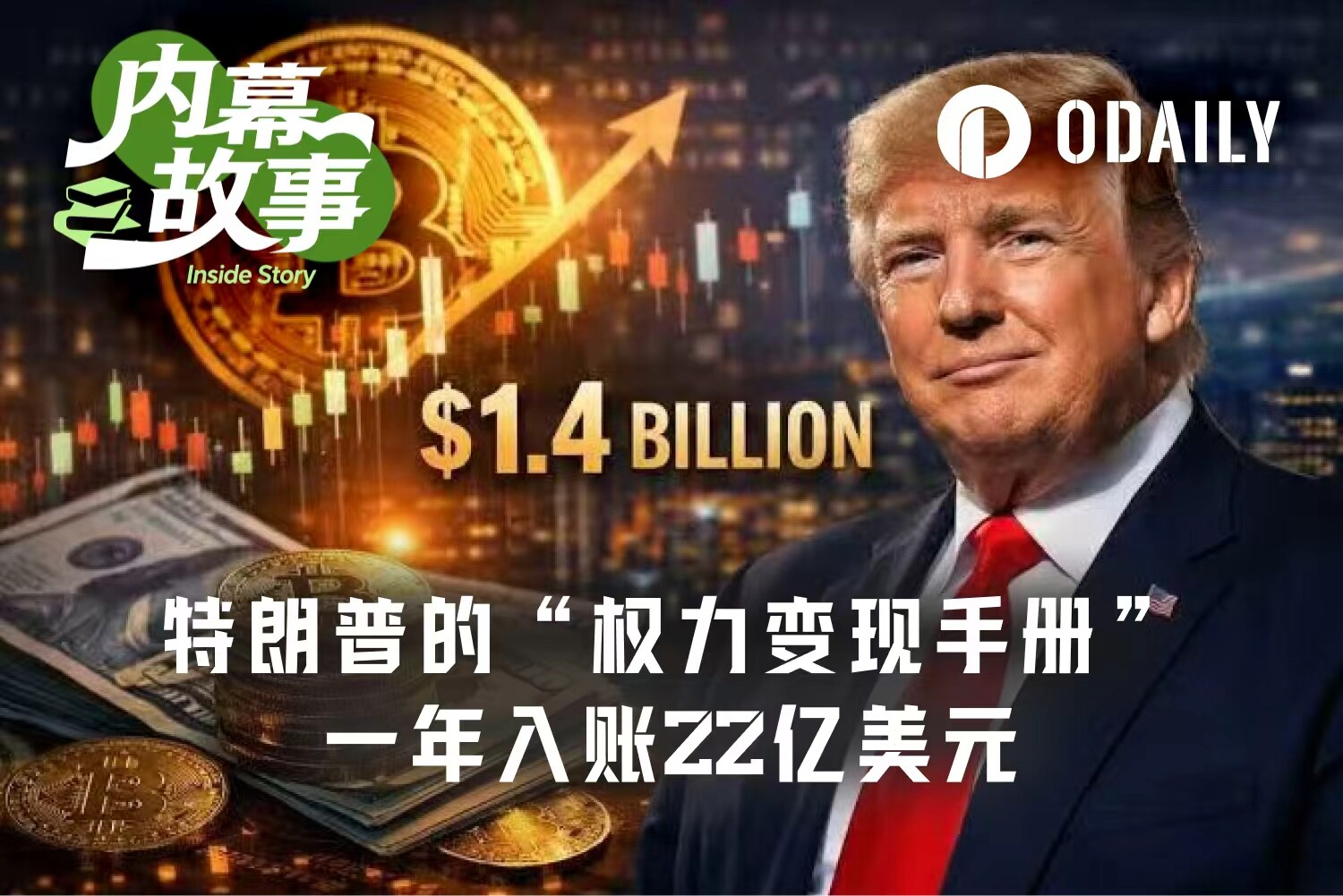
Trump Earns $2.2 Billion Annually, Two-Thirds from Cryptocurrency, with 87 Stock Trades Daily

Former U.S. President Donald Trump reported a personal income exceeding $2.2 billion in 2025, the highest annual income for a sitting president, according to U.S. government financial disclosures. This income primarily stemmed from cryptocurrency ventures and investments, starkly contrasting the standard presidential salary of $400,000. More than two-thirds ($1.4 billion) of his income originated from cryptocurrency-related activities. This includes over $1 billion in Bitcoin and Ethereum holdings, approximately $800 million from World Liberty Financial (a crypto project co-founded with his son), and about $635 million from sales of the TRUMP meme coin. Overall, Trump family crypto operations reportedly generated over $2.3 billion in profit after his 2025 inauguration. Trump's stock portfolio showed heavy trading activity, with over 22,000 trades executed in 2025—averaging 87 trades per day. Major holdings included tech giants like Google, Apple, Nvidia, and Microsoft. Notably, some large-scale stock purchases coincided with major policy announcements, such as tariffs, raising questions about potential insider trading. His traditional business empire, centered on real estate and branding, contributed $575 million. Additionally, he earned nearly $60 million through numerous "DT Marks" licensing companies, which leverage the Trump brand globally in locations like Dubai and Abu Dhabi. The report highlights significant conflicts of interest, as countries like the UAE and Saudi Arabia, whose entities invested in Trump's businesses, later received favorable U.S. policy treatment. Trump has stated he delegates financial management and is not directly involved in day-to-day investment decisions.

Odaily星球日报Há 20m

Trump Earns $2.2 Billion Annually, Two-Thirds from Cryptocurrency, with 87 Stock Trades Daily

Odaily星球日报Há 20m

Trading

Spot
活动图片