Cardano Founder Gives Sneak Peek at New ‘Ouroboros Leios’ Upgrade

TheCryptoTimesPublicado em 2025-05-02Última atualização em 2025-05-02

Cardano’s founder, Charles Hoskinson, recently shared some details about the upcoming ‘Ouroboros Leios’ protocol during his livestream yesterday.

Hoskinson explained that the upgrade can potentially render Cardano substantially faster, up to 11,000 transactions per second (TPS). He also said it can provide  “an infinitely scalable protocol” that will grow without affecting the system’s security or performance. 

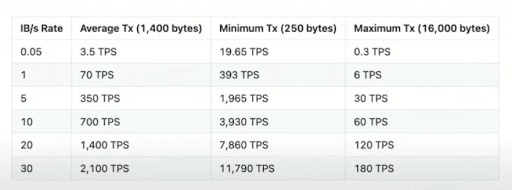
Leios is built to allow the blockchain to grow continuously while maintaining Cardano’s decentralization and security features. Hoskinson shared a graph showing how Leios could reach 11,000 TPS with different “input-block” configurations. He demonstrated how adding more input blocks in parallel before each ranking block could boost the network’s throughput. 

Cardano Leios Estimated Tps FiguresCardano Leios Estimated Tps Figures
Cardano Leios estimated TPS figures | Source: x.com/ItsDave_ADA

In his words, “With just that one input block, you can see that maximum is about 6 TPS.” Moreover, he explained that increasing the input blocks can raise it to 11,000 TPS. 

Leios is different from other blockchain platforms in the sense that it will not be a standalone. It will be built over Cardano’s current proof-of-stake ledger, which will keep the network’s features intact. “It can collapse back down to the current protocol should any unforeseen fault occur,” Hoskinson explained. 

As part of the Leios Research agenda, Hoskinson has also tweeted on X about the creation of a testnet to run the protocol at the fastest speeds. He said, “We’ll populate it with thousands of AI agents to trade amongst each other. Any Cardano DApps want to sign up to deploy on Face Melting Net? FMN.” 

Hoskinson also noted that the Leios upgrade is a huge change that will affect nearly every part of the Cardano blockchain. The update will impact the ledger, consensus rules, cryptography, and other key components of the network. 

He mentioned that implementing these changes could take between nine to twelve months. “It typically takes about nine months to twelve months of implementation effort from a SIP to bring this into the protocol,” he said. However, even with all these complex changes, Hoskinson is confident in Cardano’s ability to stay ahead of the curve.

Leios will launch alongside several Layer-2 solutions, such as Hydra and Mithril. The founder concluded by saying “Leios is the crowning achievement of ten-plus years of careful thought, research, and engineering.” If everything goes as planned, the network’s stakeholders could vote on the Leios Cardano Improvement Proposal (CIP) in early 2026.

Also Read: Crypto.com Sponsors Times Square Boxing Event with The Ring Magazine


Criptomoedas em alta

Leituras Relacionadas

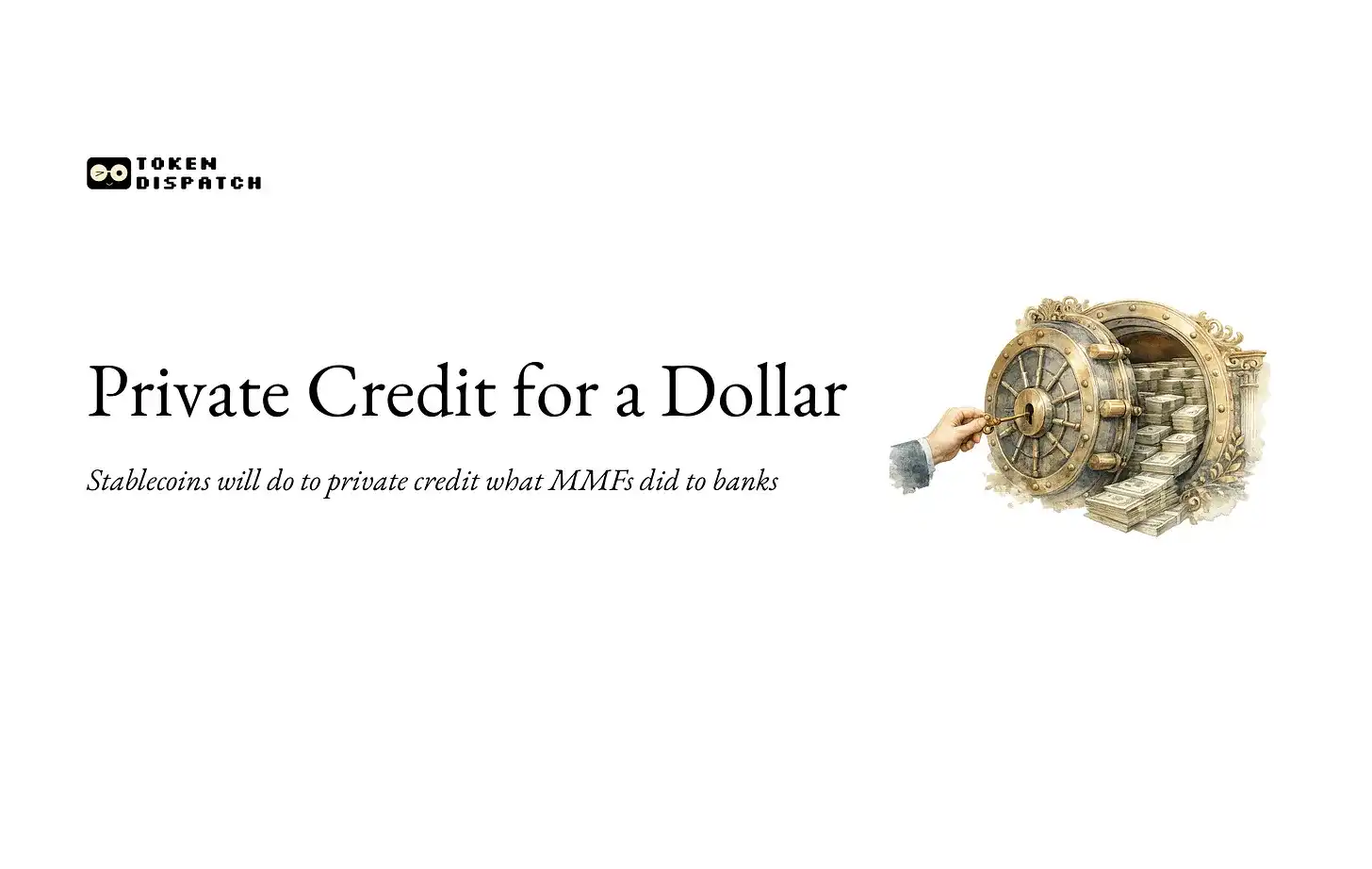
Private Credit in US Dollar

Stablecoins are evolving into a new type of money market fund, channeling crypto deposits into the $2 trillion private credit market. This mirrors the 1970s innovation where money market funds pooled small deposits to buy high-yield government securities, bypassing bank restrictions. Today, platforms like Apollo's ACRED tokenized fund and Figure's on-chain lending system allow stablecoin holders to access institutional private credit strategies with no minimum investment, offering yields of 8-12%. On-chain tokenization enables greater liquidity and DeFi composability (e.g., using tokens as collateral for leveraged positions) compared to traditional, locked-up private credit funds. Consequently, on-chain private credit has grown 15x in a year to $5.87 billion, though it remains a tiny fraction (0.3%) of the global market. However, this model carries significant risks, as illustrated by the failure of Goldfinch. Launched in 2021, it directed crypto deposits to motorcycle loans in Kenya and Nigeria. Critical issues included a lack of local oversight, leading to unauthorized fund transfers and borrower defaults. With $56 million now trapped in non-performing loans, its collapse highlights that while blockchain streamlines capital transfer, the essential 90% of lending—underwriting, monitoring, and recovery—remains a costly, localized challenge. Success requires robust, traditional credit infrastructure, not just on-chain execution.

marsbitHá 8m

Private Credit in US Dollar

marsbitHá 8m

Goldman Sachs: How to Invest in Tech Stocks in the Second Half of the Year?

Goldman Sachs remains bullish on tech stocks in the second half of the year, advising a shift from "buying the sector" to "picking individual companies." The firm's latest report indicates the AI-driven tech cycle shows no signs of peaking, with supply exceeding demand or technological progress slowing yet to materialize. Recent pullbacks are viewed as healthy corrections following rapid gains, not a trend reversal. Three core investment themes are highlighted: 1) Maintain overweight positions in AI server and data center-related hardware stocks. 2) Conduct more nuanced risk-reward assessments in sub-sectors where supply and demand are tightening. 3) During periods of declining risk appetite, consider software and IT services companies leveraging AI to create new business opportunities as a defensive play. The report emphasizes that future outperformance will depend more on individual company competitiveness (alpha) rather than broad sector momentum (beta). Companies likely to excel are those benefiting from price increases, possessing strong capacity expansion capabilities, having undervalued AI growth potential, or holding unique catalysts. For defense, Goldman suggests focusing on AI-enabling software and service firms—such as those in AI consulting, data infrastructure, and cybersecurity—which may see efficiency gains and new demand, rather than retreating to traditional defensive sectors. Overall, the strategy balances offensive exposure to AI infrastructure with defensive positioning in AI-applicable software and services.

链捕手Há 13m

Goldman Sachs: How to Invest in Tech Stocks in the Second Half of the Year?

链捕手Há 13m

Wall Street's Take on the June Fed Meeting Minutes: Focus on Core Inflation, No Short-Term Urgency to Hike Rates

Wall Street's View on Fed June Minutes: Inflation is the Key, No Urgency for Near-Term Hike The minutes of the Federal Reserve's June FOMC meeting revealed a unified Wall Street interpretation: inflation remains the true determinant for future policy moves. Major institutions including Goldman Sachs, Morgan Stanley, and Citigroup concluded that the Fed remains data-dependent, with its path hinging on upcoming inflation data. Key takeaways from the minutes: * **No Immediate Tightening**: Despite "a few" participants seeing reasons to hike, none actively advocated for it at the June meeting. The consensus was to hold the federal funds rate steady at 3.5%-3.75%. * **Inflation as the Decisive Factor**: The Fed outlined two primary scenarios. If inflation declines "soon" toward the 2% target, "almost all" officials would support maintaining or eventually cutting rates. If inflation persists high due to factors like AI demand or supply shocks, "almost all" would see some policy tightening as necessary. * **Patience is Warranted**: Officials noted inflation remains above target but cited anchored inflation expectations and a labor market not currently driving price pressures as reasons for patience. The Fed is focused on the *direction* of inflation over the next few months. * **No Policy Framework Shift**: The minutes reaffirmed a data-dependent approach rather than a fundamental shift toward pre-emptive tightening. Institutional Forecasts: * **Morgan Stanley**: Expects rates on hold in 2026, with potential cuts in 2027 if inflation cools. * **Goldman Sachs**: Baseline scenario sees rates unchanged through 2026, with inflation moderating gradually. * **Citigroup**: Takes a more dovish view, suggesting market pricing for a July hike is too aggressive and forecasting potential rate cuts starting in late 2026. Overall, the minutes were perceived as marginally dovish, emphasizing a watchful stance on inflation data with no near-term urgency to hike.

marsbitHá 19m

Wall Street's Take on the June Fed Meeting Minutes: Focus on Core Inflation, No Short-Term Urgency to Hike Rates

marsbitHá 19m

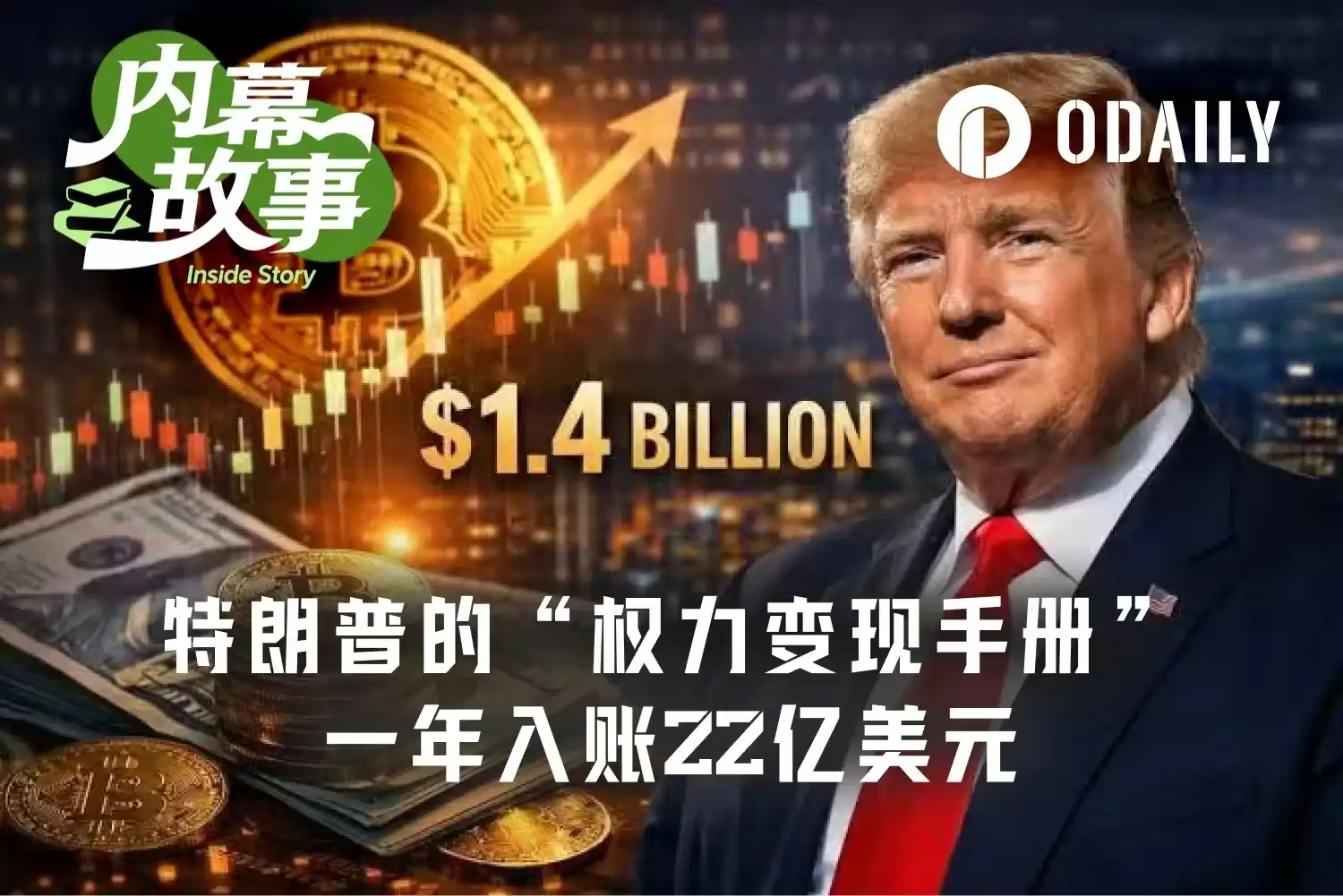
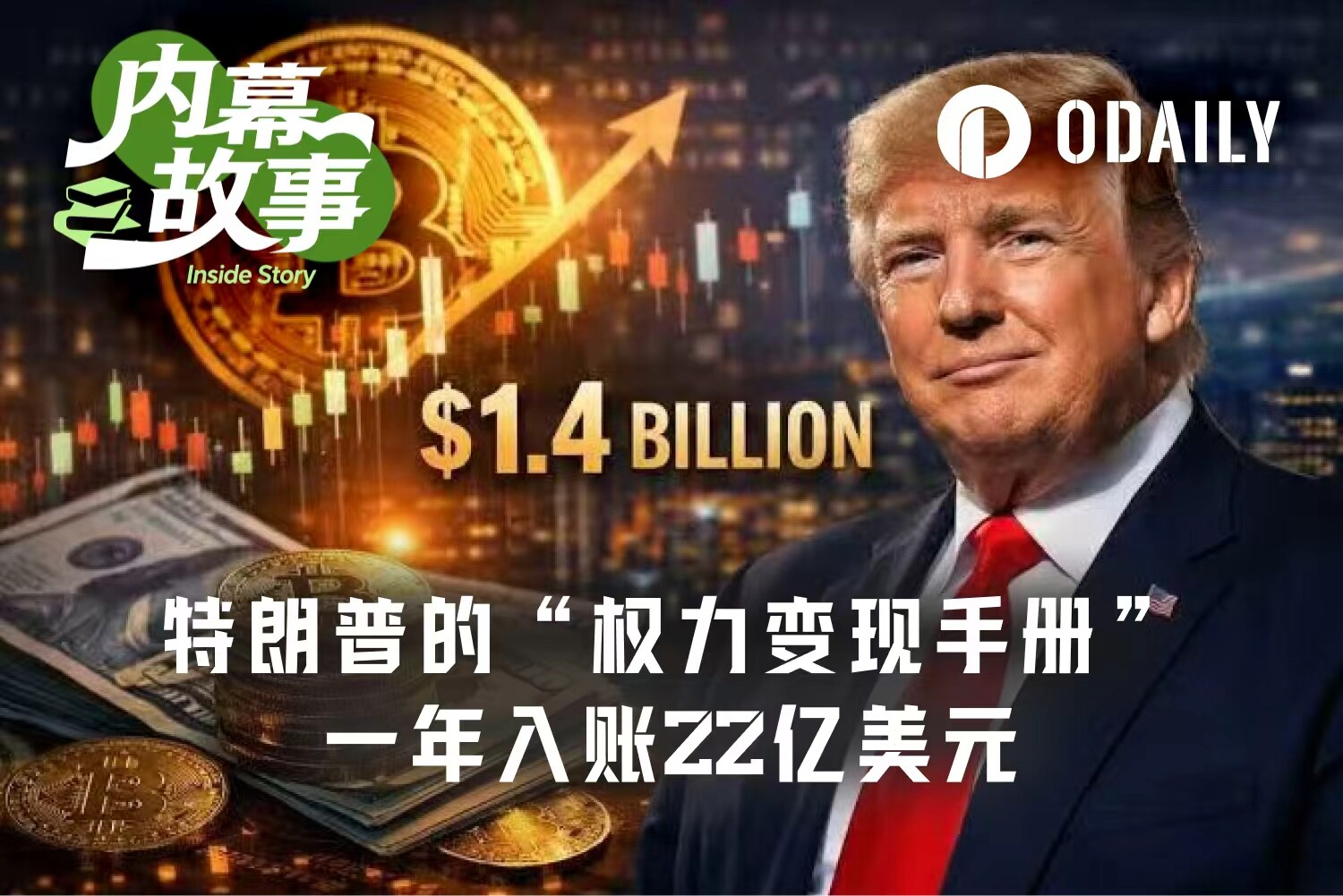
Trump Earns $2.2 Billion Annually, Two-Thirds from Cryptocurrency, with 87 Stock Trades Daily

Former U.S. President Donald Trump reported a personal income exceeding $2.2 billion in 2025, the highest annual income for a sitting president, according to U.S. government financial disclosures. This income primarily stemmed from cryptocurrency ventures and investments, starkly contrasting the standard presidential salary of $400,000. More than two-thirds ($1.4 billion) of his income originated from cryptocurrency-related activities. This includes over $1 billion in Bitcoin and Ethereum holdings, approximately $800 million from World Liberty Financial (a crypto project co-founded with his son), and about $635 million from sales of the TRUMP meme coin. Overall, Trump family crypto operations reportedly generated over $2.3 billion in profit after his 2025 inauguration. Trump's stock portfolio showed heavy trading activity, with over 22,000 trades executed in 2025—averaging 87 trades per day. Major holdings included tech giants like Google, Apple, Nvidia, and Microsoft. Notably, some large-scale stock purchases coincided with major policy announcements, such as tariffs, raising questions about potential insider trading. His traditional business empire, centered on real estate and branding, contributed $575 million. Additionally, he earned nearly $60 million through numerous "DT Marks" licensing companies, which leverage the Trump brand globally in locations like Dubai and Abu Dhabi. The report highlights significant conflicts of interest, as countries like the UAE and Saudi Arabia, whose entities invested in Trump's businesses, later received favorable U.S. policy treatment. Trump has stated he delegates financial management and is not directly involved in day-to-day investment decisions.

Odaily星球日报Há 20m

Trump Earns $2.2 Billion Annually, Two-Thirds from Cryptocurrency, with 87 Stock Trades Daily

Odaily星球日报Há 20m

Trading

Spot

Artigos em Destaque

Como comprar ADA

Bem-vindo à HTX.com!Tornámos a compra de Cardano (ADA) simples e conveniente.Segue o nosso guia passo a passo para iniciar a tua jornada no mundo das criptos.Passo 1: cria a tua conta HTXUtiliza o teu e-mail ou número de telefone para te inscreveres numa conta gratuita na HTX.Desfruta de um processo de inscrição sem complicações e desbloqueia todas as funcionalidades.Obter a minha contaPasso 2: vai para Comprar Cripto e escolhe o teu método de pagamentoCartão de crédito/débito: usa o teu visa ou mastercard para comprar Cardano (ADA) instantaneamente.Saldo: usa os fundos da tua conta HTX para transacionar sem problemas.Terceiros: adicionamos métodos de pagamento populares, como Google Pay e Apple Pay, para aumentar a conveniência.P2P: transaciona diretamente com outros utilizadores na HTX.Mercado de balcão (OTC): oferecemos serviços personalizados e taxas de câmbio competitivas para os traders.Passo 3: armazena teu Cardano (ADA)Depois de comprar o teu Cardano (ADA), armazena-o na tua conta HTX.Alternativamente, podes enviá-lo para outro lugar através de transferência blockchain ou usá-lo para transacionar outras criptomoedas.Passo 4: transaciona Cardano (ADA)Transaciona facilmente Cardano (ADA) no mercado à vista da HTX.Acede simplesmente à tua conta, seleciona o teu par de trading, executa as tuas transações e monitoriza em tempo real.Oferecemos uma experiência de fácil utilização tanto para principiantes como para traders experientes.

1.3k Visualizações TotaisPublicado em {updateTime}Atualizado em 2026.06.02

Como comprar ADA

Discussões

Bem-vindo à Comunidade HTX. Aqui, pode manter-se informado sobre os mais recentes desenvolvimentos da plataforma e obter acesso a análises profissionais de mercado. As opiniões dos utilizadores sobre o preço de ADA (ADA) são apresentadas abaixo.

活动图片