Nike Sued After Shuttering NFT Unit—Buyers Allege Major Crypto Losses

bitcoinistPublicado em 2025-04-27Última atualização em 2025-04-28

Resumo

A collective of upset NFT purchasers has brought a lawsuit against Nike after the company shut down its digital collectibles...

Trusted Editorial content, reviewed by leading industry experts and seasoned editors. Ad Disclosure

A collective of upset NFT purchasers has brought a lawsuit against Nike after the company shut down its digital collectibles division, RTFKT.

According to a report by Reuters, the lawsuit, filed Friday in Brooklyn, New York, alleges that the sportswear colossus’s sudden shutdown erased hundreds of thousands of dollars’ worth of digital asset value.

Australian Investor Leads Legal Fight Against Sportswear Giant

Australia-based lead plaintiff Jagdeep Cheema leads the class of plaintiffs that is demanding at least $5 million in damages. According to court filings, Nike’s December 2024 shutdown of RTFKT left investors with worthless digital tokens created and sold on both the Nike and RTFKT brands.

The complaint states Nike breached consumer defense laws in a number of states, including New York, California, Florida, and Oregon. Nike, headquartered in Beaverton, Oregon, has yet to respond to the claims.

Lawsuit Puts Key Question: Are NFTs Securities?

The court filing contends Nike sold the NFTs without registering them properly with financial authorities. This poses a basic question that US regulators and courts are still grappling to answer: Are NFTs securities subject to regulatory scrutiny?

Purchasers said the company provided no notice before cancelling the initiative. Numerous NFTs ceased to show images properly, contributing to fears the assets would no longer be supported or held their worth.

Total crypto market cap currently at $2.9 trillion. Chart: TradingView

They wouldn’t have bought any of the NFTs if they had known they were unregistered securities, the plaintiffs said in their lawsuit. The group also alleged they would not have invested if they had known Nike could cancel the project so soon after its inception.

Technical Issues Haunt Digital Assets Following Service Shutdown

After the December shutdown, numerous users complained of severe technical problems with their NFTs. Images of highly prized objects in the Clone X series went missing, being replaced with “holding page” messages from Cloudflare stating that the content was taken down.

This led speculation that Nike stopped paying for servers that were displaying the NFT images. While some digital works have resurfaced online afterward, the incident raised legitimate doubts about the ultimate value of digital art attached to centralized services.

Nike’s NFT Adventure Had Brief But Memorable Existence

RTFKT (pronounced “artifact”) was bought by Nike in December 2021 at the peak of NFT popularity. The sports company termed the acquisition as a bold step into the future of collectibles and fashion and gaming.

The attorney for the plaintiffs, Phillip Kim, has yet to comment further on the case.

When digital collectibles became trendy, numerous firms jumped in without set regulations or oversight mechanisms. This suit identifies the danger that comes with large corporations testing and then abandoning nascent digital asset segments.

Featured image Nike, chart from TradingView

Editorial Process for bitcoinist is centered on delivering thoroughly researched, accurate, and unbiased content. We uphold strict sourcing standards, and each page undergoes diligent review by our team of top technology experts and seasoned editors. This process ensures the integrity, relevance, and value of our content for our readers.

Christian, a journalist and editor with leadership roles in Philippine and Canadian media, is fueled by his love for writing and cryptocurrency. Off-screen, he's a cook and cinephile who's constantly intrigued by the size of the universe.

Leituras Relacionadas

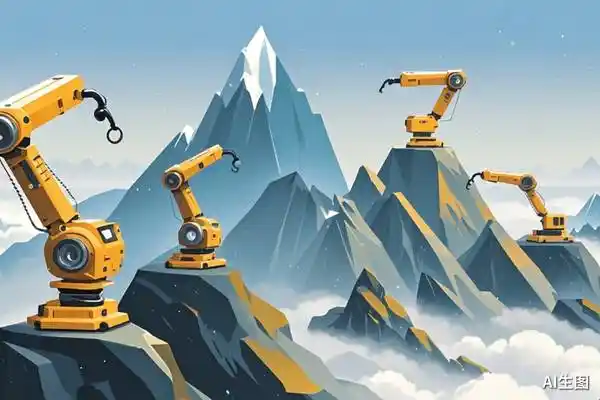
Embodied Intelligence 'Gaokao' is Insanely Hard, Humans Score 100, Best Model Only 12.8

Embodied AI Faces a Daunting "Everest": New Benchmark Reveals Huge Gap Between Models and Humans A comprehensive new benchmark for robotic manipulation, RoboDojo, has been released, painting a stark picture of the current state of embodied AI. It serves as a unified evaluation platform covering both simulation and real-world robot tasks. The benchmark assesses five core capabilities: Generalization (adapting to new scenes/objects), Memory, Precision manipulation, Long-Horizon multi-step tasks, and Open semantic understanding. It includes 42 simulation tasks and 18 standardized real-world tasks across three dual-arm robot platforms. The results are sobering. In simulation, the best-performing generalist robot policy achieved an average success rate of only 8.80%. Performance in the real world was slightly higher but still low, with the top model succeeding 12.8% of the time on average. In stark contrast, human experts scored 76.03% in simulation and 100% in real-world tests. The benchmark highlights significant, uneven gaps in current models' abilities. While some excel in specific areas like visual recognition or simple actions, they struggle with reliability, especially in long-horizon tasks where errors accumulate and in open-ended semantic instructions. The low scores, particularly in real-world deployment with physical uncertainties like camera noise and contact dynamics, underscore that today's models are far from being robust, general-purpose operational robots. RoboDojo is more than just a ranking; it's an infrastructure designed for fair, reproducible comparison. Its companion system, XPolicyLab, standardizes the interface for different models to be evaluated. Maintained by an academic consortium without commercial ties, it aims to provide a community-wide "altitude meter" to track genuine progress toward reliable and generalizable robot manipulation.

marsbitHá 1h

Embodied Intelligence 'Gaokao' is Insanely Hard, Humans Score 100, Best Model Only 12.8

marsbitHá 1h

Trading

Spot
活动图片