Роберт Кийосаки сделал прогноз курса биткоина и драгметаллов на 2035 год

investing.ruPublicado em 2025-04-21Última atualização em 2025-04-21

Кийосаки утверждает, что сейчас драгоценные металлы и биткоин стали особенно важными средствами защиты накоплений от инфляции и способом долгосрочного сохранения ценностей. Инвестор предупредил, что в 2025 году задолженность по кредитным картам достигнет исторического максимума, как и госдолг США. Безработица в стране растет, тысячи людей терпят убытки, а их пенсии «воруют». США могут еще глубже погрузиться в экономическую депрессию, заявил предприниматель.

Он призвал подписчиков «не сидеть сложа руки» во времена экономического кризиса, а хотя бы понемногу инвестировать в биткоин, золото и серебро. Тогда есть шанс пережить этот кризис и стать очень богатым человеком, а если откладывать это на потом, может быть уже слишком поздно, настаивает Кийосаки.

«Я твердо верю, что к 2035 году биткоин будет стоить более $1 млн, унция золота будет торговаться за $30 000, а серебро — за $3 000. Если бедный человек купит несколько унций золота или серебра, или хотя бы половину биткоина, тогда он станет еще одним богачом, как только Депрессия закончится. Грядущий финансовый крах приведет к тому, что миллионы людей станут бедными, а те немногие, кто предпримет действия, смогут получить богатство и свободу», — написал Кийосаки в соцсети Х.

Криптоаналитик Вилли Ву (Willy Woo) тоже верит, что через десять лет биткоин сможет достичь отметки в $1 млн. Он объяснил свой прогноз быстрым внедрением биткоина в разные сферы деятельности и увеличением количества пользователей криптовалюты.
Читайте оригинальную статью на сайте Bits.media

Leituras Relacionadas

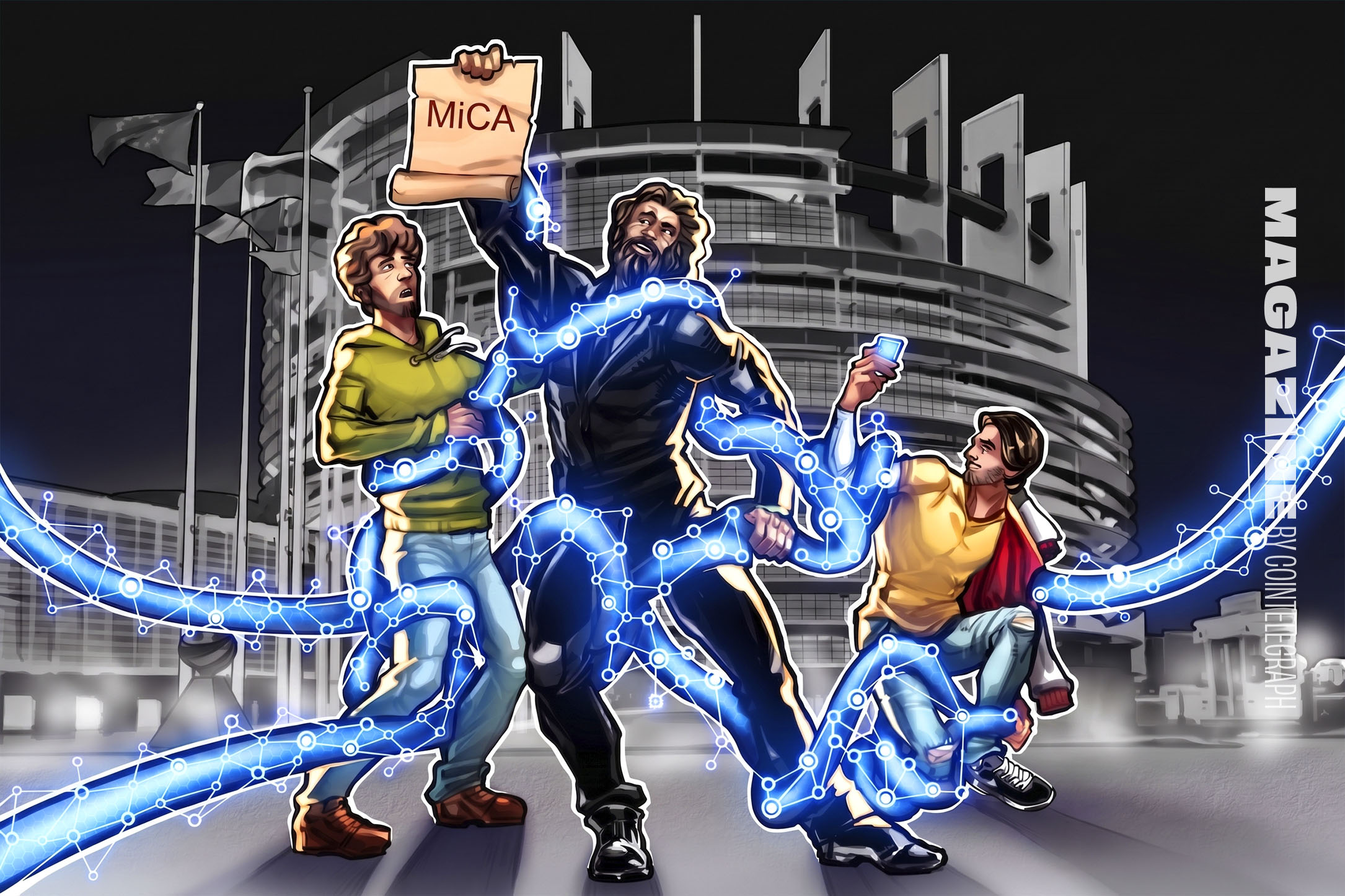
MiCA is coming for DeFi vaults, but regulation will be difficult

The European Commission is exploring whether to extend the Markets in Crypto-Assets (MiCA) regulation to cover decentralized finance (DeFi) lending and borrowing, including lending vaults. These vaults, which channel billions into on-chain credit markets, present significant regulatory challenges because their decentralized structure doesn't map neatly onto existing financial frameworks. Their legal status is currently based on non-binding interpretations that they fall outside MiCA and EU fund rules. The article uses Morpho's decentralized lending protocol as an example, illustrating how responsibilities are divided among various participants (owner, curator, allocator, sentinel), making it difficult to identify a single "provider" to regulate. Experts warn that broadly categorizing "DeFi lending" could inadvertently capture vastly different structures. They argue that any regulatory approach should focus on the specific structure and control mechanisms of a vault, rather than using decentralization as a simple dividing line, and that DeFi lending may require a dedicated, carefully crafted framework distinct from traditional finance. The Commission's consultation closes on September 30, 2026. The core challenge for regulators is not just whether to regulate DeFi lending, but how to design rules that distinguish between different forms of on-chain lending and the entities that control them.

cointelegraphHá 17m

MiCA is coming for DeFi vaults, but regulation will be difficult

cointelegraphHá 17m

Grayscale Report: Financial Privacy in the AI Era, Why Zcash Should Not Be Overlooked?

Title: Grayscale Report: Financial Privacy in the AI Era – Why Zcash Should Not Be Overlooked The article argues that privacy is a fundamental, not niche, attribute of functional money. It highlights that technological shifts, like the rise of AI and stablecoins, are driving a new wave of public focus on financial privacy. Zcash, a decentralized digital currency similar to Bitcoin but with built-in privacy via zero-knowledge proofs, is positioned to address this need. Unlike transparent blockchains, Zcash offers users the option to conduct "shielded" transactions that hide sender, receiver, and amount while remaining verifiable. The report details Zcash's evolution, noting key upgrades that improved usability and security. It points to rising on-chain usage of privacy features as evidence of real demand. Currently, ZEC holds a minimal share (~0.4%) of the total crypto market cap. Grayscale suggests this reflects a market assumption that privacy is a marginal concern. The investment thesis hinges on a potential market re-evaluation: if privacy is recognized as a core monetary feature in an era of enhanced surveillance, Zcash's current valuation represents significant upside potential. Key risks discussed include regulatory challenges, historical trusted setup concerns for older pools (mitigated by newer protocols), quantum computing threats, and execution risks associated with future technical upgrades. The conclusion is that while the future scale of private digital currency is uncertain, the market currently prices in little chance of its value increasing substantially, presenting a potential opportunity for investors.

marsbitHá 2h

Grayscale Report: Financial Privacy in the AI Era, Why Zcash Should Not Be Overlooked?

marsbitHá 2h

Trading

Spot
活动图片