Оcнователя Manta Network чуть не обокрали хакеры Lazarus

investing.ruPublicado em 2025-04-18Última atualização em 2025-04-18

Кенни Ли (Kenny Li) сообщил, что с ним связался знакомый и попросил связаться через платформу онлайн-конференций Zoom (NASDAQ:ZM). Когда Ли зашел в Zoom, все выглядело вполне нормально: у собеседника была включена камера и было видно лицо. Однако во время звонка звук отсутствовал, и Ли увидел предложение загрузить файл скрипта под видом обновления Zoom.

Заподозрив обман, Ли попытался проверить личность собеседника, предложив перейти в Google (NASDAQ:GOOGL) Meet или пообщаться в Telegram. Самозванец отказался, затем быстро удалил все сообщения и заблокировал Ли. Позже руководитель Manta Network рассказал, что учетная запись настоящего пользователя, чья личность использовалась во время видеозвонка, была скомпрометирована хакерами Lazarus.

Это не первый случай, когда Lazarus использует Zoom для фишинга. Обсуждая инцидент, Джулио Ксилояннис (Giulio Xiloyannis), сооснователь компании Mon Protocol, разрабатывающей игры на основе блокчейна, рассказал, как ему удалось не стать жертвой мошенника. В его случае хакер выдавал себя за руководителя проекта Story Protocol, пытаясь заманить Ксилоянниса и его директора по маркетингу на встречу. Обман раскрылся, когда из-за проблем со звуком их попросили подключиться к Zoom по новой ссылке. Если бы они это сделали, то загрузили бы вредоносное ПО для кражи личных данных.

С похожей атакой столкнулся сооснователь платформы Stably Дэвид Чжан (David Zhang). Сначала мошенники созвонились с ним в Google Meet, а затем нашли причину, чтобы переключить на встречу по другой ссылке. Чжан принял звонок на своем планшете, а не на компьютере, что могло помешать установке вредоносной программы. Чжан подозревает, что фишеры пытались определить операционную систему пользователя, однако настройки вируса не была оптимизированы для мобильных устройств.

В декабре о фишинговых атаках через Zoom предупредили специалисты по безопасности SlowMist. Часто мошенники рассылают электронные письма о банкротствах известных компаний, убеждая пользователей перевести средства на «безопасный кошелек». Такую тактику применили злоумышленники, попытавшиеся выдать себя за криптобиржу Gemini.


Читайте оригинальную статью на сайте Bits.media

Criptomoedas em alta

Leituras Relacionadas

Goldman Sachs' Summary After Silicon Valley Investigation: Agents Enter the Execution Era, AI Competition Shifts to Workflows, World Models Rise

Based on a recent field research in Silicon Valley, Goldman Sachs highlights a key shift in the AI industry: moving from systems that "answer questions" to autonomous AI agents that "execute tasks." Commercial models are transitioning from per-seat subscriptions to usage- and outcome-based pricing. The competition is shifting from raw model capability to mastery over specific business workflows, with value accruing to proprietary data, domain context, and operational expertise. A major hurdle for enterprise Agent deployment is not technical ability but "controllability"—issues of accountability, auditability, and error correction, especially in regulated fields. Workflows with clear rules, verifiable outcomes, and reversible actions (e.g., invoice processing) are being automated first. The model landscape is evolving toward a division of labor. Frontier models (like GPT-4) are expected to handle high-value, high-reliability core tasks, while improving open-source models will likely capture the majority (~90%) of inference tokens for standardized, high-volume tasks due to cost advantages. Finally, attention is moving from Large Language Models (LLMs) to "World Models," which understand physical environments, causality, and dynamic interactions. This shift elevates the importance of proprietary, real-world data (from industrial, scientific, and robotic systems) and could drive a second wave of compute demand. Goldman Sachs projects compute needs could grow ~24x over five years, benefiting cloud and infrastructure providers.

marsbitHá 39m

Goldman Sachs' Summary After Silicon Valley Investigation: Agents Enter the Execution Era, AI Competition Shifts to Workflows, World Models Rise

marsbitHá 39m

Fidelity Warns: The Boom in AI Agents May Not Be a Feast for Public Blockchains

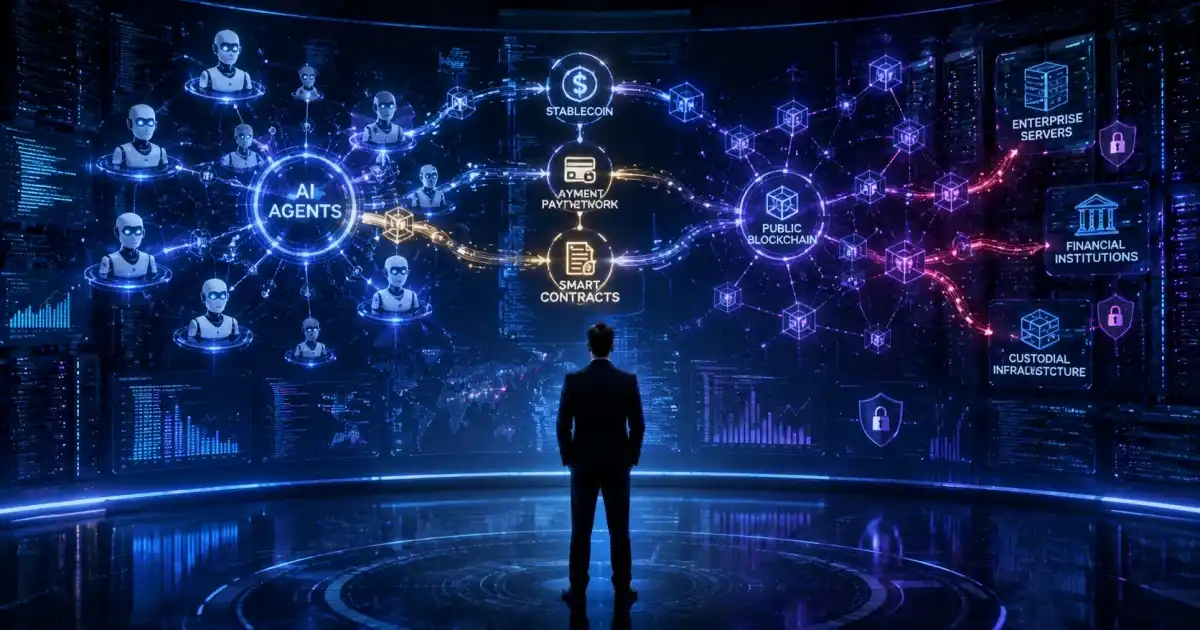
Fidelity Digital Assets cautions that the anticipated boom in AI agents does not automatically guarantee a corresponding surge in public blockchain adoption or token value. While AI agents that can autonomously perform tasks like payments and data calls could theoretically utilize blockchain for settlement, a significant gap exists between "can use" and "must use." The analysis highlights six key risks. First, many AI agents, especially in corporate settings, may prefer closed, permissioned systems over public blockchains due to needs for speed, cost, compliance, and control. Second, increased on-chain transactions from AI-driven micropayments may not benefit native tokens if fees remain low or if value is captured by stablecoins and payment service providers instead. Third, while AI lowers development costs and increases the number of projects, more code does not equal more economic value and can lead to market oversaturation. Fourth, AI commoditizes coding, making pure technological advantage less of a sustainable moat; competition may shift to brand, liquidity, and user networks. Fifth, AI can also lower the cost of attacks by making vulnerability discovery easier, potentially outpacing security auditing and increasing ecosystem risk. Sixth, institutions may require "controlled blockchain" systems with robust identity, permissioning, and audit trails, conflicting with the permissionless nature of public chains. Ultimately, Fidelity argues against simply equating AI growth with blockchain prosperity. The narrative requires moving from speculation to a concrete analysis of which infrastructures can convert real AI agent needs into sustainable economic value, critically examining each step of the assumed value chain.

marsbitHá 40m

Fidelity Warns: The Boom in AI Agents May Not Be a Feast for Public Blockchains

marsbitHá 40m

Telegram Introduces WEB-Proxy Technology: Masks Traffic as Regular Website Visits

Telegram has introduced a new experimental WEB-Proxy technology designed to circumvent blocking by disguising messenger traffic as regular, secure website visits. Announced on August 21, 2026, the technology routes MTProxy data through an in-app WebView using HTTPS or WebSocket transport, making the data stream indistinguishable from legitimate web surfing. The core innovation is a multiplexed stream sent through a single WebView session. It uses special frame formats to pack multiple logical Telegram connections into one encrypted channel that externally resembles loading a web page. A server-side relay receives this stream, separates it into individual connections for the standard MTProxy, without decrypting content or knowing final destinations, thus preserving privacy. The WEB-Proxy operates on a standard HTTPS domain that also hosts a public website. The proxy bridge page is only activated by a specific URL parameter derived via HMAC-SHA256 from the proxy configuration; all other requests receive the normal site homepage. This provides reliable cover against automated detection systems. Currently a proof-of-concept, the system includes a desktop implementation, an experimental Android client, and plans for iOS support. The technology represents a shift towards more sophisticated integration with legitimate web infrastructure, complicating filtering systems that must choose between blocking HTTPS traffic entirely or allowing service access. Its long-term value will depend on resilience to adaptive traffic analysis and scalability without performance loss.

cryptonews.ruHá 55m

Telegram Introduces WEB-Proxy Technology: Masks Traffic as Regular Website Visits

cryptonews.ruHá 55m

MiCA is coming for DeFi vaults, but regulation will be difficult

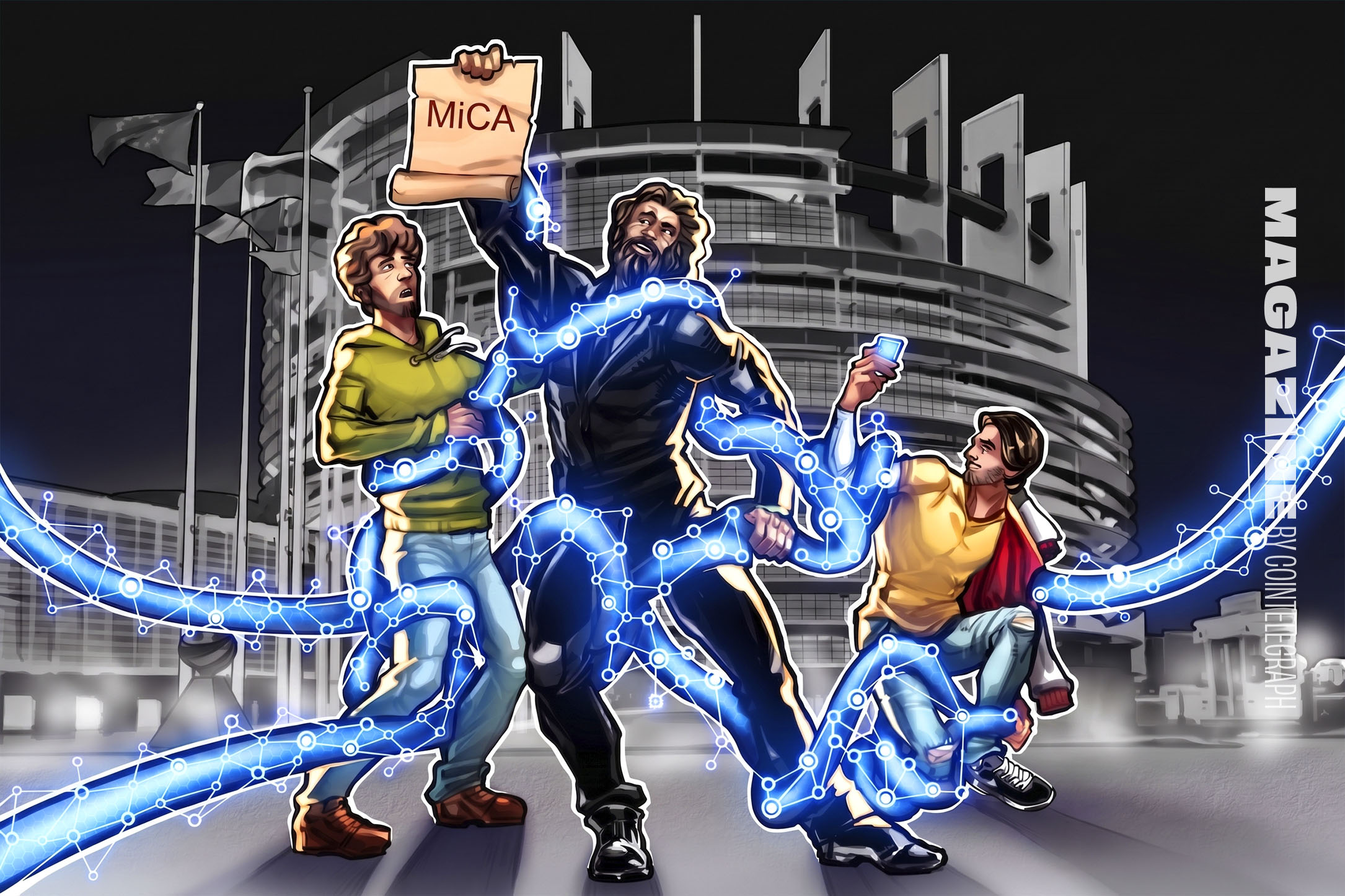
The European Commission is exploring whether to extend the Markets in Crypto-Assets (MiCA) regulation to cover decentralized finance (DeFi) lending and borrowing, including lending vaults. These vaults, which channel billions into on-chain credit markets, present significant regulatory challenges because their decentralized structure doesn't map neatly onto existing financial frameworks. Their legal status is currently based on non-binding interpretations that they fall outside MiCA and EU fund rules. The article uses Morpho's decentralized lending protocol as an example, illustrating how responsibilities are divided among various participants (owner, curator, allocator, sentinel), making it difficult to identify a single "provider" to regulate. Experts warn that broadly categorizing "DeFi lending" could inadvertently capture vastly different structures. They argue that any regulatory approach should focus on the specific structure and control mechanisms of a vault, rather than using decentralization as a simple dividing line, and that DeFi lending may require a dedicated, carefully crafted framework distinct from traditional finance. The Commission's consultation closes on September 30, 2026. The core challenge for regulators is not just whether to regulate DeFi lending, but how to design rules that distinguish between different forms of on-chain lending and the entities that control them.

cointelegraphHá 2h

MiCA is coming for DeFi vaults, but regulation will be difficult

cointelegraphHá 2h

Trading

Spot

Artigos em Destaque

Como comprar MANTA

Bem-vindo à HTX.com!Tornámos a compra de Manta Network (MANTA) simples e conveniente.Segue o nosso guia passo a passo para iniciar a tua jornada no mundo das criptos.Passo 1: cria a tua conta HTXUtiliza o teu e-mail ou número de telefone para te inscreveres numa conta gratuita na HTX.Desfruta de um processo de inscrição sem complicações e desbloqueia todas as funcionalidades.Obter a minha contaPasso 2: vai para Comprar Cripto e escolhe o teu método de pagamentoCartão de crédito/débito: usa o teu visa ou mastercard para comprar Manta Network (MANTA) instantaneamente.Saldo: usa os fundos da tua conta HTX para transacionar sem problemas.Terceiros: adicionamos métodos de pagamento populares, como Google Pay e Apple Pay, para aumentar a conveniência.P2P: transaciona diretamente com outros utilizadores na HTX.Mercado de balcão (OTC): oferecemos serviços personalizados e taxas de câmbio competitivas para os traders.Passo 3: armazena teu Manta Network (MANTA)Depois de comprar o teu Manta Network (MANTA), armazena-o na tua conta HTX.Alternativamente, podes enviá-lo para outro lugar através de transferência blockchain ou usá-lo para transacionar outras criptomoedas.Passo 4: transaciona Manta Network (MANTA)Transaciona facilmente Manta Network (MANTA) no mercado à vista da HTX.Acede simplesmente à tua conta, seleciona o teu par de trading, executa as tuas transações e monitoriza em tempo real.Oferecemos uma experiência de fácil utilização tanto para principiantes como para traders experientes.

297 Visualizações TotaisPublicado em {updateTime}Atualizado em 2026.06.02

Como comprar MANTA

Discussões

Bem-vindo à Comunidade HTX. Aqui, pode manter-se informado sobre os mais recentes desenvolvimentos da plataforma e obter acesso a análises profissionais de mercado. As opiniões dos utilizadores sobre o preço de MANTA (MANTA) são apresentadas abaixo.

活动图片