Securitize управляет $38 млрд с приобретением административного бизнеса MG Stover

cryptonews.ruPublicado em 2025-03-17Última atualização em 2025-04-17

Компания по токенизации Securitize расширила свои операции с цифровыми активами, приобретя бизнес по управлению фондами MG Stover, что, по словам компании, значительно увеличило ее активы под управлением и способность обслуживать институциональных клиентов.

Бизнес по управлению фондами MG Stover был поглощен Securitize Fund Services, дочерней компанией Securitize, полностью принадлежащей Securitize, сообщила компания.

Securitize Fund Services теперь управляет активами на сумму более $38 млрд в 715 фондах.

Основанная в 2007 году, MG Stover предлагает полный спектр услуг по управлению фондами, охватывающих традиционные финансовые отрасли, такие как хедж-фонды, венчурный капитал и частный капитал, а также фонды цифровых активов.

Представитель Securitize сообщил, что приобретение касается только бизнеса по управлению фондами MG Stover, а не компании в целом.

Соучредитель и генеральный директор Securitize Карлос Доминго заявил:

«Приобретение MG Stover значительно усиливает наше институциональное предложение, добавляя одну из самых опытных команд по управлению фондами цифровых активов в отрасли в Securitize Fund Services».

«Устаревшие администраторы фондов никогда не были предназначены для скорости, сложности или глобального охвата цифровых активов. Их системы борются с давлением рынков 24/7, и они не были созданы для обработки потоков стейблкоинов или расчетов в реальном времени».

Securitize — одна из крупнейших компаний по токенизации реальных активов (RWA), выпустившая более 3,3 млрд долларов в виде ончейн-активов, в частности BlackRock USD Institutional Digital Liquidity Fund, также известный как BUIDL.

Согласно отраслевым данным, в настоящее время активы BUILD составляют около 2,5 млрд долларов.
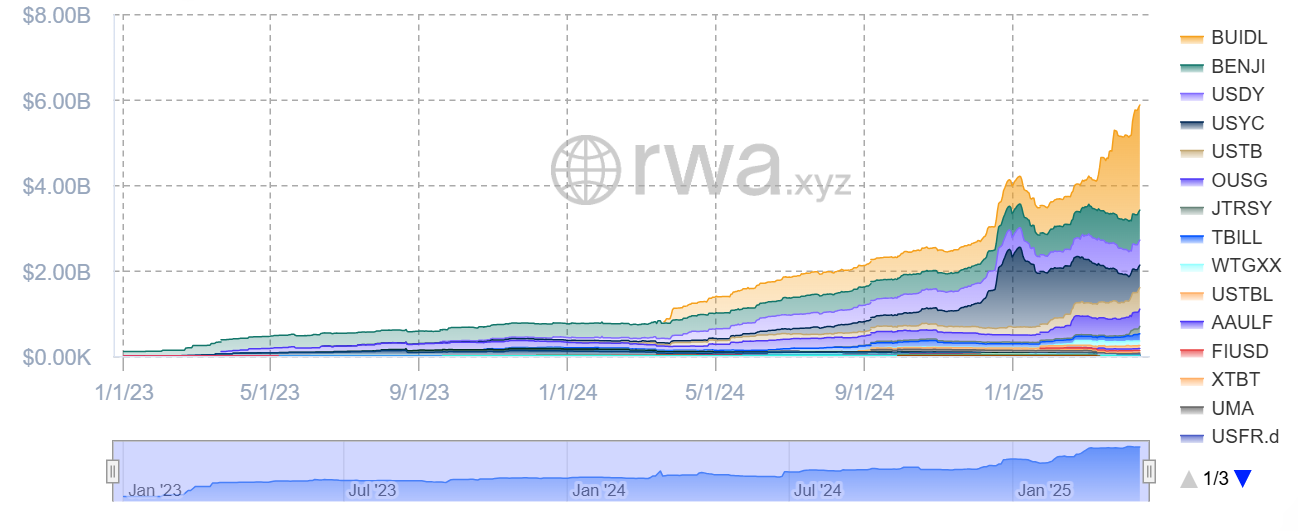

BUIDL лидирует на быстрорастущем рынке токенизированных казначейских облигаций США. Источник: RWA.xyz

Рынок токенизации набирает обороты

Токенизированные RWA — это быстрорастущий сегмент индустрии блокчейнов, привлекающий как традиционных инвесторов, так и пользователей криптовалют.

Рост RWA бросил вызов общему нисходящему тренду на рынке криптовалют: общая стоимость финансовых активов в блокчейне выросла на 11,2% до 21 млрд долларов за последние 30 дней, согласно RWA.xyz.

На фоне волны токенизации Securitize недавно объединилась с Ethena Labs для создания нового блокчейна для экономики RWA. Предстоящий блокчейн Converge позволит розничным и институциональным инвесторам получать доступ к токенизированным активам и децентрализованным финансовым приложениям.

Тем временем блокчейн Mantra недавно представил экосистемный фонд в размере 109 миллионов долларов для поддержки стартапов, создаваемых в экономиках RWA и DeFi. Однако проекты Mantra находятся под угрозой из-за внезапного краха токена OM, причины которого до сих пор полностью не ясны.

Leituras Relacionadas

Olympus DAO Myth Reappears? A "Sovereign On-Chain Central Bank" Written with 4000 Lines of Immutable Code

A new project called The Standard Reserve has emerged, branding itself as a "sovereign on-chain central bank." It aims to replicate core central bank functions—currency issuance, money supply adjustment, and reserve accumulation—entirely through 4,000 lines of immutable code, with no human governance. Its core mechanism is a "reflexive monetary policy" based on a single signal: the net ETH flow into or out of the system's sole Uniswap v4 ETH/$STANDARD pool. Sustained net ETH inflows trigger an "expansion" phase, increasing $STANDARD issuance and using protocol fees to buy tokenized gold as a permanent hard reserve. Net outflows (or zero flow) trigger an immediate "contraction" phase, reducing issuance and using fees to buy back and burn $STANDARD. The system involves six key entities: the $STANDARD token (hard-capped at 1 billion), the central Uniswap pool, the Central Bank contract, Charter NFTs (acting as "banking licenses"), Branch units under each Charter (which earn a share of newly minted $STANDARD), and separate Vaults for expansion (buying gold) and contraction (buying back $STANDARD). To participate, users ideally acquire a Founding Charter NFT (initially 1,000 are free via allowlist/public mint). Each Charter comes with one Branch; more can be opened by burning $STANDARD for "expansion permits," increasing revenue share. Retiring a Branch lets users claim accumulated $STANDARD but imposes a dynamic exit fee (higher if many exit simultaneously), with half the fee burned and half distributed to remaining participants. All protocol revenue (from pool fees and Charter auctions) is allocated: 70% to the active Vault (for gold or buybacks), 15% to permanent protocol-owned liquidity, and 15% to the team. The project presents an innovative, game-theoretic model where user actions (expanding Branches by burning tokens or exiting) align with system goals of building reserves or inducing deflation. However, it is fully anonymous, with key parameters undefined and unaudited code, posing significant risks.

marsbitHá 12m

Olympus DAO Myth Reappears? A "Sovereign On-Chain Central Bank" Written with 4000 Lines of Immutable Code

marsbitHá 12m

US Jobs, China PMI, and Inflation on Stage: Can Global Growth Maintain Resilience?

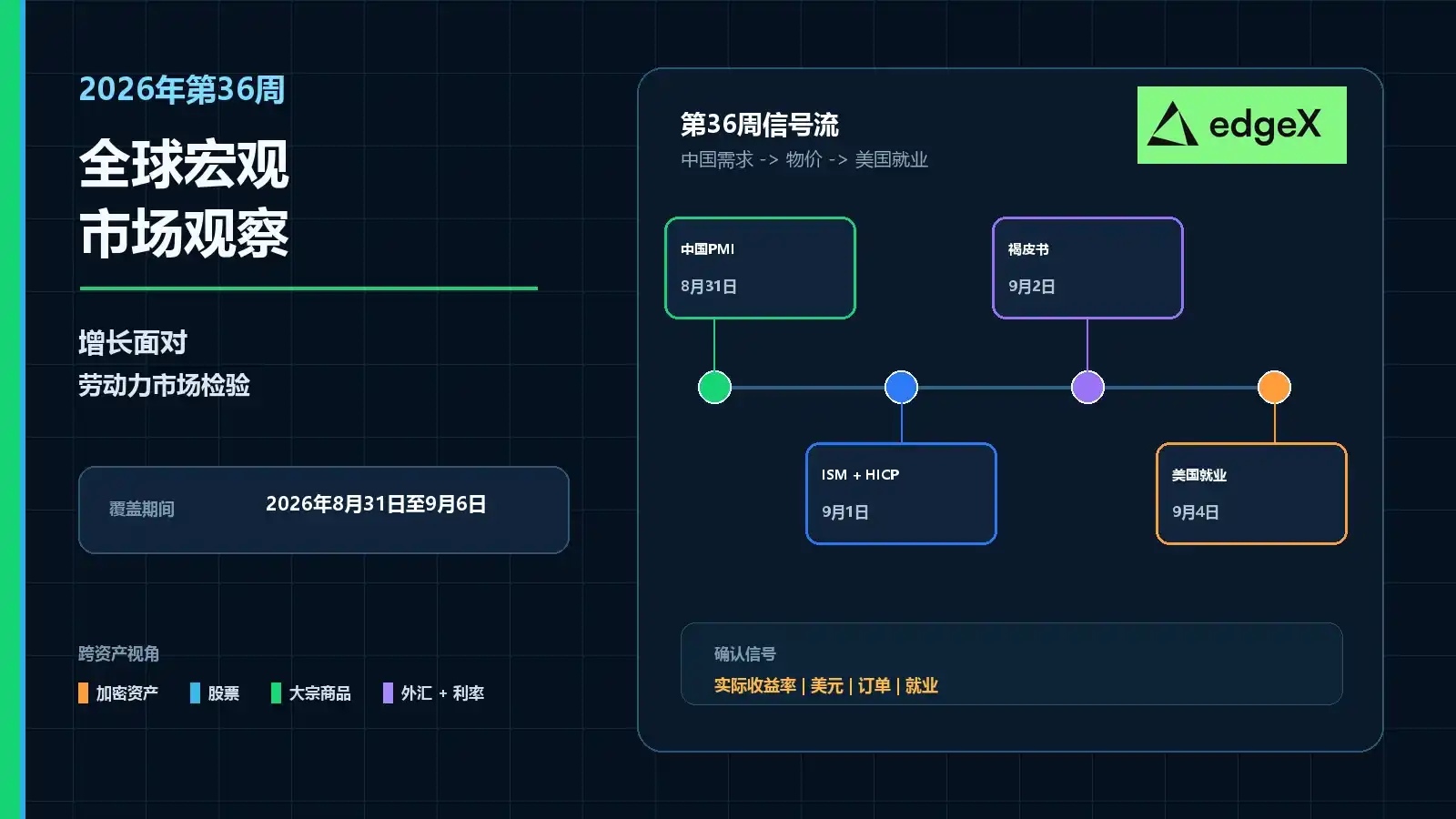
**Week 36 Macro Outlook: Key Data to Test Global Growth Resilience** The week from August 31 to September 6 will shift focus from policy discussions to a critical test of global economic activity. The sequence of events is key, starting with China's official August PMI on Aug 31, which will provide early signals on factory orders, services, and employment following July's contraction. The data flow then broadens. On September 1, US ISM Manufacturing PMI and the Eurozone's flash inflation estimate will offer simultaneous checks on demand, prices, and regional divergence. The subsequent US Federal Reserve Beige Book on September 2 adds granular, qualitative evidence on consumer spending, wages, and regional conditions. Australian Q2 GDP and Canadian trade and jobs data will test resilience in other major economies. The week's pivotal event, however, is the US August employment report on September 4. It will decisively influence expectations for interest rates, the US dollar, and broader risk appetite, acting as a final cross-check for the preceding data. The core question for markets is whether global growth can remain resilient. An ideal outcome would combine a rebound in China's PMI, stable US jobs growth, cooling inflation, and signs of a gradual demand slowdown. Conversely, weak Chinese manufacturing, sticky Eurozone prices, and disappointing US non-farm payrolls would create a more complex scenario of reduced corporate confidence and limited room for aggressive monetary easing, increasing pressure on cyclical assets. Investors should monitor the breadth of improvements—such as new orders and employment—rather than headline PMI figures alone. Confirmation across different data points is crucial. A positive combination of steady activity and disinflation could support equities, industrial commodities, and risk assets like crypto. However, if a growth slowdown triggers lower yields, it must be distinguished from a scenario of rising recession risks that would pressure corporate earnings, potentially limiting rallies. The market's final reaction will hinge on whether the week's signals align to either reinforce or challenge the current growth narrative.

marsbitHá 14m

US Jobs, China PMI, and Inflation on Stage: Can Global Growth Maintain Resilience?

marsbitHá 14m

Trading

Spot
活动图片