Hoskinson Says Cardano Is Ready Without Him, Embarks On High-Risk Trip

bitcoinistPublicado em 2025-04-14Última atualização em 2025-04-14

Resumo

Cardano founder Charles Hoskinson delivered a new message to the community on April 12, declaring that the Cardano ecosystem has...

Trusted Editorial content, reviewed by leading industry experts and seasoned editors. Ad Disclosure

Cardano founder Charles Hoskinson delivered a new message to the community on April 12, declaring that the Cardano ecosystem has reached full decentralization while hinting at a potential step back from active involvement. In a livestream titled “See you on the other side”, Hoskinson reflected on a decade-long journey with Cardano, praised recent governance milestones, and announced plans for a perilous personal expedition.

Cardano Fully Decentralized, Hoskinson Steps Back Briefly

Speaking from his home office in Colorado following a trip to Paris, Hoskinson opened with a candid statement: “This time it’s to go somewhere to do something that is quite dangerous—so much so there is a possibility of death.” He characterized the livestream as a precaution, a chance to reflect on what has been built in the event something were to go wrong. While he reassured viewers that he expected to return safely, the tone of the address underscored a transition, both personal and professional.

The central focus of Hoskinson’s message was the formal maturation of Cardano’s governance infrastructure. After more than a decade of development, he asserted that Cardano has now entered a fully decentralized phase, citing recent constitutional and institutional advancements made possible under the Voltaire governance framework. “We have passed a constitution both through a constitutional convention and an on-chain ratification,” he said. “We have passed an info action approving a roadmap. There are almost a thousand DREs [Delegated Representative Entities] registered and an interesting distribution of power amongst them.”

These milestones mark a significant shift for Cardano, effectively transferring decision-making authority from the founding entities to the broader community. A transitional constitutional committee—partially elected—is currently in place, with fully democratic elections scheduled for later in the year. Budget reconciliation among DRAPs (Delegated Representative Action Plans) is ongoing and expected to conclude within the next 60 to 90 days.

Hoskinson emphasized the significance of this structural shift: “I wanted to build something where I could spend my entire life working on it, but I didn’t want to be a dictator or a king.” He likened Cardano’s trajectory to Bitcoin’s early evolution, referencing Satoshi Nakamoto’s departure from Bitcoin development as a precedent for decentralized growth.

The founder also praised the ecosystem’s increasing technical plurality, highlighting the recent node diversity workshop in Paris. There, he met with teams from Pragma, TXPipe, Blink Labs, and Harmonic—independent development groups contributing alternative node implementations to strengthen the protocol’s resilience. “It was really impressive to spend some time with them and see them,” he said. “The end result of those conversations is basically an assurance that we will have multiple independent implementations by independent teams in the Cardano ecosystem.”

In a notable moment of cross-chain collaboration, Hoskinson mentioned that even members of the Ethereum community were present at the workshop to discuss interoperability and client diversity. This broader dialogue reflects Cardano’s ambition to move beyond its insular beginnings and into a more heterogeneous blockchain environment.

While affirming Input Output Global (IOG)’s continued presence in the ecosystem, Hoskinson made clear that the organization’s prominence would now be subject to the will of the community: “You ultimately get to decide how prominent that role is […] whether it be involved in core infrastructure or simply building on top of the protocol.”

A New Era

Hoskinson also discussed the growing enthusiasm around Midnight, a new privacy-oriented blockchain protocol under the Cardano umbrella, describing it as a potential gateway for “millions of users” into the ecosystem. He portrayed hybrid applications—bridging Bitcoin, Ethereum, Solana, and Cardano to Midnight—as a promising direction for the space.

Amid these technical updates, Hoskinson’s remarks turned reflective and philosophical. At 37, he noted that he now finds himself at a liminal point—not young, not old—and is increasingly seeking fulfillment outside the crypto sphere. “I’ve been chained down for the last decade,” he admitted, referencing his ventures into ranching, synthetic biology, and even fringe endeavors like the “alien salvage expedition in Papua New Guinea.”

This upcoming venture, however, stands out in its severity. Although he declined to specify its nature, he admitted that it’s “one of the most challenging things I’ve ever done in my entire life,” and that it has been in preparation for over a year. “If I survive—which is very likely—I will record it and put it up on Twitter when I return,” he said.

Hoskinson framed the journey as both a personal test and a necessary mental reset before entering the “long brutal march” of the next Cardano era, citing Midnight, Hydra scalability, Minotaur’s AVS (Active Validator Set) ambitions, and the roadmap’s transition to full realization. “Cardano’s roadmap is the best it’s ever been,” he asserted, referencing the system’s emerging functionality as a Bitcoin DeFi platform and its commitment to scalable governance.

Yet behind the achievements lies a sense of fatigue with the broader crypto industry. Hoskinson expressed disenchantment with the market’s narrow focus on price movement at the expense of innovation and impact. “Every accomplishment doesn’t matter ]…] everything is chained to whether the price goes up or the price goes down. You have no idea how thoroughly boring that has become.”

He concluded with a reaffirmation of Cardano’s resilience and a tacit acknowledgment that his role may soon evolve. “Cardano, like Bitcoin before it, is durable. It’s here to stay. All elements of centralization have been removed… that was my life’s work, and I’m proud of that.”

At press time, ADA traded at $0.6452.

Cardano price
ADA needs to break the red resistance zone, 1-week chart | Source: ADAUSDT on TradingView.com
Featured image created with DALL.E, chart from TradingView.com
Editorial Process for bitcoinist is centered on delivering thoroughly researched, accurate, and unbiased content. We uphold strict sourcing standards, and each page undergoes diligent review by our team of top technology experts and seasoned editors. This process ensures the integrity, relevance, and value of our content for our readers.

Jake Simmons has been a Bitcoin enthusiast since 2016. Ever since he heard about Bitcoin, he has been studying the topic every day and trying to share his knowledge with others. His goal is to contribute to Bitcoin's financial revolution, which will replace the fiat money system. Besides BTC and crypto, Jake studied Business Informatics at a university. After graduation in 2017, he has been working in the blockchain and crypto sector. You can follow Jake on Twitter at @realJakeSimmons.

Leituras Relacionadas

End of the 'Gray Era' for Hong Kong and US Stock Trading Accounts: Where Can Your Money Go Now?

Hong Kong and US stock “grey account opening era” ends, where can your money go? In a coordinated regulatory crackdown starting May 22nd, Hong Kong's SFC and China's securities regulator have targeted the previously common but legally ambiguous practice of mainland Chinese investors opening accounts with Hong Kong brokers to trade Hong Kong and US stocks. The SFC issued a stern circular after a review of 12 brokerages, citing major deficiencies including inadequate due diligence, acceptance of suspicious or forged documents, and weak management of cross-border relationships. New requirements mandate mainland clients to submit a written declaration confirming their investment funds originate from *outside* mainland China, the account has never been closed for using suspicious documents, and agreeing to information disclosure. Brokers must immediately close accounts opened with suspicious documents and dormant accounts. Simultaneously, Chinese authorities launched a two-year campaign to rectify illegal cross-border securities activities. Key internet brokers like Futu, Tiger Brokers, and Longbridge are facing penalties, with existing accounts allowed only to sell/withdraw funds, not add new ones. The impact is immediate. Reports from social media and financial news outlets confirm that individuals traveling to Hong Kong to open accounts are now required to sign the new declaration. However, even after signing, applications are frequently rejected. The declaration shifts compliance responsibility to the client and acts as a filter, as most mainland investors' funds do not legally meet the "from outside China" criterion. Major brokers like Futu and Tiger have stopped accepting new mainland clients. A few, such as uSmart Securities, Fosun Wealth, and Cheerful Investment, still offer limited channels, but approvals have tightened significantly. Crucially, funding must now come exclusively from the investor's own bank account in Hong Kong or a qualified jurisdiction, blocking previous workarounds like using money changers or stablecoins. For mainland investors, compliant pathways still exist but are narrower. Individuals with overseas status (students, work visa holders) and verifiable offshore funds may still qualify. Official channels like Stock Connect, QDII, and the Cross-boundary Wealth Management Connect remain fully compliant options, albeit with product and quota limitations. On-chain alternatives exist but carry their own regulatory uncertainties and often exclude mainland users. The crackdown signals the end of the lax expansion period for Hong Kong brokers targeting mainland clients. While investment opportunities persist, the era of easy, low-compliance access is over. Investors must now carefully assess their eligibility and understand that signing the new declaration carries personal legal liability.

Odaily星球日报Há 35m

End of the 'Gray Era' for Hong Kong and US Stock Trading Accounts: Where Can Your Money Go Now?

Odaily星球日报Há 35m

SpaceX's $1.75 Trillion IPO: A Quick Guide to 17 Related Stocks

**Title: SpaceX's $1.75 Trillion IPO: Analysis of 17 Related Stocks** SpaceX is set to IPO on Nasdaq with a $1.75 trillion valuation. The real value driver is Starlink, contributing 61% of Q1 revenue with high margins. Its valuation heavily depends on future execution, including user growth despite falling ARPU. Key stocks have already surged pre-IPO. Tesla (TSLA, +10%) is a primary beneficiary due to deep integration with SpaceX in chip design and AI. Rocket Lab (RKLB, +89%) is seen as a "mini-SpaceX," but faces risk from potential Neutron rocket delays. AST SpaceMobile (ASTS) competes in the same satellite-to-phone market as Starlink. Firefly (FLY, +70%) is a strong government contractor in lunar services. Partners like EchoStar (SATS), Planet Labs (PL), and T-Mobile (TMUS) will see revaluation. Suppliers like Qualcomm (QCOM, +57%) are critical ecosystem "picks and shovels." Investment vehicles like DXYZ (+80%) hold significant SpaceX stakes but trade at high premiums, which may collapse post-IPO. Redwire (RDW) is highlighted as an under-the-radar "pick and shovel" play in space components, with growth in defense contracts and microgravity pharmaceuticals. The article warns that much of the positive news is already priced in, and a post-IPO sell-off is possible. Large IPOs often underperform initially. Key risks include Starship delays, ARPU decline, and unforeseen black swan events affecting Elon Musk or space operations. Investors are advised to focus on companies with solid fundamentals and manage overall sector exposure carefully.

marsbitHá 37m

SpaceX's $1.75 Trillion IPO: A Quick Guide to 17 Related Stocks

marsbitHá 37m

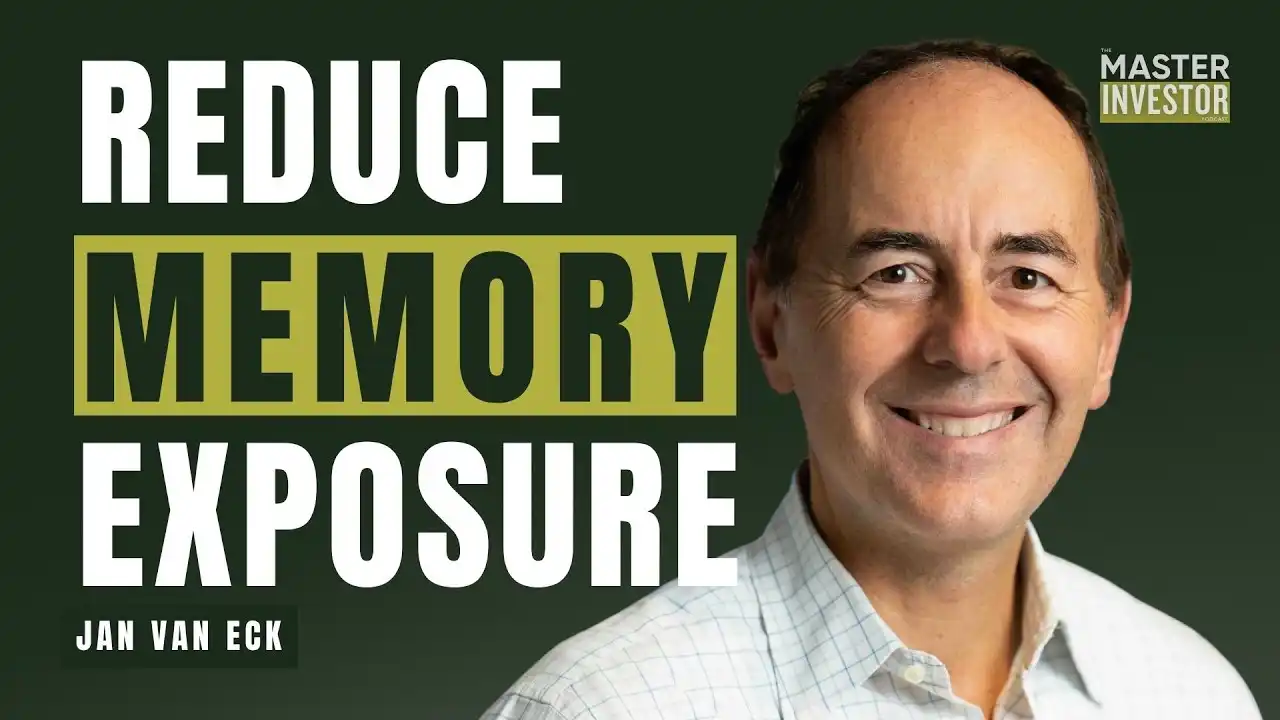
Conversation with VanEck CEO: Memory Chip Stocks Are a Bubble, Bitcoin Will Stay but Token Ecosystems Will Disappear

In this podcast, VanEck CEO Jan van Eck discusses his investment outlook centered on three key long-term ("10-year macro") themes: AI-driven compute demand, India's economic rise, and excessive government debt in developed nations. Regarding AI and semiconductors, van Eck believes Nvidia has transformed into a foundational "host" for AI infrastructure, possessing deep moats in software, scale, and power efficiency, making it a core holding. However, he views the recent surge in memory chip stocks as a bubble driven by temporary supply-demand imbalances and pricing power, lacking Nvidia's competitive durability. On asset management, he emphasizes that while ETFs are scale-driven tools, the decisions on which ETFs to own and how to allocate remain highly active. He expresses greatest concern over fixed-income market illiquidity and the risk of a loss of confidence in government debt sustainability. Van Eck is bullish on gold's long-term role as a global monetary alternative and highlights the dramatic policy-driven growth in nuclear energy investment. He is strongly positive on India due to its demographic trends and pro-business reforms. Discussing crypto, he labels 2026 the "year of the corporate-controlled chain," where traditional finance adopts blockchain's best features (like 24/7 operation and programmability) but retains control. He predicts a permanent "crypto winter" for many projects, with only Bitcoin, stablecoins, and the core blockchain concept surviving long-term. He sees the U.S. stablecoin bill as marginally impactful, enabling tech firms to compete with, but not replace, banks. Finally, he views the upcoming SpaceX IPO as a significant, positive liquidity event for markets and advises investors to maintain a long-term, macro perspective when making asset allocation decisions.

marsbitHá 48m

Conversation with VanEck CEO: Memory Chip Stocks Are a Bubble, Bitcoin Will Stay but Token Ecosystems Will Disappear

marsbitHá 48m

Trading

Spot
Futuros

Artigos em Destaque

Como comprar ADA

Bem-vindo à HTX.com!Tornámos a compra de Cardano (ADA) simples e conveniente.Segue o nosso guia passo a passo para iniciar a tua jornada no mundo das criptos.Passo 1: cria a tua conta HTXUtiliza o teu e-mail ou número de telefone para te inscreveres numa conta gratuita na HTX.Desfruta de um processo de inscrição sem complicações e desbloqueia todas as funcionalidades.Obter a minha contaPasso 2: vai para Comprar Cripto e escolhe o teu método de pagamentoCartão de crédito/débito: usa o teu visa ou mastercard para comprar Cardano (ADA) instantaneamente.Saldo: usa os fundos da tua conta HTX para transacionar sem problemas.Terceiros: adicionamos métodos de pagamento populares, como Google Pay e Apple Pay, para aumentar a conveniência.P2P: transaciona diretamente com outros utilizadores na HTX.Mercado de balcão (OTC): oferecemos serviços personalizados e taxas de câmbio competitivas para os traders.Passo 3: armazena teu Cardano (ADA)Depois de comprar o teu Cardano (ADA), armazena-o na tua conta HTX.Alternativamente, podes enviá-lo para outro lugar através de transferência blockchain ou usá-lo para transacionar outras criptomoedas.Passo 4: transaciona Cardano (ADA)Transaciona facilmente Cardano (ADA) no mercado à vista da HTX.Acede simplesmente à tua conta, seleciona o teu par de trading, executa as tuas transações e monitoriza em tempo real.Oferecemos uma experiência de fácil utilização tanto para principiantes como para traders experientes.

1.2k Visualizações TotaisPublicado em {updateTime}Atualizado em 2025.03.21

Como comprar ADA

Discussões

Bem-vindo à Comunidade HTX. Aqui, pode manter-se informado sobre os mais recentes desenvolvimentos da plataforma e obter acesso a análises profissionais de mercado. As opiniões dos utilizadores sobre o preço de ADA (ADA) são apresentadas abaixo.

活动图片